Chapter 1
The Dark Side of America's Favorite Fruit
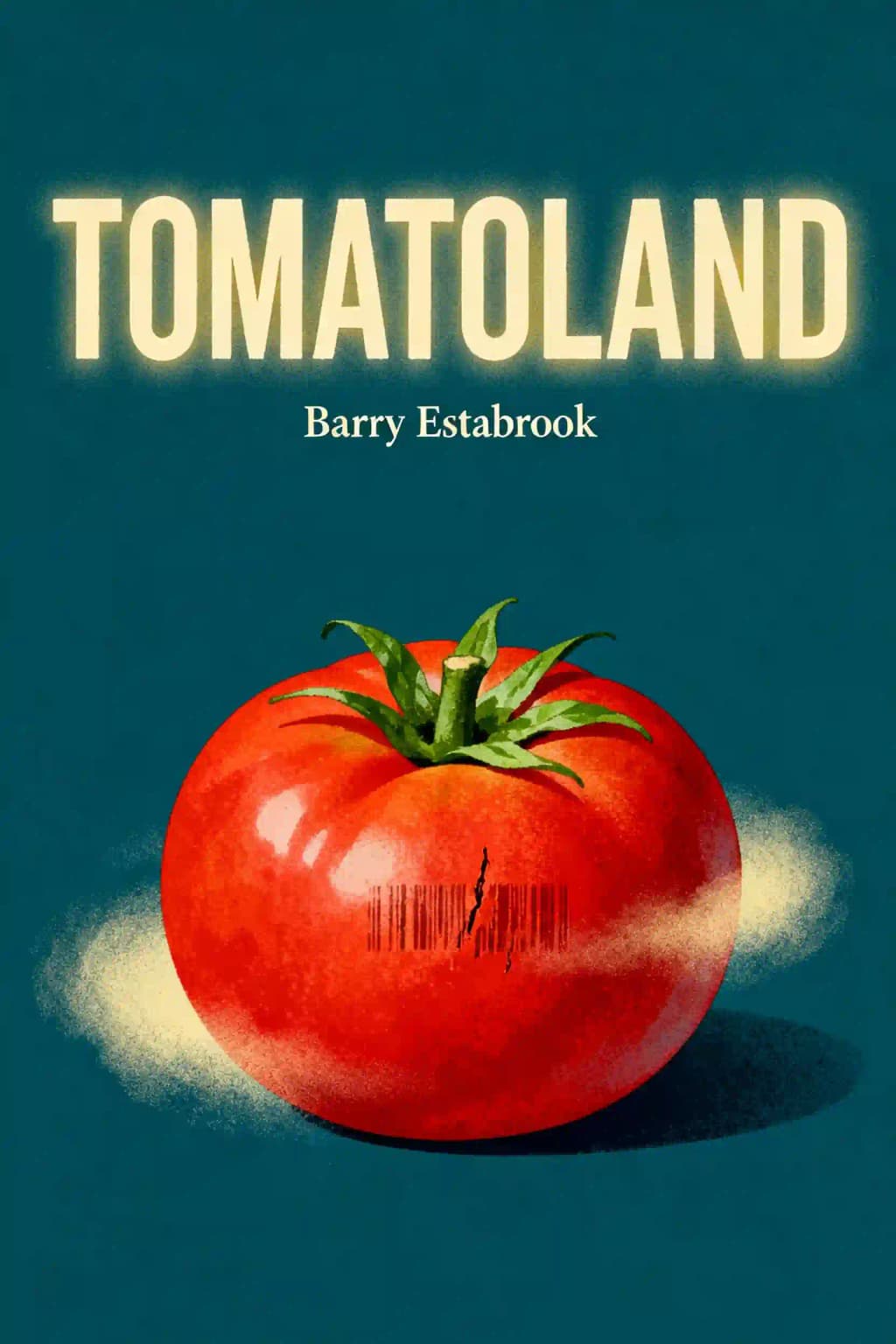
Picture this: You're driving on a Florida highway when suddenly a truck in front of you spills its cargo - dozens of green tomatoes bounce across the asphalt. Most survive the 10-foot fall and highway impact completely intact, as if made of rubber. These aren't tomatoes as nature intended; they're industrial products engineered for shipping, not eating. This near-death experience with flying produce led journalist Barry Estabrook to investigate a disturbing reality: the Florida tomato industry represents everything wrong with our modern food system. Americans spend $5 billion annually on these tasteless, nutritionally inferior fruits while the workers who harvest them endure conditions that U.S. Attorney Douglas Molloy calls "ground zero for modern-day slavery." Tomatoland became an instant classic upon publication, earning Estabrook the James Beard Award and sparking genuine industry reform. Even celebrities like Michael Pollan and Eric Schlosser have praised its unflinching examination of how something as simple as a winter tomato connects to profound questions about labor justice, environmental sustainability, and what we value in our food system.
Chapter 2
From Desert Origins to Industrial Product
In Chile's Atacama Desert, one of Earth's driest places, Roger Chetelat's research team carefully navigated landmine warnings while searching for wild tomato species. These expeditions for the C.M. Rick Tomato Genetics Resource Center at UC Davis represent a race against time to preserve tomato biodiversity before it disappears forever. In climate-controlled vaults, the center maintains 3,600 specimens that bear little resemblance to supermarket tomatoes - woody perennials with diverse foliage and tiny fruits in black, yellow, purple, and striped green.
These wild relatives contain genetic treasures - resistance to at least forty-four diseases that plague domestic varieties and adaptations to extreme environments that could help crops survive in a warming world. The wild species also hold potential health benefits, with genes that could boost antioxidant levels in commercial varieties. Yet these populations face extinction from agricultural expansion, urbanization, and grazing animals.
When Chetelat visited northern Peru in 2009, he discovered sugarcane monocultures had eliminated many wild tomato populations documented decades earlier. Only in higher mountain valleys, where industrial agriculture couldn't reach, did wild tomatoes persist in rocky areas and fieldstone walls. This loss represents more than botanical curiosity - it's the disappearance of genetic resources that future generations might need.
The contrast between these resilient wild ancestors and today's commercial tomatoes couldn't be starker. Modern varieties have been bred primarily for shipping durability and cosmetic uniformity, sacrificing flavor, nutrition, and natural resilience in the process. What began as a diverse, adaptable fruit has been transformed into a standardized industrial product - one that can survive a highway impact but fails the most basic test of good food: does it taste good?
The journey from those wild Andean plants to Florida's industrial tomato fields represents a fundamental shift in how we approach agriculture - prioritizing logistics over flavor, appearance over nutrition, and short-term economics over long-term sustainability. As we'll see, this transformation comes with profound costs not just for our taste buds, but for workers, the environment, and our connection to food itself.
Chapter 3
Florida's Hostile Tomato Paradise
"Nothing." That's what would happen if you tried planting a tomato seedling directly in Florida soil, according to vegetable specialist Monica Ozores-Hampton. The seedling would completely disappear - devoured by Florida's relentless pests, bacteria, and fungal diseases or starved by the state's nitrogen-deficient sandy soil.
Yet remarkably, Florida produces one-third of America's fresh tomatoes, making them the state's most valuable vegetable crop. From a botanical perspective, this makes absolutely no sense. Florida tomato growers aren't working with soil but with pure sand - "no more nutrient rich than the stuff vacationers like to wiggle their toes into on the beaches." They're essentially practicing hydroponic production without greenhouses.
The challenges are relentless. The state's warm climate means pests and pathogens never die off in winter freezes. High humidity creates perfect conditions for blights, wilts, and molds. Aggressive native weeds like nut grass (called that "because it can drive you nuts") can even punch through plastic mulch. Winter brings unpredictable rainfall, requiring irrigation, while shorter daylight hours limit growth compared to northern summer conditions.
So why grow tomatoes in such a hostile environment? The answer is purely economic - Florida is just warm enough for tomatoes to survive when the populous Midwest, Mid-Atlantic, and Northeast markets are frozen under snow. To succeed, growers wage "total war against the elements" using "chemical, biological, and scorched-earth warfare against the forces of nature."
The process begins after harvest in April, when fields either receive cover crops like sorghum, are left fallow with weeds controlled by Roundup, or are flooded to kill pests. By July, heavy equipment removes all vegetation, leaving pristine sand rectangles. Water management is critical - Florida's unique "seepage irrigation" system uses canals that moisten sand from below, with water stopped by an impermeable "hard pan" layer.
Crops grow in raised beds covered with plastic to slow evaporation. GPS-guided tractors create perfectly flat-topped beds, applying fertilizer in a precise "bottom mix" (20%) and "hot mix" (80%) strategy that allows roots to access nutrients gradually. Before planting, beds are fumigated with highly toxic methyl bromide, killing every living organism in the soil. Workers then manually plant seedlings, later providing support with stakes and twine while pruning "suckers" to channel energy to fruit production.
Florida tomatoes face attacks from at least 27 insect species, 29 diseases, and numerous weeds. Growers combat these with over 100 chemicals - including 19 herbicides, 31 fungicides, and 60 pesticides, many classified as "Bad Actors" with serious health risks. A Florida tomato field receives five times more fungicide and six times more pesticide than California fields, costing over $2,000 in chemicals per acre.
After 10-15 weeks, tomatoes are harvested while still hard and green, then artificially ripened with ethylene gas - a practice known since the 1920s to produce inferior taste and texture. Any tomatoes showing natural ripening are left behind or collected by "pinhookers" who sell them locally. As one grower candidly admitted: "No consumer tastes a tomato in the grocery store before buying it. I have not lost one sale due to taste. People just want something red to put in their salad."
This system serves corporate interests but fails consumers who get flavorless, potentially contaminated produce. Most tragically, it fails the workers who face daily exposure to toxic chemicals in the fields.
Chapter 4
Poisoned Lives: The Human Cost of Chemical Farming
At Tower Cabins, a dreary labor camp near Immokalee, Florida, three pregnant women who worked in the same tomato field gave birth to severely deformed babies within weeks of each other. Carlitos was born without arms or legs, Jesus had a deformed jaw requiring tube feeding, and Violeta had multiple severe defects and survived only three days.
All three mothers had worked in fields sprayed with at least 31 different chemicals, including known teratogens (substances causing birth defects). Despite EPA regulations requiring "restricted-entry intervals" after chemical application, the women reported being ordered to pick tomatoes in violation of these safety rules. They worked without protective gear beyond bandanas covering their mouths, experiencing symptoms like dizziness, nausea, burning eyes, and open sores from pesticide exposure.
After Carlitos's birth, attorney Andrew Yaffa took on their case. Rather than pursuing the conventional approach of identifying a specific chemical and manufacturer, Yaffa decided to challenge the entire agricultural industry and its chemical-dependent practices. His team assembled impressive expert testimony establishing that the birth defects weren't genetic but environmental. Dr. Aubrey Milunsky, a renowned geneticist from Boston University, examined DNA samples and ruled out genetic causes. Epidemiologist Dr. Omar Shafey determined the cluster of birth defects couldn't have happened by chance.
Florida applies chemical pesticides at staggering rates - eight million pounds on tomato fields in 2006, eight times California's usage on the same acreage. Yet Florida employs only about fifty inspectors compared to California's 350, and reported just two cases of pesticide exposure among 400,000 agricultural workers that year, while California recorded two hundred cases.
The enforcement system is fundamentally broken. Florida doctors aren't required to report pesticide poisoning to get reimbursed (unlike California), and most healthcare workers don't even know reporting is mandatory. When violations are found, penalties are rarely levied - less than 8% of violations between 1993-2003 resulted in fines. The Florida Department of Agriculture and Consumer Services, tasked with both promoting agriculture and enforcing pesticide regulations, consistently fails to investigate poisoning complaints properly, rarely interviews witnesses without supervisors present, and almost never issues fines.
Even when pesticide training occurs, it's often farcical. Victor Grimaldi, who spent twenty years in the fields, described being forced to sign English-language documents he couldn't read and watching safety videos he couldn't understand. When he properly avoided spraying near pickers, his boss declared, "I'm the law out here," and ordered him back. Later, after standing in what he thought was water while spraying, Grimaldi's toenails fell off. Workers quickly learn not to complain about pesticide exposure or risk losing their jobs.
While short-term poisoning symptoms often pass quickly, virtually no research exists on long-term effects. The Lake Apopka community near Orlando provides a disturbing glimpse of what may await today's workers. Linda Lee, a 57-year-old former farmworker who spent a decade working those fields, suffers from diabetes, lupus, high blood pressure, emphysema, arthritis, kidney failure, and needed hip replacement and corneal implants. A 2006 survey found that 92% of Lake Apopka's 2,500 former workers had been exposed to pesticides, with 83% reporting "fair" or "poor" health. Birth defects among their children occurred at 13% - more than four times the state average.
Beyond harming humans, methyl bromide severely damages the ozone layer - its bromine is fifty times more destructive than chlorofluorocarbon chlorine. Though the Montreal Protocol mandated phasing it out by 2005, Florida tomato growers received a "critical use exemption" allowing continued use. Even five years after the supposed ban, millions of pounds were still being injected into Florida's soil each planting season.
After Yaffa secured a substantial settlement for Carlitos in 2008, Ag-Mart withdrew five dangerous pesticides. Though the company admitted no guilt, the settlement ensured Carlitos would receive lifelong care. His birth, according to Yaffa, "changed the system" - but the fundamental problems of chemical-dependent agriculture remain.
Chapter 5
Modern-Day Slavery in America's Fields
Just an hour's drive from wealthy Naples, Florida, where the average net worth is $1.7 million, lies Immokalee - the impoverished town that tomatoes built. With a per capita income of just $9,700, half its residents below the poverty line, and a crime index rating of 1 (where 1 is most dangerous), Immokalee represents a stark contrast to its affluent neighbor. U.S. Attorney Douglas Molloy calls it "ground zero for modern-day slavery" and states unequivocally that any American who has eaten a winter tomato has consumed something harvested by enslaved hands.
Lucas Mariano Domingo, a Guatemalan migrant, was lured by Cesar Navarrete with promises of good wages and housing. Instead, he found himself enslaved, beaten, and locked in trucks. After two and a half years of captivity, Domingo finally escaped when he noticed light through a gap in a truck roof where he'd been locked overnight. He and fellow worker Jose Vasquez helped others escape and approached someone who called police.
Human trafficking is notoriously difficult to prosecute - while approximately 15,000 new trafficking cases occur annually in America (similar to murder rates), only 1% are solved compared to 65% of homicides. Prosecutors need solid cases, as acquittals risk retaliation against witnesses. Undocumented workers fear authorities, deportation, and threats against their families back home. Many victims don't come forward because they believe they truly owe debts, considering non-payment dishonorable.
The Coalition of Immokalee Workers created a traveling museum housed in a box truck similar to where Domingo was confined. The exhibits included chains, bloodstained shirts, and wooden-butted pistols - all from recent slavery cases, not historical artifacts. Florida's agricultural slavery history dates back to European settlement, with 44% of residents being slaves by 1860. After emancipation, "convict lease programs" replaced formal slavery until 1923, followed by debt peonage systems that continue in modified forms today.
In LaBelle, Florida, crew leader Miguel Flores ran a violent operation in the 1990s. After worker Julia Gabriel reported to the Coalition of Immokalee Workers that Flores had shot an employee trying to leave, an investigation revealed a sophisticated slavery operation. Flores's accomplices recruited workers who were undocumented, spoke no English, and had little education. Workers were transported in modified vans, charged exorbitant transportation fees, and threatened with death if they tried to leave while indebted. Flores's "pistoleros" fired guns to wake workers and guard them in fields. After fifteen years controlling 400 laborers who earned about $20 weekly, Flores was finally prosecuted.
Antonio Martinez left Hidalgo, Mexico to support his sick parents and four siblings. After paying a coyote for a promised construction job in Los Angeles, he endured a grueling desert crossing with minimal food and water. At a Tucson safe house, a coyote named Chino demanded more money and offered tomato-picking work in Florida supposedly paying $150 daily. Martinez and sixteen others were transported to Florida, where they were sold to Abel Cuello for $350 each. Cuello locked the twenty-six men in decrepit trailers at night, threatened them with violence if they tried to escape, and claimed ownership over them. After four months, Martinez escaped when Cuello fell asleep at a convenience store. Though Cuello received only a thirty-three-month sentence, he returned to Immokalee afterward and was immediately rehired as a crew boss at another major tomato company.
The tomato industry showed little outrage over the slavery convictions. Major corporations like Six L's and Pacific Tomato Growers remained silent. Reggie Brown of the Florida Tomato Growers Exchange offered only perfunctory condemnation, claiming growers "abhor slavery" while Governor Charlie Crist refused to meet with the Coalition to discuss labor abuses. Florida agriculture officials downplayed the issue, with Terence McElroy dismissing it as "maybe one case a year" - even as Detective Frost and Attorney Molloy were already building cases on two other human trafficking operations.
The Navarretes' defense attorney highlighted the hypocrisy of the system, noting that language making corporations responsible for "knowing or having reason to know" about enslaved workers was removed from trafficking legislation through Senator Orrin Hatch's intervention, protecting wealthy companies while prosecuting poor crew bosses.
Chapter 6
Beyond Slavery: Systemic Exploitation of "Free" Workers
Florida's field slavery isn't just isolated cases but part of an economic system built on worker exploitation. The continuum ranges from actual slavery to debt bondage (where workers put up family property as loan collateral to cross the border) to workers paying inflated rates for basic necessities. Mary Bauer of the Southern Poverty Law Center confirms that beyond dramatic slavery cases, "incredibly oppressive circumstances that amount to forced labor are extremely common and close to the norm."
Federal labor laws deliberately exclude farmworkers from protections other Americans take for granted. Roosevelt's New Deal specifically exempted agricultural laborers from the National Labor Relations Act's collective bargaining rights - a concession to southern Democrats protecting a workforce that was then predominantly African American. Today's farmworkers still lack guaranteed overtime, benefits, and protection from child labor, with children as young as twelve permitted to work fields while other industries require workers be at least sixteen.
Florida's tomato harvesters are paid on an antiquated "piece basis" - earning by container rather than hourly. While technically required to equal minimum wage ($7.25/hour), workers face unpaid waiting time for rain, dew, truck availability, and travel. They receive no sick benefits or paid vacation, and must cover their own medical expenses despite frequent injuries. The average migrant earns $10,000-$12,000 annually - below minimum wage and far below the federal poverty line.
Emilio Galindo, a stocky Mexican man in his fifties who left his family in Puebla a decade ago, describes a tomato worker's brutal daily routine. Rising at 4 AM, he walks to "The Pantry" parking lot where workers compete to be selected by crew bosses. Being older, he often waits over an hour to be chosen. Workers crouch for 10-12 hours, filling buckets while bosses constantly yell "Hurry!" Bathroom breaks are often denied, and the physical toll is severe - damaged knees, back pain, and fingers cut and stained with "tomato tar." After work, he's "all used up" and collapses until 4 AM comes again.
Florida tomato farmers typically subcontract field work to crew bosses who recruit, transport and supervise workers. This system shields corporate farmers from direct responsibility for abuses occurring in their fields. Crews range from a dozen to several hundred workers, with bosses selecting workers each morning based on youth and strength, often leaving older workers like Galindo waiting for hours or without work.
The housing crisis compounds workers' struggles. Juan Dominguez shows the author his living conditions: ten men sharing a singlewide trailer with stale, thick air and dark brown particleboard walls. Five mattresses crowd one bedroom - three on the floor, two suspended from the ceiling on chains. The bathroom is airplane-sized with a curtainless shower, stained sink and seatless toilet. The kitchen features broken appliances, exposed wiring, and no climate control despite Florida's extreme temperatures. For this squalor, the men pay $2,000 monthly - comparable to a clean two-bedroom in wealthy Naples.
In 2007, Pascuala Sanchez and two of her children died alongside two others when fire engulfed their wire-meshed trailer, trapping occupants inside. Despite this tragedy, nothing changed in Immokalee, where one-quarter of residences remain substandard. Senator Bernie Sanders called conditions "deplorable," yet enforcement creates a catch-22: improving standards would leave workers homeless while making remaining slums even more profitable.
The Coalition of Immokalee Workers emerged to fight these conditions. Lucas Benitez, who came to America at seventeen from Mexico, began organizing workers after standing up to an abusive boss. The Coalition's turning point came in 1996 when they rallied 600 workers after sixteen-year-old Edgar was beaten for taking a water break. Brandishing Edgar's bloody shirt, they confronted the perpetrator, ending field beatings. The shirt became their unofficial flag, showing collective action could bring change.
Chapter 7
A Penny Per Pound: The Campaign for Fair Food
The Coalition of Immokalee Workers developed an innovative strategy targeting not the growers directly, but the major food companies that purchased Florida tomatoes. Their Campaign for Fair Food had a simple demand: pay just one penny more per pound of tomatoes, with the money going directly to workers. This seemingly modest increase would nearly double workers' wages while adding minimal costs for consumers.
They launched their campaign against Taco Bell in 2001, a company already criticized for stereotypical Mexican marketing. Taking on Yum! Brands' 35,000-restaurant empire required sophisticated tactics. They recruited college students - Taco Bell's core "New Hedonism Generation" demographic - who formed the Student/Farmworker Alliance. Starting with three Florida universities, the alliance grew to 300 colleges nationwide. Their "Boot the Bell" hunger strikes succeeded in removing Taco Bell from 22 campuses.
Religious groups including the Presbyterian Church and National Council of Churches joined the fight, providing support for the 2004 cross-country Truth Tour that culminated in demonstrations at Taco Bell headquarters. Meanwhile, religious shareholders pressured Yum! from inside, with an Oxfam resolution gaining unprecedented 35% support. By 2005, Yum! agreed to the coalition's demands across all its restaurant chains, followed by McDonald's two years later.
Burger King, however, mounted aggressive resistance despite being headquartered just 100 miles from Immokalee. Their resistance turned scandalous when their VP of food safety, Steven Grover, was exposed posting inflammatory online comments about the Coalition using his daughter's "surfxaholic36" pseudonym. He called the CIW "blood suckers" and "the lowest form of life." When reporter Amy Bennett Williams traced the account to Grover's middle-school daughter, she admitted, "That was my dad." In another PR disaster, Burger King and the Florida Tomato Growers Exchange organized a media junket to showcase supposedly good conditions - on the exact day the Navarrete slavery case broke. Finally in 2008, CEO John Chidsey capitulated, apologizing for negative statements and acknowledging farmworkers needed "better wages, working conditions and respect."
Despite the Coalition's impressive victories with fast food chains and major food service companies by 2010, one significant obstacle remained: the Florida Tomato Growers Exchange refused to participate in the Campaign for Fair Food, even threatening member growers with $100,000 fines for joining. Without grower participation to track worker payments, the extra penny per pound promised by companies was accumulating in escrow accounts rather than reaching the workers who desperately needed it.
The Exchange's executive vice president, Reggie Brown, defended the industry against criticism, pointing to growers' charitable contributions and claiming workers were already well-compensated. At a 2008 Senate hearing, Brown faced harsh questioning when he claimed tomato pickers averaged over $12 per hour. Senator Dick Durbin calculated this would require harvesting nearly one tomato per second, challenging the industry's wage claims.
The Campaign for Fair Food had been remarkably successful, with major fast food and food-service companies representing hundreds of millions in purchasing power signing agreements. This created significant financial incentive for growers to participate. In fall 2009, East Coast Growers and Packers broke ranks, quit the exchange, and signed with the coalition. Chipotle Mexican Grill immediately switched to sourcing tomatoes exclusively from them. Though other growers initially held out, by 2010, after a catastrophic freeze and price collapse, Pacific Tomato Growers and Six L's also joined the campaign.
Five months after Estabrook's meeting with Reggie Brown, he unexpectedly called the coalition's office. The exchange was finally ready to join the Campaign for Fair Food. On November 16, 2010, Brown sat with coalition members at their headquarters and announced the partnership, committing to "new standards of verifiable social accountability for the tomato industry." No other fruit or vegetable growers' group in America had ever made such a far-reaching agreement with its workers.
Chapter 8
The Quest for Flavor: Rebuilding the Tomato
In early 2010, Estabrook discovered a supermarket tomato that actually tasted like something - the Tasti-Lee. Though not comparable to a vine-ripened August tomato, it was unmistakably a tomato in taste and appearance, costing $3.47 for three-quarters of a pound compared to 80 cents for commodity tomatoes. This rare experience led him to investigate what made this tomato different.
At the University of Florida's Gulf Coast Research and Education Center, he met John "Jay" Scott, a professor of horticultural sciences who had developed over thirty tomato varieties. Unlike modern seedsmen relying on molecular biology and genetic modification, Scott was an old-fashioned plant breeder using the same tools as nineteenth-century growers: keen observation, a disciplined palate, and immense patience. Each year, he grew hundreds of parent lines, crossbreeding those with complementary traits, meticulously examining each plant and personally taste-testing promising specimens in the field.
Tasti-Lee represented Scott's closest approach to Tomatoland's Holy Grail - a fruit tough enough for commercial distribution yet still flavorful. Modern tomatoes consistently rank at the bottom of consumer satisfaction surveys, described as "insipid," "blah," "tough," and "like eating cardboard" since at least 1977. Scott developed Tasti-Lee to help Florida farmers compete with greenhouse-grown tomatoes that had captured 10% of the market.
Creating a commercially viable yet tasty tomato presents numerous challenges. Florida growers demand high yields of large, uniform fruit with disease resistance and long shelf life - taste comes last, if at all. The tomato's structure complicates matters: the gooey locular jelly contains most of the acidity, while the pericarp tissue provides strength and sweetness. Harder tomatoes typically taste more bland. Further complications include the mature green picking process, where immature tomatoes may be harvested that never develop flavor, and "chilling injury" - exposure to temperatures below 50 degrees permanently destroys taste by reducing fragrant volatile chemicals, though refrigeration extends shelf life.
Harry Klee, another University of Florida professor, takes a fundamentally different approach to developing better-tasting tomatoes. While Scott works from the grower perspective, Klee starts with consumer preferences. His multidisciplinary team includes psychologists, food scientists, statisticians, and molecular biologists conducting extensive taste panels with heirloom varieties. Klee identifies a critical disconnect: commercial breeders serve growers who get paid for yield, size, and appearance - not flavor. This focus has increased tomato yields fivefold since the 1930s but diluted flavor.
Klee's research reveals tomato flavor's extraordinary complexity - a precise balance of sugars, acids (mainly citric and malic), and about fifteen to twenty volatile compounds like beta-ionone, cis-3-hexenal, and 2-phenylethanol. Unlike simpler fruits like bananas, no single chemical creates tomato flavor; instead, it requires the perfect combination of many compounds working together. His ultimate goal is to reintroduce taste genes into commercial tomatoes without genetic modification, though he acknowledges ethical questions about the workforce harvesting these improved fruits.
Chapter 9
Alternative Models: Proving Change Is Possible
While industrial tomato production dominates Florida's landscape, several pioneers are demonstrating that alternatives are not only possible but viable. Their approaches challenge conventional wisdom about what's necessary and profitable in agriculture.
Tom Beddard's Lady Moon Farms defies conventional wisdom by successfully growing organic tomatoes in Florida on a commercial scale. As the largest organic grower on the East Coast with 850 acres in Florida, 450 in Georgia, and 300 in Pennsylvania, Beddard uses natural practices like bacterial insecticides, vinegar for weed control, and mushroom compost for nutrients. Unlike conventional growers, he plants cover crops of sorghum and cowpeas between seasons and practices crop rotation. Though his yields are lower than chemical-dependent operations, higher organic prices make his business more profitable per acre. When approached by Whole Foods about the Coalition of Immokalee Workers' penny-per-pound initiative, Beddard discovered he already exceeded the requirements through fair hourly wages and free seasonal housing.
Labor lawyer Gregory Schell sees his lawsuits not just as a way to recover wages but as crucial deterrents against labor violations. His negotiation approach is direct: offering violators one chance to settle before pursuing aggressive litigation with substantial financial backing. Schell has begun addressing pesticide exposure by filing formal complaints with Florida's Department of Agriculture to test their enforcement capabilities. Despite the lucrative careers of his Harvard Law classmates, Schell finds immense satisfaction in his work: "I probably enjoy my work as much or more than any of them. I can't believe they are paying me, I'm having so much fun... All they want is to be paid what the law requires for their hard work."
Barbara Mainster leads the Redlands Christian Migrant Association, which provides child care and education for farmworkers' children across Florida. What began in 1965 as a small Mennonite initiative now serves 8,000 children in over 80 centers across 21 counties. The organization succeeded only when it began hiring caregivers from the migrant community itself - women who "walked in the same shoes as the babies' parents." This approach creates dual benefits: children receive quality care and early education while caregivers escape fieldwork for better employment.
When Hurricane Andrew destroyed a dilapidated trailer park housing migrant workers near Homestead in 1992, Steven Kirk saw an opportunity to transform farmworker housing. At Everglades Farmworker Village, Kirk created a 120-acre development with 493 attractive stucco homes housing nearly 2,000 workers. Kirk's philosophy contradicts assumptions about low-income housing - he believes quality inspires respect from tenants. His developments include resident-requested features like washer hookups, storage space, and security measures. Through his umbrella organization Rural Neighborhoods, Kirk has expanded to build developments across Florida, investing over $200 million to house more than 4,500 tenants.
Perhaps most inspiring is Tim Stark, dubbed the "Titan of Tomatoes" by New York magazine. Stark abandoned his urban lifestyle and consultant job in the mid-1990s to grow heirloom tomatoes on marginal land behind his mother's house in rural Pennsylvania. Despite zero farming experience, Stark built Eckerton Hill Farm into a successful operation selling chemical-free tomatoes to New York City markets and top restaurants while providing workers with free housing, livable wages, and benefits.
Unlike industrial farms, Stark pays workers hourly wages starting at $10 for interns and up to $15 for experienced employees - above Pennsylvania's minimum wage - plus year-end bonuses. He provides free housing, workers' compensation, and unemployment insurance. This investment in fair labor practices has created stability, with several employees remaining for over a decade.
Stark's success comes from eliminating middlemen and becoming a "price maker, not price taker" through direct sales to restaurants and consumers. Chef Peter Hoffman explains chefs' loyalty simply: "It's all about taste." Unlike industrial producers who prioritize yield, disease resistance, and uniformity, Stark focuses on flavor - "the ineffable flavor of a real tomato." His business approach embraces tomatoes' intrinsic qualities rather than trying to "fix" them, allowing him to pay workers well without harming land or using harmful chemicals.
These pioneers demonstrate that the current industrial tomato system isn't inevitable - it's a choice. Alternative models exist that respect workers, protect the environment, and deliver superior products to consumers. The question isn't whether change is possible, but whether we as consumers, voters, and citizens will demand it.