Chapter 1
When Love Defies Convention: A Modern Musical Triangle
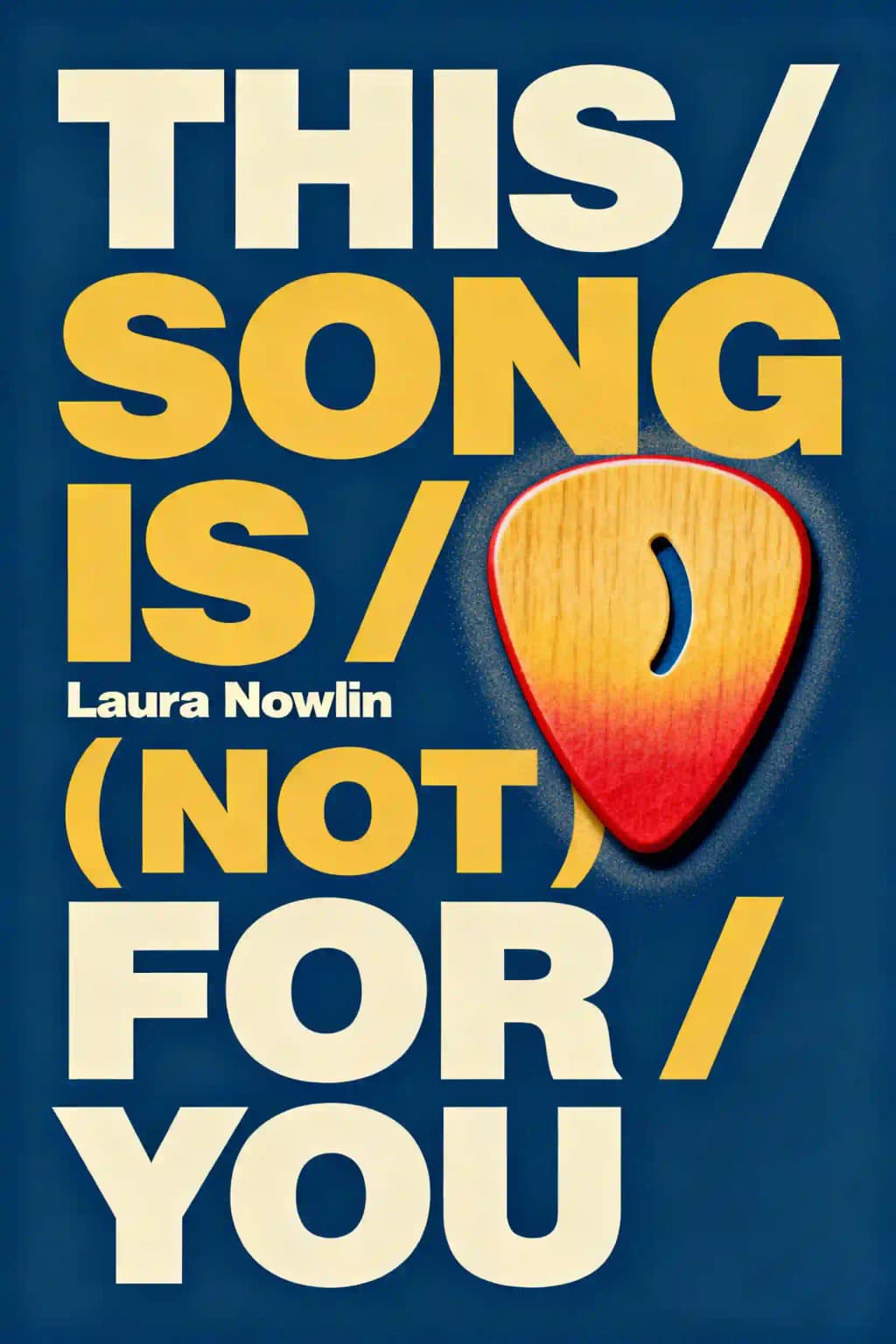
In a world where relationships are expected to follow rigid scripts, Laura Nowlin's "This Song Is Not For You" strikes a powerful chord of defiance. This tender exploration of unconventional love has developed something of a cult following among young adults seeking stories that validate complex emotional experiences. The novel has been praised by publications like Publishers Weekly for its "honest portrayal of teenage relationships that transcend traditional boundaries." Since its 2016 release, it has quietly influenced a generation of readers struggling to define their own identities and relationships in a world of expectations. The book's exploration of asexuality, polyamory, and artistic passion continues to resonate with readers seeking representation beyond mainstream narratives.
Chapter 2
The Harmonious Beginning of an Extraordinary Friendship
Senior year should be straightforward: Ramona and Sam, best friends and bandmates in "April and the Rain" for years, are preparing for their auditions at Artibus College of Music and Arts. Their musical connection transcends ordinary friendship - she's a talented drummer whose expressive faces mirror every beat, her custom rainbow-sparkled drum kit as vibrant as her personality. Sam is her perfect counterpoint: a thoughtful guitarist whose fingers dance across the strings while his mind drifts into meditative trances, lost in the music they create together. They share everything from half-eaten sandwiches to obscure musical references, finishing each other's sentences and communicating through subtle glances that speak volumes. Their music flows between them like a private language, each note carrying years of shared history and understanding.
Though Ramona harbors deep romantic feelings for Sam, she guards this secret carefully, burying it beneath layers of friendly banter and musical collaboration. Her heart races when he leans close to adjust her drumming technique or when their hands brush while setting up equipment, but she maintains the facade of platonic friendship. Sam, too, seems trapped in his own emotional maze - his lingering looks and protective gestures betray feelings that go beyond friendship, yet he remains paralyzed by the fear of disrupting their delicate balance.
Their carefully maintained duo dynamic shatters during their college auditions when Ramona encounters Tom in the waiting room. While Sam performs his carefully prepared piece for the admissions panel, Ramona finds herself drawn into conversation with Tom, whose genuine struggle with depression is evident in his haunting poetry and musical choices. Their discussion flows naturally from mainstream artists to the fringes of experimental music, with Ramona surprising Tom with her encyclopedic knowledge of noise artists like Merzbow, Prurient, and lesser-known figures like Masonna and Government Alpha. Their shared enthusiasm for pushing musical boundaries creates an instant connection.
By the time Sam emerges from his audition, still buzzing with adrenaline, Ramona has already mentally reconstructed their band's future with Tom in it - though neither Tom nor Sam knows this yet. The three end up at Jerry's All-Night Diner, where between bites of greasy fries and sips of chocolate milkshakes, Ramona formally presents her vision. She explains to Tom how their band needs someone who can bring an "avant-garde edge" through experimental vocals and noise elements, her eyes sparkling with excitement as she describes the possibilities.
Throughout the conversation, Tom observes the unconscious intimacy between Sam and Ramona - the way they automatically split their dishes without discussion, how Ramona steals Sam's pickles while he pretends not to notice, their shared glances that seem to carry entire conversations. When they insist they're just friends, Tom's skeptical expression speaks volumes. This moment marks the beginning of a complex triangular relationship that will reshape all their lives, as their musical collaboration becomes inextricably entangled with their personal dynamics.
Chapter 3
Musical Chemistry and the Birth of Vandalized by Glitter
When Tom arrives at their first practice session in Sam's mother's garage, the musical chemistry is immediate and electric. Tom's array of effects pedals - carefully arranged in a semicircle around his feet - creates "haunting electronic sounds" that weave seamlessly through Sam's intricate guitar work and Ramona's thunderous drumming. Their sound transforms into something fuller and more experimental, elevating beyond two friends "fooling around in a garage" into a legitimate band with genuine artistic ambitions. The concrete walls of the garage seem to vibrate with possibility as their individual styles merge into something entirely new.
As they continue to practice together, their musical connection deepens and evolves. Tom's experimental nature pushes them to explore unconventional instruments and sounds. During one particularly inspired session, he introduces his homemade PVC didgeridoo - crafted from hardware store pipes and decorated with swirling patterns - alongside Sam's authentic sitar (a family heirloom from his grandmother) and Ramona's polyrhythmic drumming. When Ramona dismisses her innovative approach as "just messing around," Tom highlights how she naturally finds rhythm in everything: tapping pencils during class, drumming on lunch tables, even playing the metal railings at school. Sam chimes in with the observation that becomes their creative breakthrough: "You already treat the whole world like your drum set." This simple statement awakens something in Ramona, helping her recognize that her instinctive percussion - the way she transforms everyday objects into instruments - isn't just fidgeting but genuine musical exploration.
Their evolving sound demands a new identity to match its uniqueness. The naming process becomes an event itself: a creative summit in Sam's garage featuring their ritual snack combination of dark chocolate, homemade garlic popcorn (Sam's mother's secret recipe), and Mexican orange soda. After hours of increasingly absurd suggestions, Tom shares the story of his recent arrest for a guerrilla art installation where he covered various public sculptures with biodegradable glitter. The arresting officer's exasperated comment - "Everything's been vandalized by glitter" - strikes them all as perfect. "Vandalized by Glitter" captures their essence: music that's simultaneously beautiful and disruptive, leaving listeners forever changed, like glitter that refuses to be ignored or forgotten.
The transformation of their sound becomes evident when they upload new recordings to their online platform. Their most dedicated fan, Nanami, who's followed them since their first garage recordings, comments: "Is this even the same band? The sound is so much fuller, more confident - like you've finally found your voice." This musical metamorphosis mirrors the personal evolution unfolding between the three friends, as their creative partnership intertwines with deeper emotional connections and unspoken attractions, adding layers of complexity to their already intricate dynamic.
Chapter 4
The Art of Rebellion: Glitter Bombing and Guerrilla Art
Tom's artistic expression extends beyond music into what he calls "Glitter in Odd Places" (GOP) - a guerrilla art project transforming mundane urban spaces into unexpected moments of wonder. His philosophy challenges conventional notions of public space and ownership: "I see artistic potential in everyday objects - concrete walls, light posts, trash cans, chain-link fences - and question why beautifying them is considered vandalism while corporate advertising is perfectly legal." He views each intervention as a small act of resistance against the growing commercialization of public spaces.
The project began as solo missions at night, with Tom carefully selecting locations that would maximize visual impact while minimizing property damage. He developed specific techniques: using eco-friendly glitter, weather-resistant adhesives, and targeting surfaces that wouldn't be permanently altered. His early works included crystalline patterns on abandoned phone booths, rainbow cascades down concrete barriers, and geometric designs on weathered utility boxes.
This rebellious artistic spirit eventually draws Ramona in, transforming their relationship through shared creative activism. On Valentine's Day, instead of exchanging traditional gifts, they execute their most ambitious project yet - "bombing St. Louis with love." Walking casually down the sidewalk as a young couple with a brown paper grocery bag, Tom pretends to tie his shoe while Ramona smoothly reaches into the bag containing a carefully crafted stencil and pink spray paint. Behind them, "LOVE IS ALL YOU NEED" dries on the sidewalk - their valentine to the city. They repeat this performance across dozen locations, creating a trail of love messages that commuters discover throughout their morning routines.
Their artistic rebellion deepens when Tom takes Ramona to an abandoned elementary school in the city's forgotten district. Together, they transform a broken chain-link fence into an art installation using rubber cement and light-blue glitter. As they work, Tom shares stories about the neighborhood's history - how it transformed from a thriving community to its current state, demonstrating how urban spaces evolve despite society's resistance to change. Their six-foot diameter creation turns the fence into "a shimmering border between this world scarred by drugs and poverty and another, perhaps better, place." Ramona's response - calling it "awesome, in the old-timey biblical meaning of the word" - captures their shared sense of creating something transcendent from decay.
The movement grows when Sam joins their artistic activism, bringing his own political edge to their interventions. Their most pointed piece targets a sexist fast-food advertisement showing a woman in a suggestive pose with a burger. Using their signature glitter technique, they modify it with the message "CONSUME CONSUME CONSUME AND DIE WITHOUT THINKING ABOUT IT" outlined in bold red sparkles. The piece remains untouched for weeks, with restaurant employees seemingly choosing to leave it up - a silent endorsement that delights Tom. "Most people are actually pretty smart and actually pretty cool," he observes. "They're just waiting for permission to show it."
These acts of artistic rebellion represent more than mere vandalism - they embody their shared vision for social transformation. Through each installation, they challenge not only conventional aesthetics but also deeper questions about consumerism, urban decay, and the right to shape public spaces. Their glitter bombs become symbols of resistance against the commodification of urban life, proving that beauty can emerge from unexpected places and that art can be a powerful tool for social commentary.
Chapter 5
Complex Identities: Navigating Asexuality and Polyamory
As Ramona and Tom begin dating, their relationship quickly becomes complicated by unspoken truths that challenge conventional notions of romance and partnership. Though Ramona finds Tom cute and is drawn to how he's "unapologetically himself" - particularly his passion for music and genuine way of connecting with others - she still harbors deep feelings for Sam that she can't simply switch off. Meanwhile, Tom grapples with a fundamental aspect of his identity he's never fully shared with anyone outside his immediate family: he's asexual, experiencing love and romantic attraction without sexual desire.
Tom's previous relationship with Sara became a painful turning point in his journey of self-discovery. After months of dating, Sara confronted him about their lack of physical intimacy, leading to a devastating conversation in her apartment. When she suggested he might be gay, he finally voiced the truth he'd been struggling to articulate: "I'm not gay. I'm not straight. I just don't really care about sex." He tried explaining that his love for her was real and profound - manifesting in wanting to share his life, his thoughts, and his dreams with her - but without sexual desire. Sara couldn't reconcile this, insisting everyone is inherently sexual and that he must be "in denial" or suffering from trauma. To her, their relationship lacked "the most basic human need," while to Tom, it had been everything he wanted: emotional intimacy, shared experiences, and deep connection.
This unresolved tension inevitably surfaces in his relationship with Ramona when she initiates physical intimacy, placing his hand on her breast during a quiet moment together. His lack of response creates a painful silence between them. Later, in a park near her condo where they often went to watch street musicians, Ramona directly confronts him about not wanting her physically. Tom reveals his asexuality, carefully explaining that while he doesn't want anyone sexually, his love for her is genuine and encompasses everything else - companionship, emotional connection, and romantic attraction. To his immense relief, Ramona responds with understanding and acceptance, sharing her own journey of questioning traditional relationship paradigms.
The final piece of their complex relationship puzzle falls into place when Ramona admits to Tom that she also loves Sam, and Sam loves her too - feelings that have persisted throughout their years of friendship and musical collaboration. Rather than reacting with jealousy or hurt, Tom suggests something revolutionary: they could all be together, seeing it as a perfect solution that honors everyone's needs and identities. This unconventional arrangement opens up possibilities none of them had previously considered viable.
Sam later explains this polyamorous relationship to his mother over coffee at their regular Sunday brunch spot. Though initially surprised, she cautiously accepts it as "mature," recognizing the thoughtful way they've approached their unique situation. The three develop a balanced dynamic that works for their individual needs - Sam and Ramona nurture their romantic and physical relationship, while Tom and Ramona maintain their deep emotional connection with mutually comfortable physical boundaries. Sam and Tom share a profound platonic love as friends and bandmates, their music becoming stronger through their honest connection. Their arrangement challenges traditional relationship models while demonstrating how love can exist in various forms, all equally valid and meaningful.
Chapter 6
Dreams and Diverging Paths: The Challenge of Growing Up
As senior year progresses, the trio's carefully constructed plans begin to unravel against the backdrop of college applications and mounting pressure about their futures. While Ramona remains steadfastly focused on attending Artibus to study piano and percussion, following in her deceased mother's footsteps as a professional musician, both Sam and Tom harbor increasingly heavy secrets about their diverging future plans.
Sam has been having regular meetings with his guidance counselor, Mr. Van Bueran, wrestling with his uncertainty regarding Artibus. Though music brought Ramona into his life and remains deeply important to him - the way it connects people, the rush of performing together, the shared language it creates - Sam gradually realizes he doesn't want it as his entire future. His true passion lies in chemistry and developing sustainable products, driven by a desire to solve real-world problems. He dreams of "a comfortable life, a nice house, maybe four kids" and making music because he wants to, not because his livelihood depends on it. Unlike Ramona who "breathes music" with every fiber of her being, Sam recognizes that while he has "some talent" and genuine love for music, he lacks the all-consuming drive necessary for a professional music career. His late-night practice sessions feel more like obligation than passion.
Meanwhile, Tom feels increasingly suffocated by conventional expectations and the predetermined path laid out before him. He yearns to "run, drive across America, write, make unprecedented music" rather than follow society's script. The prospect of a "safe, sane life" doesn't just bore him - it terrifies him to his core. He wants to work and improve the world, but not through traditional channels or institutional structures. His alternative plan involves traveling across the country, studying on his own terms, reading philosophical works when he chooses, and creating music and art to give away freely rather than pursuing formal education. During band practice, his improvisations become increasingly wild and experimental, hinting at his desire to break free.
The truth finally erupts one evening when they're lying on the cold concrete garage floor, discussing their imagined future at Artibus. Tom breaks first, his voice barely above a whisper: "I'm not going to Artibus," followed quickly by Sam's equally devastating admission that he's not going either. For Ramona, this revelation doesn't just disappoint - it shatters her entire sense of security and future certainty. Her response captures the depth of her fear and dependence: "We need to stay together. We need to keep the music together. I can't free-fall into adulthood without them. Without Sam, how will I stay sane? Without Tom, how will I be brave?" The garage, once their sanctuary of shared dreams, suddenly feels like a tomb for their collective future.
Chapter 7
The Declaration: Love Beyond Convention
After their painful revelations about diverging futures, Tom orchestrates a powerful moment of reconciliation that would reshape their understanding of love and friendship. He carefully chooses an abandoned warehouse near the Mississippi River - a vast, industrial space transformed by streams of afternoon sunlight filtering through broken windows. The setting itself becomes a metaphor for their relationship: raw, authentic, and beautifully imperfect.
On the weathered brick wall, Tom has painted three intertwined circles in vibrant cerulean blue, reminiscent of a Venn diagram but more fluid and organic. Beneath the circles, in bold letters that seem to pulse with conviction, he's written "THINK DIFFERENTLY, LOVE MORE." The message serves both as a declaration and an invitation to reimagine what relationships can be.
"Ramona is the heart," Tom explains, his voice echoing in the empty space. "Sam, you're our equal sign. I'm the question mark." Each circle represents their individual identities while their overlap illustrates their deep interconnection. The symbolism is deliberate - the heart representing passion and emotion, the equal sign suggesting balance and fairness, and the question mark embodying curiosity and openness to possibilities. "This isn't just a high school thing," he continues, his words carrying the weight of absolute certainty. "I'd been waiting my whole life to meet you guys. You're a part of me now, and no matter where any of us goes, I know I'm gonna know you for forever."
This profound declaration creates space for Sam and Ramona to navigate their own complicated feelings. Later, in an intimate moment carefully chosen for its privacy, Sam drives with Ramona, windows rolled up to ensure every word is heard. His confession comes out in a rush of honesty: "I love you. I'm sorry if that's a problem. And I want us to be friends no matter what. But anyway, I love you, and maybe I'm crazy, but I think there's a chance that you love me too." His words hang in the air, vulnerable and brave.
When Ramona acknowledges her dual love - for both Sam and Tom - Sam responds with remarkable emotional intelligence. "I know! And I love Tom too. I don't have sexual feelings for him, but I love him. He's massively important to me." He outlines a vision of love that transcends traditional boundaries, suggesting that if everyone loves everyone, they could create something unique and beautiful together. "I don't want to own you," he tells her, his voice soft but certain. "I just want to be near you and to love you."
This unconventional arrangement becomes their solution, allowing each person to fulfill their emotional needs while honoring their connections to one another. Sam and Ramona explore their romantic relationship with Tom's blessing and support. Tom maintains his deep emotional bonds with both while remaining free from sexual expectations that make him uncomfortable. Their musical collaboration continues to thrive, even as they prepare for different paths after graduation. The three circles Tom painted become their blueprint for a love that defies conventional categories - proving that sometimes the most beautiful relationships are the ones we have the courage to imagine differently.
Chapter 8
This Song Is Not For You: Finding Your Authentic Voice
The novel reaches its emotional crescendo at Tom's school's senior showcase, where Vandalized by Glitter prepares for their most significant performance yet. Backstage, amid the chaos of final sound checks and nervous energy, the three friends share an intimate moment discussing their diverging paths. Sam reveals his practical yet passionate plan to study sustainable chemistry at Saint Louis University while maintaining his connection to music through local bands and open mics. Tom explains his decision to work at Grift Craft, saving money for his dream of exploring Southeast Asia and documenting street musicians. Ramona, having earned a coveted spot at Artibus, outlines her ambitious dual focus on classical piano and experimental percussion - a combination that perfectly reflects her refusal to be confined by traditional boundaries.
When they finally take the stage, their first song - an experimental piece blending Sam's math-rock rhythms, Ramona's classical influences, and Tom's unconventional percussion - immediately divides the audience. A voice cuts through the polite applause: "What the hell was that?" The moment hangs in the air, threatening to shatter their confidence. But Tom, instead of shrinking from the criticism, steps forward to the microphone. His voice steady and clear, he addresses the crowd: "This song is not for you" - a declaration that becomes both a defense and a manifesto. He explains that their music, like their relationship, exists not for external validation but for the pure joy of creation and connection.
Sam responds with an encouraging thumbs-up, his quiet support speaking volumes about their bond. Ramona's playful wink across the stage communicates volumes of shared understanding. Their final song emerges not as a performance but as a celebration - three musicians playing purely for the love of their craft and each other.
This pivotal scene crystallizes the novel's core theme: authentic self-expression transcends the need for universal acceptance. Their polyamorous relationship mirrors their musical style - unconventional, complex, and beautiful in its own right. Just as their three-way romance challenges traditional relationship structures, their music defies easy categorization, blending genres and breaking rules with purposeful abandon.
As they prepare for their separate journeys - Ramona to the prestigious halls of Artibus, Sam to the laboratories of Saint Louis University, and Tom to the creative environment of Grift Craft - they carry this fundamental truth with them. Their love, like their music, will continue to evolve and adapt. Through distance and change, they've learned that maturity isn't about fitting into predetermined boxes but about having the courage to create new ones.
The novel's conclusion reinforces that the most profound art - whether in music, love, or life - often emerges from daring to challenge conventions. Their story becomes a testament to the beauty of writing one's own rules, composing one's own melody, and finding harmony in unexpected places. The title "This Song Is Not For You" transforms from a defensive statement into an anthem of self-acceptance and artistic integrity, reminding readers that true fulfillment comes not from meeting others' expectations but from being unapologetically authentic.