Chapter 1
When Strength Becomes Weakness: The Hidden Dangers of Power
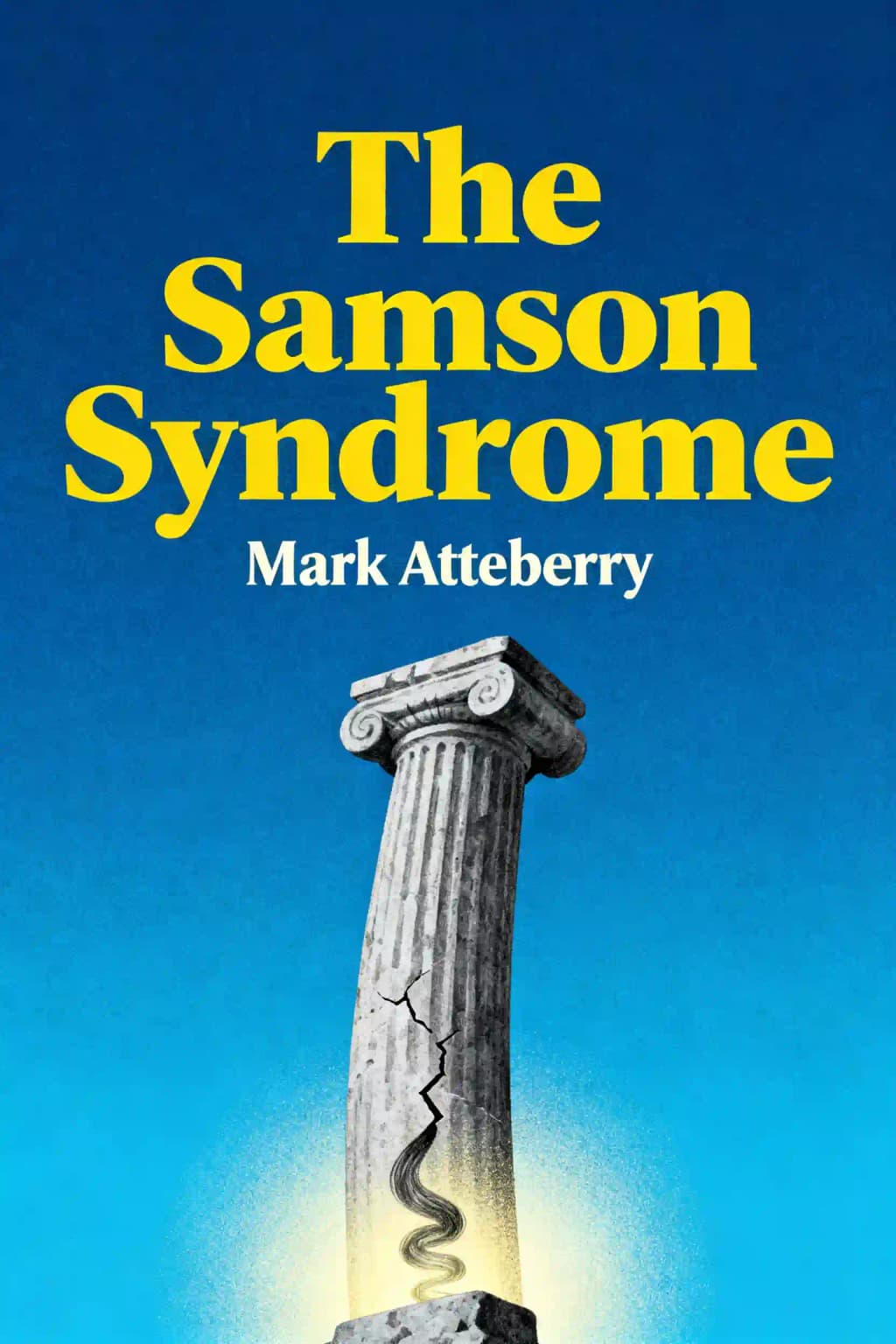
The Samson Syndrome has become a cultural touchstone for understanding why powerful men fail. Mark Atteberry's masterful exploration of this biblical tale has influenced everyone from sports coaches to Fortune 500 executives since its publication. Even Oprah Winfrey once cited it during a discussion on self-sabotage, noting how "we often destroy what we've worked hardest to build." The book's enduring appeal lies in its uncomfortable truth: the very qualities that make men successful-strength, confidence, ambition-can become the instruments of their downfall. In a world where celebrities and politicians regularly fall from grace through scandals, Atteberry's insights feel more relevant than ever, offering a roadmap for avoiding the pitfalls that have claimed so many promising lives.
Chapter 2
The Fatal Pattern: How Strong Men Disregard Boundaries
From our earliest days, we encounter boundaries-from playpens to parental rules-against which we naturally rebel. Yet these restrictions protect us from harm. God established specific boundaries for Samson through the Nazirite vow: avoiding strong drink, dead bodies, and cutting his hair. These weren't arbitrary restrictions but divine guardrails designed to keep Samson's impulsive, alpha-male personality from spinning out of control.
Unfortunately, Samson respected these boundaries only when convenient, believing his strength would rescue him from any trouble. Many powerful men follow this pattern, gradually compromising their values through a series of small concessions, always thinking "I can handle it." Consider Daniel Dukes, who ignored SeaWorld's boundaries and died swimming with a killer whale-he drastically underestimated the danger, just as men who disregard divine restrictions do.
The consequences of boundary-crossing are inevitable and twofold. First, you become shackled by your sin. Samson never intended to fight against God-he was just seeking pleasure. But his sin gradually entangled him, evident when even a close call with Philistine soldiers while visiting a prostitute wasn't enough to change his ways. Today's rehab centers and therapy offices are filled with people who never intended to become so ensnared in their sins.
Second, you face public shame. King David's affair with Bathsheba illustrates this perfectly. What began as a one-night stand led to pregnancy, then an elaborate cover-up including murder. Though David thought his sin was hidden, God sent Nathan with a chilling message: "You did it secretly, but I will do this to you openly." God consistently exposes strong men's secret sins, as countless humiliated public figures have discovered.
Fortunately, there's hope for those who've crossed boundaries. First, remember the joy of living within God's parameters. Like Jerry, a successful police officer who had lost his spiritual purpose until a Bible-college reunion invitation started his journey back. Second, renounce activities that lure you outside God's boundaries. Third, rebuild the fences you've trampled, whether prayer disciplines or ministry involvement. Fourth, rejoice in God's forgiveness, which unlike human forgiveness is immediate and complete when we genuinely repent.
Chapter 3
The Battlefield of Desire: When Lust Controls the Strong
When we first meet Samson in Judges 14, he's walking through the Philistine village of Timnah. Rather than gathering intelligence or planning to lead Israel, he's merely checking out women. This begins his lifelong battle with lust-a common struggle for men of power who are considered attractive by society regardless of their physical appearance.
Lust causes people to ignore spiritual considerations. When Samson's parents questioned his interest in a pagan Philistine woman, he dismissed their concerns, caring only about her physical attractiveness. This illustrates how lust causes us to act on animal instinct rather than human reason. Unlike animals, humans were designed by God for sexual experiences with spiritual dimensions-we're the only creatures anatomically designed for face-to-face mating, where women can experience orgasm, and where romance plays a central role. These distinctions show that God intended human sexuality to transcend mere procreation and serve as relationship-building within marriage.
More dangerously, lust causes people to ignore God's plan. Throughout history, lust has distracted righteous beings from divine purpose. From Genesis 6, where the "sons of God" pursued beautiful women against divine will, to Samson himself, who was measuring for a tux when he should have been planning the Philistines' defeat. Instead of becoming the Moses-like deliverer God intended, Samson was perpetually distracted by sexual gratification.
When we engage in secret sexual behaviors-whether through pornography, chat rooms, masturbation, or illicit relationships-we're allowing lust to control us and divert us from God's plan for our lives. To overcome sexual struggles, follow four crucial steps: First, get right-confess your sin completely to God without minimizing it. Second, get away-cut yourself off from anything that tempts you, "sinking the ships" that allow retreat into sin. Third, get help-recognize that sexual addiction requires outside assistance, as willpower alone often fails. Fourth, get busy-fill the time previously spent in sexual sin with productive activities.
Living with hidden sexual sin means constant fear of exposure and devastating consequences. As David wrote after confession: "All my guilt is gone"-freedom that awaits anyone willing to follow these steps.
Chapter 4
The Deaf Ear: Why Strong Men Reject Valuable Counsel
Strong men often reject valuable advice due to pride or stubbornness. Though good advice abounds in our information age, it's worthless unless followed-like medicine that isn't taken. Samson exemplifies this tendency, dismissing his parents' legitimate concerns about his Philistine girlfriend with the terse demand: "Get her for me. She is the one I want." His stubborn rejection of their counsel set in motion a chain of events bringing only frustration and heartache.
The truly great understand the value of good counsel. Tiger Woods, despite his knowledge and talent, relies on coach Butch Harmon to spot tiny flaws invisible to himself. U.S. Presidents surround themselves with advisors not from weakness but from recognizing no one person can see every nuance of every problem. Even Moses, when his father-in-law Jethro pointed out how inefficiently he was handling disputes, listened and implemented a new judicial system.
Wise men carefully select their advisors. First, listen to those who disagree with you-they stretch your thinking. President Wilson once hired the most intelligent member of the opposing party to "keep me from going blind." Second, heed those who truly love you, despite familiarity sometimes breeding discourtesy. Third, seek counsel from those who've achieved what you desire-taking marriage advice from someone divorced four times makes little sense. Fourth, listen to those demonstrating wisdom, regardless of appearance or credentials-like the janitor who died leaving millions in investments. Finally, value those who know God's Word.
Effective listening requires six steps: Reserve judgment rather than assuming you know what's coming; Resist interrupting, which fragments thoughts; Remain calm even if the messenger becomes agitated; Review by paraphrasing to ensure understanding; Reflect on the advice through prayer and Scripture; then Receive or Reject. Strong men are typically good talkers, comfortable barking orders, but as Benjamin Disraeli noted, "God gave us two ears and one mouth because He intended for us to do twice as much listening as talking."
Chapter 5
Breaking the Rules: The Strong Man's Dangerous Game
Even in rare moments of tranquility, Samson found ways to sin, revealing a fundamental aspect of his character as troubling as his battlefield exploits or sexual affairs. Rule-breakers like Robert Downey Jr. and David Wesley demonstrate how disregarding rules leads to devastating consequences. Downey's drug addiction derailed his promising career, while Wesley's reckless racing with teammate Bobby Phills resulted in Phills' tragic death.
Scripture repeatedly emphasizes obedience-not because we'll always like the rules imposed by God, government, parents, or employers, but because following them keeps us from trouble. Just as parents establish boundaries to mold children into decent humans and the military imposes strict discipline to transform recruits into soldiers, God used the Ten Commandments and various regulations to shape the Israelites into a righteous people distinct from surrounding nations. Every rule, from dietary restrictions to sacrificial systems, was designed to lead them toward righteousness and prepare them for the coming Savior.
God's comprehensive rules provide clear benchmarks for measuring our spiritual progress, as demonstrated by a young man who realized he'd broken nine of the Ten Commandments. Whether it's God's Word for personal life, job descriptions for professional life, budgets for finances, or doctor's orders for health, rules provide essential guidance in an otherwise confusing world.
To evaluate rules properly, consider five key questions: Who wrote the rule and do they have legitimate authority? Does the rule violate God's will or your conscience? Does it have a meaningful purpose? What would happen if you disobeyed it? What would happen if everyone disobeyed it?
Most rules are good and should be followed. The basketball coach who made players run laps for missed free throws proved the value of seemingly harsh rules when the team's percentage improved from 58% to 69%. Habitual rule breakers, like Samson, always end badly.
Chapter 6
The Illusion of Cleverness: When Strong Men Outsmart Themselves
Strong men often fall victim to overestimating their intelligence, as illustrated by the hapless criminal who robbed a laundry truck thinking it was an armored car. Samson displayed this same flaw when he challenged his Philistine groomsmen with a seemingly unwinnable riddle, not anticipating they would cheat by threatening his wife to get the answer.
Strong men fall prey to seven deadly enemies of discernment mentioned in Proverbs. First is pride, which caused Samson to overestimate himself and underestimate his opponents. Second is liquor, which clouds judgment, as Solomon noted "whoever is led astray by drink cannot be wise." Third is anger, illustrated by Thomas Junta who killed Michael Costin in a rage over hockey practice. Fourth is lust, which destroyed countless marriages, including those of executives exposed by an airline's "Fly Your Wife for Free" promotion. Fifth is greed, which led wealthy Sotheby's chairman A. Alfred Taubman to criminal price-fixing. Sixth is hatred, demonstrated by college students whose snake "prank" accidentally caused a girl's death. Seventh is impatience, which causes speeding that costs society thirty billion dollars annually and claims fifteen thousand lives yearly in accidents.
To overcome poor judgment, we can learn from Joseph's four secrets of discernment displayed when facing Potiphar's wife's seduction. First, look around and see your blessings-Joseph recognized his privileged position wasn't worth risking for momentary pleasure. Second, look within and see your integrity-Joseph refused to compromise his moral code, understanding that even hidden sins damage self-respect. Third, look forward and see your future-Joseph recognized no future existed with another man's wife, unlike those who enter situations with 100% chance of disaster. Fourth, look up and see your God-Joseph's ultimate motivation was avoiding sin against God.
Had Samson employed these four secrets, his life might have rivaled Moses in greatness.
Chapter 7
The Weapon of Rage: When Strong Men Unleash Their Anger
When Samson discovered his Philistine groomsmen had blackmailed his wife to solve his riddle, his fury led him to kill thirty men in Ashkelon. Though empowered by God's Spirit, his anger lacked righteous dimension-he wasn't thinking about glorifying God but satisfying his lust for revenge. Throughout history, strong men have similarly employed a "scorched earth" policy in their relationships, destroying anyone who crosses them.
Anger often becomes a tool because it produces results: getting what you want, creating an image of toughness, sending warnings to others, and delivering an adrenaline-induced euphoria. But anger is addictive-providing a rush and feeling of invincibility. Bobby Knight exemplifies someone whose anger has become his identity, with people expecting his outbursts rather than recognizing his coaching brilliance.
Anger must be intensified to maintain effectiveness-what starts as yelling escalates to throwing objects, then to physical violence. It produces collateral damage-like military explosions, angry outbursts wound innocent bystanders, especially children. And anger stunts spiritual growth-you can never grow stronger than your biggest weakness.
To control anger, follow Philippians 4:8 by focusing on what is true, honorable, and right. Another strategy is loosening your grip on money, as the love of money causes tremendous anger and conflict. The happiest people are neither the poorest nor richest, but those in the middle with "enough, but not too much" who have fewer reasons to be angry.
These strategies aren't meant to eliminate all anger but to prevent its misuse, illustrating with a fable about a lion who stopped biting villagers but needed to maintain his ability to roar. True strength lies not in wreaking havoc but in showing restraint, as Proverbs 16:32 states: "It is better to be patient than powerful; it is better to have self-control than to conquer a city."
Chapter 8
The Cycle of Failure: Why Strong Men Repeat Their Mistakes
Despite his disastrous marriage to the girl from Timnah who nagged and betrayed him, Samson inexplicably returned to her with a peace offering. Later, he allowed Delilah to extract his secret just as his first wife had done with his riddle. Many gifted people sabotage their potential through recurring mistakes, like a talented preacher who repeatedly ruins ministries by failing to control his tongue.
Even the strongest men remain human with inherent weaknesses, as Paul confessed in Romans 7: "I can't make myself do right. I want to, but I can't." In a personal experiment, I tried to go a day without disappointing God but failed after just 37 minutes, demonstrating why we need a Savior.
Many strong men have blind spots-weaknesses they cannot recognize. David nearly led a bloody raid against Nabal until Abigail helped him see his error, prompting him to thank God for preventing him from carrying out vengeance. Others have untended spiritual weaknesses, as seen in Samson's unaddressed sexual issues. And excessive pride prevents learning from mistakes, as when Samson tried reconciling with his wife to save face rather than acknowledging their incompatibility.
To break the cycle of repeated mistakes, follow a four-step plan: First, sign up with a friend who will hold you accountable. Unlike biblical figures who had companions (Moses had Aaron, David had Jonathan), Samson was always alone, making him vulnerable to Satan's attacks. Just like Jack, who left his Christian buddies at the auto shop to drive trucks alone and fell into temptation, isolation makes you an easy target.
Second, give up your rationalizations. Stop making excuses like "That's just the way God made me" and claim the power you have in Christ. Third, line up your life with God's Word. Like trying to chalk a baseball line without a string guide, eyeballing your way through life leads to crooked paths. Finally, power up with the Holy Spirit. Though Samson used God's power for physical feats, he never employed it against temptation. Only by emptying yourself of pride and surrendering completely can you tap into the Spirit's power to overcome besetting sins.
Chapter 9
The Pedestal Problem: When Strong Men Fall to Pride
After his greatest military victory, when he slaughtered a thousand Philistines with only a donkey's jawbone, Samson composed a self-glorifying poem: "With the jawbone of a donkey, I've made heaps on heaps! With the jawbone of a donkey, I've killed a thousand men!" This moment of pride reveals how deeply the Samson Syndrome had corrupted his character.
Pride isn't merely an annoyance but a dangerous sin condemned throughout Scripture. The Bible warns that "haughty eyes" top God's list of detestable things, and that "the Lord despises pride." To determine if you've fallen prey to this aspect of the Samson Syndrome, examine four warning signs: First, an absence of heartfelt worship, as pride and worship never coexist (though pride and religion often do). Second, increasing foolishness, as "pride goes before destruction" and boastful words invite disaster. Third, isolation, as strong men with big egos intimidate others and drive people away. Fourth, inevitable disappointment, because whatever fuels your pride-looks, athletic ability, business savvy-is temporary and will eventually be surpassed or diminished.
The cure for sinful pride comes through remembering three things. First, remember what you are-an imperfect human being. Giving up the Superman complex and learning to delegate responsibility frees you from unnecessary stress. Second, remember why you're here-to worship and serve your Creator. Jesus challenged this directly in Mark 8, asking what benefit there is in gaining the whole world but losing your soul. As one poem reminds us, having your name inscribed in heaven matters more than any earthly fame. Third, remember who you serve-like Nehemiah, who left his comfortable position to rebuild Jerusalem's walls, strong men face "Nehemiah moments" where they must choose between comfort and sacrifice. True humility places God's interests above your own.
Chapter 10
The Risk Factor: When Strong Men Gamble With Their Future
Strong men often push the limits of good judgment, risking health, reputation, and relationships. Like Evel Knievel's infamous 1974 Snake River Canyon jump attempt-a stunt with virtually no chance of success that nearly cost him his life-Samson put himself in danger by visiting a Philistine prostitute in Gaza, where enemies gathered to capture him.
We face four categories of risks. First, unavoidable risks are simply part of daily life-like slipping in the shower despite taking normal precautions. Second, necessary risks include situations like military operations where soldiers risk their lives returning to a battlefield to recover fallen comrades. This "band of brothers" mentality, while dangerous, is essential for military effectiveness as every soldier needs to know their team will support them completely.
Third, calculated risks involve weighing options when multiple choices exist. Army doctors who deliberately exposed themselves to yellow fever to prove mosquitoes transmitted the disease took such risks. These calculated risks often bring the biggest rewards when carefully considered.
Fourth, foolish risks result from strong men believing they're invincible. Like Samson, who grew complacent with each consequence-free indulgence, many men take unnecessary chances that lead to disaster-whether keeping venomous snakes as pets or engaging in marital infidelity. The danger compounds when we don't get caught, as it encourages further risk-taking.
To avoid foolish risks, ask six essential questions: Are the rewards worth the potential consequences? Have you fully researched the risk? What has happened to others who took the same risk? What's your motivation? What will life be like if you don't take this risk? What does the Bible say about what you're thinking of doing?
The Bible serves as a lamp for your feet and light for your path, showing where Satan's mines are hidden. Strong men often fail to give God's Word proper attention, relying instead on their own strength and cunning-a dangerous gamble that rarely pays off.
Chapter 11
The Heart of the Matter: When Strong Men Can't Connect
Twenty years after his first romantic disaster, Samson falls for Delilah, showing he's learned nothing about love. Just as with the girl from Timnah, he remains aloof and standoffish, refusing to share his innermost feelings until forced. This wasn't caution-his eventual sharing of his secret proves he trusted Delilah completely. Samson simply struggled with intimacy, as do many strong men today.
Most marriages suffer from too many walls and secrets-sharing beds but not feelings, with schedules full but hearts empty. One young mother described her marriage: "We don't have a marriage, we have a business. We make money, pay bills, and raise kids, period."
Building marital intimacy begins with the proper mindset. First, it takes two to build intimacy-unlike household chores that can be divided, intimacy requires total involvement from both spouses. The Bible commands husbands to love their wives as Christ loved the church, but never commands wives to love husbands. This is because romantic love grows through a series of overtures and responses, with husbands meant to take the proactive role in creating an environment where love flourishes.
Second, intimacy takes time. True intimacy extends far beyond sex-it comes from peeling away all layers of another person's nature to access their soul, knowing their thoughts, sharing their feelings, and understanding their needs. This level of familiarity only comes through years of hard work and shared experiences.
Third, intimacy takes trouble. Hard times force couples to unite, revealing hidden strengths and noble qualities never apparent in good times. Like Jackie, diagnosed with terminal cancer at forty-two, whose illness transformed her career-focused marriage into one of profound connection.
After gaining the right perspective on intimacy, men must apply it daily through several practical steps. First, spend quality time with your wife-not just proximity but meaningful connection. Second, give your wife the gift of words. The myth that men don't talk is false-they simply need to discuss subjects that matter to their wives. Third, protect the dignity and privacy of your marriage. Keep intimate details about your sex life, finances, and private conversations confidential. Fourth, make your wife your primary source of emotional support. Many affairs begin not with sex but with emotional bonds formed through sharing feelings with coworkers.
Chapter 12
The Grace Beyond the Rubble: Finding Redemption in Failure
Surprisingly, Samson's story doesn't end in the rubble of a Philistine temple but continues in Hebrews 11, where he appears among Bible heroes who "overthrew kingdoms, ruled with justice, and received what God had promised them." This isn't because Samson was misunderstood or better than portrayed-it's a tribute to God's grace. After studying Samson's life in detail, I'm in awe of a God gracious enough to tolerate and use someone like him.
If I were in charge, I would have given up on Samson around his twenty-fifth birthday and found someone who would take the Nazirite vow seriously. But God stuck with him, confirming that "The Lord our God is merciful and forgiving, even though we have rebelled against him." Still, Samson's life remains a study in missed opportunities-perhaps no one in the Bible did so little with so much.
There's a little Samson in all of us. We're capable of great things with God's help, but never more than one bad choice away from humiliation. By understanding our tendencies and committing wholly to God, we can fulfill our calling and remain faithful until death.
Like Lou Gehrig, one of the strongest men in baseball history, who exemplified gratitude even when facing ALS, we can choose how to respond to our strengths and weaknesses. In his famous 1939 Yankee Stadium speech, he called himself "the luckiest man on the face of the earth" despite his terminal diagnosis, expressing gratitude for teammates, fans, and family.
The Iron Horse left behind impressive statistics, but his most worthy contribution was showing that strong men can indeed be humble and grateful. In the end, that may be the most important lesson from The Samson Syndrome: true strength isn't found in physical power, sexual conquest, or battlefield victories, but in the character to use our gifts wisely, the humility to seek and follow good counsel, and the wisdom to stay within God's boundaries-even when we have the strength to break them.