Chapter 1
A Journey Through Time and Identity: The Missing Sister
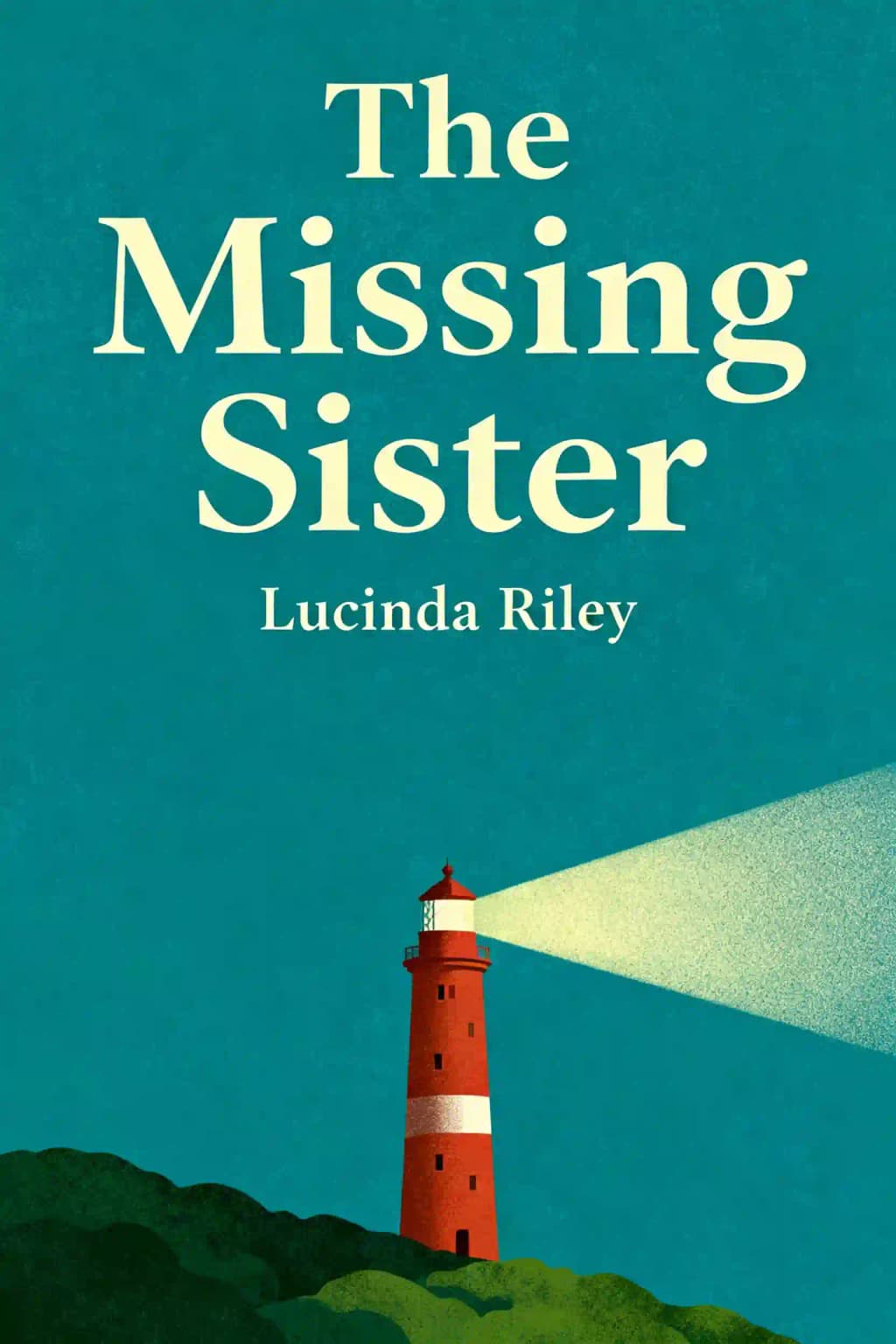
Have you ever wondered what it would feel like to discover your entire life was built on a hidden past? Imagine the shock of learning that the person you believed yourself to be was constructed on secrets and lies, yet finding that this revelation connects you to a family you never knew existed. This is the emotional journey at the heart of Lucinda Riley's "The Missing Sister," the penultimate installment in her bestselling Seven Sisters series. Since the series began in 2014, it has sold over 30 million copies worldwide and been translated into 37 languages, captivating readers with its blend of historical fiction, family drama, and global adventure. The series has attracted celebrity fans including Kate Winslet, who reportedly called it "addictive storytelling at its finest," and has been optioned for a major television adaptation. Riley's masterful interweaving of present-day narratives with richly detailed historical storylines creates an immersive reading experience that transcends typical historical fiction.
Chapter 2
The Search for the Missing Seventh Sister
The D'Apliese sisters-Maia, Ally, Star, CeCe, Tiggy, and Electra-were all adopted as babies by their enigmatic billionaire father, whom they affectionately called "Pa Salt." Named after the stars in the Pleiades constellation, the sisters were raised in their father's magnificent home on Lake Geneva, known as Atlantis. When Pa Salt dies unexpectedly, he leaves each daughter clues to her origins-except for the seventh sister, Merope, who was never found.
In previous books, each sister followed her clue to discover her birth heritage, uncovering rich historical narratives spanning from Brazil to Norway, Kenya to Australia. Now, with Pa Salt's funeral approaching, the sisters intensify their search for their missing seventh sister, following clues that lead them to New Zealand, where they meet Mary-Kate McDougal, a young music graduate who possesses a distinctive emerald ring with seven points-identical to the one in the drawing Pa Salt left behind.
CeCe and her partner Chrissie are the first to make contact with Mary-Kate at her family's vineyard in New Zealand's Gibbston Valley. Mary-Kate, still grieving her father's recent death, is surprised to learn the ring her mother gave her for her twenty-first birthday might connect her to these strangers. When they discover Mary-Kate's mother "Merry" is traveling the world on what she calls a "Grand Tour," the sisters begin a global chase to find her, sensing she holds the key to the mystery.
As the sisters track Merry from New Zealand to Norfolk Island, Toronto, and finally London, they notice something peculiar-Merry seems to be deliberately avoiding them, even fleeing locations when she learns they're coming. This cat-and-mouse game raises questions: Why is Merry running? What secret is she protecting? And could Mary-Kate-or perhaps Merry herself-be the missing seventh sister?
Chapter 3
Dual Timelines: Present-Day Mystery and Historical Drama
Like previous books in the series, "The Missing Sister" operates on dual timelines, masterfully weaving together contemporary mystery with historical drama. In the present day, we follow the D'Apliese sisters' increasingly urgent search for their missing sibling, while a parallel historical narrative gradually unveils the complex events that shaped Merry's life and ultimately led to her disappearance.
The contemporary storyline traverses multiple continents, from the sun-drenched vineyards of New Zealand's Marlborough region to the bustling streets of Dublin and the windswept coastline of West Cork, Ireland. As Ally D'Apliese journeys to France to meet Mary-Kate's brother Jack, she finds herself drawn into an unexpected romance that both enriches and complicates her mission. Their growing connection provides moments of tenderness amid the intensity of the search, while adding another layer of emotional complexity to the unfolding drama. Meanwhile, Star - typically the most reserved of the sisters - partners with her theatrical friend Orlando to orchestrate an elaborate scheme at London's prestigious Claridge's Hotel. Their plan to pose as aristocrats demonstrates both desperation and ingenuity, as they attempt to penetrate Merry's carefully constructed defenses.
When Merry finally ceases her decades-long flight, she returns to Ireland - a homeland she abandoned thirty-seven years earlier under circumstances so traumatic she swore never to return. Accompanied by her protective son Jack and later joined by her daughter Mary-Kate, she must confront the ghosts of her past in the very place she tried so hard to forget. Through her reunion with childhood friend and godfather Ambrose - now in his eighties but still sharp-minded - we begin to understand the cascade of tragic events that forced her to flee. The fear that has haunted her every step becomes palpable as layers of long-buried secrets gradually come to light.
The narrative structure proves particularly effective through Riley's careful control of information flow. Like a master puppeteer, she releases crucial details at precisely the right moments, allowing readers to assemble the puzzle pieces alongside the characters themselves. Each revelation - whether it's a forgotten photograph, a cryptic letter, or a chance encounter - simultaneously answers existing questions while raising new ones. This creates an irresistible momentum that propels the story forward across both geographical boundaries and temporal planes, keeping readers thoroughly invested in both timelines until they inevitably converge in a powerful climax.
The dual timeline approach also serves to highlight themes of inheritance, identity, and the way past decisions echo through generations. As the modern-day sisters piece together their family history, they discover that understanding their past is crucial to securing their future.
Chapter 4
The Irish War of Independence: A Nation's Struggle
The historical timeline begins in 1920 Ireland during the Irish War of Independence, following nineteen-year-old Nuala Murphy, whose diary Merry discovers among her possessions. Through Nuala's eyes, we witness the brutal reality of Ireland's fight for freedom from British rule.
Nuala lives with her family at Cross Farm in West Cork, which serves as a safehouse for IRA volunteers fighting against British forces. While nursing the wounded Philip Fitzgerald, son of the Anglo-Irish landowners at Argideen House, Nuala develops a complex friendship with him despite their opposing loyalties. Their relationship challenges her black-and-white view of the conflict, forcing her to see the humanity in someone she's been taught to consider an enemy.
Riley's depiction of this period is unflinching in its portrayal of violence and divided loyalties. We see how the conflict tears apart communities and even families, particularly when the Anglo-Irish Treaty of 1921 creates a schism between those who accept the compromise of a Free State (still part of the British Empire) and those who continue fighting for a fully independent republic.
What makes this historical narrative particularly powerful is its focus on women's roles in the struggle. Through Nuala and the women of Cumann na mBan (the women's auxiliary of the IRA), Riley highlights how women maintained households, nursed the wounded, carried messages, and gathered intelligence while living under constant threat of raids and reprisals. This perspective offers a fresh angle on a historical period often told through male experiences of combat.
Chapter 5
The Weight of Family Secrets
As Merry reconnects with her Irish roots, we learn that she was raised as Mary O'Reilly in rural West Cork during the 1950s and 60s, in a landscape marked by ancient stone walls and windswept coastlines. Through vivid flashbacks to her childhood, we discover she was an exceptionally bright child who found solace in books borrowed from the traveling library van, eventually winning a prestigious scholarship to St. Catherine's boarding school in Dublin. This achievement represented not just academic success, but an escape from the grinding poverty and limited opportunities of farm life - where most girls her age were expected to marry local boys or seek domestic work in the city.
The revelation that Merry herself was adopted creates a profound parallel between her and Mary-Kate, both women raised by loving families who weren't their biological parents. This connection deepens when Mary-Kate learns her birth mother was a seventeen-year-old medical student at Trinity College who gave her up for adoption during an era when unmarried mothers faced severe social stigma. The shame and secrecy surrounding both adoptions reflect Ireland's complex relationship with illegitimacy and family honor during the mid-twentieth century.
One of the most powerful themes in the novel is how family secrets shape identities across generations, creating ripples that extend far beyond their original circumstances. We witness how Nuala's experiences during the Irish War of Independence - particularly the night she watched British soldiers burn her family home - echo through the decades, affecting her daughter Maggie (Merry's adoptive mother) and eventually Merry herself. The trauma of violence and loss creates patterns that repeat across generations: silence at dinner tables, unexplained anxieties, and unspoken rules about what can and cannot be discussed.
This theme resonates particularly in the character of Bobby Noiro, Merry's childhood friend whose family history of mental illness and violence ultimately drives her from Ireland. Bobby's grandfather was institutionalized after participating in the Easter Rising, and this legacy of political violence and subsequent mental breakdown haunts her family. Bobby's obsession with Irish history and virulent hatred of the British represents how unresolved historical trauma can poison the present when not properly understood and processed - a pattern that manifests in her increasingly erratic behavior and eventual breakdown. Through Bobby's story, we see how family secrets don't simply disappear; they transform into new shapes, affecting each generation until someone finally confronts the truth and breaks the cycle of silence.
Chapter 6
The Meaning of Home and Belonging
Throughout "The Missing Sister," characters struggle with questions of home and belonging. Where do we truly belong? Is it with the family that raised us, or is there an innate connection to our biological origins? Can we ever truly escape our past, or does it inevitably shape who we become?
For Merry, who fled Ireland and reinvented herself in New Zealand, home became a place of safety and new beginnings. Yet her Irish identity remained an essential part of her, evident in her accent, her love of mythology, and the values she instilled in her children. Her journey back to Ireland represents a reconciliation with her past, allowing her to integrate the different aspects of her identity rather than keeping them separated.
Mary-Kate faces similar questions about identity and belonging. Having always felt secure in her family despite knowing she was adopted, her encounter with the D'Apliese sisters awakens questions about her origins. Yet unlike some adoption narratives that focus on the search for biological parents as the key to identity, Riley presents a more nuanced view. Mary-Kate values knowing her birth mother's identity but doesn't feel this information fundamentally changes who she is or where she belongs.
This theme extends to the D'Apliese sisters themselves, who have spent the series discovering their diverse origins while maintaining the bonds they formed as adoptive siblings. Their family represents a chosen family that transcends blood ties, united by their shared upbringing and love for their adoptive father.
Chapter 7
The Power of Female Solidarity
One of the most striking aspects of "The Missing Sister" is its profound portrayal of women supporting each other across generations and circumstances. From the courageous women of Cumann na mBan who risked their lives for Irish independence to the determined D'Apliese sisters searching for their missing sibling, female solidarity forms not just the backbone but the very heart of the narrative. These relationships demonstrate how women's strength often emerges from their connections to one another, particularly in times of adversity.
This solidarity is particularly evident in the complex and evolving relationship between Nuala and her sister Hannah during the Irish War of Independence. Their bond transcends mere familial obligation - they serve as each other's confidantes, protectors, and moral compass. Despite their eventual political differences after the Treaty, with Nuala supporting the Free State and Hannah remaining steadfast to the Republican cause, their early support for each other provides crucial strength during the most dangerous periods of the conflict. They share everything from secret messages to safe houses, demonstrating how sisterhood can survive even the most divisive political circumstances.
Similarly, Merry's sister Katie becomes her emotional anchor when she returns to Ireland. Katie's unwavering support helps Merry navigate the challenging process of piecing together their family history and confronting painful memories. Their relationship exemplifies how sisters can bridge temporal and emotional gaps, with Katie providing both practical assistance in researching their past and emotional support as Merry uncovers difficult truths about their family's involvement in Ireland's struggle for independence.
In the contemporary timeline, the bond between the D'Apliese sisters emerges as a formidable force driving the search for their missing sibling. Each sister brings unique strengths to their shared quest - Ally's fierce determination and leadership skills, Star's quiet but acute perception, CeCe's straightforward approach and artistic sensitivity, Tiggy's spiritual intuition and healing presence, Electra's worldwide connections and passionate energy, and Maia's steady wisdom and linguistic abilities. Together, they form a powerful unit capable of solving the mystery their father left behind, demonstrating how different personalities and skills can complement each other in pursuit of a common goal.
This emphasis on female relationships offers a refreshing and necessary counterpoint to traditional narratives that center male experiences or prioritize romantic relationships over female friendships and sisterhood. Riley shows how women's connections to each other provide essential support during times of crisis and transformation, whether in the context of national revolution, family secrets, or personal growth. These bonds prove particularly vital in situations where traditional power structures fail to protect or support women's interests, illustrating how female solidarity can create alternative networks of power and support.
The novel also explores how these bonds transcend generations, with stories and strength passed down through maternal lines. The modern-day sisters find inspiration and guidance in the historical accounts of women's courage and solidarity, creating a powerful narrative thread that connects past and present struggles for identity and independence.
Chapter 8
The Shadow of Pa Salt and the Eszu Connection
Throughout "The Missing Sister," the mysterious figure of Pa Salt looms large. Though deceased, his presence is felt in the clues he left behind and the elaborate plan he set in motion before his death. As the sisters come closer to finding Merope, they also edge nearer to understanding their adoptive father's true identity and purpose.
A shocking revelation comes when the sisters discover coordinates on Pa Salt's armillary sphere pointing to Argideen House in West Cork-the very location featured in Nuala's diary and near where Merry grew up. This connection suggests Pa Salt knew about Merry's Irish origins all along, raising questions about how deeply he was involved in her life before adopting the other sisters.
The plot thickens with the mention of the Eszu family, who purchased Argideen House in 1948. This name creates a direct link to Kreeg Eszu, a mysterious figure the sisters encountered earlier in the series, and his son Zed, who fathered Maia's unborn child. This connection suggests a complex web of relationships spanning generations and continents, with Pa Salt at the center.
The novel ends with Merry receiving a letter from someone named Atlas-presumably Pa Salt's real name-claiming she is his seventh daughter and that her mother was the love of his life. This bombshell revelation sets up the final book in the series, promising to answer the overarching questions that have driven the narrative across seven novels.
Chapter 9
The Healing Power of Truth
As "The Missing Sister" progresses, we witness how confronting painful truths ultimately leads to healing. For decades, Merry lived in paralyzed by fear, believing Bobby Noiro might find and harm her or her family. Her anxiety manifested in countless small ways - avoiding Irish music festivals, refusing to teach her children Gaelic, and maintaining a careful distance from her heritage. When she finally learns he has been institutionalized for years due to paranoid schizophrenia, the weight of this fear lifts, allowing her to gradually reconnect with her Irish identity and family. This revelation transforms not only her present but reframes her entire past, showing how secrets can hold us captive long after their original threat has passed.
The reunion between Ambrose and Father James - friends separated for decades by societal prejudice and misunderstanding - offers a poignant example of healing through truth. Their relationship had fractured during Ireland's more conservative era, when their close friendship sparked cruel rumors and prejudice. Their joyful reconnection in old age, complete with shared memories of their youth and genuine forgiveness for past misunderstandings, suggests it's never too late to reclaim important relationships. Their story serves as a testament to the enduring power of authentic connections that survive despite societal pressures.
For the D'Apliese sisters, each step toward finding their missing sibling brings them closer to understanding their father's legacy and their own places in the world. Through old letters, photographs, and conversations with those who knew Pa Salt, they piece together not just the mystery of their sister but the deeper story of their unusual family. Though the full truth remains elusive at the novel's end, the pieces they've gathered point toward a resolution that will bring their collective journey full circle. Each revelation about their past strengthens their bond as sisters and helps them understand the careful orchestration behind their adoptions.
This theme reflects a fundamental human truth: while uncovering painful secrets may initially cause distress, the long-term freedom that comes from facing reality ultimately allows for genuine connection and peace. The novel demonstrates this through multiple characters - from Merry's daughter finally understanding her mother's protective behavior to the local community confronting its own historical prejudices. As Merry reflects while listening to the waves at Inchydoney Beach: "What gave meaning to our brief existence was love." This realization comes not despite the painful truths she's faced, but because of them, suggesting that authentic connection requires the courage to embrace both the beautiful and difficult aspects of our stories.
Chapter 10
A Global Tapestry of History and Culture
Like previous installments in the Seven Sisters series, "The Missing Sister" weaves a rich tapestry of global settings and cultural contexts. From the sun-drenched vineyards of New Zealand's Marlborough region and the historic wine caves of France's Rhone Valley to the windswept coastal cliffs and lush green landscapes of County Kerry, Ireland, Riley creates vivid sensory experiences that transport readers around the world. Each location is rendered with meticulous attention to geographical and cultural detail, allowing readers to feel the warm Canterbury winds, smell the fermenting grapes, and hear the crash of Atlantic waves against Irish shores.
Particularly notable is Riley's multifaceted depiction of Ireland across different time periods. The narrative explores the violent upheaval of the 1920s, when the Irish War of Independence tore communities apart and reshaped family loyalties. It then moves through the poverty and religious conservatism of the 1950s and 60s - an era marked by the powerful influence of the Catholic Church, widespread emigration, and traditional rural life centered around farming communities. Finally, it presents the modernized European nation of the present day, with its tech companies, tourism industry, and renewed appreciation for traditional culture. These shifting portraits show how dramatically a country can transform within a century while still maintaining its distinctive cultural identity through language, music, and communal traditions.
Food and drink serve as important cultural markers throughout the novel, acting as bridges between past and present. The McDougals' vineyard in New Zealand represents new-world innovation in winemaking, while Jack's ancient wine cave in Chateauneuf-du-Pape embodies centuries of French viticultural tradition. The simple yet hearty Irish meals shared at Cross Farm - from soda bread and farm-fresh butter to lamb stew and boxty - contribute to the sensory richness of the narrative while highlighting how culinary traditions connect people across generations. Riley uses these gastronomic details to explore themes of heritage, belonging, and the way food memories can trigger deep emotional connections to place and family.
Music weaves another vital thread through the narrative, particularly through Mary-Kate's character. Her identity as a musician connects her to both her New Zealand upbringing - where she learned to play in local folk bands - and her newly discovered Irish heritage, with its rich tradition of Celtic music. Through traditional Irish sessions in rural pubs, formal classical training, and contemporary folk fusion, Mary-Kate's musical journey suggests how art can bridge different aspects of identity and experience. The novel demonstrates how musical traditions, like family histories, can be both preserved and reinvented across time and distance.
Chapter 11
The Unfinished Symphony
"The Missing Sister" concludes with Merry agreeing to join her children and the D'Apliese sisters on their yacht to Greece, where they plan to lay a wreath at the spot where they believe Pa Salt is buried. On the private jet taking her there, Georg Hoffman-Pa Salt's lawyer-gives her a package containing a letter from someone named Atlas and a journal containing his life story.
This ending deliberately leaves many questions unanswered, setting up the final book in the series. Who exactly was Pa Salt/Atlas? What was his connection to Merry's mother? How does the Eszu family fit into the larger mystery? And what will happen when all seven sisters finally come together?
By ending with these unresolved questions, Riley creates a powerful sense of anticipation for the series conclusion while still providing enough resolution to make "The Missing Sister" satisfying on its own terms. Merry's personal journey from fear to acceptance reaches a meaningful conclusion, even as the larger mystery of the seven sisters remains to be fully solved.
This narrative technique reflects life itself-some questions are answered while others remain mysterious, and endings often contain the seeds of new beginnings. As Merry boards the plane to Greece, she reflects that unlike her previous departure from Ireland when she was fleeing in fear, this time she is flying toward family and truth, suggesting that the cycle of separation and reunion that has defined her life may finally be coming full circle.