Chapter 1
From Bankruptcy to Millions: The Ultimate Guide to Financial Freedom
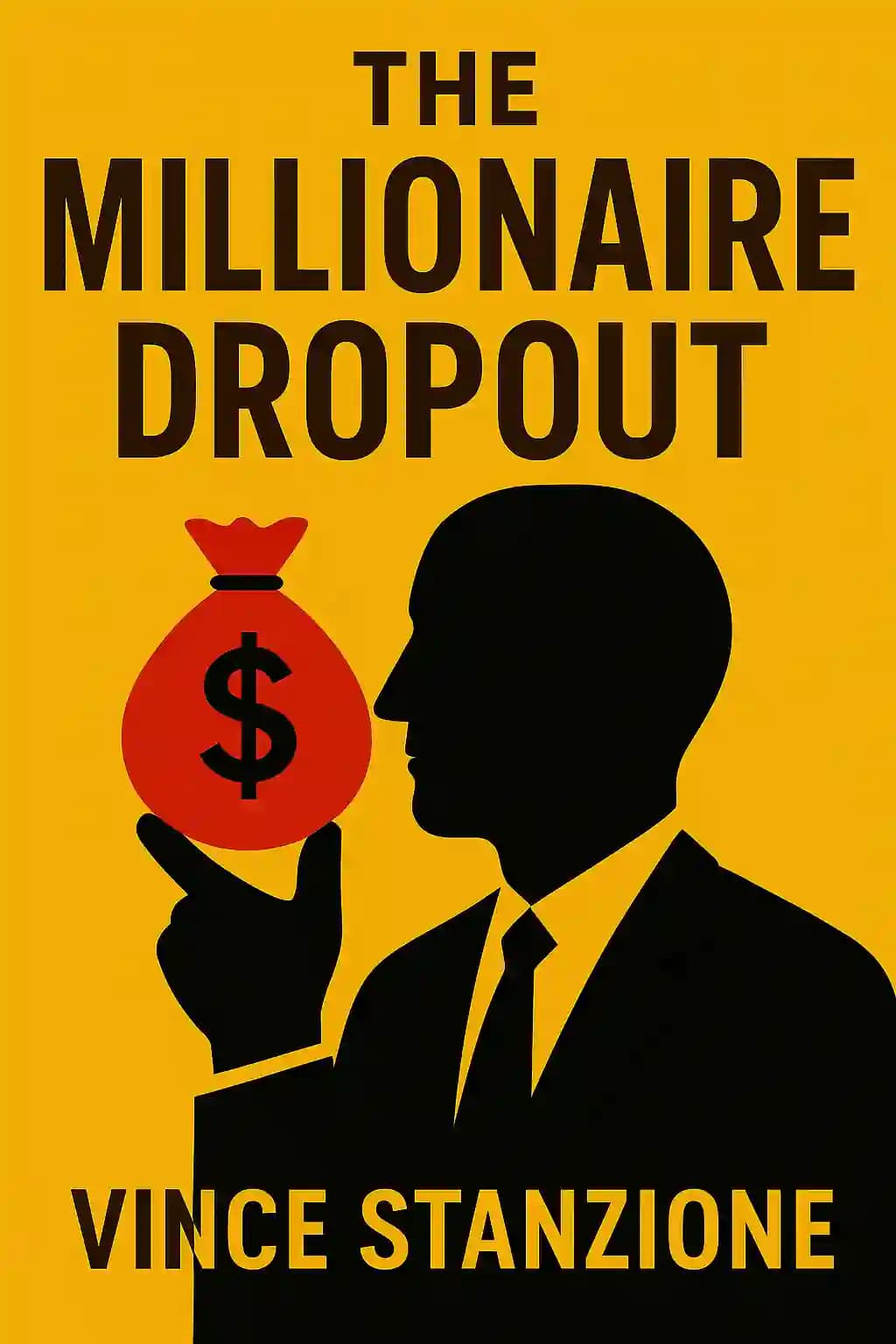
Have you ever wondered what separates the ultra-successful from everyone else? Imagine waking up tomorrow with complete financial freedom, doing only what you love, and never worrying about bills again. This isn't just a fantasy-it's exactly what Vince Stanzione achieved after hitting rock bottom. Once sleeping in his Ford van after bankruptcy, he rebuilt his life to become a multi-millionaire entrepreneur who eventually floated a business on the London Stock Exchange. "The Millionaire Dropout" has become a cult classic among entrepreneurs and career-changers alike, with celebrities like Tim Ferriss citing its practical wisdom. Unlike theoretical business books written by academics, Stanzione's guide comes from the trenches of real entrepreneurial battle-making it one of the most actionable success manuals ever written.
Chapter 2
Reprogramming Your Mind for Unstoppable Success
Success begins long before you make your first dollar-it starts in your mind. Think of your brain as a computer that's been programmed since childhood. Unfortunately, most of us have negative programming installed: "You'll never amount to anything," "Money doesn't grow on trees," or "That's too risky." These limiting beliefs become self-fulfilling prophecies that sabotage our potential.
The breakthrough comes when you realize your subconscious mind doesn't distinguish between what's real and what's vividly imagined. This explains why a four-year-old accepts incorrect alphabet letters without question, or why someone with anorexia sees themselves as overweight despite being dangerously thin. Your current reality is largely the product of past mental programming.
To reprogram your mind, Stanzione introduces "declarations"-positive statements read aloud each morning and night as if they've already come true. "I now earn $10,000 monthly doing work I love" is far more powerful than "I hope to earn more someday." These declarations work because they bypass your conscious mind's skepticism and plant seeds directly in your subconscious.
Elite athletes have used this technique for decades. Roger Bannister mentally rehearsed breaking the four-minute mile hundreds of times before physically achieving it. George Foreman reclaimed the heavyweight boxing championship at age 46 against a 26-year-old opponent largely through mental conditioning.
But visualization alone isn't enough-it must be paired with action. As Stanzione puts it, "Positive thinking without action is like expecting a cookbook to bake a cake by itself." The winning formula combines positive thinking, goal setting, visualization, AND taking action-creating a virtually unstoppable force for achievement.
Morning routines play a crucial role in this mental reprogramming. Start each day by stretching and saying "Yes! Today is a good day and it's getting better." Review your written goals, eat breakfast (which Stanzione calls vital for setting up your body for the day), and organize your day the night before to eliminate morning stress. By waking just one hour earlier each day, you gain an extra 365 hours yearly-almost an entire extra workday each week for reading, exercise, or building your business.
Chapter 3
The Psychology of Goal Achievement
Most people never live life to its fullest not because of bad luck or disadvantages, but because they never clearly define what they want. It's like going to a travel agent and vaguely asking to be sent "somewhere nice" without specifying a destination. Just as a travel agent can't help without specific information, you can't achieve success without clearly articulated goals.
When Stanzione asks people what they want from life, he rarely gets concrete answers-most have only vague desires like "lots of money and a good life." Before writing down his own specific goals, he too achieved little. The turning point came when he developed well-defined written goals, which changed everything for the better.
Setting goals is like mapping your journey-knowing your direction and destination. Though it might sound tedious, Stanzione describes goal-setting as exciting-like writing a wish list to Santa Claus that's guaranteed to come true if you take action. He introduces two important charts to complete: Financial Needs (immediate necessities like bills, rent, insurance) and Financial Wants (personal desires like specific cars, houses, experiences). Being extremely specific is crucial-naming exact models, locations, and features as if you already own them.
However, achieving money alone is "shallow and unrewarding." Stanzione stresses the importance of nonmonetary goals like fitness, confidence, finding a partner, or improving public speaking. He provides a goal assessment sheet format with spaces for objectives, action steps, completion dates, and rewards. Breaking goals into manageable steps and rewarding yourself after each accomplishment maintains motivation.
The goal-setting process transforms vague aspirations into specific targets with timeframes. With your goals clearly defined, the individual steps will connect like pieces of a jigsaw puzzle falling into place. This clarity creates a psychological foundation for all future success.
Chapter 4
Making Decisions That Transform Your Life
All life outcomes-good or bad-result from our previous decisions. The key is making more right decisions than wrong ones, while recognizing that the best long-term decisions often require short-term sacrifice and discomfort.
When facing tough choices, Stanzione recommends several proven techniques. The Ben Franklin Method involves writing your dilemma as a question at the top of a paper, drawing a line down the middle with "Benefits" and "Disadvantages" columns, and honestly listing all pros and cons. The resulting comparison makes your decision clear.
The Coin Method is particularly clever-toss a coin, but don't look at the result. Instead, notice which outcome you're hoping for while the coin is in the air. This reveals your true feelings about the decision, accessing your intuition when you're consciously uncertain but subconsciously know what you want.
For complex problems, try the Sleep-on-It Method. Before bed, write down your question and tell yourself you need an answer by morning. As you fall asleep, think about your options. When you wake up and revisit the question, your mind will typically provide a clear direction.
Once you've decided, respect your answer, especially if it's "no." If you've committed to "yes," put aside doubts and take immediate action. Block negative thoughts by reminding yourself of the positive factors that influenced your decision. Without action, decisions are worthless.
Fear of failure stops many people from making decisions, but Stanzione reframes failure as valuable learning. He shares Thomas Edison's perspective on his 10,000 failed attempts at creating a light bulb-not failures but successful discoveries of what doesn't work. People who make more mistakes are usually those taking action and doing more work. Inaction means fewer mistakes but also no progress.
When dealing with rejection, remember that people have short memories. If rejected for a job or loan, wait and try again. Dan Pena was rejected by nearly 200 banks before securing financing and building a $250 million fortune. Colonel Sanders was rejected by over 2,000 restaurants before KFC's success. Persistence is key.
Chapter 5
Your Inner Voice: Friend or Saboteur?
Your worst enemy and best friend both live inside your head-they are versions of yourself. These two aspects of your personality are with you constantly, and their influence far outweighs external opinions. The key is to make your best friend stronger than your worst enemy.
Your internal best friend wants you to be happy, celebrates your successes, and enjoys positive thoughts and experiences. This aspect knows that setbacks are temporary and can be overcome. To strengthen this inner ally, nurture it with happy music, positive thoughts, and joyful stories.
Conversely, your inner worst enemy revels in your suffering, encourages bad habits like drugs and alcohol, prefers sad or violent entertainment, and discourages self-improvement. Stanzione advises "starving" this negative aspect by denying it the attention and behaviors it thrives on.
Words have tremendous power in this inner dialogue. With about 50,000 thoughts each day delivered by your inner voice, ensuring most are positive gives you a significant advantage. Winners must eliminate loser phrases like "I know I'm going to miss the bus," "It's not my day today," "I'm scared of computers," or "I can't understand..." These self-defeating statements ensure negative outcomes and limit your potential.
Instead, incorporate positive, energetic phrases like "Today is a good day, and it's getting better," "I am excited, and I look forward to this new challenge," "I can fix this problem," and "Past mistakes and failings are history. Future successes and achievements are present."
Learning to love yourself is essential for success. Stanzione suggests writing down what you dislike about yourself, analyzing what can be changed, and crossing off what cannot be changed. For physical issues like weight, take action. For mental insecurities, positive thinking and programming can eliminate many perceived shortcomings.
Worry is another mental habit that sabotages success. Stanzione confesses he was once a master worrier but learned to reduce worry by recognizing that what he feared rarely happened. He identifies common worry categories: unlikely events, past occurrences, imagined health problems, and manufactured concerns from advertisers. Focus only on legitimate worries (5-10% of all worries)-those you can actually take action to address.
Chapter 6
The People Around You: Eagles or Turkeys?
The people you surround yourself with can either elevate or diminish you. Many look down on others but never up at those doing better. This downward focus leads to downward movement. Instead, aim high, find positive role models, and associate with winners.
Good associations, like Weight Watchers groups, provide encouragement and inspiration. Bad associations, like negative people in downmarket venues, drag you down regardless of your initial positivity. Choose to flock with positive, upbeat people rather than negative, deadbeat ones-both in person and online.
Success breeds success. Study successful people and learn from them. Join groups tackling the same challenges you face for support and ideas. Push yourself to maximize your potential, remembering that the journey should be as enjoyable as the destination.
When confronted with others' success, some respond with envy or accusations rather than admiration. These reactions reveal a loser mentality. Instead of resenting successful people, congratulate them, learn their secrets, and emulate them. Success stories provide valuable roadmaps and prove what's possible.
In personal relationships, behind every great person stands an equally great partner. While positive partners inspire success, negative ones who don't share your aspirations can become your worst enemy. You can identify supportive partners by their reactions to your proposals for change, business ideas, or self-improvement. Those who respond with genuine enthusiasm will help you succeed, while those lacking enthusiasm create problems that worsen as you become more successful.
If your partner isn't fully supporting your goals, have an in-depth conversation about what you're trying to achieve and why you're changing your life. Consider sharing this book with them. When one partner begins living a richer life, the other can easily follow their example. However, if you've genuinely tried to motivate your partner without success, you face a major decision-a negative partner draining your energy is worse than no partner at all.
Chapter 7
The Mail-Order Business Model: Your Path to Financial Freedom
After establishing the right mindset, the next step is creating a business that generates income. Stanzione reveals his preferred business model: mail order. He started from his bedroom with a few hundred pounds and built businesses worth hundreds of thousands. This model existed before the Internet and continues to thrive today. It's truly the last business where individuals can compete with multinationals and win.
Mail order offers lifestyle and riches beyond your wildest dreams. You choose your hours-perhaps working just three months yearly. Work from home in your pajamas and live anywhere. It offers freedom, choice, and unlimited earnings potential. You can start from your kitchen and grow into a worldwide business.
This isn't a get-rich-quick scheme, though with the right product, success can come quickly. It's not about deceiving people or selling shoddy goods. Don't confuse it with multilevel marketing or chain letters. It's a legitimate business model built on good client relationships and repeat business. The Internet has enhanced mail order while its fundamentals remain the same.
Success in mail order requires self-discipline, determination, adaptability, and willingness to multitask. You need to develop hidden talents, learn new techniques, and do whatever it takes-from emptying bins to carrying mail. This business model won't give you money for nothing, but it offers legitimate income potential and freedom from office politics.
To appear professional, get your own domain name and email address rather than using free services like Gmail. Set up separate business accounts on YouTube, Twitter, and Facebook. Create a blog using WordPress, preferably self-hosted with your own domain. These steps establish your professional online presence.
For tax purposes, start as a Sole Proprietor or Trader. In the US, this means reporting income on Schedule C of the 1040 tax form. A separate business bank account is essential, and professional letterhead builds confidence in your business.
Chapter 8
Finding Products That Sell: The Market-First Approach
The biggest business mistake is insufficient research into products and markets. Many new businesses fail because they focus on administrative details rather than understanding what customers want. Forget about tax concerns initially-if you don't sell anything, you won't have taxes to worry about! Focus first on finding and reaching your target market with the right product at profitable margins.
Put market first, product second. Consumer preferences change constantly based on current events, politics, and entertainment. When Jurassic Park was released, wooden dinosaur kit sales tripled at the Natural History Museum. As Gary Halbert famously said, the only advantage he needed to beat any competitor was a "hungry crowd." Many businesses fail by trying to sell unwanted products.
Look for "hungry" markets desperate for what you're selling. The common mistake is developing a product first, then searching for buyers. Instead, identify what people want, then provide exactly that. Don't try selling boats to car shoppers or trading books to needlework enthusiasts. Match your product to existing demand.
Google offers free research tools including Google Trends to see what people are searching for. Setting up a free Google AdWords account provides even better insights into market desires. The keyword tool shows exactly what people are searching for and in what volume. For example, "golf swing" gets 450,000 searches monthly-a perfect opportunity to sell instructional products to this hungry market.
eBay has evolved from an auction site to a department store selling mostly new products. Tools like hotlister.com reveal what people are actively bidding on, allowing you to identify trending products by country and sector. When thousands of users are watching an item, it signals strong market demand.
Bestselling nonfiction books, including eBooks on Amazon's Kindle Store, provide excellent insights into popular interests and buying trends that can guide your product selection. Major shopping channels like QVC, HSN and Ideal World reveal what's selling well through their programming allocation.
People's fundamental desires haven't changed in decades. They respond to promises that gratify personal needs like improving status, increasing income, and gaining admiration. Products addressing these needs-especially for the growing older population with significant spending power-will always find buyers.
Chapter 9
Creating High-Margin Products That Customers Love
The perfect mail-order product should be small, lightweight, durable, and not readily available in local stores. Most importantly, it must have high perceived value with markup of at least 100%-typically 500%. Pricing too low is a common mistake for new businesses. Price creates psychological perceptions of quality-people often trust expensive products more.
Information products make excellent mail-order items, including books, how-to manuals, correspondence courses, self-improvement courses, newsletters, DVDs, spoken word CDs, and computer software. People pay good money for information-Stanzione once sold a four-page document for 50 that cost less than 50p to produce, but the customer greatly valued the information.
Top-selling information topics include making money, diets/fitness, attracting the opposite sex, money-saving tips, gambling strategies, computers, self-defense, and cosmetics. When producing a how-to manual, you can write it yourself, pay a researcher, or purchase reprint/resale rights to existing manuals.
Written content can be converted to CDs or digital MP3s for time-starved consumers. Audio products can be produced cheaply-CDs cost about $0.50 each, and professional voice-over recordings can be created for a few hundred dollars. Buying rights to printed content and converting it to audio instantly allows you to charge more for essentially the same product.
Low-budget information videos can be highly profitable. One of Stanzione's friends made a simple video showing how to clean computers and start a computer maintenance business, filmed with a home video camera. With an accompanying manual and workbook, his package cost $10 to produce but sold for $127. He's sold over 10,000 copies, generating more than $1.2 million.
Newsletters and small magazines are excellent entry points into the media business, especially now that online delivery increases profit margins. With 2,000 subscribers paying $40 annually, you can generate $80,000 yearly with near-zero costs for online delivery. Newsletters offer multiple advantages: they can be run from home, use affordable membership technology, provide upfront payment from subscribers, generate residual value through renewals, have resale value, and offer additional revenue streams through mailing list rentals and reader offers.
Chapter 10
Marketing Magic: The Lifeblood of Your Business
Business is nothing without advertising and marketing. You can have the best product and branding, but without cost-effective marketing, you'll fail. Advertising and marketing make up 90% of a successful business. The best product doesn't always win-the most successfully marketed one does.
Today's consumers are more savvy and skeptical than 40 years ago. The hard sell ("shout loud-money grab") approach that worked decades ago turns off modern buyers. Few visitors immediately buy from your website or sales letter. Depending on product price, you'll need 5-6 contacts before making a sale.
Building relationships means long-term success. Lead capturing-asking website visitors for email addresses in exchange for free information-helps build relationships through communication. Automate this with services like 1shoppingcart.com or awebber.com. Keep sales inquiries and existing customers on separate lists as you'll market to them differently.
Sales are your business lifeblood, though many owners get distracted by paperwork. Three primary ways to increase revenue: 1) Get more customers (most focus here, but may not generate much extra income), 2) Increase sales from existing customers (easier than cold prospects), and 3) Increase order frequency and value (offer standard/deluxe packages, shorten purchase cycles).
Words have tremendous power to drive purchasing decisions. Headlines determine whether people read the rest of your ad-they're the critical hook that must grab attention instantly. As David Ogilvy noted, "five times as many people read headlines as body copy," making headlines responsible for 90% of your advertising success.
After your headline grabs attention, the first paragraph must maintain interest. It should excite, worry, or spark curiosity in readers. Your body copy must focus entirely on reader benefits, not company achievements. Remember WIIFM-"What's In It For Me"-which should guide all your writing. The closing must drive action-a critical step many ads miss. Use direct language like "Phone now for your FREE 24-page report" or "Take action today. For the special introductory offer of only $19.95..."
Writing articles provides free publicity while establishing your expertise. Include a brief bio with product information at the end of each piece. Though typically unpaid, these articles build credibility that can lead to regular columns, media appearances, and significant business growth. Press releases generate free publicity when written correctly. They should read like news articles, not advertisements, with your product mention subtly integrated into a genuinely interesting story.
Chapter 11
The Back-End Profit Machine
The single most important business principle is that one-time sales generate income, but lifetime customers create wealth. Most companies make the critical mistake of fulfilling an order then forgetting about the customer. Once someone has purchased from you and received good service, they've overcome their biggest hurdle-resistance to the first sale-making them far more likely to buy from you again.
When shipping a customer's first order, include a thank-you letter with information about complementary products and a time-limited discount voucher. Follow up with additional offers if they don't respond. Build trust gradually before attempting to sell higher-priced items.
Create a product ladder with offerings at different price points-from entry-level $27 products to premium $2,497 or $5,000+ options. A percentage of customers will progress through your entire product range as trust develops. Some customers will buy everything you offer-one customer bought 30 different products from Stanzione until he simply couldn't find anything else to sell him!
When you have a successful product that's selling well, remember that most products don't sell forever. Trends change and competitors may start price cutting, causing your "Golden Goose" to lay fewer eggs. The key is having another product/service ready to roll out when sales begin to slow.
When business is going well, there's a temptation to start doing too many things at once-what Stanzione calls the "octopus scenario." While you should be ambitious and work to your full potential, don't become reckless. If your business succeeds, you'll naturally want to expand, but don't try running 20 companies simultaneously.
Instead, expand your business through agents, licensing, and joint ventures rather than trying to do everything yourself. Agents are an excellent way to employ a large sales force with no fixed costs. They only make money when they make a sale, so you only pay them when they generate profit for you. Companies like Virgin and Disney excel at licensing their names for use on various products in exchange for a cut. Joint ventures work well when you don't want to take a big risk alone or when you have expertise in one area but lack it in another.
Chapter 12
Smart Spending: Making Your Money Work Harder
To maximize your spending power and effectively earn more money without working harder, you need to become a smart buyer. Some people struggle on $250,000 while others thrive on $50,000-the difference is how the money is spent. By spending wisely, you're essentially adding fifty cents to every dollar.
Before making major purchases, ask yourself if you really need the item or if it's just an impulse buy. Consider alternatives: renting, sharing costs, buying secondhand, or calculating depreciation. Don't be pressured by "special offers" and don't be afraid to return items for refunds if you've made a mistake.
For travel expenses, Stanzione has flown Business and First Class worldwide at knockdown rates by avoiding direct bookings, understanding ticket codes, booking in advance, and knowing when to request upgrades. Airlines rarely discount when you book through their reservation numbers or websites. They sell leftover seats at discounts to consolidators.
With hotels, last-minute bookings often work in your favor. Most hotels prefer filling rooms at lower rates than leaving them empty. Check websites for discount codes, call directly to ask about special offers, and look for new hotel openings with promotional rates.
For electronic goods, shop both online and in physical retail stores to find the best deals. Look for managers' offers, returned goods, and ex-display items that often come with 25% or more discount while still offering guarantees. Consider buying slightly older versions of gadgets that will still meet your needs at significant savings.
Designer clothing, accessories and luxury items can be purchased at significant discounts through alternative channels that still guarantee authenticity. From dress agencies selling barely-worn luxury items to factory outlets and specialized sales events, smart shoppers can enjoy premium brands without premium prices.
Auctions offer exceptional bargains on everything from vehicles to office equipment, particularly government auctions selling confiscated items and general auctions liquidating bankruptcy stock. The best deals come from no-reserve auctions held on business days.
The simplest way to get a discount is to ask-most people don't. While you shouldn't request discounts on small purchases like coffee, major purchases or regular customer relationships often yield discounts or extras just by asking politely with confidence and a smile.
While this book isn't focused on trading and investing, making your money grow is essential. A realistic 10% annual growth through smart investing can transform $10,000 into $16,105 in just five years. Take advantage of tax relief on investments-in the US, 401K plans allow around $16,000, while UK residents can invest approximately 10,000 tax-free annually.
Wise spending and investing are crucial to maximizing wealth regardless of income level. Controlling expenses helped Stanzione build his fortune, and he still enjoys finding discounts and special bargains. Take charge of your financial future through investing-it's simpler than experts suggest, and the power of compounding can grow even modest sums significantly over time.