Chapter 1
When Worlds Collide: A Journey Through the Impossible
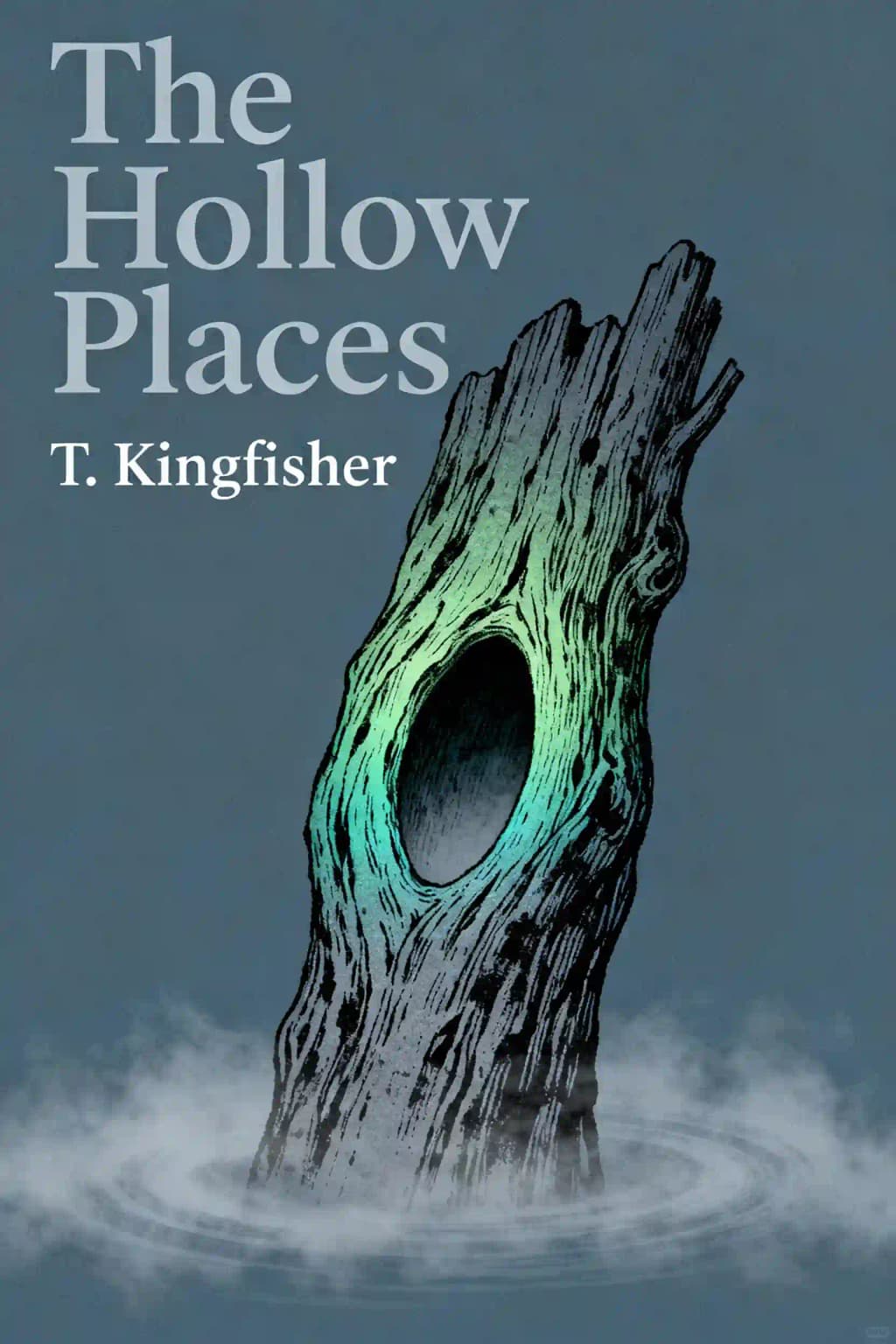
The Wonder Museum of Natural Wonders, Curiosities, and Taxidermy isn't just another roadside attraction in Hog Chapel, North Carolina-it's a portal between worlds. T. Kingfisher's "The Hollow Places" has become something of a cult phenomenon among horror enthusiasts, with Stephen King calling it "a masterclass in subtle terror" and Jordan Peele citing it as inspiration for his recent work. The novel's blend of cosmic horror and sardonic humor has earned it comparisons to both Lovecraft and Terry Pratchett-an unlikely pairing that somehow works perfectly. What begins as a woman's retreat to her eccentric uncle's taxidermy museum after a divorce transforms into a nightmarish journey through reality itself, leaving readers questioning what might lurk behind the walls of their own homes.
Chapter 2
The Wonder Museum: A Sanctuary of the Strange
When Kara's marriage to Mark ends-not with a bang but with a whimper of mutual dissatisfaction-she finds herself facing the prospect of moving back in with her mother. Their relationship has always been strained, like "deer antlers locked together," making the situation nearly unbearable. Salvation arrives in the form of a call from her Uncle Earl, owner of the Glory to God Museum of Natural Wonders, Curiosities, and Taxidermy. He offers her his spare room above the museum, ostensibly because he needs help managing his gout, though they both know he's rescuing her from domestic purgatory.
The Wonder Museum itself is a marvel of eccentricity-a storefront crammed with everything from legitimate taxidermy to dubious artifacts. Uncle Earl himself is equally fascinating, a man who simultaneously believes in Jesus, aliens, cryptids, and the healing power of Vicks VapoRub. His defining characteristic is his boundless capacity for acceptance; he likes almost everyone he's ever met and can't imagine people he knows being damned.
For Kara, the museum represents comfort rather than creepiness. She grew up there, sitting on phone books to reach the cash register, never finding the glass-eyed taxidermy unsettling like her classmates did. The spare room Uncle Earl prepares for her features fresh yellow paint and an imposing antique twin bed with a pineapple comforter. Most touchingly, on the wall hangs "Prince," the mounted Roosevelt elk head she loved as a child after watching Bambi. Uncle Earl had changed the plaque years ago to honor her childhood belief that the elk was the Prince of the Forest.
As Kara settles into museum life, she begins the monumental task of cataloging Uncle Earl's collection while he deals with his health issues. She quickly falls into a comfortable routine-opening the museum, fetching coffee from the Black Hen next door, handling mobile tasks while Uncle Earl mans the register, and spending afternoons documenting the collection. The museum, with its glass-eyed guardians, becomes home more quickly than she expected, raising questions about her future that she's not yet ready to face.
Chapter 3
The Discovery: Behind the Wall
Everything changes when Uncle Earl leaves for knee surgery, leaving Kara in charge of the aquarium. After several days of routine management - feeding schedules, water quality checks, and guiding wide-eyed children through the touch pools - she discovers a jagged foot-and-a-half hole in the drywall of the otter room. The damage sits at waist height, its edges rough and splintered inward as if something had burst through from the other side. Assuming an overzealous tourist damaged it without reporting it, she heads to the adjacent coffee shop to research repair methods on her tablet.
Simon, the enigmatic barista known for his mismatched eyes, greets her with his usual cryptic smile. He claims his heterochromia comes from absorbing his twin sister in the womb, along with her left eye - a story he tells with disturbing enthusiasm. When he notices Kara researching drywall repair techniques, he offers to help, mentioning his experience renovating his grandmother's Victorian home.
Their casual repair project transforms into something far more sinister when they examine the hole together. Behind the damaged drywall lies not the expected wooden studs and electrical wiring, but a dark concrete corridor that extends far beyond where the building should end. The hallway stretches at least thirty feet, illuminated only by the weak beam of Kara's phone flashlight, its walls covered in a strange, slightly iridescent moisture that seems to absorb rather than reflect light.
The corridor leads to a massive circular chamber, easily forty feet in diameter. Ancient-looking graffiti covers the walls - symbols that seem to shift and change when viewed directly. At the far end stands a heavy metal door, its surface marked with elaborate geometric patterns and secured with rusted bolts the size of dinner plates.
"This is physically impossible," Kara observes, measuring the space with her arms and steps. "This hallway can't exist. The building next door - your coffee shop - should be right here. We're literally standing where people are drinking lattes right now."
The discovery defies all logic and architectural possibility. The corridor occupies space that should belong to the adjacent coffee shop, yet somehow exists in its own impossible pocket of reality. Even more disturbing, they find a corpse in the hallway, slumped against the moisture-slick wall. The body sits in an attitude of desperation, its desiccated fingers still pressed against the concrete as if it had been trying to claw its way out before dying. Unlike a normal corpse, it appears mummified rather than decomposed, its skin leather-like and preserved by some unknown means. The clothing, what remains of it, suggests the body has been there for decades.
Rather than immediately call the police - a decision that will later haunt them - they retreat to the coffee shop for Irish coffees loaded with extra whiskey. Simon, maintaining his peculiar sense of humor even in the face of horror, flips a coin to determine whether they're dealing with aliens or black magic. Kara, trying to maintain some grip on rationality, insists they should first consider whether black mold might be causing shared hallucinations. The impossibility of their discovery forces them to question the very nature of reality itself, setting the stage for an exploration that will challenge everything they thought they knew about the physical world and their place in it.
Chapter 4
The Willow World: A Reality Beyond
When Kara and Simon finally summon the courage to open the rusted metal door at the end of the corridor, they discover something even more impossible-a landscape of tiny grassy islands surrounded by sluggishly moving water, all bathed in bright daylight despite it being nighttime in their world. The sky above is thick with fog, creating a surreal, dreamlike quality to the scene.
"This is a different world," Kara realizes, feeling the alien sunlight on her skin. "Like Narnia, but without enough attention to how jarring it is to realize nothing can be taken for granted here."
The landscape appears deeply unnatural, with evenly spaced islands resembling gravestones or ancient burial mounds. As they explore, they discover that their island is actually part of a concrete bunker, with steps leading down into the water. From the top, they make a horrifying discovery-dozens of identical islands upstream, each with a single metal door set into its side. They count thirty, forty, maybe fifty bunkers before the fog obscures the view.
Before venturing further, Simon installs a deadbolt on their bunker door. They wade through cold water to reach a nearby sandspit covered in willows, debating whether this world extends for miles or is merely a small pocket universe walled in by fog. The landscape consists mostly of willows, with occasional cedar-like trees and strange funnel-shaped depressions in the sand.
Their exploration leads them to an abandoned school bus buried axle-deep in sand-oddly colored carrot-orange instead of goldenrod, with "Byricopa County Public Schools" written on it. When sudden rain forces them to shelter inside, they witness something horrifying: shapes of children moving beneath the green leather seats, pushing against the material as if trapped inside. Even more disturbing is the invisible presence in the driver's seat-someone made of empty space who seems to occupy it though invisible.
They flee in terror back toward the river, only to discover the rain has swollen the water, washing away their marker stick and leaving them uncertain which bunker leads home. Lost in this alien world, they face the terrifying prospect of being trapped forever among the willows.
Chapter 5
Encounters with the Impossible
As Kara and Simon search desperately for their way home, they encounter horrors that defy comprehension. In a bunker with a half-open door, they discover Martin Sturdivant, a former park ranger who entered this world through kudzu vines in his park. Unlike them, who came through a hole in a bunker wall, he entered through what he called a "kudzu cathedral" and was never able to find his way back.
Sturdivant warns them about "Them"-the entities that inhabit this place. He explains that the willows are "the soul of this place" and that the humming sound they've heard belongs to Them. When Simon describes the school bus they saw, Sturdivant chillingly explains that the children were trapped there because They "weren't hungry"-implying that They sometimes play with their victims, taking them apart or changing them.
"Nowhere is truly safe here," he tells them, explaining that the river area is marginally safer than inland, where there are only willows forever, producing an eerie light that brings shadows to life.
When Kara asks if they're safe in the bunkers, Sturdivant laughs bitterly and stands up in the water. To their horror, they discover his body ends at his ribcage-his lower half has been dissected, his blackened organs floating freely in the water around him. He's been stroking his own intestines as they spoke.
"They like to take things apart," he explains with terrible calm. "See how things work. Sometimes they put them back together... differently."
This encounter represents the novel's most visceral horror-the realization that in this world, the laws of biology and physics can be suspended, allowing a man to continue existing in a state that should be impossible. It's a manifestation of cosmic horror that goes beyond simple death, suggesting a fate worse than dying-becoming a subject of alien experimentation and transformation.
Chapter 6
Evidence from Another Reality
After escaping back to their world, Kara and Simon discover they've brought back compelling physical evidence of their journey-a weathered Bible from another reality. The book's margins are filled with dense, desperate handwriting, revealing it belonged to a soldier codenamed "Bible," part of an elite military reconnaissance team tasked with exploring what they termed "vacuae"-interdimensional portals to other worlds. Their entry point was described in meticulous detail: triple-layered razor wire perimeters, UV decontamination chambers, and multiple security checkpoints, all suggesting a long-term government operation dedicated to studying and containing these supernatural doorways.
The Bible's annotations paint a haunting picture of systematic exploration gone wrong. Bible's team wasn't the first to venture through-they documented multiple failed expeditions, with equipment and dog tags recovered but no survivors. The margins contain detailed sketches of security protocols, emergency procedures, and cryptic references to "Event Zero"-apparently the first documented contact with the entities.
The most crucial information comes from Bible's account of meeting Singer, a survivor from yet another parallel world who had managed to stay alive for five weeks in the willows. Singer's observations about the creatures reveal disturbing capabilities that defy conventional physics. She describes them as "extradimensional beings" that exist simultaneously in multiple planes-they can't be shot or physically harmed unless they choose to manifest fully in our dimension. "They step out of the way on an axis we can't get to," Bible quotes her saying, "like a paper figure sliding off its own page."
Most terrifying is Singer's revelation about the creatures' cognitive abilities. "They can hear you think," Kara reads from the smudged margins. "If you think about Them, They can find you." This telepathic hunting ability suggests an apex predator that has evolved beyond physical constraints to hunt through consciousness itself. The implications are staggering-no mental preparation, no strategic planning, not even prayer would be safe from their awareness.
The Bible also contains crude maps showing how multiple realities connect through the willow world, which appears to function as a central hub or nexus point between dimensions. This explains the seemingly random access points-Sturdivant's kudzu-covered park entrance, Kara and Simon's museum portal, and dozens of other documented gateways. Bible's notes suggest these connections follow some pattern related to organic growth and decay, but the final pages become increasingly paranoid, warning that "They're learning to make their own doors." This raises the chilling possibility that these portals aren't just naturally occurring phenomena but might be deliberately created by the entities themselves, potentially turning any isolated space-a quiet alley, an empty room, even a dark closet-into a gateway to their realm.
Chapter 7
The Call of the Willows
Despite their safe return, Kara and Simon discover they haven't truly escaped the willow world. Both begin sleepwalking, drawn back to the hole in the wall. Kara wakes one morning to discover gouges in the wall patch-as if someone had tried to dig through with their fingernails. Looking at her own bandaged fingers with plaster dust under the nails, she realizes she's been unconsciously trying to claw her way back.
"I'm not trying to kill myself by returning to the willow world," she realizes with relief after another sleepwalking incident. "Something is trying to drag us back."
Their attempts to secure themselves-tying themselves to their beds, installing noisy alarms-prove only partially effective. The call of the willows persists, suggesting a psychic connection has been established that transcends physical barriers.
The situation worsens when Kara discovers the albino raccoon from a museum display case has been stolen. Later that night, Beau, her cat, attacks what appears to be the missing raccoon-now somehow animated despite being taxidermied. This impossible occurrence is followed by other taxidermied animals coming to life, glowing with silver willowlight.
The source of this phenomenon is revealed to be a carved wooden otter figure from the museum's collection-item #93, labeled as a "corpse-otter" carving from the Danube. The carving has become a conduit between worlds, allowing the influence of the willow world to seep into reality and animate dead things.
"It was the carving all along," Kara realizes. "The tourist who damaged the wall must have knocked it through, creating the connection between worlds."
This revelation transforms the horror from something external to something that has infiltrated her sanctuary. The Wonder Museum, once her safe haven, has become compromised by an object that serves as a beacon or key to the entities beyond.
Chapter 8
The Battle for Reality
The animated taxidermy, possessed by the willowlight emanating from the carving, attempts to tear open the sealed hole to the other world. In a surreal and terrifying sequence, Kara finds herself defended by other taxidermied animals in the museum-Prince the elk head impales the possessed otter on his antlers while Beau claws out one of its glass eyes. The Feejee Mermaid, jackalope, fur-bearing trout, and even a mallard attack the pursuing otter as Kara tries to escape.
Realizing she must lead the carving back to the willow world where it belongs, Kara escapes through the hole into the concrete corridor. But outside, the bunker is now overgrown with willows that grab at her when she tries to climb up. She falls into the water instead, where the otter follows with terrifying grace.
As she swims desperately toward another bunker door, the humming sound of Them appears overhead, drawn by her distress. She throws herself into a partially open bunker door but finds it's flooded with no way to close it. Inside, she encounters Sturdivant again, who engages in battle with the pursuing otter.
The climax comes when Kara witnesses one of Them tearing a hole in the sky-an incomprehensible form like an Old Testament angel with wings, wheels, and eyes, using a beak or drill to pierce reality itself. Remembering that pain saved Bible and Singer by wiping their minds blank, she deliberately drops her full weight on her injured knee. The agony is unimaginable, wiping her mind blank as she thrashes in the sand. When she regains consciousness, the beings have missed her, their hum drifting away.
This sequence represents the novel's most explicit cosmic horror-the revelation that reality itself is thin and permeable, subject to violation by entities that exist beyond comprehension. The comparison to biblical angels is particularly effective, suggesting that humanity's earliest attempts to describe transcendent beings might have been encounters with these same entities.
Chapter 9
Sealing the Breach
After surviving her harrowing ordeal, Kara reaches out to Woody Morwood, a renowned expert on supernatural phenomena who originally sent the mysterious carving to Uncle Earl's museum. During their lengthy conversation, Woody reveals the carving's dark history - it came from a small, now-abandoned island in the Danube River, a place that had become riddled with supernatural portals to the willow world. The locals called it "Swiss cheese island" because of the numerous holes that kept appearing in the landscape, each one a gateway to that shadowy dimension.
"The carving itself is a key of sorts," Woody explains, his voice heavy with regret. "I theorized it needed proximity to willow trees to activate its properties, which is precisely why I sent it to your uncle's museum - far from any natural willows. I never imagined it could animate taxidermy or create portals in modern buildings. I thought it would remain dormant in your uncle's collection, just another curious artifact."
Through further discussion, Woody shares crucial information about closing these supernatural breaches. The principle, he explains, is deceptively simple yet profound: holes between worlds can be sealed if filled with their natural counterpart - air holes require air, sand holes need sand, and wall breaches must be filled with proper wall material. This revelation leads Simon to formulate a methodical plan for sealing their breach permanently.
They purchase forty bags of quick-setting concrete, carefully calculating the volume needed to fill the void completely. Working systematically, they construct a barrier in the corridor, stacking the bags in an overlapping pattern for maximum stability. As they soak the concrete with water, they observe the material beginning to set, creating a solid barrier between the worlds.
Simon tackles the finishing work, applying metal mesh and spackle to patch the remaining opening. As they watch, something extraordinary occurs - the drywall begins to heal itself, the material knitting together as if guided by an invisible force. It's as though the natural laws of reality are reasserting themselves, eager to restore proper order. Working with painstaking precision, they gradually reduce the opening until only a pinhole remains, which Kara, with her smaller fingers, manages to seal completely.
Two weeks later, taking no chances, they conduct a thorough inspection. They carefully drill a small test hole and insert a fiber-optic camera - the results confirm their success. The breach is completely sealed, showing only normal drywall and structural studs. Simon, who has developed a heightened sensitivity to the supernatural during their ordeal, confirms the change. "The wall feels right now," he explains. "Before, it felt wrong - deeper than it should be, like it went on forever. Now it's just a wall again."
This resolution reveals a fascinating aspect of reality itself - while it can be breached by supernatural forces, it also possesses an inherent resistance to such violations, a kind of cosmic immune system that works to heal these wounds when given the proper assistance. The wall, in essence, wants to be a wall; reality strives to maintain its fundamental integrity. By working in harmony with these natural forces rather than against them, Kara and Simon successfully seal the breach, restoring the proper boundary between worlds.
Chapter 10
Living with the Aftermath
Though the physical connection to the willow world has been closed, Kara and Simon remain permanently changed by their experience. Kara suffers from nightmares, panic attacks at the sight of willows, and a damaged sense of security. During a visit to her parents, even a normal willow in a neighbor's yard triggers severe anxiety, causing her to nearly crash her car.
"I wonder how many people are walking around with pieces of other worlds inside them," she reflects. "How many have seen things they can't explain and just... keep going."
Despite her trauma, Kara chooses to stay at the Wonder Museum. Uncle Earl apologizes for leaving her alone, but she assures him it was right for him to go. She explains that she lost his "exhibit" (unable to say "otter"), and he accepts it easily, already planning a replacement ichthyosaur skull.
The museum feels like home, especially after the taxidermy animals fought to protect her. Prince's head remains tilted as if listening for her return, and they're still finding cane toads in unexpected places. Kara suspects some of the costumed mice might be changing positions, though Simon remains skeptical.
With her damaged knee requiring a brace and pain pills, Kara hobbles around like her uncle. Uncle Earl plans to leave her the museum in his will, suggesting a continuation of family legacy despite the trauma she's experienced there. Simon and Kara spend evenings watching bad movies and sharing the unspoken bond of having survived the willows.
"I keep thinking I'll get an apartment," Kara admits. "But I'm still here. The Wonder Museum is bizarre and sometimes tacky, but it's mine."
This conclusion suggests that while encounters with the impossible leave permanent scars, they don't necessarily destroy us. Kara has been changed by her experience-physically, emotionally, and spiritually-but she continues to find meaning and connection in the aftermath. The Wonder Museum, once violated by forces beyond comprehension, has been reclaimed as a sanctuary, albeit one where the boundaries between the possible and impossible have been permanently blurred.