Chapter 4
The Psychology of a Predator: Inside the Mind of Dainn Blackthorne
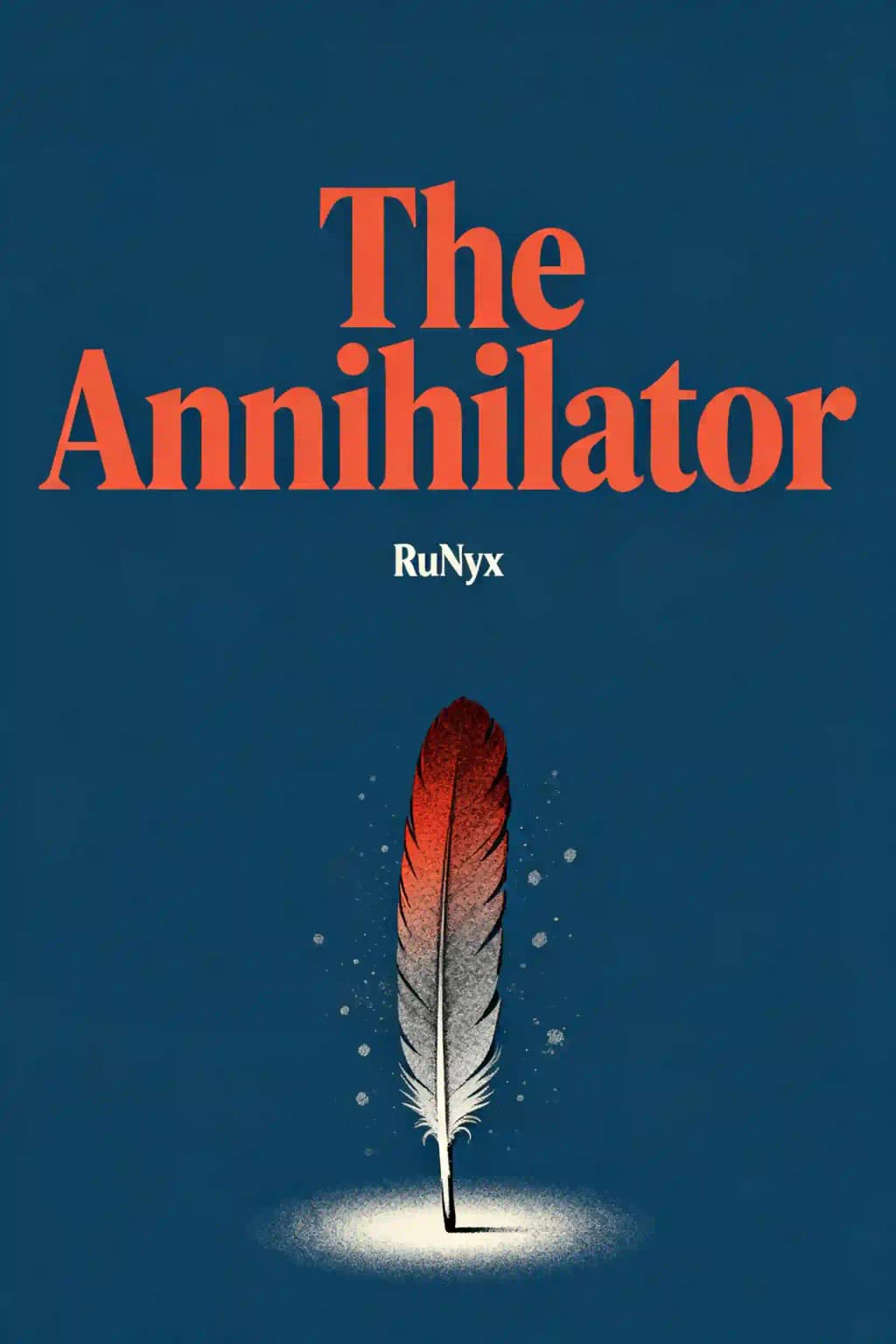
Dainn Blackthorne presents one of the most fascinating psychological portraits in contemporary dark romance-a man who exists beyond conventional morality yet develops a singular obsession that becomes his north star. From childhood, he recognized his difference: "not feeling what other children felt." Labeled a "demon child" for his mismatched eyes, he embraced his darkness, even burning his own hands while "playing with fire" against his tormentors.
His fascination with fire becomes both literal and metaphorical. He watches flames with clinical detachment, "drawn to the colors: blue flickering to blinding white, deepening to oranges and reds." When he kills, he often uses fire as his weapon, finding aesthetic satisfaction in the destruction while remaining unmoved by the human suffering. "Emotions escape him; he recognizes but doesn't understand them," the narrative explains.
What makes Dainn compelling rather than simply monstrous is his self-awareness. He knows he isn't a good man. He acknowledges his obsession with Lyla has moved beyond mere possession into something more intense that he can't fully comprehend. "Though unsure if the tightness in his chest is what she calls love, he knows that in another reality where he could feel normally, he would love her completely."
His backstory reveals layers of complexity-born to an underage girl by a Syndicate member, raised in an orphanage where he was treated as less than human, and eventually joining The Syndicate to gather intelligence for his lifelong mission to dismantle the organization. "I am the prince of this hell in every way," he tells Lyla, acknowledging how his origins have shaped his destiny.
Despite his emotional limitations, Dainn demonstrates growth through his relationship with Lyla. Initially seeing her as something to possess, he gradually begins prioritizing her needs, even when they conflict with his desires. When he realizes reconnecting with her family will help her heal, despite his fear of losing her, he arranges for her brother to find her. This moment-putting someone else's needs before his own-marks his first experience of what might be called love, even if he lacks the emotional vocabulary to name it.
Chapter 5
Healing Through Fire: Reclaiming Agency After Trauma
The journey from victim to survivor forms the emotional core of The Annihilator. When we first meet Lyla, she's trapped not just physically but psychologically-her identity reduced to her trauma, her voice silenced, her agency nonexistent. Her transformation begins when Dainn removes her from captivity after her suicide attempt, bringing her to his remote mountain home.
This sanctuary becomes the setting for her gradual reclamation of self. Simple acts take on profound significance: exploring the house freely, preparing meals, experiencing genuine pleasure, and most importantly, making choices. When she initiates intimacy with Dainn, whispering "Make me yours," she's paradoxically asserting her own agency by choosing the terms of her surrender.
The narrative presents a nuanced view of healing that acknowledges both progress and setbacks. Lyla experiences moments of regression-searching frantically for tea triggers an emotional breakdown as she crumples to the floor, overwhelmed by feelings she can't understand. Yet these moments become opportunities for growth rather than defeat. After each collapse, she rebuilds herself stronger.
Particularly powerful is how Dainn helps her rewrite traumatic memories through consensual experiences. When he takes her back to Moonflame, the sex club where she was once hunted through a maze, she's initially terrified. But the club has been transformed-the maze replaced by viewing rooms where consensual BDSM scenes unfold. As they watch together, Dainn initiates intimacy with her, and she realizes how "he's helping her replace traumatic memories with pleasurable ones."
Her healing culminates in a moment of both vengeance and closure when she confronts her torturer. Though tempted by cruelty's power, she recognizes the risk of undoing her healing journey. When she ultimately chooses to set the room ablaze, watching her tormentor burn, she experiences "a rush of power and closure as her hell is destroyed." This act represents not just revenge but a symbolic burning away of her past, allowing her to emerge like a phoenix from the ashes.
Chapter 6
The Power of Identity: Names, Belonging, and Self-Discovery
Throughout The Annihilator, identity emerges as a central theme - how it can be stripped away, how it can be reclaimed, and how it shapes our connections to others. Lyla's journey toward self-discovery accelerates when she learns her true name is Luna Caine and that she has a brother named Tristan who has been searching for her for twenty-two years. This revelation shatters her understanding of self, forcing her to confront the possibility that everything she thought she knew about herself might be built on shifting sand.
This revelation triggers a profound identity crisis that ripples through every aspect of her life. "Who am I?" she wonders, suddenly confronted with a past and family she can't remember. Her anger at Dainn for withholding this information is complicated by her understanding of his fear - that knowing her true identity might mean losing her to her family. This internal conflict manifests in small but significant ways: her hesitation when signing documents, her startled response when hearing her birth name, and her unconscious flinching whenever someone calls her Luna.
The symbolism of names carries significant weight throughout the narrative, serving as anchors of identity and belonging. Dainn calls her "flamma" (flame), a name that acknowledges her inner fire and resilience - a name that becomes more meaningful as she discovers her ability to withstand trauma and emerge stronger. Her captors refer to her only by her function or as merchandise, a dehumanizing tactic that strips away individuality. When Dainn gives her a marriage license declaring her "Mrs. Blackthorne," it represents not just a legal identity but a chosen one - a name she accepts rather than one imposed upon her. This moment marks a crucial shift in her journey of self-discovery.
Perhaps most poignant is the revelation about her son, whom she named Xander before giving him to Dainn for safekeeping six years earlier. Learning that her son has been raised by her brother Tristan brings her journey full circle - the child she thought lost forever has been with family she didn't know she had. This discovery forces her to reconcile three versions of herself: Luna Caine the sister, Lyla Blackthorne the wife, and the mother who made an impossible choice to protect her child.
This theme extends to Dainn as well, whose identity has been shaped by labels others gave him - "demon child," "the Shadow Man," "the Annihilator." His struggle to understand his own emotions reflects a deeper question about who he is beyond these roles, particularly as he grapples with his capacity for both violence and tenderness. When Lyla defines love for him as feeling safe, being accepted without judgment, and putting another's needs above your own, she's offering him a new way to understand himself - not as a monster, but as someone capable of connection and growth. Their relationship becomes a mirror through which both characters begin to see themselves more clearly, challenging the identities they've been given and choosing who they want to become.
The novel ultimately suggests that identity isn't fixed but fluid - shaped by our choices, our relationships, and our willingness to embrace change. Through Lyla's journey from lost soul to self-aware woman, we see how the names we're given and the names we choose for ourselves can either cage us or set us free.
Chapter 7
The Complexity of Consent: Power Dynamics in Extreme Circumstances
The Annihilator delves deep into the intricate territory of consent, desire, and power dynamics, presenting these themes through the lens of a world where bodily autonomy has been systematically stripped away. In a society where Lyla has endured years of exploitation and abuse, her developing sexual relationship with Dainn becomes a complex exploration of agency, trust, and healing.
The narrative takes great care to establish clear distinctions between violation and consensual intensity. Dainn's declaration, "For you, anything," serves as more than just a romantic gesture - it represents a fundamental shift in how Lyla experiences intimate relationships. Their first intimate encounter emerges organically from her own desire and initiative - she actively seeks him out, initiates physical contact while he appears to be sleeping, and verbally expresses her consent with the words "Make me yours." This moment marks a crucial transition where she reclaims control over her sexuality.
However, the power dynamic between them remains inherently complicated. Dainn wields significant advantages: he possesses crucial information about Lyla's past, has demonstrated lethal protectiveness by eliminating multiple men who harmed her, and embodies both her greatest source of safety and potential danger. His declaration that choosing him means accepting his "twisted, deranged, obsessed" nature - along with the assertion that he'll "never fucking let her go" - walks a razor's edge between passionate devotion and concerning possessiveness.
The story directly confronts these complexities through sophisticated discussions of consensual power exchange. Dainn's careful explanation of force fantasies and negotiated power dynamics helps establish a framework for understanding how similar physical acts can carry vastly different meanings based on consent and context. Through their relationship, Lyla begins to explore and reclaim aspects of her sexuality that her trauma had tainted, learning to distinguish between violation and consensual submission. Their scenes together demonstrate how trust, communication, and explicit consent transform potentially triggering situations into opportunities for healing and empowerment.
The narrative extends this examination of consent beyond the physical realm into emotional territory. Dainn's decision to withhold critical information about Lyla's brother and son represents a significant breach of emotional consent - denying her the ability to make informed choices about her own life and relationships. The story validates her anger at this betrayal while acknowledging the complex motivations behind Dainn's actions, rooted in his fear of losing her. Their eventual reconciliation demonstrates mature relationship dynamics - it comes not through manipulation or coercion but through Lyla's autonomous choice to forgive while establishing clear boundaries and expectations for future honesty.
Through these layered explorations, the story illustrates how consent operates on multiple levels - physical, emotional, and psychological - and how genuine healing requires respect for autonomy in all these dimensions.
Chapter 8
Family Bonds: The Search for Connection Beyond Blood
The revelation that Lyla has a brother who has been searching for her for twenty-two years introduces a powerful exploration of family-both blood relations and chosen connections. Tristan Caine, a mafia leader in Shadow Port, represents a past Lyla can't remember but instinctively yearns for. When she discovers photos of him online with his partner Morana, she experiences a shock of recognition-she had encountered them before at her club on the night she attempted suicide.
This connection creates a triangle of tension between Lyla, Dainn, and her brother. Dainn sees Tristan as "his greatest threat-not because of power but because Tristan has a connection to Lyla that she craves." This fear drives his decision to withhold information about her family, even as he secretly arranges for her son Xander to be raised by them.
The complexity deepens with the revelation about her son. Six years earlier, after giving birth to a child conceived through rape, Lyla had fled with him and encountered Dainn, who promised to keep her son safe. Learning that Dainn fulfilled this promise by placing Xander with her brother creates a web of connections that transcends simple definitions of family.
Lyla's reaction to these revelations reveals her emotional growth. Despite her initial anger at Dainn's deception, she feels "relief knowing her son is with people who seem capable of raising him well." Her ability to prioritize her son's welfare over her own desire to reclaim him immediately demonstrates her capacity for maternal love despite her trauma.
The narrative suggests that family can be both a source of healing and complication. As Lyla prepares to reconnect with her brother and son, she expresses fears about whether they'll accept her given her past. Dainn's decision to facilitate this reunion, despite his fear of losing her, represents his own evolution-recognizing that her healing requires something that conflicts with his desire to keep her entirely to himself.
Chapter 9
The Promise of Redemption: Finding Light in Darkness
As The Annihilator draws toward its conclusion, it offers a vision of redemption that acknowledges the permanence of scars while suggesting the possibility of healing. Neither Lyla nor Dainn will ever be "normal" in conventional terms-their experiences have shaped them too profoundly. Yet together, they find a way forward that honors rather than erases their darkness.
For Lyla, redemption comes through reclaiming her agency, reconnecting with her family, and finding purpose beyond survival. When she confronts her torturer and chooses to set him ablaze, she transforms from victim to avenger. This act of destruction becomes paradoxically life-affirming-burning away her past to create space for her future.
Dainn's path toward redemption is more ambiguous. As a man who has killed without remorse and manipulated others for his own ends, his moral compass remains fundamentally skewed. Yet his capacity to put Lyla's needs before his own represents genuine growth. When he arranges for her brother to find her, knowing it might mean losing her, he demonstrates a form of love that transcends possession.
Their relationship itself becomes a vehicle for redemption. When Lyla defines love for Dainn as feeling safe in every way-emotionally, sexually, physically-being accepted without judgment, trusting without thought, and putting another's needs above your own, she offers a template for connection that neither has experienced before. Though Dainn cannot say he loves her in conventional terms, his actions increasingly align with her definition.
The final image of Dainn watching his sleeping lover, marveling at how this "vibrant woman crashed into his life, bringing light to his darkness," suggests transformation without denying his fundamental nature. He remains obsessive and possessive, but these traits now coexist with genuine care for another's wellbeing. "While he doesn't know if what he feels is love-his emotions are dark, obsessive, and possessive rather than light and pure-he knows she completes the jagged, raw parts of him."
This vision of redemption acknowledges that healing doesn't erase the past but builds something new from its ashes. As the book's epigraph from Nietzsche asks: "How can you become new if you haven't first become ashes?"
Chapter 10
The Art of Survival: Finding Strength in Vulnerability
At its core, The Annihilator is a story about survival-not just physical endurance but the preservation of humanity under inhuman conditions. Both Lyla and Dainn have survived circumstances that should have destroyed them, each developing mechanisms that protected them while exacting heavy costs.
Lyla's survival initially depends on emotional detachment-retreating into "the black hole" inside her mind when reality becomes unbearable. Yet this protective mechanism eventually threatens to consume her, leading to her suicide attempt. Her journey toward genuine survival begins when she allows herself to feel again, to risk vulnerability with Dainn despite knowing he could hurt her.
Dainn's survival strategy has been control-meticulous planning, emotional detachment, and the elimination of threats. His obsession with Lyla represents both his greatest vulnerability and his path toward authentic connection. When he admits his fear that she might leave him for her family, he demonstrates a level of emotional honesty previously impossible for him.
Their relationship evolves from mutual use-she needing his protection, he needing her to satisfy his obsession-into something approaching partnership. When Lyla confronts her torturer, Dainn stands beside her, supporting her choice rather than imposing his will. This moment symbolizes their growth-two damaged individuals finding strength in shared vulnerability rather than isolated control.
The narrative suggests that true survival requires more than just continuing to exist-it demands finding meaning and connection despite trauma. When Lyla defines love for Dainn, she's articulating a vision of survival that transcends mere endurance: feeling safe, being accepted without judgment, trusting without thought. These qualities, once unimaginable in their brutal world, become possible through their willingness to risk vulnerability with each other.
As the book concludes with Dainn making arrangements for Lyla to reconnect with her family, we see survival transforming into the possibility of flourishing. Though their future remains uncertain, with threats still looming from The Syndicate, they face these challenges not as isolated survivors but as partners whose shared darkness has somehow created light.