Chapter 4
The Psychology of a Predator
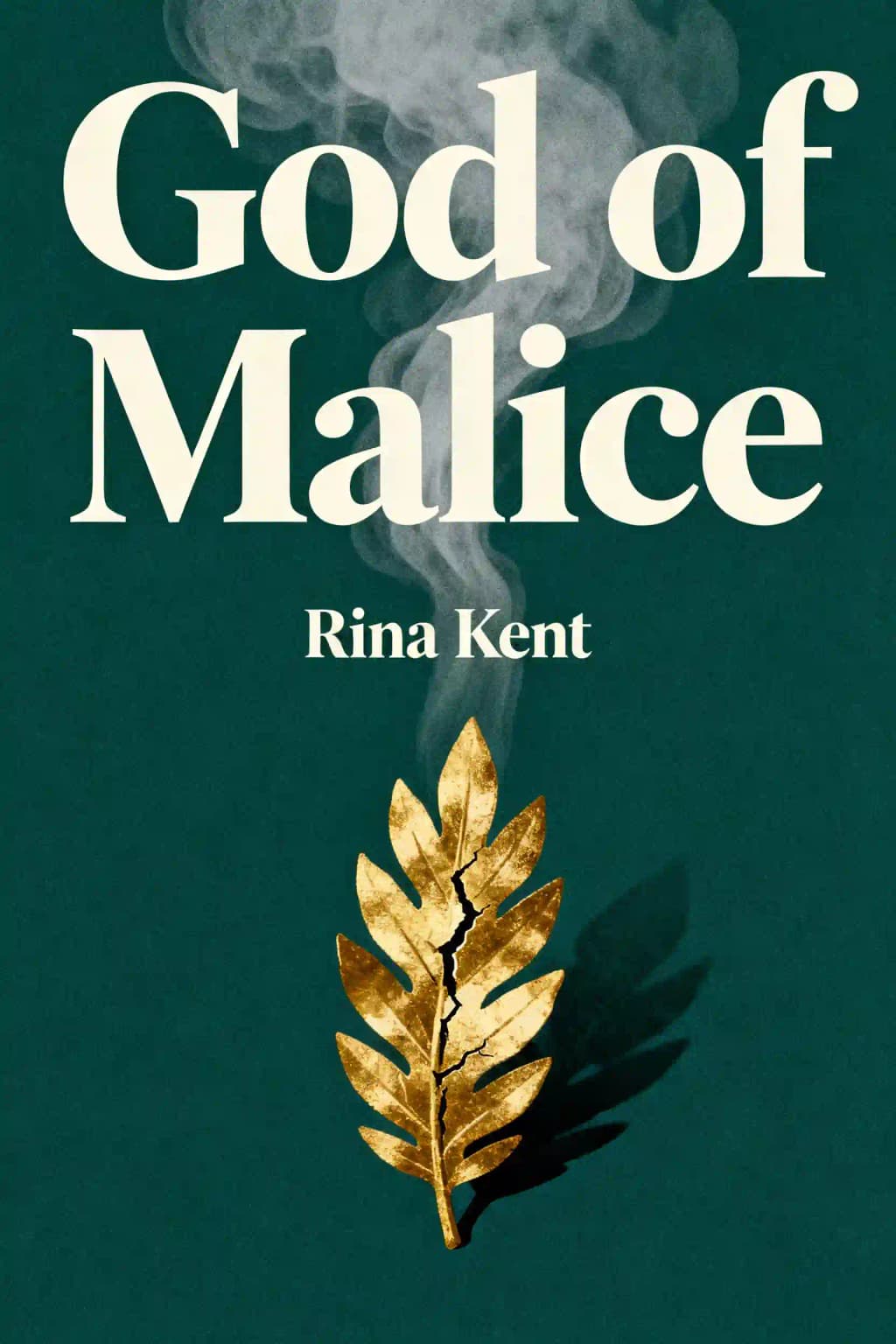
What makes Killian Carson such a compelling character is Kent's unflinching portrayal of his psychology. Unlike many "bad boys" in romance fiction who are eventually tamed by love, Killian is explicitly described as a true psychopath-someone fundamentally different from neurotypical humans. Through his perspective chapters, we gain insight into a mind that processes the world in ways most readers will find alien yet fascinating.
Killian collects photographs of human suffering and vulnerability in a secret "red room," a hobby that began with dissected mice in childhood and evolved to capturing moments of human weakness. He describes himself as "colorless" rather than evil, operating outside conventional morality. Most disturbing is his self-awareness-he knows exactly what he is and makes no apologies for it.
"I've wanted to kill since I was seven," he admits to Glyndon, explaining that he refuses to act on these impulses not out of moral compunction but because it would mean losing control. Control is paramount to Killian; it's what separates him from being just another violent criminal. His medical studies represent another form of control-mastery over the human body and its vulnerabilities.
Yet Glyndon's presence disrupts this carefully maintained equilibrium. She affects him in ways he doesn't understand, making him experience unfamiliar emotions that both fascinate and frustrate him. When he tells her, "There won't be me without you, little rabbit," it's perhaps the closest he can come to expressing love-acknowledging that she has become essential to his existence in a way no one else ever has.
Chapter 5
The Art of Vulnerability
If Killian represents control and calculation, Glyndon embodies vulnerability and artistic sensitivity. As an art student living in the shadow of her more talented family members, she struggles with feelings of inadequacy that make her particularly susceptible to Killian's manipulations. Her art becomes a metaphor for her emotional state throughout the novel-evolving from safe, conventional pieces to raw, chaotic expressions of trauma and desire.
After her first traumatic encounter with Killian, she creates "a chaotic canvas of black and red" that captures her violation. Later, this style becomes her signature, eventually earning recognition from her previously critical professor. This artistic evolution parallels her personal journey-learning to embrace the darker aspects of herself that respond to Killian rather than denying them.
Glyndon's vulnerability extends beyond her art. She carries the weight of her friend Devlin's apparent suicide, unaware that this tragedy is connected to Killian and the club rivalries that will eventually threaten her own life. She also bears the burden of family dynamics-particularly her complicated relationship with her controlling brother Landon, who attempts to dictate her romantic choices.
What makes Glyndon more than just a victim is her gradual reclamation of agency within the constraints of her relationship with Killian. While she ultimately accepts his possessiveness and control in the bedroom, she also challenges him intellectually and emotionally, refusing to be merely an object of his obsession. When she finally tells him "I'm yours," it represents not just surrender but a conscious choice to accept both the man and the monster.
Chapter 6
The Thin Line Between Obsession and Love
At its core, "God of Malice" explores the complex question of whether obsession can evolve into something resembling love, even in someone fundamentally incapable of normal emotional attachments. Killian's initial fixation on Glyndon begins as a calculated investigation into Devlin's death but rapidly transforms into something far more consuming and primal. He describes his feelings as "a violent volcano of obsession, possession, and deranged lust" - his own twisted version of love that defies conventional romantic definitions while maintaining an intense emotional gravity.
Their relationship deliberately challenges traditional romance tropes by never falling into the trap of suggesting Killian will become "normal" through the redemptive power of love. Instead, Glyndon faces the stark choice of whether to accept him exactly as he is - "the good, the ugly, and the fucked-up." Their dynamic is explicitly and unapologetically unequal; Killian dominates both physically and psychologically, demanding complete surrender while offering possession rather than partnership in return. This power imbalance manifests in various ways, from his controlling behavior in public spaces to his obsessive need to monitor her movements and relationships.
Yet within this darkly unconventional framework, moments of genuine connection emerge that hint at something deeper than mere obsession. When Killian creates an ethereal scene by the lake - his fiercely guarded private sanctuary - we glimpse his vulnerability and desire to share beauty with Glyndon, not just control her. The painstaking detail he puts into arranging thousands of fireflies reveals a capacity for creativity and consideration that contradicts his typically ruthless nature. When he defends her against Devlin's brutal attack, risking his own safety in the process, we see that his possessiveness encompasses protection alongside domination - a complexity that challenges simple categorization.
Perhaps most telling is how Glyndon's presence affects Killian's murderous impulses. Despite Cherry's dire warnings that she might intensify his violent tendencies, her presence actually serves to quiet his darkest thoughts and provide focus to his chaos. "Before me, he used to be an aimless monster. Now, he's my monster," Glyndon reflects, recognizing both the tremendous responsibility and unexpected power in this role. This transformation suggests that while their relationship may not fit conventional definitions of love, it creates its own form of balance - one where obsession and attachment become indistinguishable, and possession becomes a two-way street.
Through their story, the novel poses uncomfortable questions about the nature of love itself: Can it exist without equality? Must it always be healthy to be real? The answer seems to lie somewhere in the shadowy space between conventional romance and dark obsession, where Killian and Glyndon forge their own definition of connection.
Chapter 7
Family Wounds and Healing
Beneath the explicit sexuality and psychological manipulation lies a deeply resonant story about generational trauma and the arduous journey toward healing. Both protagonists carry profound childhood wounds that have shaped their adult relationships and defense mechanisms. For Glyndon, it's the crushing pressure of belonging to the talented King family while feeling like the perpetual underachiever - always measuring herself against her siblings' extraordinary accomplishments. For Killian, it's the soul-destroying weight of his father's devastating judgment: "he's defective" - words that became the foundation of his self-image.
The novel masterfully explores how these childhood wounds create vulnerabilities that manipulative people can exploit. Devlin recognized Glyndon's desperate need for validation and weaponized it, using her deep-seated insecurities to make her an unwitting pawn in his vendetta against the Heathens. Similarly, Gareth identified Killian's unresolved anger toward authority figures and attempted to channel that resentment to drive a wedge between him and Glyndon. These manipulation attempts succeed precisely because they target well-worn emotional grooves carved by years of pain.
Yet the story suggests that our deepest wounds can also become portals to healing when confronted with courage and compassion. The pivotal emotional breakthrough arrives when Killian, after years of suffering in silence, finally confronts his father about that overheard conversation from his childhood. The raw honesty of this scene - with Killian's voice breaking as he describes how those words shaped his entire life - creates space for his father Asher to offer both explanation and genuine remorse. Asher reveals that Killian's childhood behaviors triggered his own unresolved trauma from losing his brother to mental illness. The family embrace that follows - described as "stiff, awkward, but achingly sincere" - represents the first tentative steps toward genuine reconciliation.
Glyndon's parallel journey of healing unfolds through several emotionally charged conversations with her mother Astrid. In these intimate moments, she finally voices the inadequacy that has haunted her - the feeling of being the ordinary child in an extraordinary family. Astrid's response offers both validation of Glyndon's pain and a reframing of what makes someone valuable to a family. These healing dialogues suggest that while we cannot erase past trauma, we can integrate it into a new understanding of ourselves.
The novel ultimately presents family wounds not as permanent scars but as opportunities for growth and deeper connection. Through both protagonists' journeys, we see how confronting painful truths - though terrifying - can lead to unexpected moments of grace and the possibility of writing new endings to old stories.
Chapter 8
The Darkness Within: Violence and Power
Violence permeates the world of "God of Malice," from the brutal Heathens initiation where participants must escape being hunted through the dense woods at midnight to the savage beating Devlin inflicts on Glyndon near the novel's climax. Each act of violence is meticulously choreographed to reveal deeper truths about power, control, and human nature. The initiates' terror during the hunt - their ragged breathing, the snap of twigs underfoot, the metallic taste of fear - serves as a visceral reminder that violence isn't merely physical but psychological.
The secret clubs - Heathens, Elites, and Serpents - operate as microcosms of power structures in the broader world, complete with elaborate initiation rituals, strict hierarchies, and territorial disputes. The Heathens' hunting ritual, where new members are stripped of phones, watches, and any means of orientation, reveals how power is maintained through fear and spectacle. Senior members, faces obscured by ancient Greek masks, stalk their prey with military precision, demonstrating that true dominance requires both physical prowess and psychological manipulation. The rivalry between clubs mirrors international conflicts, with Devlin explicitly stating his goal is to "start a war" between factions - a war that begins with whispered threats in marble hallways and escalates to bloody confrontations in abandoned warehouses.
On a personal level, violence becomes a language through which characters communicate when words fail. Landon expresses his disapproval of Killian by kidnapping and torturing him for three days in an underground bunker, leaving scars that become physical reminders of their complicated history. Killian demonstrates his love for Glyndon by inflicting suffering on those who hurt her, each broken bone and bruise a testament to his devotion. Even Glyndon's grandfather Jonathan, a respected businessman, offers to "break the legs" of whoever broke her heart - violence as an expression of familial protection, showing how deeply ingrained these responses are across generations.
What elevates the novel beyond mere glorification of violence is its nuanced exploration of consequences. When Killian and Landon temporarily unite to avenge Glyndon's beating, their retribution doesn't bring closure but escalates the conflict into previously untouched territories. The blood price keeps rising - broken arms lead to knife wounds, knife wounds lead to gunshots, and soon the violence spreads like a contagion through their social circles. Violence begets violence in an endless cycle that threatens to consume everyone involved, suggesting that true power might lie in knowing when not to strike. This is particularly evident in the final confrontation, where Glyndon's choice to lower her weapon becomes the most powerful act of all.
The novel's exploration of violence extends to institutional power as well, examining how universities and wealthy families use more subtle forms of force - financial pressure, social ostracism, and political connections - to maintain their control. These sophisticated mechanisms of power prove just as devastating as physical violence, destroying lives with the stroke of a pen rather than a blade.
Chapter 9
Redemption Through Acceptance
As the story approaches its conclusion, both protagonists face the profound question of whether acceptance-of self and other-can offer a form of redemption. For Glyndon, this means confronting and ultimately embracing her attraction to Killian's darkness rather than trying to rationalize or deny it. "Not all girls like the hero," she reflects in a pivotal moment of self-discovery. "I was fated to fall in love with the villain." This realization marks a departure from traditional romance narratives where the "bad boy" must be reformed to be worthy of love.
This acceptance doesn't excuse or absolve Killian's violent actions but represents Glyndon's conscious choice to see him completely-both the monster and the man-and love him despite, or perhaps because of, this duality. Through intimate scenes and internal monologues, the novel explores how Glyndon's acceptance of Killian mirrors her acceptance of her own darker desires and impulses. It's a complex position that the novel doesn't attempt to simplify or moralize about, instead allowing readers to grapple with the ethical implications themselves.
For Killian, redemption manifests not through becoming "normal" or conforming to societal expectations, but through channeling his darker impulses in ways that protect rather than harm Glyndon. His declaration, "I'd willingly embrace my demons for you. I'd turn into the devil, a monster, and whatever weapon I have to be if it means I can protect you," reveals the only version of love he's capable of offering-one defined by possession and protection rather than equality and emotional vulnerability. The novel suggests that this, too, is a valid form of love, albeit an unconventional one.
Their relationship evolves through various tests and challenges, from external threats to internal conflicts. Killian must learn to balance his possessive nature with Glyndon's need for independence, while Glyndon navigates the complexities of loving someone society deems dangerous. Their journey illustrates how acceptance doesn't mean stagnation but can lead to subtle yet meaningful growth.
The epilogue, set two years later, demonstrates this evolution while staying true to their essential natures. When Killian proposes marriage, he does so with characteristic intensity, taking Glyndon against a tree despite her protests about being in public-showing that his fundamental nature remains unchanged. Yet there's also evidence of growth-he's learned to tolerate her friendships and social outings, recognizing her need for connections beyond their relationship. He maintains his protective stance but has expanded his definition of protection to include Glyndon's emotional well-being. This isn't a conventional happy ending with complete transformation, but rather one that honors the characters' authentic selves while showing their capacity for growth within their established dynamic.
Chapter 10
The Legacy of Trauma and Love
"God of Malice" ultimately suggests that both trauma and love leave permanent marks on us, changing who we are in ways we can't always control. The cliff where Glyndon nearly fell in the opening scene becomes the site of Killian's proposal in the epilogue-a symbolic reclaiming of trauma through choice and agency.
Devlin's betrayal and attack leave physical scars on Glyndon, but they also strengthen her resolve to protect herself and those she loves. Killian's childhood wounds don't disappear, but his connection with Glyndon gives him something beyond himself to focus his obsessive nature on. Even secondary characters like Landon and Gareth show how past experiences shape present actions, creating cycles that require conscious effort to break.
The novel's final message seems to be that we can't escape our histories or fundamental natures, but we can choose who to become within those constraints. Glyndon chooses to love a monster while maintaining her own identity. Killian chooses to channel his darkness into protecting rather than destroying what matters to him. Neither is entirely transformed, but both find a way forward that honors who they truly are.
In a world that often demands conformity to social norms, there's something subversively hopeful about this acceptance of difference-even dangerous difference. As Glyndon's mother Astrid tells her, love is never safe but worth the risk. In embracing this philosophy, both characters find their own version of redemption-not through change, but through the courage to be fully seen and accepted for who they are.