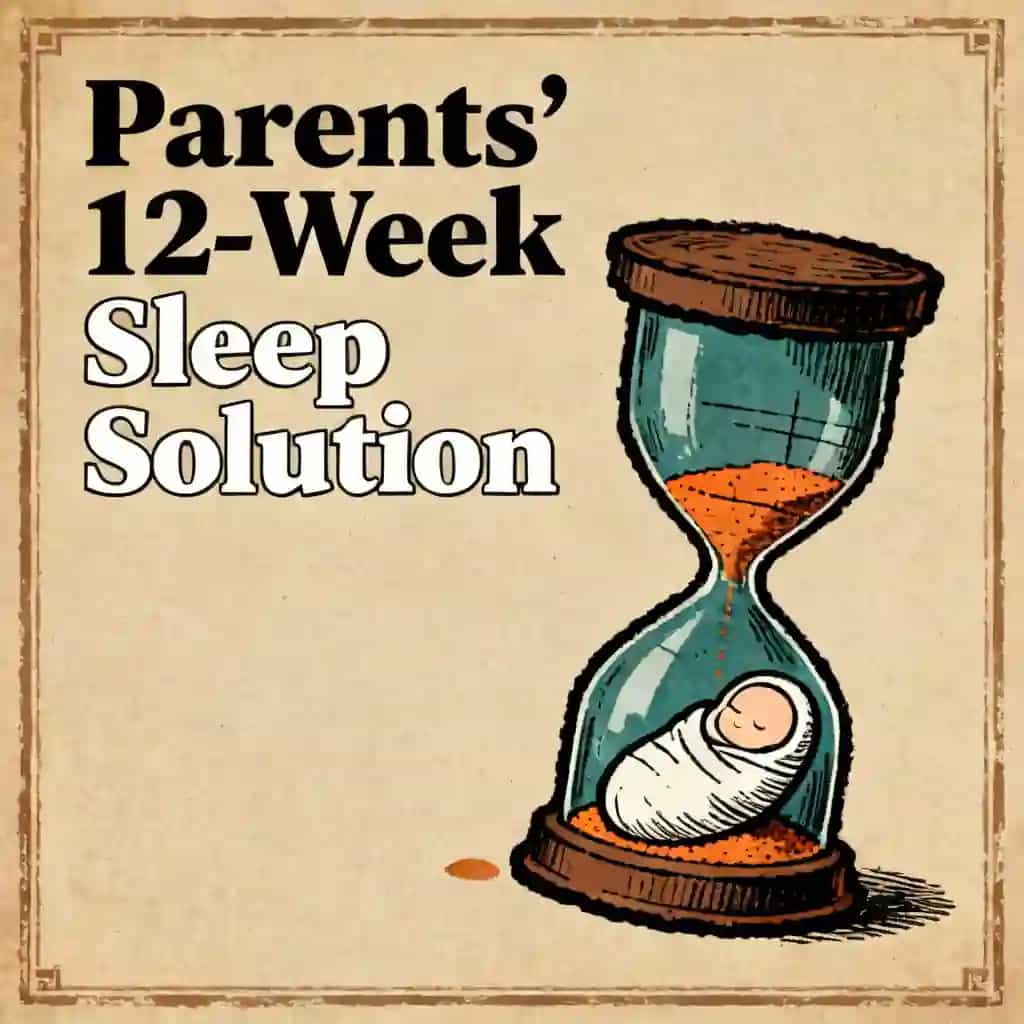
Dr. Mindell's revolutionary sleep guide has rescued countless exhausted parents. What's her secret? A flexible, guilt-free approach that respects individual family dynamics. Could better sleep patterns actually transform your entire household's wellbeing? Parents worldwide swear this compassionate method works when others fail.
Feel the book through the author's voice
Turn knowledge into engaging, example-rich insights
Capture key ideas in a flash for fast learning
Enjoy the book in a fun and engaging way
Break down key ideas from Sleeping Through the Night, Revised Edition into bite-sized takeaways to understand how innovative teams create, collaborate, and grow.
Distill Sleeping Through the Night, Revised Edition into rapid-fire memory cues that highlight Pixar’s principles of candor, teamwork, and creative resilience.

Experience Sleeping Through the Night, Revised Edition through vivid storytelling that turns Pixar’s innovation lessons into moments you’ll remember and apply.
Ask anything, pick the voice, and co-create insights that truly resonate with you.

From Columbia University alumni built in San Francisco

Get the Sleeping Through the Night, Revised Edition summary as a free PDF or EPUB. Print it or read offline anytime.
You're standing in a darkened nursery at 3 AM, swaying with a crying baby in your arms. Your eyes burn with exhaustion. Your partner is equally depleted. You've tried everything-rocking, singing, nursing, driving around the block-yet here you are again, wondering if you'll ever sleep through the night. Sound familiar? You're not alone. Up to 70% of families struggle with infant sleep problems, and without intervention, 84% of these issues persist for years. Here's the truth that changes everything: by six months, every baby is physiologically capable of sleeping through the night. The question isn't whether your baby can sleep-it's whether they've learned how. Sleep is one of nature's beautiful mysteries. We know it consolidates memories, repairs cells, and strengthens immunity, yet its ultimate purpose remains elusive. What we do know is that babies experience sleep fundamentally differently than adults. While you cycle through 90-minute sleep stages with only 20% spent in REM, your newborn operates on 60-minute cycles with half their sleep in active REM-essential for rapid brain development. They can drift into REM immediately, unlike adults who ease through lighter stages first. This isn't a design flaw. Your baby's polyphasic sleep pattern-multiple periods scattered throughout the day-gradually consolidates as their brain matures.