Chapter 1
When Dystopia Becomes Reality: A Nation's Descent into Chaos
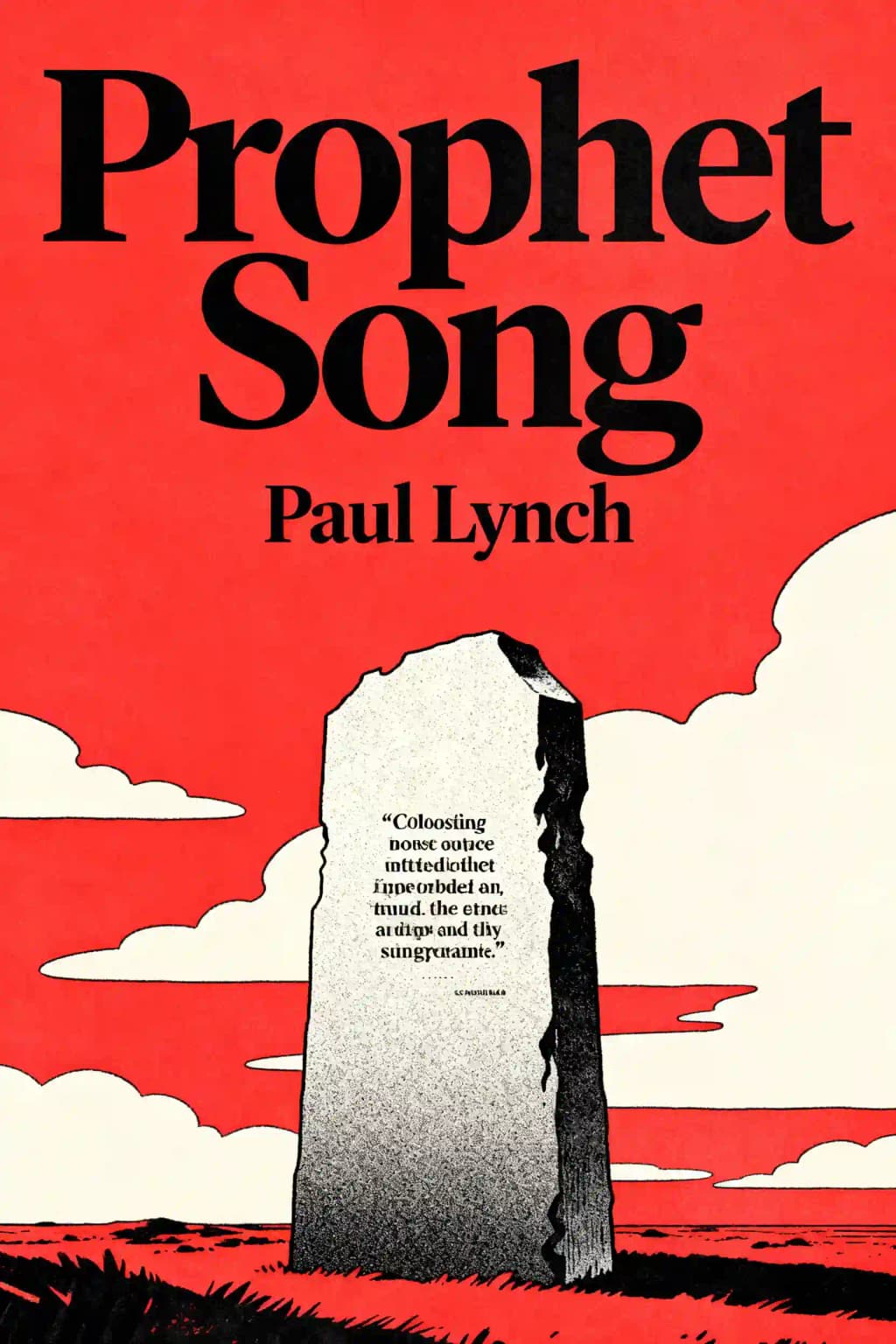
In Paul Lynch's haunting novel "Prophet Song," the Ireland we know transforms into a dystopian nightmare with frightening plausibility. The book has been hailed as "disturbingly prescient" by The Guardian and recently claimed the prestigious Booker Prize, with judges praising its "immersive, layered, and deeply felt" portrayal of societal collapse. When Oprah Winfrey featured it in her book club, she noted how it "forces us to confront the fragility of democracy in ways we can't look away from." Lynch's story resonates particularly in our current political climate, where the erosion of democratic norms no longer feels like distant fiction but an urgent warning. As authoritarianism rises globally, this novel asks us: how would we respond if the unthinkable happened in our own backyard?
Chapter 2
The First Warning Signs: A Family Under Surveillance
The descent into darkness begins with a knock at the door on an otherwise unremarkable Tuesday afternoon. Eilish Stack, a molecular biologist at Trinity College and mother of four, answers while still wearing her lab coat, having just returned from work. She finds two plainclothes officers - one tall and weathered, the other young with close-cropped hair - asking for her husband Larry, a secondary school teacher and active trade unionist. They leave a cream-colored card from the Garda National Services Bureau (GNSB), requesting he call at his "earliest convenience." This seemingly mundane interaction carries an undercurrent of menace that will soon engulf their lives.
When Larry returns home from his evening union meeting, his reluctance to contact the officers immediately creates palpable tension in the family's Victorian townhouse. "Show them you have nothing to hide," Eilish urges over dinner, the children picking up on their parents' anxiety. But Larry bristles at the suggestion, reminding her of his colleague Michael who faced similar questioning last month and hasn't been seen at school since. That night, after putting their youngest to bed, he drives through Dublin's rain-slicked streets to Kevin Street Garda Station where Detective Inspector Stamp - a man whose politeness barely masks his intimidation tactics - presents him with allegations of sedition under the newly enacted Emergency Powers Act. Larry protests that he's merely fulfilling his role as a trade unionist, organizing legal strikes and representing teachers' interests, but the detectives' implications are clear - he's being watched, his phone likely tapped, his movements monitored.
This opening sequence brilliantly establishes the novel's central theme: how quickly normalcy can dissolve when a government turns against its citizens. The invasion of privacy comes not with dramatic raids or midnight arrests but through bureaucratic channels - meeting requests, official letterheads, cordial conversations with undertones of threat - making it all the more insidious. We recognize in Larry's situation the historical pattern of how authoritarian regimes begin their campaigns - by targeting union leaders, academics, journalists, and those who might organize resistance. The parallels to 1930s Germany, Pinochet's Chile, and modern surveillance states are unmistakable.
What makes this scenario particularly chilling is how ordinary it feels. The Stack family could be any middle-class household in Dublin's suburbs, with everyday concerns about children's swimming lessons, mortgage payments, and household routines. Eilish still tends her garden, their teenage daughter Rebecca practices for her piano recital, and their twin boys argue over PlayStation games. The contrast between domestic normalcy and encroaching totalitarianism creates a tension that drives the narrative forward. Through the Stacks' experience, we're forced to confront uncomfortable questions: How many of us would recognize the warning signs if they appeared in such mundane packaging? Would we speak up, or would we tell ourselves it's safer to stay quiet? The author masterfully shows how authoritarianism doesn't arrive wearing jackboots - it comes with a polite smile and an official business card.
Chapter 3
The Erosion of Rights: When Democracy Crumbles
As winter progresses, an unsettled atmosphere pervades the Stack home. Larry grows irritable and withdrawn, using a burner phone to avoid surveillance. Despite these precautions, he remains committed to participating in a planned protest march for constitutional rights. When Eilish urges him to withdraw, fearing GNSB reprisals, she ultimately encourages him to stand firm against government overreach-a decision that will have devastating consequences.
The march turns violent when police charge protesters with horses, tear gas, and batons. Larry is detained in a government roundup of union personnel, and Eilish must construct a web of lies to explain his absence to their younger children. This marks the beginning of a systematic dismantling of civil liberties that accelerates throughout the novel.
Michael Given, a colleague, visits Eilish to reveal that detained union members may be moved to internment camps. The government has begun arresting journalists and controlling newsrooms while suspending habeas corpus-the legal principle preventing unlawful detention. When Eilish attempts to apply for passports for her children, she discovers they've been deemed security risks requiring special clearance.
Lynch brilliantly illustrates how quickly democratic institutions can collapse when emergency powers override constitutional protections. The novel forces us to confront uncomfortable questions: How fragile are our democratic systems? What invisible lines must be crossed before we recognize authoritarianism taking hold? The gradual normalization of state violence makes these questions all the more urgent.
The power of this narrative lies in its refusal to portray these developments as distant or abstract. Instead, we experience them through Eilish's eyes as she navigates increasingly impossible situations. When she visits Mrs. Stamp, the detective inspector's wife, pleading for help with Larry's case, she's called "scum" and told that her husband is a decorated officer protecting the state against agitators. This encounter reveals how easily people justify oppression when they believe they're on the right side of history.
Chapter 4
Daily Life Under Oppression: The New Normal
As the situation deteriorates, Lynch masterfully depicts how oppression infiltrates every aspect of daily life. Eilish lies awake at night, listening anxiously for sounds outside while Molly, her daughter, sleeps in Larry's place. Similar attacks happened nationwide, with rumors that security forces participated. The Alamode cafe, once a neighborhood fixture, now stands vandalized with a closure notice.
At work, Eilish faces sudden dismissal after nine years as a senior manager in biotech. Her solicitor, Anne Devlin, hits walls investigating Larry's whereabouts-her assistant has disappeared, and she offers no news about Larry's location. "What I see now is a black hole opening before us," Anne says. Returning to her car, Eilish finds it vandalized-tires slashed, light kicked in, wing mirror destroyed.
The novel excels at showing how oppression creates ripple effects through every aspect of society. Food shortages emerge as supply chains break down. At the butcher's shop, Paddy Pidgeon deliberately ignores Eilish, serving other customers who arrived after her. When confronted, he turns his back, leaving her standing amid the smell of fat and blood. This small humiliation represents how quickly social bonds dissolve under authoritarian pressure.
Military helicopters hover constantly over the city "as though the city were beset by a plague of insects." A new government decree prohibits foreign media and implements an internet blackout. When Bailey protests, "How am I supposed to live?" his question highlights how totalitarianism particularly impacts younger generations who have never known life without connectivity.
These details create a suffocating atmosphere where each day brings new restrictions and dangers. The genius of Lynch's approach lies in showing how people attempt to maintain normalcy despite these conditions. Eilish continues to prepare meals, help with homework, and maintain household routines even as the world collapses around her. This juxtaposition of domestic life against societal breakdown creates a profound emotional impact that statistics or political analysis could never achieve.
Chapter 5
War Arrives: A City Under Siege
The situation escalates dramatically when actual warfare erupts. Eilish wakes to "a hammering fury" as two columns of dark smoke drift over the southern suburbs and a helicopter gunship hovers nearby. She feels strangely calm, "as if witnessing something she's been waiting for her entire life," conscious of joining countless others across history who have watched war approach their homes.
Venturing out for essentials, she finds ATMs broken, shops closed or price-gouging, and streets transformed. Returning home, she encounters soldiers building a checkpoint near her house. When she tries to pass, they stop her-a young soldier and then an officer checking her ID. "This is a war zone," he warns, ordering her to stay home.
The war shapes itself around their lives: gunfire like pneumatic drilling, shelling that shudders through the house, while smoke rises from multiple sites across the city. The electricity cuts in and out as they attempt to maintain normalcy, Bailey watching TV when possible, Molly refusing to leave her bed, and Eilish struggling to care for them all while worrying about her unreachable father.
Lynch's description of urban warfare is harrowing in its precision. The family moves mattresses downstairs for safety as explosions continue. The rebels eventually dismantle the checkpoint, but Eilish feels not joy but deepening fear her husband and son may never return. The military drops barrel bombs filled with shrapnel and oil; Ben suffers from teething pain while Eilish's body remains perpetually tense, her hair falling out from stress.
These scenes evoke images from contemporary conflicts in Syria, Ukraine, and Gaza, forcing readers to confront the reality that war is not a distant abstraction but a lived experience for millions. By placing this horror in familiar Western European settings, Lynch challenges the comfortable assumption that "it couldn't happen here."
Chapter 6
Family Fractures: When Children Become Casualties
As external pressures mount, the Stack family begins to fracture from within. Mark, the eldest son, grows increasingly distant and eventually joins the rebel forces. When Eilish discovers disturbing videos of executions in his search history, she confronts him about the darkness growing within him. Later, she watches him leave in an unfamiliar car with strangers, heightening her fears for his safety.
Bailey, her younger son, begins wetting the bed and acting out. When Eilish announces she's sold their car, he erupts: "This family is a joke. I wish I never had you for a mother." After she slaps him, they hold each other as he cries. His vulnerability contrasts sharply with his desire to appear strong in a world that suddenly demands toughness.
Molly withdraws into depression, refusing to leave her bed. When Eilish forces her into a cold shower, Molly confesses she feels her father "dying inside her heart." This poignant moment reveals how children process trauma differently than adults, often internalizing political violence as personal loss.
The novel reaches a devastating climax when an explosion rocks their neighborhood. Eilish awakens to find Molly pulling a bicycle off her body, her mouth filled with blood from a bitten tongue. Despite dizziness, she stumbles outside into smoke and dust, desperately searching for Bailey. She finds him helping civil defense workers pull rubble, but discovers his hair matted with blood from shrapnel embedded in his skull.
The journey to get medical care for Bailey becomes a harrowing odyssey through a war zone. They travel in a landscaper's van turned improvised ambulance, eventually reaching an overwhelmed hospital where patients in bloody states fill corridors and floors. When Eilish returns the next day after crossing sniper fire, she discovers Bailey has been mysteriously transferred to another facility-effectively disappeared by the system.
These family dynamics illuminate how political violence destroys not just buildings but the emotional foundations of society. Children lose their innocence, parents lose their authority to protect, and the basic trust that holds families together dissolves under impossible pressures.
Chapter 7
Resistance and Complicity: Moral Choices Under Duress
Throughout the novel, characters must make impossible moral choices that reveal their deepest values and true character. The brutal torture and killing of two detained teenage boys - found mutilated in a drainage ditch after three days of interrogation - becomes a catalyst for widespread civil unrest. In response, fifty thousand people gather at College Green in what begins as a peaceful demonstration. Eilish, accompanied by her children and her friend Carole, joins the sea of protesters wearing white clothing and carrying flickering candles - a powerful symbol of hope and remembrance. This peaceful resistance is met with shocking brutality as security forces deploy an arsenal of weapons: tear gas that burns eyes and throats, deafening flash grenades, rubber bullets, and eventually live ammunition. The aftermath leaves thousands arrested, hundreds injured, and eleven dead.
The novel meticulously explores various forms of resistance, from large-scale organized protests to seemingly insignificant acts of personal defiance. When Eilish encounters a teenage boy breaking curfew on Morton Street, she instinctively rushes forward, claiming him as her son despite the obvious age difference. She positions herself between the youth and the approaching rebel police, knowing full well the risks she's taking. Though the ungrateful youth later spits in her kitchen sink and disappears without thanks, her spontaneous act of protection demonstrates how moral conviction can override self-preservation - even for strangers.
Lynch's examination of complicity proves equally nuanced and compelling. At her cousin Margaret's wedding reception, when the national anthem begins playing through crackling speakers, Eilish makes a conscious choice to remain seated while others rise. She quietly ties a white scarf around her neck - a symbol of resistance adopted by the opposition movement - while the rest of the wedding party sings what she considers "the lie." This moment crystallizes how authoritarian regimes maintain control not just through force, but through social pressure and the human desire to conform. The disapproving glances and whispered comments from fellow guests demonstrate the personal cost of such small rebellions.
The transformation of familiar faces into regime supporters proves particularly disturbing. Rory O'Connor, once a jovial neighbor who borrowed garden tools and shared Sunday papers, now sports a party pin on his lapel when Eilish encounters him at Clerys department store during Christmas shopping. At her workplace, the sudden replacement of their long-serving managing director with Paul Felsner brings party rhetoric into daily operations, complete with mandatory political education sessions and loyalty pledges before meetings. These individuals represent the insidious way authoritarianism seeps into ordinary life - through small compromises that accumulate into complete moral surrender.
The novel repeatedly forces readers to confront uncomfortable questions: Would we risk our safety to protect strangers? Would we compromise our principles to protect our families? Would we recognize the moment when small concessions become moral capitulation? Through Eilish's experiences, we see how seemingly simple choices - standing for an anthem, wearing a pin, signing a loyalty statement - carry profound moral weight in oppressive circumstances. These questions have no easy answers, which is precisely why they deserve our consideration before crisis arrives, when clear thinking becomes clouded by fear and survival instincts.
Chapter 8
Refugee Experience: The Desperate Flight
The final sections of the novel transform into a refugee narrative as Eilish flees with her remaining children. They join others walking toward the border, eventually boarding a minibus for fifty pounds per person. The journey becomes a gauntlet of checkpoints, each requiring payment, with militias demanding "exit taxes."
At the British checkpoint, Eilish must purchase a "temporary passport" for Ben. The official demands more money than she has, suggesting he wants to "interview" Molly alone. Recognizing his predatory intentions, Eilish places all her remaining money on the table. Though angry, the official accepts it and sends them through.
After crossing, they avoid the registration center where a man named Gary approaches them, claiming to rescue them from "limbo land" in refugee camps. During a stop, Eilish cuts both her and Molly's hair short to protect her daughter from sexual assault. They're eventually taken to an abandoned factory where "the Gaffer" locks them in a room with barred windows alongside dozens of others. Days pass in squalid conditions with inadequate facilities and limited food.
The novel's final scene finds them on a beach with inflatable boats and insufficient life vests. Though Molly begs not to go, Eilish looks at the horizon and knows they must continue their journey, telling her daughter, "to the sea, we must go to the sea, the sea is life."
This section powerfully reverses the perspective many Western readers bring to refugee narratives. By placing a middle-class European family in circumstances typically associated with refugees from the Global South, Lynch challenges our tendency to view displacement as something that happens to "others." The Stack family's journey mirrors the experiences of millions who have fled Syria, Afghanistan, and other conflict zones, forcing readers to recognize the universal vulnerability of all humans to political violence.
Chapter 9
The Personal Cost of Political Collapse
What makes "Prophet Song" so devastating is its unflinching examination of how political collapse destroys individual lives, unraveling the fabric of families and communities with ruthless efficiency. Eilish's father Simon exemplifies this destruction - once a sharp, independent man who took pride in his well-kept home and intellectual pursuits, he deteriorates mentally as the crisis deepens, becoming a shadow of his former self. When Eilish visits, she finds him transformed: a new white beard covers his once-clean-shaven face, and the house has fallen into shocking disarray. He seems perpetually disoriented, keeping the stove lit despite suffocating summer heat, surrounded by towers of unwashed dishes and unopened mail. Later, in a heart-wrenching phone call, he reaches out in panic, believing his long-dead wife has simply stepped out and abandoned him. "Where does all our love go when once we held it beating in our hand?" he asks - a question that echoes throughout the novel, speaking to both personal loss and national collapse.
The psychological toll of living under authoritarian control manifests physically in every character. Eilish's body bears witness to the trauma - she exists in a state of perpetual tension, her shoulders permanently hunched, her hair falling out in alarming clumps from relentless stress. She dreams frequently of Larry, seeing him hollow-cheeked and prematurely aged, waking to find her pillow wet with tears. During a harrowing checkpoint crossing under sniper fire, she falls when a woman mere feet away is shot through the neck. In that moment, certain of her own death, she's overcome with crushing grief not for herself, but for having ignored earlier warnings to evacuate her children to safety.
Even amid escalating horror, the novel weaves moments of profound tenderness that illuminate the persistence of love in darkness. When Eilish carefully shaves her father's unkempt beard as he rambles about a visitor who might have been Mark - or maybe Matthew, he's no longer sure - she's overwhelmed by a wave of love so intense it nearly breaks her. She responds by secretly stitching a label with his vital information into his coat lapel, a small act of protection for when she can no longer watch over him. Sitting in her mother's old chair, worn smooth by years of use, she contemplates time's cruel dual nature - how it simultaneously adds days while taking away what remains of the people we love, whispering to her sleeping father, "I never wanted you to be anybody else."
These intimate moments serve as powerful reminders that political violence is never merely abstract - it methodically destroys specific lives, cherished relationships, and imagined futures. The novel's genius lies in making us care deeply about the Stack family while forcing us to recognize they represent countless others whose stories go untold, whose losses remain unmourned in the broader sweep of history. Through their experiences, we witness how quickly the familiar structures of daily life can crumble, leaving only love and memory as anchors in a world turned hostile.
Chapter 10
A Warning We Cannot Ignore
"Prophet Song" serves as a powerful warning about the fragility of democratic institutions and the speed with which societal collapse can occur. Through Eilish's journey, we witness how quickly rights can be suspended, how easily neighbors can turn against each other, and how thoroughly violence can transform everyday life. The novel depicts this transformation with chilling precision - from the initial small erosions of civil liberties to the eventual breakdown of social order in ways that feel devastatingly familiar.
The story's progression mirrors historical examples of democratic decline, from the Weimar Republic to modern-day examples of backsliding democracies. Lynch masterfully shows how each small compromise, each accepted violation of norms, creates a cumulative effect that ultimately leads to catastrophic change. The novel particularly excels in depicting how ordinary people rationalize these changes, finding ways to normalize the increasingly abnormal - until it's too late.
The novel refuses easy consolation or heroic resistance narratives. Instead, it presents survival itself as an act of courage in impossible circumstances. When Eilish realizes she must remain alive as "a vessel in which to carry the children away from the darkness" despite her grief, she embodies the quiet heroism of refugees throughout history. Her story echoes countless real-world examples - from Syrian families fleeing across the Mediterranean to Ukrainian mothers seeking safety across borders - highlighting the universal nature of displacement and survival.
What makes Lynch's vision so disturbing is its plausibility. The mechanisms of control he describes - surveillance, detention without trial, control of information - exist in various forms around the world today. The novel details how these tools of oppression are implemented: the gradual expansion of surveillance through seemingly benign technology, the exploitation of existing legal frameworks to enable detention, and the sophisticated manipulation of media narratives. Modern examples like facial recognition systems, social credit scores, and digital surveillance demonstrate how these mechanisms are already at work in various societies.
The story's setting in Ireland - a stable, prosperous Western European democracy - deliberately challenges the complacent assumption that "it couldn't happen here." Lynch shows how economic instability, political polarization, and external threats can combine to create perfect conditions for democratic collapse. The novel's events parallel real-world patterns of democratic erosion, where institutions are hollowed out from within while maintaining a facade of legitimacy.
As we close the book, we're left with urgent questions that resonate with current global challenges: How do we protect democratic institutions before they collapse? How do we maintain our humanity when systems fail? And perhaps most importantly, how do we ensure that fiction like "Prophet Song" remains speculative rather than prophetic? The novel suggests that the answer lies not in dramatic acts of resistance but in the small, daily choices we make to protect our shared values and human connections.