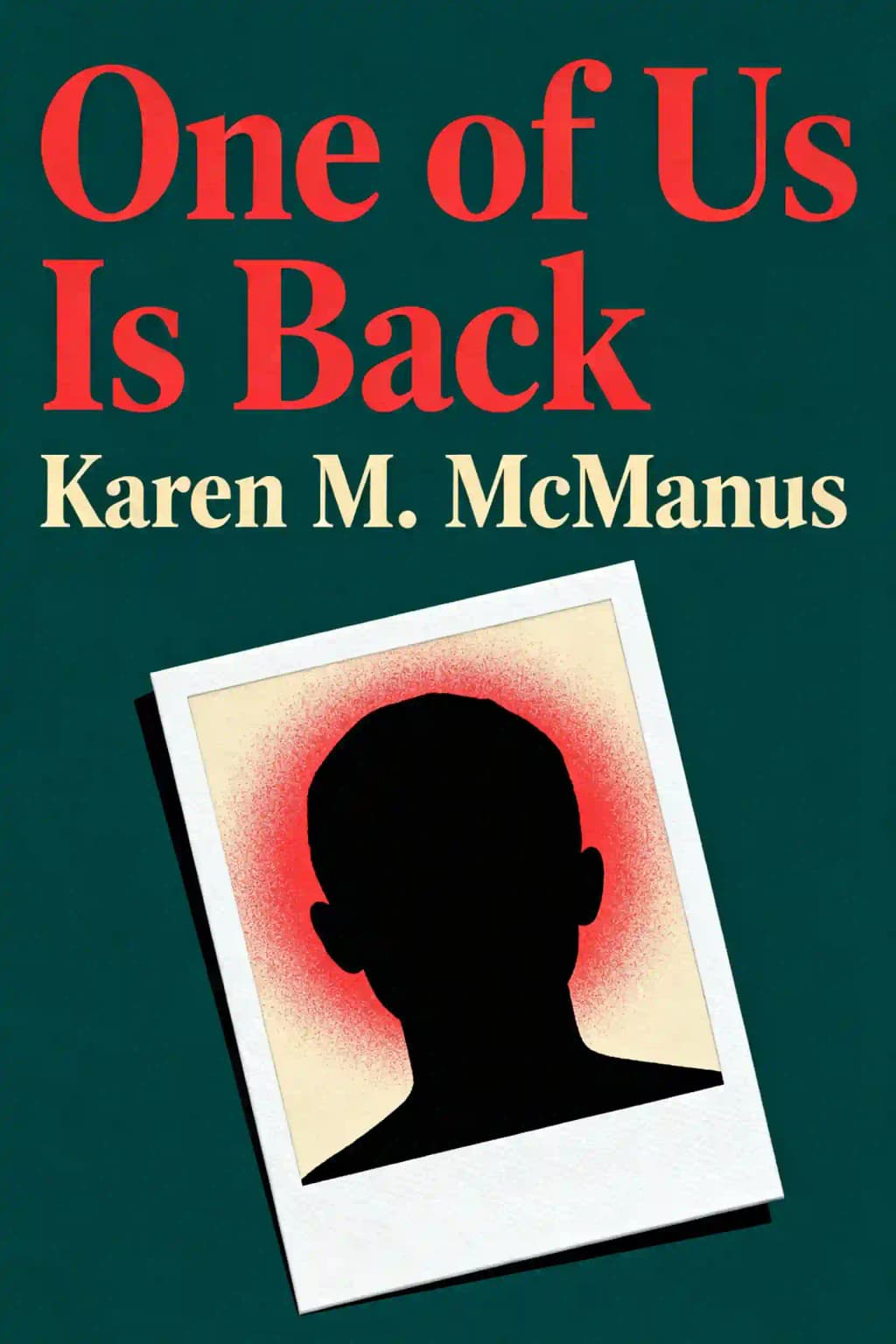
Chapter 4
The First Victim: Practice Makes Perfect
The new game claims its first victim when Phoebe disappears after a party at Nate's house. The Murder Club frantically searches for her, eventually finding her drugged and abandoned in the equipment shed at Bayview High. Most disturbing is the word "PRACTICE" written in black marker on her arm-a cryptic message that becomes the first piece in a terrifying puzzle.
When Phoebe regains consciousness, she describes being in a room with distinctive green vine-patterned wallpaper. This detail triggers a memory for Addy: the sunroom in Jake Riordan's family vacation home in Ramona. The connection to Jake seems obvious, but something doesn't quite add up.
Before they can fully process what happened to Phoebe, tragedy strikes again. Reggie Crawley, Nate's problematic roommate known for recording women without consent, is found dead in the Bayview High locker room-tied to a chair with the word "MAKES" written on his arm in the same block lettering used on Phoebe.
"Practice makes..." Maeve theorizes, connecting the dots. "They're spelling out a message with each victim."
The phrase "Practice makes perfect" emerges as a possible endgame, raising the terrifying question: who or what represents "perfect" in this deadly equation?
As the Murder Club investigates, they discover that "Practice Makes Perfect" was a famous advertising campaign created by Conrad and Olsen-the same agency that manages the hacked billboard and where Jake's mother, Katherine Riordan, once worked as co-managing director alongside Alexander Alton, who mysteriously drowned six years ago.
The investigation takes an even more sinister turn when Jake Riordan disappears, his ankle monitor cut off and abandoned in his yard. Could Jake be another victim? Or is he somehow orchestrating these events from behind the scenes?
What becomes increasingly clear is that the current attacks are connected to long-buried secrets-secrets that involve the Riordan family, the Alton family, and events that transpired years before the Murder Club ever formed. As Bronwyn observes, "In Bayview, the past never stays buried for long."
Chapter 5
Unmasking the Past: The Alton Family Mystery
As the Murder Club digs deeper into the connection between the current attacks and Conrad and Olsen advertising agency, they uncover a web of secrets surrounding Alexander Alton's death six years ago. Alexander was the co-managing director alongside Katherine Riordan, Jake's mother, and rumors suggest they were having an affair.
Vanessa Merriman, a former high school nemesis who's unexpectedly inserted herself into the investigation, provides crucial information after visiting Ms. Riordan. During a wine-fueled confession, Ms. Riordan admitted to having had an affair with Alexander years earlier. They had reconnected at Conrad and Olsen and planned to leave their respective spouses before Alexander's mysterious drowning while Ms. Riordan was in Mexico for work.
"She called him her 'ticket out' of her marriage," Vanessa reveals.
This revelation leads the group to investigate Alexander's children: Chase, an aspiring actor in LA; twins Christopher and Chelsea; and their mother, who died in a drunk driving accident. Could one of them be seeking revenge for their father's death?
Maeve has been tracking Chelsea Alton through Instagram posts that show her studying at Oxford University in England. But when they discover that the real Sophie Hicks-Hartwell has accused "Chelsea" of stealing her photos, they realize Chelsea has been catfishing them-creating a false alibi while she's actually somewhere much closer.
This realization coincides with another shocking discovery: "Evie," a barista at Cafe Contigo who has been hovering at the edges of their investigation, is actually Chelsea Alton. And Gavin Barrett, Nate's coworker, knew Chelsea years ago in Ohio.
The pieces start falling into place, revealing a revenge plot years in the making. Chelsea and Gavin have been meticulously planning their vengeance against those they hold responsible for Alexander Alton's death-with Jake Riordan at the center of their crosshairs.
What remains unclear is exactly what happened to Alexander Alton and why his children blame Jake. As Addy observes, "In Bayview, everyone has secrets. The question is always which ones are worth killing for."
Chapter 6
The Darkest Secret: Jake's Original Sin
The truth about Alexander Alton's death emerges through a series of shocking revelations. Six years earlier, Jake and Simon witnessed a confrontation between Jake's father Scott and Alexander Alton. During this confrontation, Alexander made a stunning claim: Jake was actually his biological son, the product of his affair with Katherine Riordan.
Enraged, Scott attacked Alexander, leaving him unconscious on the floor. But it was Jake who made the horrifying decision to finish what his father started, smothering Alexander with a towel while Simon secretly watched through the window.
Rather than reporting the crime, Simon kept this knowledge as leverage over Jake-a debt he would later collect when planning his revenge scheme at Bayview High. Before his death, Simon sent a letter to Chelsea Alton, revealing the truth about her father's murder.
This revelation casts Jake's character in an even darker light. His violence and manipulation didn't begin with Addy-they were fundamental aspects of his personality that manifested years earlier. As Addy realizes, "The monster in Jake existed long before we met."
Jake's murder of Alexander Alton represents his original sin-the moment when he crossed a moral line from which there was no return. It explains why Simon had such power over Jake during the events of the first book and why Jake was willing to go to such extremes to protect his secret.
For Chelsea, this knowledge fueled a years-long quest for revenge. She adopted the slogan from her father's last advertising campaign-"Practice Makes Perfect"-as the framework for her own game of retribution. She targeted those she deemed complicit: Vanessa for enabling Jake (though Phoebe accidentally drank the drugged drink intended for Vanessa), Reggie for defending Jake despite his predatory behavior, and ultimately Jake himself-the "perfect" in her deadly equation.
The revelation of Jake's patricide creates a moral complexity within the narrative. While Jake is undeniably a villain who has caused immense harm, Chelsea's revenge quest has itself created new victims and perpetuated Bayview's cycle of violence. As Cooper observes, "At some point, someone has to break the chain."
Chapter 7
The Final Confrontation: Breaking the Cycle
The story reaches its climax when Chelsea and Gavin capture Addy, Phoebe, and Jake, bringing them to Chelsea's childhood home. With a gun in her hand, Chelsea forces Jake to face the truth about Alexander Alton's murder while beginning to write "PERFECT" on his arm-completing her macabre message.
When Cooper and Luis arrive to rescue them, Chelsea seems ready to flee with Gavin but suddenly changes her mind. With a half-smile, she raises her gun and fires, leaving readers momentarily uncertain about who has been shot.
The aftermath reveals that Jake is dead-Chelsea's revenge complete. While the Murder Club is saved from Jake's future threats, they're left to grapple with the moral complexity of what transpired. Jake was a monster who caused immense harm, but his death by Chelsea's hand represents yet another link in Bayview's chain of violence.
In the days following the confrontation, each character must decide how to move forward. Owen Lawton confesses his role in Brandon Weber's death, accepting that he deserves consequences for his actions. The Shaw family practices "brutal honesty" as they process their collective trauma, acknowledging their shared pain while supporting each other through it.
Nate tells Bronwyn that despite her imminent departure for college, he has a "fifty-year plan" that revolves around her. "Someday I'm going to marry you," he promises, to which Bronwyn simply responds, "Oh, I know."
Addy, perhaps changed most profoundly by the events of the trilogy, prepares for her trip to Peru-a journey of self-discovery far from Bayview's shadows. In a symbolic act of closure, she burns an old photo of herself with Jake on the beach, saying goodbye to her past while embracing an uncertain but hopeful future.
"The thing about monsters," Addy reflects, "is that they only have power over you if you let them. Jake's gone, but I'm still here. And I get to decide what that means."
This final confrontation brings the trilogy full circle, addressing the question at the heart of the series: Can we ever truly escape the consequences of our actions? While the answer remains complex, the characters demonstrate that healing is possible-not by forgetting the past, but by confronting it honestly and choosing a different path forward.
Chapter 8
The Price of Secrets: Truth as Both Poison and Cure
Throughout One of Us Is Back, secrets function as both weapons and shields. Characters conceal truths to protect themselves and others, only to discover that these very secrets often cause more harm than the truths they hide.
Phoebe's decision to keep Owen's involvement in Brandon's death secret isolates her from her friends and creates a vulnerability that Chelsea exploits. When she finally confesses to Knox, his reaction-"You're perpetuating the cycle"-forces her to confront the consequences of her silence.
Similarly, Jake's family is destroyed by the secret of his paternity and his murder of Alexander Alton. As Simon observed years earlier, "Secrets are power"-but that power often corrupts both the keeper and those affected by the secret.
Maeve, who has spent much of the trilogy investigating others' secrets, offers perhaps the most insightful perspective on why people lie: "Most people aren't malicious; they're afraid." This compassionate understanding recognizes that deception often stems from vulnerability rather than malice-people lie because they fear the consequences of truth.
Yet the novel also demonstrates that truth, however painful, is ultimately necessary for healing. When the Shaw family practices "brutal honesty" after Owen's confession, they begin to process their collective trauma in a healthy way. When Addy burns the photo of Jake, acknowledging the truth of her past while refusing to let it define her future, she takes a crucial step toward genuine freedom.
"The truth doesn't set you free," Addy reflects. "But it does give you somewhere to start."
This nuanced exploration of truth and deception avoids simplistic moral judgments, recognizing that human relationships are complex and that sometimes people lie for understandable reasons. Yet it ultimately argues that secrets, especially those born of violence or shame, tend to perpetuate cycles of harm that can only be broken through honest confrontation with the past.
Chapter 9
Breaking the Chain: Finding Hope After Trauma
The conclusion of One of Us Is Back-and indeed the entire trilogy-offers a measured but genuine sense of hope. While acknowledging that trauma leaves lasting scars, the story suggests that healing is possible through connection, honesty, and the courage to imagine a different future.
Each character finds their own path forward. Addy, who began the trilogy as Jake's controlled girlfriend, emerges as a strong, independent woman preparing for adventures abroad and exploring her attraction to Keely. Her journey represents perhaps the most profound transformation-from victim to survivor to someone who refuses to be defined by her past trauma at all.
Nate and Bronwyn, whose relationship has weathered numerous challenges, commit to a future together despite the uncertainties of long distance and different life paths. Their relationship, built on mutual respect and understanding, stands in stark contrast to the controlling dynamic between Jake and Addy in the first book.
Phoebe and Knox navigate the complexities of friendship evolving into something more, demonstrating that vulnerability-while frightening-can lead to deeper connection. Their tentative steps toward romance suggest that trust is possible even after betrayal.
Even Owen, who carried the heavy burden of his role in Brandon's death, finds a measure of peace through confession and accountability. His willingness to face consequences represents a break from Bayview's pattern of denial and deflection.
The novel's final image-Addy burning Jake's photo on the beach while holding the secret of her future niece's name-beautifully encapsulates this theme of breaking cycles. As she watches the past turn to ash while anticipating a new generation, Addy embodies the possibility of transformation: acknowledging history without being imprisoned by it.
"The thing about revenge," Addy reflects in the closing pages, "is that it keeps you tethered to the person who hurt you. I don't want to be tethered to Jake anymore. I want to be free."
This freedom-not the absence of pain or the erasure of memory, but the ability to move forward despite them-represents the trilogy's most profound message. In a community haunted by cycles of revenge, the characters ultimately discover that breaking the chain requires not forgetting the past, but refusing to let it dictate the future.
Chapter 10
The Legacy of Bayview: When Will the Games End?
As One of Us Is Back concludes, it leaves readers with a lingering question: Has Bayview finally broken free from its cycle of secrets and revenge, or is this merely a temporary reprieve?
The trilogy began with Simon Kelleher's deadly game, continued with Jared Jackson's Truth or Dare, and concluded with Chelsea Alton's "Practice Makes Perfect." Each game emerged from genuine grievances-Simon's social isolation, Jared's brother's death, Chelsea's father's murder-yet each perpetuated harm rather than healing.
This pattern reflects broader social questions about justice, retribution, and reconciliation. When systems fail to provide accountability, individuals may seek their own form of justice, often with devastating consequences. As Bronwyn observes, "The problem with revenge is that it never quite satisfies the way you think it will."
Yet the novel doesn't condemn those who seek justice-it simply illustrates the destructive nature of vengeance as a means to achieve it. Chelsea's desire to hold Jake accountable for her father's murder is understandable, even sympathetic. Her methods, however, created new victims and perpetuated Bayview's cycle of trauma.
The Murder Club itself represents an alternative approach to justice-one based on truth-seeking, community, and formal accountability rather than personal retribution. Their investigations have consistently aimed to expose truth rather than exact punishment, suggesting a more constructive path forward.
As the characters disperse to college and new adventures, Bayview remains-its history neither erased nor deterministic. The legacy of Simon, Jake, and now Chelsea will continue to shape the community, but perhaps with each revelation, each confrontation with buried truths, the town moves incrementally toward healing.
"Maybe that's all we can do," Maeve suggests in the final chapter. "Try to leave things a little better than we found them."
This modest but meaningful aspiration encapsulates the trilogy's ultimate message: that while we cannot undo the past or guarantee a perfect future, we can choose to break destructive patterns and create space for something better to emerge. In this sense, the legacy of Bayview-like the legacy of the Murder Club itself-remains unfinished, a story still being written by those brave enough to imagine it differently.