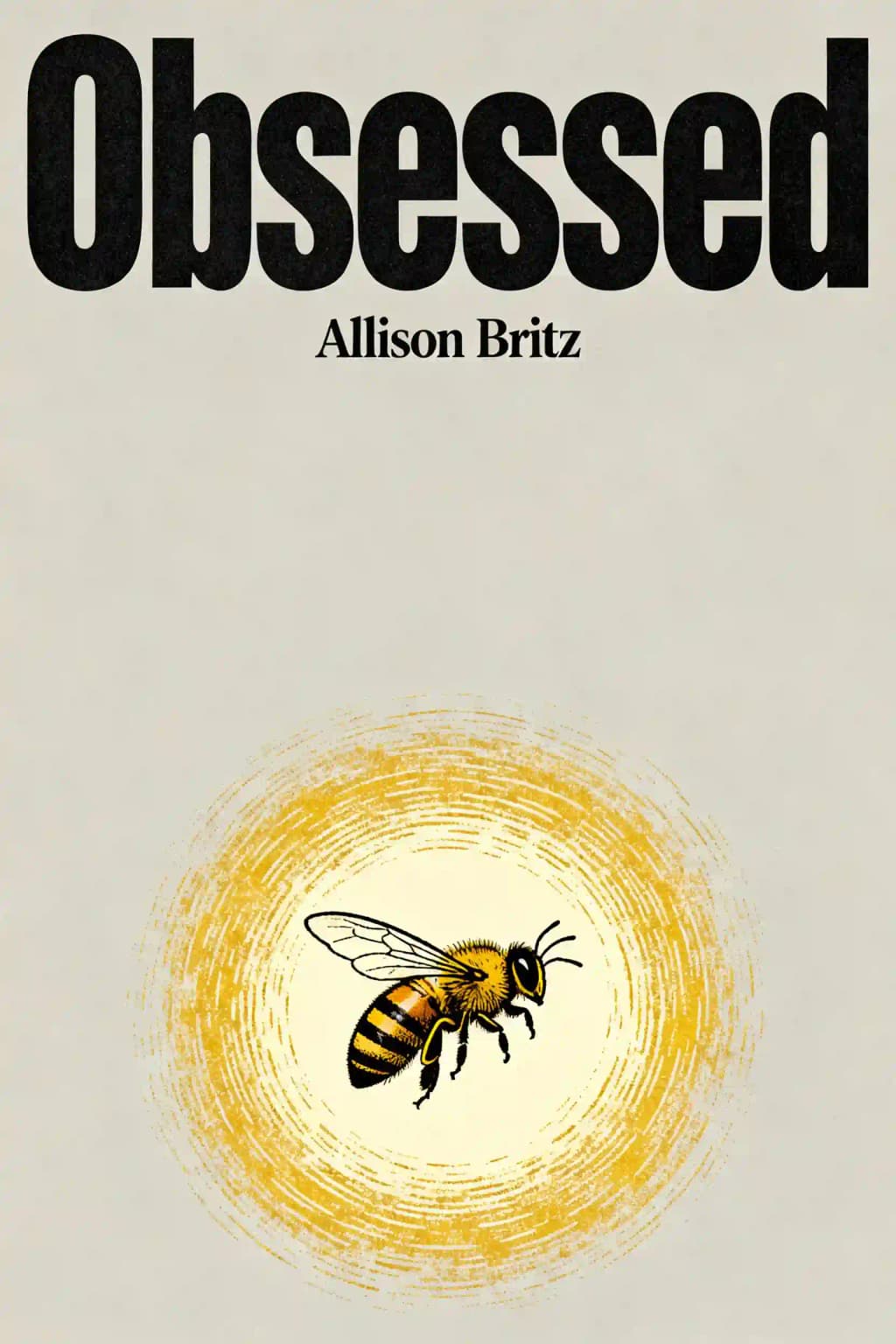
What is Obsessed by Allison Britz about?
Obsessed by Allison Britz is a young adult memoir chronicling the author's debilitating struggle with obsessive-compulsive disorder during her sophomore year of high school. After a vivid nightmare about brain cancer, fifteen-year-old Allison develops severe OCD that transforms her from a popular, high-achieving student into an outcast who must avoid everyday objects like pencils, computers, and even certain colors. The memoir tracks her painful descent into mental illness and her hopeful journey toward recovery through professional treatment.
Who is Allison Britz and why did she write Obsessed?
Allison Fairall Britz is a Wake Forest University graduate (BA '11, MAM '12) who wrote Obsessed as her first book to share her teenage experience with OCD. She penned this powerful memoir to help others understand the reality of living with obsessive-compulsive disorder and to provide hope for those struggling with mental illness. As an adult, Allison continues to manage her OCD, demonstrating that while the condition doesn't disappear, it can be controlled with proper treatment and coping strategies.
Who should read Obsessed by Allison Britz?
Obsessed by Allison Britz is essential reading for teenagers and young adults experiencing anxiety or OCD symptoms, as well as parents, educators, and mental health advocates seeking to understand these conditions. The memoir is particularly valuable for anyone who feels isolated by mental illness or struggles to explain their experiences to others. It's also beneficial for readers interested in mental health memoirs that offer both raw honesty about psychological struggles and genuine hope for recovery through professional treatment and personal resilience.
Is Obsessed by Allison Britz worth reading?
Obsessed by Allison Britz is absolutely worth reading for its unflinching portrayal of OCD's devastating impact on a teenager's life and relationships. The memoir received strong reviews, including a 4.5/5 star rating, and was nominated for the Abe Lincoln Award in 2021. Readers particularly appreciate Allison's brave vulnerability in detailing her descent into mental illness and the practical insights into treatment options, including therapy with psychologist Dr. Nelson. The book successfully balances educational value with compelling storytelling that keeps readers engaged throughout.
How did Allison Britz's OCD symptoms start in Obsessed?
Allison Britz's OCD in Obsessed began with a single, terrifying nightmare about being diagnosed with brain cancer, which she became convinced was a premonition or divine warning. The intrusive thought that she had brain cancer felt overwhelmingly real and triggered immediate, consuming fear. Within hours, she started interpreting random occurrences—like song lyrics on the radio saying "it's all in my head"—as coded messages confirming her fears. This pattern of finding hidden meaning in unrelated events quickly escalated from avoiding sidewalk cracks to developing elaborate rituals and restrictions.
What objects and activities did Allison have to avoid due to OCD in Obsessed?
In Obsessed, Allison Britz's OCD forced her to avoid an extensive list of everyday items including:
- Hair dryers
- Calculators
- Cell phones
- Computers
- Notebook paper
- Pencils
- Most schoolbooks
- Anything green in color
- Bananas
- Oatmeal
- Most of her own clothing
These avoidances weren't random—each object was perceived as deadly through intense physical sensations or sudden, forceful intrusive thoughts that labeled them as dangerous. The restrictions became so severe that they destroyed her ability to function as a student, causing her GPA to implode and eliminating her plans for the future.
How did OCD affect Allison Britz's relationships and school life in Obsessed?
OCD transformed Allison Britz from a once-popular, high-achieving student with tons of extracurricular activities into an isolated outcast. Her inability to act "normal"—counting steps loudly, avoiding common objects, performing strange rituals—alienated her friends who couldn't understand her sudden behavioral changes. Her parents questioned her increasingly bizarre behavior, leading to explosive fights as they struggled to comprehend what was happening. Academically, when she couldn't touch pencils, paper, or most textbooks, her previously stellar GPA collapsed along with her college prospects.
What treatment did Allison Britz receive for OCD in Obsessed?
In Obsessed, Allison Britz's treatment journey began with a psychiatrist, Dr. Adams, who recommended medication, but Allison initially refused pharmaceutical intervention. She was then referred to a psychologist, Dr. Nelson, who introduced her to therapeutic techniques that helped her recognize and manage her compulsions rather than simply obeying them. The memoir emphasizes that OCD doesn't completely disappear—even as an adult, Allison still experiences intrusive impulses that she must actively recognize and control using the strategies she learned in therapy.
What does Obsessed by Allison Britz teach about intrusive thoughts and OCD?
Obsessed by Allison Britz reveals that intrusive thoughts in OCD are unwanted, persistent, and feel incredibly real despite having no basis in reality. The memoir demonstrates how Allison misinterpreted these obsessions as divine warnings or messages from a "monster," "protector," or God, believing she was chosen to receive secrets about illness and danger. Unlike typical worries, these thoughts demand immediate attention and trigger overwhelming fear that compels sufferers to perform rituals or avoidances to neutralize perceived threats. The book powerfully illustrates how something as simple as a dream can trigger a lifelong struggle with mental illness.
What is the main message of Obsessed by Allison Britz?
The main message of Obsessed by Allison Britz is that OCD is a debilitating but manageable mental illness, and seeking professional help is crucial for recovery. Allison's memoir emphasizes that mental health struggles don't define your worth or future—with proper treatment, therapy, and learned coping mechanisms, people with OCD can reclaim their lives. The book also conveys that recovery isn't about curing the condition entirely but learning to recognize obsessive patterns and manage compulsions effectively. Most importantly, it offers hope that even in the depths of mental illness, there is a path forward through vulnerability, asking for help, and persistent effort.
How does Obsessed by Allison Britz portray the reality of living with OCD?
Obsessed by Allison Britz portrays OCD not as a quirk about cleanliness or organization, but as a severe, life-destroying disorder driven by terrifying intrusive thoughts and compulsive behaviors. The memoir shows how OCD isolates sufferers, damages relationships, destroys academic and social prospects, and creates an internal world of constant fear and ritualistic behaviors. Allison's candid account reveals the exhausting mental gymnastics of trying to prevent imagined catastrophes while appearing normal to others. The book also honestly depicts that OCD is a chronic condition requiring ongoing management rather than a problem with a simple cure.
What makes Obsessed by Allison Britz different from other mental health memoirs?
Obsessed by Allison Britz stands out for its young adult perspective, capturing OCD's onset during the vulnerable high school years when social acceptance and academic performance feel paramount. Unlike many sanitized accounts, Allison provides raw, specific details about her bizarre compulsions and the exact objects she feared—from green items to bananas to notebook paper. The memoir also uniquely explores how she attributed her intrusive thoughts to divine messages rather than mental illness, showing how OCD can manipulate religious or spiritual beliefs. Additionally, her journey from complete denial to seeking help and learning management strategies offers a realistic recovery arc that acknowledges ongoing challenges.