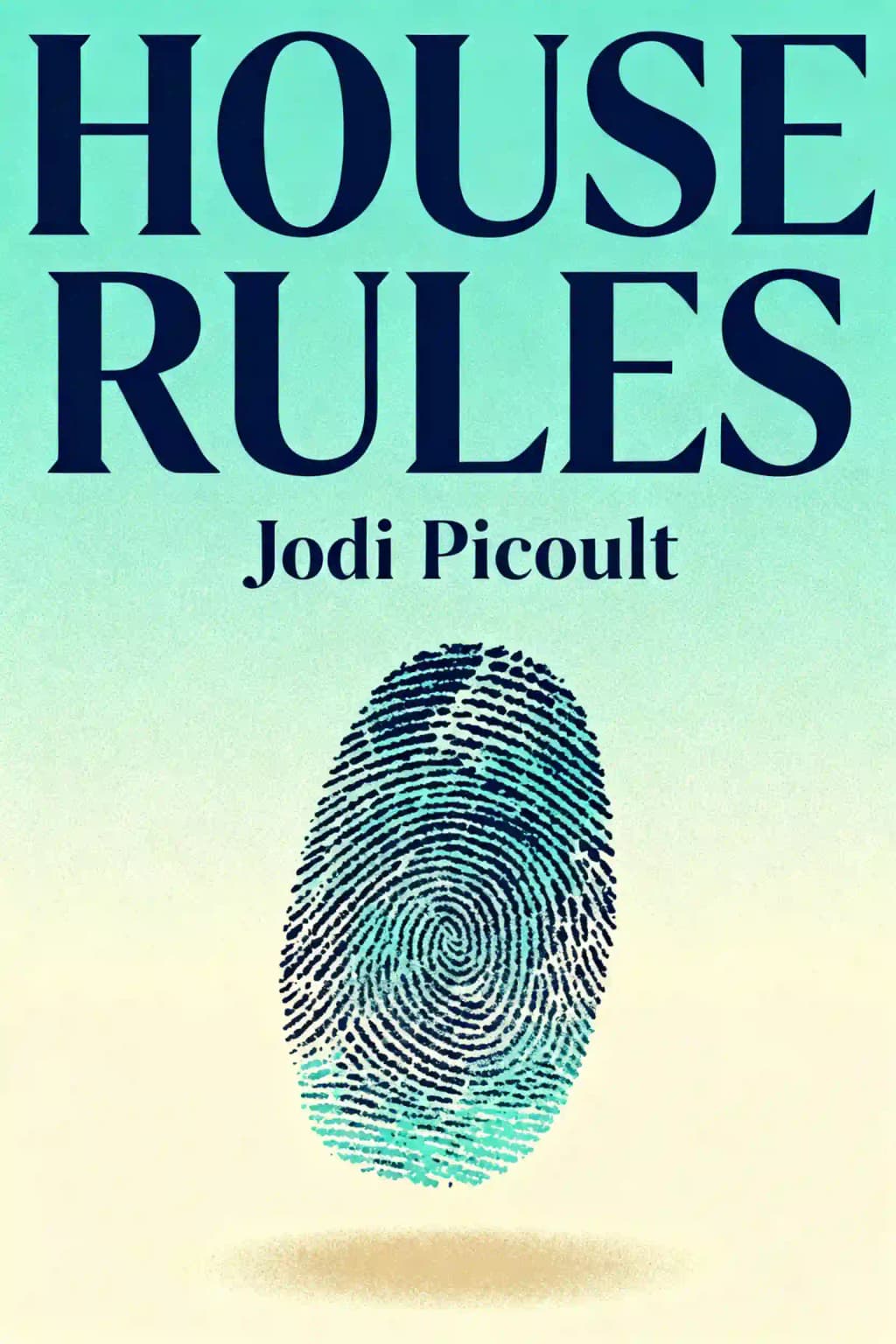
Chapter 1
When Differences Become Criminal: A Family's Journey Through Autism and Justice
Imagine a world where your brain processes information so differently that everyday interactions feel like navigating a foreign country without a translation guide. This is the reality for Jacob Hunt, an eighteen-year-old with Asperger's syndrome whose obsession with forensic science leads him down a dangerous path. When his social skills tutor Jess Ogilvy is found dead, wrapped in Jacob's rainbow quilt, his unique behaviors become evidence in a murder trial that captivates a nation. Jodi Picoult's "House Rules" explores the devastating collision between neurodiversity and the criminal justice system through multiple perspectives, challenging readers to question their assumptions about difference, intent, and culpability. The novel became a #1 New York Times bestseller, praised by autism advocacy groups for its authentic portrayal of Asperger's syndrome and the ripple effects it creates throughout families. Even Temple Grandin, renowned autism spokesperson, called it "a powerful examination of how we define 'normal' in our society."
Chapter 2
The Hunt Family: Living with Unwritten Rules
Emma Hunt's life revolves around her son Jacob's Asperger's syndrome. Every day follows strict routines-color-coded meals (red food on Tuesdays, yellow on Wednesdays), precise schedules, and carefully managed environments to prevent sensory overload. Jacob, brilliant but socially awkward, creates elaborate crime scene recreations throughout their home using corn syrup blood and meticulous staging. His younger brother Theo lives in Jacob's shadow, constantly accommodating his brother's needs while harboring resentment and guilt.
Unlike children with more severe autism, Jacob is highly verbal and intelligent but struggles with social connections. He interprets language literally, avoids eye contact, and borrows movie quotes when he can't express his own feelings. When routines are disrupted-like when the Free Sample Lady at the grocery store is unexpectedly absent-Jacob's carefully ordered world collapses into full meltdowns that require his mother to physically restrain him while singing Bob Marley's "I Shot the Sheriff" to calm him down.
Emma has sacrificed everything for Jacob-her career, social life, and marriage. Her husband Henry eventually left, unable to handle Jacob's tantrums triggered by lights, sounds, or textures. Now she works as "Auntie Em," an advice columnist who helps others with relationship problems while her own life remains in constant crisis. The irony isn't lost on her-people trust her to solve their problems while she struggles with her own son who sneaks out to crime scenes.
For Theo, living with Jacob means constant accommodation-detours around orange signs, letting Jacob shower first, canceling plans when Jacob has meltdowns. He acts as a buffer between Jacob and the world, dragging him away from uncomfortable conversations and warning teachers about rough mornings. To escape the suffocating atmosphere at home, Theo has developed a troubling habit of breaking into strangers' houses, not to steal but to briefly experience what a "normal" family life might feel like.
The family operates under "House Rules" established by Emma: clean up your own messes, tell the truth, take care of your brother-he's the only one you've got. These rules, meant to create structure in their chaotic lives, will ultimately become central to the murder case that threatens to destroy them all.
Chapter 3
Inside Jacob's Mind: A Different Way of Processing the World
Having Asperger's syndrome means Jacob experiences the world with life's volume permanently at full blast. His skin is so sensitive he can identify fabrics by temperature, and unexpected touches feel like exposed nerve endings. Despite being described as "robotic," he's constantly panicked about unpredictable social interactions. He doesn't engage in small talk because it feels fake, and he corrects factual errors not to hurt feelings but because accuracy matters more to him than people do.
Jacob may be autistic, but he doesn't have savant abilities like calendar calculation or instant counting. Instead, he has deep, encyclopedic knowledge about specific interests: forensic science, lightning, polymerase chain reactions, movie quotes, and Lower Cretaceous sauropods. He memorizes information effortlessly, from the periodic table to Middle Egyptian, and can discuss fingerprint analysis in extraordinary detail.
His prized possession is a police scanner radio that lets him hear emergency calls. He's visited crime scenes since Thanksgiving, analyzing evidence and even offering unsolicited advice to detectives. For Jacob, these crime scenes aren't just fascinating-they're a world where his analytical skills are valuable rather than strange.
Jacob struggles to understand figurative language and social cues. When people say things they don't mean-like "I'd die if he didn't ask me to the dance" or "Get lost"-he takes them literally. This creates constant confusion as he tries to navigate a world of hidden meanings and unspoken rules. As Jacob explains, having Asperger's is like being an American tourist in England-technically speaking the same language but constantly confused by different meanings.
Most painfully, Jacob struggles with empathy. He's learned to recognize emotions like a foreign language rather than feeling them naturally. When his grandfather died, he couldn't understand his mother's grief, clinically explaining that the body was just undergoing "a physical change in carbon atoms." This inability to connect emotionally with others leaves him isolated, even within his own family. "I'd like a friend with benefits," Jacob remarks at one point. "I'd like a friend, period."
Despite these challenges, Jacob insists he wouldn't take an antidote for Asperger's if one existed. His intelligence, sarcasm, and unique perspective are all intertwined with his condition-"like trying to separate peanut butter from jelly." His condition isn't just something he has; it's who he is.
Chapter 4
The Social Skills Tutor: A Bridge to Understanding
Jess Ogilvy enters the Hunt family's life as Jacob's social skills tutor, hired after Jacob has several incidents at school. Unlike others who try to change Jacob, Jess connects with him authentically, asking questions about his interests rather than shutting him down. She teaches him about unwritten social rules through practical demonstrations rather than abstract concepts.
During their sessions, Jess helps Jacob understand the complex social dynamics that baffle him. When a classmate named Sawyer threatens Jacob for reporting his mockery of a teacher, Jess explains the unwritten rule Jacob missed-that by laughing at Sawyer's joke but then reporting him, Jacob broke his trust. She demonstrates how betrayal feels by telling Jacob's mother about his stealing a knife from the cafeteria, allowing him to experience the emotion firsthand.
Jacob develops a deep attachment to Jess, finding in her someone who accepts his differences without judgment. He memorizes everything about her-her sparkly purple nail polish, how she hates barbecue sauce, her hearty laugh "from deep in her belly." When practicing how to ask someone to a dance, Jacob tells Jess sincerely, "You're my music," and experiences an emotional connection he's never felt before.
Their relationship becomes complicated when Jess introduces Jacob to her boyfriend Mark, a ski instructor who represents everything Jacob isn't-coordinated, attractive, popular, muscular, and confident. Mark's condescending attitude toward Jacob ("I teach retarded kids all the time") creates tension, especially when Jacob realizes Jess is paid to spend time with him-a revelation that devastates him and shatters his perception of their friendship.
The pivotal moment comes at Mama's Pizza, where Jacob, Jess, and Mark have an uncomfortable meal together. When Jacob impulsively asks Jess out on a date right in front of Mark, an argument erupts. Mark cruelly points out that Jess gets paid to spend time with Jacob, calling him a "retard." After Mark storms out, Jess follows him, telling Jacob to "get lost" and accidentally leaving her cell phone behind. This rejection becomes the catalyst for the tragedy that follows.
Chapter 5
A Missing Person: The Investigation Begins
When Jess Ogilvy disappears, Detective Rich Matson initially suspects her boyfriend Mark Maguire. Mark reports strange details about Jess's disappearance-her house is unlocked, her kitchen neat, her toothbrush missing but makeup still there, and someone has alphabetized her professors' CD collection. A typed note requesting mail delivery to be held raises Matson's suspicions, especially when Mark mentions they'd recently fought before "working things out."
The investigation takes a dramatic turn when Jess's body is discovered in a culvert, wrapped in a distinctive rainbow-colored quilt. The medical examiner determines she died from a subdural hematoma with a broken nose and skull fracture. Curiously, her underwear was on backward though there was no sexual assault, her face had been washed, and her missing tooth was wrapped in toilet paper in her pocket-suggesting her killer cared about her.
Emma Hunt recognizes the quilt on the news as belonging to her son Jacob. Despite her initial instinct to protect her son, she calls Detective Matson, leading to Jacob's arrest. During questioning, Jacob confesses that the knocked-out tooth "was an accident," but insists he "saved it" by putting it in her pocket. When his mother and lawyer Oliver Bond burst into the interrogation room, Detective Matson announces Jacob is being charged with murder.
The evidence against Jacob seems damning. His fingerprints are found in Jess's kitchen. During a search of Jacob's home, police discover his police scanner, fingerprinting equipment, and 116 composition notebooks documenting CrimeBusters episodes. Most incriminating is his most recent notebook, which contains detailed information about Jess's crime scene that only the police or killer would know-with "SOLVED: ME" underlined ten times at the bottom of the entry.
As the investigation progresses, Detective Matson discovers that Mark Maguire had fought with Jess the morning of her disappearance, even admitting to grabbing her by the throat. Boot prints matching Mark's are found outside Jess's cut window screen. Despite these suspicious circumstances, the evidence against Jacob-particularly his own notebook entries and behavior-keeps him as the primary suspect.
Chapter 6
The Legal System: Unprepared for Difference
When Jacob is arrested, his unique behaviors immediately clash with the criminal justice system. During processing, he swings at Detective Matson when touched on the shoulder, as his mother pleads, "Don't touch him. He doesn't like to be touched." Only when Matson mentions the LiveScan fingerprinting system does Jacob transform from "raging tornado to curious kid," fascinated by the technology.
In jail, Jacob's condition makes him especially vulnerable. Forced to strip naked for inspection and terrified by the prospect of wearing orange jumpsuits (orange being one of his sensory triggers), Jacob is placed with a hostile cellmate who establishes dominance by grabbing Jacob's shoulder-a touch that sends Jacob into complete meltdown. He begins screaming uncontrollably, eventually smashing his head against the cell bars until he bleeds and passes out.
Emma desperately tries to explain Jacob's autism to jail officials, but they dismiss her concerns. When she attempts to deliver Jacob's medications and supplements, she's told only prescription medications will be administered-not the dietary supplements that have proven effective for Jacob's condition. After seeing Jacob covered in blood and bruises during a special visit, Emma breaks down, realizing the system is completely unprepared to accommodate her son's needs.
Oliver Bond, a young and inexperienced lawyer, takes Jacob's case. During the bail hearing, Dr. Moon Murano testifies about Jacob's Asperger's syndrome, explaining he needs predictable routines and gets overwhelmed by sensory stimuli. The prosecutor, Helen Sharp, challenges whether Jacob's adult status means he's legally responsible for his actions, suggesting jail's predictable schedule might actually suit him. After arguments, Judge Cuttings grants bail with strict conditions: Emma must post their home as surety, Jacob requires electronic monitoring, must stay home with adult supervision, and continue psychiatric treatment.
As the case progresses, Oliver requests accommodations for Jacob's trial under the Americans with Disabilities Act: sensory breaks, dimmed lights, no gavel use, Emma's presence at the defense table, direct questioning, and shortened court days. The judge grants most requests, allowing sensory breaks in a special room, no gavel use, shortened court sessions, and Emma at the defense table with written-only communication.
Despite these accommodations, Jacob's first day in court immediately demonstrates the system's limitations. When prosecutor Helen Sharp deliberately crumples a paper and drops it-triggering one of Jacob's sensory sensitivities-he loses control, screaming "No wire hangers ever!" while the judge pounds his fist. The bailiff's attempt to physically restrain Jacob only escalates the situation until Emma throws herself protectively over her son, aware that the jury and cameras are watching everything.
Chapter 7
The Trial: Truth, Perception, and Insanity
Oliver Bond builds his defense around an insanity plea, arguing that Jacob's Asperger's syndrome prevents him from appreciating the wrongfulness of his acts-the legal definition of insanity. Jacob vehemently objects to this strategy, insisting, "I don't have a mental disease or defect. I have a quirk." He cites Vermont Supreme Court case law giving him the right to reject the insanity defense.
The prosecution portrays Jacob as a calculating killer whose careful planning and cover-up efforts prove he knew right from wrong. Helen Sharp emphasizes Jacob's history of aggression, including an incident where he grabbed a female classmate by the throat-leaving the same bruises that Jess Ogilvy had at autopsy. She methodically undermines the insanity defense by asking when Jacob "snapped out of it" if he was still in that state while carefully arranging the crime scene and Jess's body.
Expert witnesses offer conflicting interpretations of Jacob's condition. Dr. Ava Newcomb testifies that while Asperger's doesn't cause psychotic breaks like schizophrenia, certain symptoms might prevent someone from distinguishing right from wrong in specific moments. She explains that Jacob's intense fixation on forensic analysis and crime scene investigation might have overridden his moral judgment, making Jess "collateral damage." She also describes Jacob's impaired theory of mind-his inability to understand others' emotions-as a contributing factor.
Emma's testimony reveals the challenges of raising Jacob-watching him be teased for wearing headphones in school hallways, celebrating awkward achievements, managing his rigid routines. The prosecutor's cross-examination turns devastating when she suggests Emma believed her son killed Jess. As the clock approaches 4:30, Jacob grows increasingly agitated about missing CrimeBusters, eventually losing control completely and jumping into the space before the judge.
Against his lawyer's advice, Jacob insists on testifying. On the stand, he describes finding Jess dead in a pool of blood. He details dressing her body, accidentally knocking out her tooth during a fall, cleaning the blood with toilet paper and bleach, and deliberately creating a misleading crime scene-wearing oversized boots outside, cutting the screen, placing the knife in the dishwasher. He explains wrapping her in his quilt and leaving clues as a test for investigators. When Oliver asks if he's sorry for killing Jess, Jacob smiles and says, "No, that's what I've been trying to tell you all along."
Chapter 8
Family Secrets: The Truth Emerges
As the trial progresses, family secrets begin to emerge. Theo reveals he's been breaking into strangers' homes, including the house where Jess was staying. In a private confession to Jacob, Theo admits he was at Jess's house the day she died. To his shock, Jacob calmly responds, "I know. I saw your footprints. That's why I had to do it."
The full truth gradually comes into focus: Theo had broken into the professor's house where Jess was staying. When he peeked at the bathroom mirror reflection, he caught a glimpse of Jess naked in the shower. As she stepped out and wiped her eyes, their gazes met in a moment of horrified recognition. Jess chased him, but Theo escaped when she slipped on the wet bathroom floor. In his hurry, he knocked over furniture and scattered papers in the kitchen.
Jacob, arriving later for his session with Jess, found her dead from the fall-having hit her head on the bathroom floor. Rather than calling the police, Jacob-with his literal understanding of his mother's house rules-"cleaned up the mess" by staging an elaborate crime scene to protect his brother. He dressed Jess's body, moved her to a culvert, and wrapped her in his quilt, leaving deliberate clues for investigators to find.
When Emma asks Jacob directly if he killed Jess, he firmly denies it, explaining, "I didn't want her to die, Mom. It wasn't my fault. I know it was an accident." He insists he did "the right thing" by following the house rules: clean up your own messes, tell the truth, take care of your brother-he's the only one you've got.
Jacob's notebook entry marking the case "SOLVED: ME" wasn't a confession to murder but his pride in creating the perfect crime scene-one that would protect his brother while testing the forensic skills of real detectives. His inappropriate affect during the trial-smiling while discussing autopsy details, showing excitement about crime scene evidence-wasn't evidence of callousness toward Jess's death but his inability to express emotions in neurotypical ways.
Chapter 9
The Verdict: Justice and Understanding
Three days after closing arguments, the jury remains sequestered in deliberation, their extended discussion highlighting the complexity of the case. Emma's family has settled into an uneasy routine at home, with Henry - who had previously been distant - surprisingly choosing to stay and provide support. His presence, though unexpected, brings a measure of stability to their fractured household. Oliver visits daily, bringing his gentle therapy dog Thor, whose calming presence helps ease the tension. Over shared meals and quiet evenings, this unconventional group has formed an unlikely support system, bound together by their concern for Jacob's fate.
During an evening walk with Thor, Oliver explains the potential outcomes to Emma in detail. A guilty verdict would mean state prison, where Jacob would struggle with sensory overload and rigid routines. If found not guilty by reason of insanity, he could face indefinite institutionalization in a psychiatric facility - a different kind of confinement that might better accommodate his needs but still separate him from his family. The judge's discretion would play a crucial role in determining the specific facility and conditions of his care.
The novel deliberately leaves the verdict ambiguous, compelling readers to wrestle with complex questions about moral responsibility and neurodiversity. Was Jacob's action a manifestation of brotherly protection, filtered through his literal interpretation of rules and social cues? Did his difficulty with theory of mind - understanding others' perspectives and emotions - prevent him from fully grasping the consequences of his choices? Or was his condition being used as a shield for deliberate actions?
Throughout the trial, Jacob repeatedly asserts, "I'm not autistic; I have autism. I also have brown hair and flat feet." This powerful distinction becomes a central theme, challenging readers to consider how much of identity is shaped by neurological differences. The statement raises fundamental questions about personhood and disability: can we separate Jacob's core identity from his Asperger's syndrome, or are they fundamentally intertwined in ways that defy simple categorization?
Emma, maintaining her nighttime vigil over her sleeping son, reflects on eighteen years of advocacy, adaptation, and unconditional love. She recalls moments of triumph and challenge: teaching Jacob to recognize social cues, celebrating his achievements in robotics club, managing meltdowns in public spaces. Despite his difficulties with empathy and social awareness, she's never seen cruelty in him - only an honest, literal interpretation of the world that sometimes clashes with society's unwritten rules.
The story ultimately presents a profound challenge to our legal system, which operates on neurotypical assumptions about intent, remorse, and moral reasoning. Can standard judicial procedures adequately assess someone whose brain processes information, emotions, and social cues in fundamentally different ways? Jacob's observation that a true "jury of peers" would require people with Asperger's syndrome highlights the gap between neurotypical standards of justice and neurodiverse experiences. The novel forces readers to confront whether our current legal framework can adapt to serve all members of society equitably, regardless of their neurological differences.
Chapter 10
When Rules Collide: The Heart of the Story
At its core, "House Rules" explores what happens when different systems of rules collide-the explicit house rules that govern the Hunt family, the unwritten social rules that Jacob struggles to understand, the legal rules that determine criminal responsibility, and the moral rules that define right and wrong.
Jacob lives in a world of black and white, where rules are rules regardless of context. When he finds Jess dead, he follows his mother's house rules literally: clean up your own messes, tell the truth, take care of your brother. In his mind, staging the crime scene wasn't covering up a crime but protecting his brother while creating the perfect forensic puzzle-combining his obsession with crime scenes and his obligation to Theo.
The tragedy stems from Jacob's inability to understand that some rules supersede others-that calling 911 would have been more appropriate than cleaning up blood, that the legal obligation to report a death outweighs family rules about protecting your brother. Without the ability to prioritize competing moral principles, Jacob's literal mind followed the only rules he understood with absolute certainty.
Emma's realization that she might have inadvertently set Jacob up for this tragedy is perhaps the most heartbreaking aspect of the story. The rules she created to help her son navigate the world became the very framework that led him to make devastating choices. Her lifelong effort to help Jacob fit into a world that wasn't designed for him ultimately couldn't prepare him for a situation where the right answer wasn't found in their carefully constructed rulebook.
As the novel concludes, we're left wondering whether any verdict could truly be just. Jacob didn't kill Jess, but his actions after her accidental death violated legal standards. His Asperger's syndrome didn't cause him to commit murder, but it fundamentally shaped how he responded to finding her body. In the gap between intent and action, between neurological difference and criminal behavior, lies the profound question at the heart of this story: how do we judge those who see the world through an entirely different lens than our own?