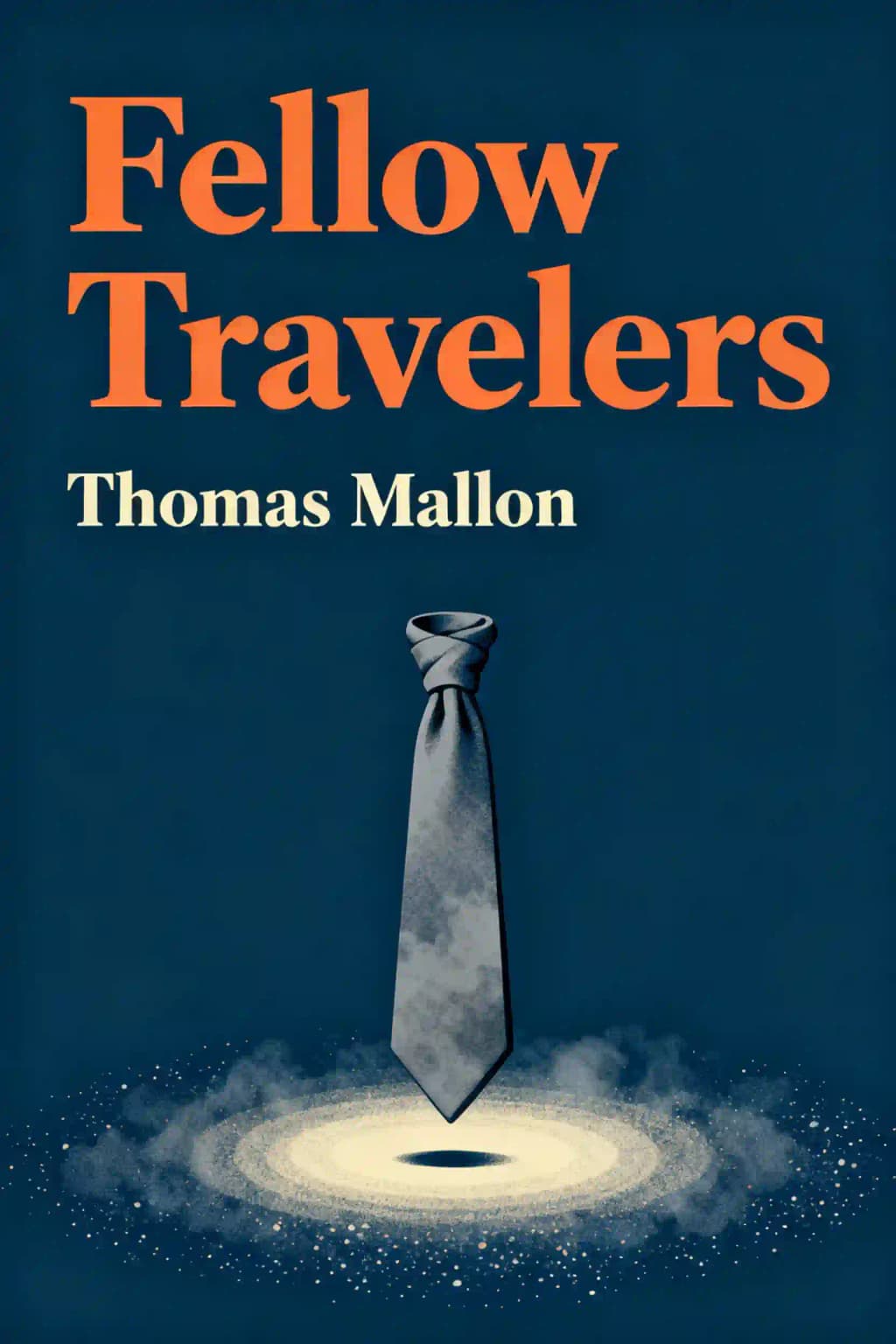
In "Fellow Travelers," a forbidden romance unfolds against McCarthy's witch hunts and the forgotten "Lavender Scare." This Peabody Award-winning tale spans from 1950s persecution to the AIDS crisis, revealing how love persists when society demands its destruction.
Thomas Mallon is the acclaimed author of Fellow Travelers and a distinguished novelist known for his meticulously researched historical fiction. Born November 2, 1951, Mallon brings decades of literary expertise to this powerful novel set during the 1950s "lavender scare," when State Department employees suspected of homosexuality faced persecution.
A former literary editor at GQ and frequent contributor to The New Yorker and The New York Times Book Review, Mallon draws on his deep understanding of American political history and LGBTQ+ experience to craft this compelling story of forbidden love between State Department official Hawkins Fuller and Senate staffer Timothy Laughlin.
Mallon's other notable historical novels include Watergate, Henry and Clara, and Finale: A Novel of the Reagan Years. He has received Guggenheim and Rockefeller fellowships and served as Deputy Chairman of the National Endowment for the Humanities. Fellow Travelers was adapted into a critically acclaimed miniseries, bringing this important story of love and survival to wider audiences.
Fellow Travelers by Thomas Mallon is a historical novel set during the 1950s McCarthy era that chronicles the forbidden romance between Timothy Laughlin and Hawkins Fuller, two closeted gay men working in Washington D.C.'s State Department. The story spans from the 1950s to 1991, exploring their dangerous love affair during the Lavender Scare, when over 10,000 gay federal employees lost their jobs. The novel examines themes of desire, guilt, political persecution, and the devastating personal costs of living hidden lives under extreme societal pressure.
Thomas Mallon is an acclaimed American novelist and essayist known for his meticulously researched historical fiction featuring characters on the "fringes of big events." Born in 1951, Mallon has authored ten novels and received numerous honors including Guggenheim and Rockefeller fellowships. As a gay man who lived through the AIDS crisis in 1980s New York, Mallon brings personal insight to Fellow Travelers' exploration of queer life under persecution. His signature style combines rich historical detail with intimate character studies, making him uniquely qualified to illuminate this overlooked chapter of American history.
Fellow Travelers appeals to readers interested in LGBTQ+ history, particularly the Lavender Scare's persecution of gay government employees during the McCarthy era. The novel suits fans of character-driven literary fiction who appreciate meticulous historical detail and emotional complexity. Readers drawn to forbidden love stories, political intrigue, and explorations of identity under oppression will find Thomas Mallon's sophisticated narrative rewarding. It's also essential reading for anyone seeking to understand how Cold War politics weaponized sexuality, making it relevant for history enthusiasts and social justice advocates alike.
Fellow Travelers is absolutely worth reading for its powerful emotional resonance and impeccable historical craftsmanship. Thomas Mallon's subtle literary techniques—shifting perspectives, recurring motifs like the "How many fingers?" question, and symbolic details—reward close reading and create layers of meaning. The novel was adapted into a critically acclaimed miniseries, demonstrating its enduring cultural relevance. While emotionally demanding, Fellow Travelers offers deep insights into love, sacrifice, and resilience during one of America's darkest periods of government-sanctioned persecution, making it both historically significant and profoundly human.
The Lavender Scare in Fellow Travelers refers to the systematic purge of homosexual federal employees during the 1950s Eisenhower administration. President Eisenhower's executive order authorized firing employees engaged in "sexual perversion," mobilizing over 1,000 federal agents to interrogate, investigate, and force resignations from suspected gay workers. This parallel campaign to McCarthy's anti-Communist crusade resulted in approximately 10,000 gay people losing civil service jobs, with some choosing suicide over public humiliation. Thomas Mallon uses this historical backdrop to frame Tim and Hawk's dangerous romance as an act of defiance against state-sponsored homophobia.
The relationship between Timothy Laughlin and Hawkins Fuller in Fellow Travelers is characterized by profound imbalance and unspoken longing. Tim is lovestruck, obsessively devoted to the older Hawk despite being a devout Catholic tormented by his homosexuality and anti-Communist beliefs. Hawk, conversely, maintains emotional distance, incapable of saying "I love you" and treating their connection as transactional—exemplified by his cruel declaration: "You belong to me...and I always will". Their affair unfolds secretively against the Lavender Scare's dangers, with Hawk eventually marrying Lucy and pursuing diplomatic success while Tim's life takes a quieter, more solitary path.
Fellow Travelers concludes with Tim dying from bone cancer at age 59 in Providence, Rhode Island, after living a peaceful but solitary life working in bookstores. Following his abrupt departure from Washington after job rejection, Tim was dishonorably discharged from the Army Reserves for admitting his homosexuality. Hawk continues his diplomatic career, remains married to Lucy with a daughter, and serves in Tallinn, Estonia, successfully compartmentalizing his past. Significantly, Tim is buried wearing Hawk's cufflinks, symbolizing the enduring significance of their love. Mary Russell reveals Tim found spiritual peace realizing that loving God—and Hawk—was enough, regardless of reciprocation.
Fellow Travelers features several recurring phrases that gain symbolic weight throughout Thomas Mallon's narrative:
"How many fingers?": Initially asked playfully by Hawk after removing Tim's glasses in Dupont Circle, this question becomes a motif symbolizing Hawk's power over Tim's perception and reality, recurring in moments of vulnerability and control.
"You belong to me, and as the advertisement says, I'm the man who has everything. And I always will": Hawk's cruel alley declaration encapsulates their power dynamic, revealing his possessiveness and the transactional nature he imposes, stripping Tim of agency.
"All that mattered was that he loved God": Mary's recounting of Tim's final realization suggests hard-won peace found in the act of loving itself, not in being loved.
Thomas Mallon employs sophisticated symbolism throughout Fellow Travelers to deepen thematic resonance. Specific locations like the turret house and State Department building represent different facets of power and secrecy. Physical objects—milk, hats, and Hawk's cufflinks—evolve in meaning, with the cufflinks ultimately symbolizing Tim's enduring love when he's buried wearing them. The recurring "How many fingers?" question transforms from playful intimacy to a symbol of control and blurred perception. Mallon uses these motifs to mirror the era's coded communication, where hidden meanings and double lives were survival necessities for gay men navigating the Lavender Scare's dangers.
Thomas Mallon employs an omniscient third-person narrator that shifts perspectives between characters—primarily Tim and Hawk, but also Mary, Tommy, and others—contrasting their inner lives with public personas. His detailed historical immersion incorporates specific political jargon, cultural references, and 1950s Washington geography, particularly Foggy Bottom and Capitol Hill. Mallon's prose requires readers to infer meaning from context, mirroring the era's coded communication among closeted individuals. This sophisticated narrative approach, combined with subtle foreshadowing and recurring symbolism, rewards close reading while creating the claustrophobic atmosphere of living under constant surveillance and the threat of exposure during McCarthy-era persecution.
Fellow Travelers remains profoundly relevant in 2025 as governments worldwide continue targeting LGBTQ+ rights through discriminatory legislation. The novel's exploration of how political power weaponizes identity and sexuality resonates amid contemporary debates about workplace discrimination, religious liberty claims, and state-sanctioned persecution. Thomas Mallon's depiction of living hidden lives under surveillance parallels modern concerns about privacy, digital monitoring, and cancel culture. The story's emotional core—finding love and peace despite systemic oppression—offers vital lessons about resilience and authenticity. Additionally, the 2023 miniseries adaptation has introduced Fellow Travelers to new audiences, reinforcing its significance for understanding historical patterns of persecution that continue today.
While critically acclaimed, Fellow Travelers has faced some critiques regarding its pacing and emotional accessibility. Some readers find the novel's character-driven structure lacking traditional plot momentum, as it focuses on internal struggles rather than external conflicts with clear antagonists. The uneven power dynamic between Tim and Hawk can be uncomfortable, with Hawk's emotional unavailability and cruel treatment frustrating readers seeking more balanced romance. Thomas Mallon's dense historical detail, while praised for authenticity, occasionally requires effort from readers unfamiliar with 1950s political context. Additionally, the tragic trajectory—with Tim dying alone and Hawk achieving conventional success—may feel too pessimistic for some, though others argue this accurately reflects the era's harsh realities for gay men.
Feel the book through the author's voice
Turn knowledge into engaging, example-rich insights
Capture key ideas in a flash for fast learning
Enjoy the book in a fun and engaging way
Who owns you?
Too bad.
Relax, apple pie, but be careful who you talk to.
Break down key ideas from Fellow Travelers (Vintage) into bite-sized takeaways to understand how innovative teams create, collaborate, and grow.
Distill Fellow Travelers (Vintage) into rapid-fire memory cues that highlight key principles of candor, teamwork, and creative resilience.

Experience Fellow Travelers (Vintage) through vivid storytelling that turns innovation lessons into moments you'll remember and apply.
Ask anything, pick the voice, and co-create insights that truly resonate with you.

From Columbia University alumni built in San Francisco
"Instead of endless scrolling, I just hit play on BeFreed. It saves me so much time."
"I never knew where to start with nonfiction—BeFreed’s book lists turned into podcasts gave me a clear path."
"Perfect balance between learning and entertainment. Finished ‘Thinking, Fast and Slow’ on my commute this week."
"Crazy how much I learned while walking the dog. BeFreed = small habits → big gains."
"Reading used to feel like a chore. Now it’s just part of my lifestyle."
"Feels effortless compared to reading. I’ve finished 6 books this month already."
"BeFreed turned my guilty doomscrolling into something that feels productive and inspiring."
"BeFreed turned my commute into learning time. 20-min podcasts are perfect for finishing books I never had time for."
"BeFreed replaced my podcast queue. Imagine Spotify for books — that’s it. 🙌"
"It is great for me to learn something from the book without reading it."
"The themed book list podcasts help me connect ideas across authors—like a guided audio journey."
"Makes me feel smarter every time before going to work"
From Columbia University alumni built in San Francisco

Get the Fellow Travelers (Vintage) summary as a free PDF or EPUB. Print it or read offline anytime.
In 1953 Washington DC, love is a dangerous liability. McCarthy's America hums with paranoia, where careers end with a whisper and personal lives become political ammunition. Against this treacherous backdrop, two men find themselves caught in an impossible romance-one that illuminates the human cost of an era where fear became policy and secrets were currency. Their story reveals how deeply the political can penetrate the personal, transforming private desires into matters of national security. What happens when loving the wrong person becomes an act of political defiance? When your heart becomes evidence against you?