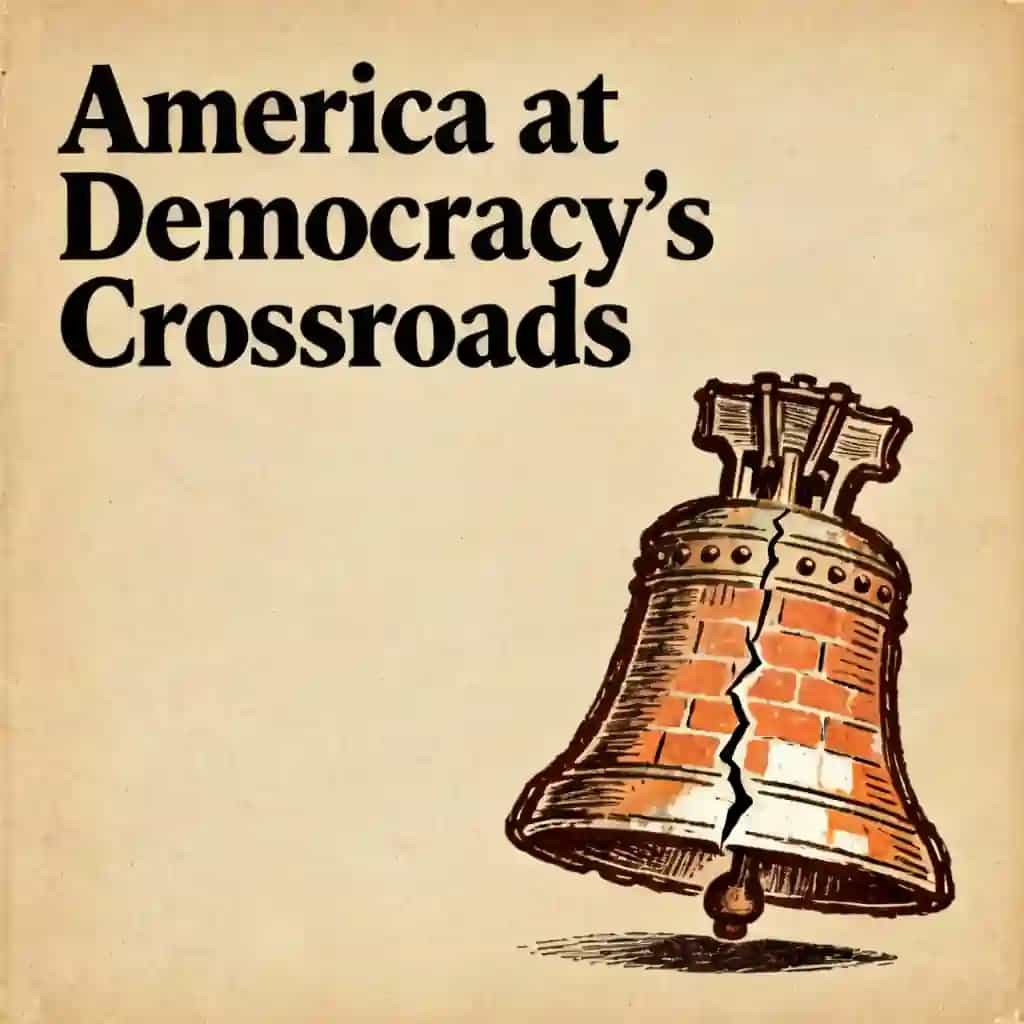
Overview of Tyranny of the Minority
In "Tyranny of the Minority," Harvard scholars Levitsky and Ziblatt expose how America's counter-majoritarian institutions undermine democracy. This NYT bestseller, longlisted for the Edwards Book Award, examines the stark contrast between Warnock's historic election and the Capitol breach - revealing our constitutional crisis hiding in plain sight.
- Counter-majoritarian institutions now empower partisan minorities to override majority will
- Tyranny of the Minority exposes how American democracy reached breaking point
- Levitsky and Ziblatt argue citizens must actively defend democracy themselves
- Electoral College allows presidential winners to lose the popular vote
- Supreme Court lifetime appointments enable minority control over majority-opposed policies
- Republican Party abandoned democratic norms to maintain power as minority
- Multiracial democracy faces institutional barriers designed for pre-democratic era
- Senate filibuster and small state bias create manufactured minority victories
- US democracy lags other nations that reformed counter-majoritarian institutions
- Voting rights protections remain essential for preventing discriminatory voter suppression
- Democratic backsliding results from exploiting outdated constitutional design flaws
- Citizen engagement and institutional reform are necessary for saving democracy
About the Author of Tyranny of the Minority
Steven Levitsky is the co-author of Tyranny of the Minority: Why American Democracy Reached the Breaking Point and a leading expert on democratization and authoritarianism. As the David Rockefeller Professor of Latin American Studies and Professor of Government at Harvard University, Levitsky brings decades of research on democratic decline and authoritarian regimes to this urgent examination of American democracy's structural vulnerabilities.
His insights draw from extensive study of political systems worldwide, particularly in Latin America, where he has analyzed how democracies fail and authoritarian leaders consolidate power. Levitsky earned his PhD from UC Berkeley and serves as Senior Democracy Fellow at the Council on Foreign Relations. He regularly contributes to The New York Times, The Washington Post, The Atlantic, and Foreign Affairs.
Along with co-author Daniel Ziblatt, Levitsky previously wrote How Democracies Die, a New York Times bestseller published in 30 languages that warned of erosion to democratic norms.
FAQs About Tyranny of the Minority
What is Tyranny of the Minority about?
Tyranny of the Minority by Steven Levitsky and Daniel Ziblatt examines how American democracy has reached a breaking point due to counter-majoritarian institutions that allow partisan minorities to wield disproportionate power. The book argues that outdated constitutional structures like the Electoral College and Senate enable minority rule, threatening the emergence of a multiracial democracy. Levitsky and Ziblatt propose institutional reforms to ensure majorities can govern effectively and democratic norms are restored.
Who are Steven Levitsky and Daniel Ziblatt?
Steven Levitsky is David Rockefeller Professor of Latin American Studies and Professor of Government at Harvard University, specializing in authoritarianism, democratization, and political parties. Daniel Ziblatt is his Harvard colleague and expert on democracy breakdown in Europe during the 1920s and 1930s. Together, they co-authored the New York Times bestseller How Democracies Die (2018) before publishing Tyranny of the Minority in 2023.
Who should read Tyranny of the Minority?
Tyranny of the Minority is essential for anyone concerned about American democracy's future, including political activists, policymakers, educators, and informed citizens. The book particularly benefits readers seeking to understand how institutional structures enable minority rule and what reforms could strengthen democratic governance. It's valuable for those interested in comparative politics, democratic backsliding, and the Republican Party's authoritarian shift under Donald Trump's influence.
Is Tyranny of the Minority worth reading?
Tyranny of the Minority is worth reading for its comprehensive analysis of America's democratic crisis and evidence-based reform proposals. Levitsky and Ziblatt draw on comparative examples from France, Thailand, and Latin America to illuminate patterns of democratic decline. The book provides actionable insights into combating anti-democratic forces through broad coalitions, institutional reforms, and sustained civic engagement, making it timely and practically relevant.
What is "tyranny of the minority" according to Levitsky and Ziblatt?
In Tyranny of the Minority, Levitsky and Ziblatt define tyranny of the minority as situations where small, organized groups exert disproportionate influence over political outcomes at the majority's expense. Counter-majoritarian institutions like the Senate, Electoral College, and filibuster enable this phenomenon by allowing partisan minorities to block or dictate policy despite losing the popular vote. The authors argue this represents a more imminent threat to American democracy than tyranny of the majority.
What are "fettered majorities" in Tyranny of the Minority?
Fettered majorities in Tyranny of the Minority refers to situations where electoral majorities cannot govern effectively due to institutional barriers that empower partisan minorities. This creates legislative gridlock where the majority's will is thwarted by minorities leveraging tools like the Senate filibuster. Levitsky and Ziblatt illustrate this with examples of the Republican Party maintaining power despite losing the popular vote, showcasing the disconnect between electoral outcomes and actual governance.
What is democratic backsliding according to Tyranny of the Minority?
Democratic backsliding in Tyranny of the Minority describes the gradual decline in democracy quality, marked by erosion of democratic norms and institutions. Key indicators include increased political violence, attempts to undermine electoral integrity, and rejection of election results' legitimacy. Levitsky and Ziblatt contextualize American backsliding within a broader global phenomenon, comparing it to democratic decline in other countries to show this is part of worldwide authoritarian trends.
What role does the Republican Party play in Tyranny of the Minority?
Tyranny of the Minority argues the Republican Party has increasingly abandoned democratic principles, especially under Donald Trump's influence. The book documents how the party has embraced authoritarianism by tolerating antidemocratic behavior, undermining norms of accepting electoral defeat, and encouraging political violence. Levitsky and Ziblatt trace this shift through historical context, noting authoritarianism's roots in white supremacist suppression of African American voting rights post-Reconstruction.
What reforms do Levitsky and Ziblatt propose in Tyranny of the Minority?
Levitsky and Ziblatt propose democratizing institutions to make electoral processes more inclusive and representative, ensuring equal voting access. They advocate strengthening democratic norms like accepting electoral defeat and rejecting political violence to rebuild trust. Additional reforms include forming broad pro-democratic coalitions across the political spectrum, using constitutional tools like the Fourteenth Amendment to exclude insurrectionists, and mobilizing sustained grassroots movements for democratic change.
What are the key quotes from Tyranny of the Minority and their meanings?
Key quotes from Tyranny of the Minority include:
- "The republic did not collapse... but it became undeniably less democratic" reflects how U.S. democratic structures remain while foundational principles erode
- "The more imminent threat facing us today, then, is minority rule" underscores the central argument about partisan minorities exerting disproportionate control
- "The cure for the ills of Democracy is more Democracy" encapsulates the belief that increasing democratic participation and institutional reforms are essential solutions
How does Tyranny of the Minority compare to How Democracies Die?
Tyranny of the Minority builds on themes from Levitsky and Ziblatt's earlier bestseller How Democracies Die (2018) by focusing specifically on structural reforms needed to save American democracy. While How Democracies Die warned about democratic erosion under Trump, Tyranny of the Minority analyzes counter-majoritarian institutions enabling minority rule and proposes concrete solutions. The later book emphasizes institutional reform and multiracial democracy as the path forward, offering a more prescriptive, solution-oriented approach.
Why is Tyranny of the Minority relevant in 2025?
Tyranny of the Minority remains urgently relevant in 2025 as debates over institutional reform, voting rights, and democratic norms continue intensifying. The book's analysis of counter-majoritarian structures helps explain ongoing political gridlock and minority obstruction of majority-supported policies. With multiracial democracy's promise still unrealized and anti-democratic forces persisting, Levitsky and Ziblatt's reform proposals provide actionable guidance for citizens, activists, and policymakers working to strengthen American democracy.
How does Tyranny of the Minority address the Electoral College?
Tyranny of the Minority critiques the Electoral College for allowing presidents to be elected without winning the popular vote, undermining democratic legitimacy. Levitsky and Ziblatt discuss numerous failed attempts to abolish or reform this institution, highlighting political obstacles preventing change. They contrast the U.S. system with other presidential democracies that have adopted direct popular elections, arguing Electoral College reform is necessary for creating a more representative democracy where majorities govern.
Feel the book through the author's voice
Turn knowledge into engaging, example-rich insights
Capture key ideas in a flash for fast learning
Enjoy the book in a fun and engaging way
Key Themes in Tyranny of the Minority
Quotes from Tyranny of the Minority
Democracy fundamentally requires accepting defeat and peacefully relinquishing power.
When parties fear they'll lose more than just an election...accepting defeat becomes nearly impossible.
Semi-loyalty appears benign but can be devastating to democracy.
This is an attack on democracy!
It Has Happened Here
Characters in Tyranny of the Minority
Quick Summary Mode - Read or listen to Tyranny of the Minority Summary in 10 Minutes

Break down key ideas from Tyranny of the Minority into bite-sized takeaways to understand how innovative teams create, collaborate, and grow.

Flash Card Mode - Top 10 Insights from Tyranny of the Minority in a Nutshell

Distill Tyranny of the Minority into rapid-fire memory cues that highlight key principles of candor, teamwork, and creative resilience.

Fun Mode - Tyranny of the Minority Lessons Told Through 21-Min Stories

Experience Tyranny of the Minority through vivid storytelling that turns innovation lessons into moments you'll remember and apply.
Personalize Mode - Read or listen to Tyranny of the Minority Summary in 0 Minutes

Ask anything, pick the voice, and co-create insights that truly resonate with you.

From Columbia University alumni built in San Francisco
"Instead of endless scrolling, I just hit play on BeFreed. It saves me so much time."


"I never knew where to start with nonfiction—BeFreed’s book lists turned into podcasts gave me a clear path."


"Perfect balance between learning and entertainment. Finished ‘Thinking, Fast and Slow’ on my commute this week."
"Crazy how much I learned while walking the dog. BeFreed = small habits → big gains."
"Reading used to feel like a chore. Now it’s just part of my lifestyle."

"Feels effortless compared to reading. I’ve finished 6 books this month already."
"BeFreed turned my guilty doomscrolling into something that feels productive and inspiring."

"BeFreed turned my commute into learning time. 20-min podcasts are perfect for finishing books I never had time for."
"BeFreed replaced my podcast queue. Imagine Spotify for books — that’s it. 🙌"

"It is great for me to learn something from the book without reading it."
"The themed book list podcasts help me connect ideas across authors—like a guided audio journey."
"Makes me feel smarter every time before going to work"
From Columbia University alumni built in San Francisco
"Instead of endless scrolling, I just hit play on BeFreed. It saves me so much time."
"I never knew where to start with nonfiction—BeFreed’s book lists turned into podcasts gave me a clear path."
"Perfect balance between learning and entertainment. Finished ‘Thinking, Fast and Slow’ on my commute this week."
"Crazy how much I learned while walking the dog. BeFreed = small habits → big gains."
"Reading used to feel like a chore. Now it’s just part of my lifestyle."
"Feels effortless compared to reading. I’ve finished 6 books this month already."
"BeFreed turned my guilty doomscrolling into something that feels productive and inspiring."
"BeFreed turned my commute into learning time. 20-min podcasts are perfect for finishing books I never had time for."
"BeFreed replaced my podcast queue. Imagine Spotify for books — that’s it. 🙌"
"It is great for me to learn something from the book without reading it."
"The themed book list podcasts help me connect ideas across authors—like a guided audio journey."
"Makes me feel smarter every time before going to work"
"Instead of endless scrolling, I just hit play on BeFreed. It saves me so much time."
"I never knew where to start with nonfiction—BeFreed’s book lists turned into podcasts gave me a clear path."
"Perfect balance between learning and entertainment. Finished ‘Thinking, Fast and Slow’ on my commute this week."
"Crazy how much I learned while walking the dog. BeFreed = small habits → big gains."
"Reading used to feel like a chore. Now it’s just part of my lifestyle."
"Feels effortless compared to reading. I’ve finished 6 books this month already."
"BeFreed turned my guilty doomscrolling into something that feels productive and inspiring."
"BeFreed turned my commute into learning time. 20-min podcasts are perfect for finishing books I never had time for."
"BeFreed replaced my podcast queue. Imagine Spotify for books — that’s it. 🙌"
"It is great for me to learn something from the book without reading it."
"The themed book list podcasts help me connect ideas across authors—like a guided audio journey."
"Makes me feel smarter every time before going to work"
"Instead of endless scrolling, I just hit play on BeFreed. It saves me so much time."
"I never knew where to start with nonfiction—BeFreed’s book lists turned into podcasts gave me a clear path."
"Perfect balance between learning and entertainment. Finished ‘Thinking, Fast and Slow’ on my commute this week."
"Crazy how much I learned while walking the dog. BeFreed = small habits → big gains."
"Reading used to feel like a chore. Now it’s just part of my lifestyle."
"Feels effortless compared to reading. I’ve finished 6 books this month already."
"BeFreed turned my guilty doomscrolling into something that feels productive and inspiring."
"BeFreed turned my commute into learning time. 20-min podcasts are perfect for finishing books I never had time for."
"BeFreed replaced my podcast queue. Imagine Spotify for books — that’s it. 🙌"
"It is great for me to learn something from the book without reading it."
"The themed book list podcasts help me connect ideas across authors—like a guided audio journey."
"Makes me feel smarter every time before going to work"

Get the Tyranny of the Minority summary as a free PDF or EPUB. Print it or read offline anytime.