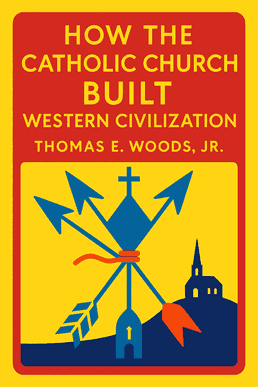
How the Catholic Church Built Western Civilization by Thomas E. Woods Jr. Summary

Overview of How the Catholic Church Built Western Civilization
Forget what you thought about the Dark Ages. The Catholic Church actually pioneered modern science, universities, and free-market economics. This bestseller shatters misconceptions about Galileo and reveals how priests - not secular thinkers - laid the groundwork for Western civilization's greatest achievements.
- Catholic monks preserved classical texts through meticulous manuscript copying in monasteries.
- The Church invented universities as centers of medieval intellectual and theological debate.
- Canon law established foundational concepts for modern Western legal systems and justice.
- Medieval Catholic theologians pioneered scientific inquiry methods centuries before the Enlightenment.
- Church-led abolition of infanticide and gladiatorial combat elevated human dignity standards.
- Monastic innovations in agriculture and land management boosted medieval European economies.
- Catholic charity networks created the first organized social welfare institutions globally.
- Gothic cathedrals advanced architectural engineering while symbolizing divine-human connectivity.
- Papal patronage directly enabled Renaissance masterpieces by Michelangelo and Da Vinci.
- Catholic scholars developed free-market economic principles 500 years before Adam Smith.
- The Galileo myth obscures the Church’s true role in advancing astronomy.
- Natural law theology shaped Western concepts of human rights and individual liberty.
About the Author of How the Catholic Church Built Western Civilization
Thomas E. Woods Jr., New York Times bestselling author of How the Catholic Church Built Western Civilization, is a historian and libertarian scholar specializing in the intersection of faith, economics, and institutional history. A senior fellow at the Ludwig von Mises Institute, Woods holds a Ph.D. in history from Columbia University. He has built his career challenging conventional narratives about American liberty and Western heritage.
His works, including The Politically Incorrect Guide to American History and Meltdown (with a foreword by Ron Paul), blend meticulous research with provocative analysis of governance and cultural legacy.
Woods’ expertise on Catholicism’s intellectual and societal influence stems from his scholarly focus on religious history and free-market principles, exemplified by his Templeton Enterprise Award-winning book The Church and the Market. He amplifies libertarian thought through The Tom Woods Show podcast and Contra Krugman, a weekly critique of mainstream economics. How the Catholic Church Built Western Civilization has been translated into multiple languages and remains a pivotal text for understanding the Church’s role in shaping science, law, and education.
FAQs About How the Catholic Church Built Western Civilization
What is How the Catholic Church Built Western Civilization about?
How the Catholic Church Built Western Civilization by Thomas E. Woods Jr. challenges secular narratives by detailing the Church’s foundational role in shaping Western progress. It highlights contributions to education (establishing universities), science (advancing astronomy), law (natural rights), economics (free-market principles), and art (patronizing iconic works). The book argues monastic preservation of classical texts and innovations in agriculture/medicine sustained Europe through the so-called “Dark Ages.”
Who should read How the Catholic Church Built Western Civilization?
This book suits history enthusiasts, Catholics seeking intellectual heritage, and critics interested in evidence-based reassessments of the Church’s legacy. It’s ideal for readers curious about how religious institutions influenced secular domains like science, law, and education.
Is How the Catholic Church Built Western Civilization worth reading?
Yes—Woods combines rigorous scholarship with accessible writing to counter myths about the Church’s “anti-science” stance or cultural stagnation. Reviews praise its eye-opening insights, though some note its apologetic tone. The book’s focus on underappreciated contributions (e.g., monastic innovations) makes it a valuable resource.
How does the book challenge the idea of the Catholic Church opposing science?
Woods documents the Church’s six-century sponsorship of astronomy, theological support for rational inquiry, and clerical scientists like Copernicus. Monasteries advanced medicine and agriculture, while Scholastic thinkers laid groundwork for the scientific method. The Galileo case, often misrepresented, is contextualized as an exception, not the rule.
What role did monasteries play in Western development?
Medieval monasteries acted as hubs for learning, technology, and social welfare. Monks preserved classical texts, developed crop rotation, pioneered land reclamation, and provided healthcare. Their scriptoria produced illuminated manuscripts, blending artistic and scholarly traditions.
How does the book connect the Catholic Church to modern economics?
Woods traces free-market concepts to late Scholastic thinkers at the University of Salamanca, who analyzed price theory and moral dimensions of trade. The Church’s emphasis on property rights and ethical commerce influenced later economic thought.
What are the key takeaways about education in the book?
- The Church created Europe’s first universities (e.g., Bologna, Oxford).
- Monastic schools promoted literacy during the Early Middle Ages.
- Scholasticism emphasized debate and reason, fostering intellectual rigor.
Does the book address the “Dark Ages” misconception?
Yes—Woods argues the “Dark Ages” were a period of innovation, not decline. The Church preserved Greco-Roman knowledge, advanced architecture (e.g., Gothic cathedrals), and stabilized society amid political upheaval.
What criticisms exist about the book’s perspective?
Some scholars accuse Woods of overstating the Church’s role while minimizing controversies (e.g., Inquisition). His libertarian leanings, evident in praises for free-market ties, may color interpretations. However, the book’s documentation of underrated contributions remains influential.
How does this book compare to other histories of the Catholic Church?
Unlike works focusing on scandals or theology, Woods emphasizes institutional achievements in secular fields. It complements narratives like The Everlasting Man by G.K. Chesterton but adds rigorous historical analysis.
What is Thomas E. Woods Jr.’s background?
A Harvard and Columbia-trained historian, Woods blends academic rigor with libertarian principles. A senior fellow at the Mises Institute, he’s written bestselling books on American history and economics, often challenging mainstream narratives.
Why is this book relevant today?
Understanding the Church’s role in building hospitals, legal systems, and universities helps contextualize Western identity debates. It offers a counterpoint to modern critiques of religious institutions’ societal value.
Feel the book through the author's voice
Turn knowledge into engaging, example-rich insights
Capture key ideas in a flash for fast learning
Enjoy the book in a fun and engaging way
Key Themes in How the Catholic Church Built Western Civilization
Quotes from How the Catholic Church Built Western Civilization
The Catholic Church built Western civilization.
Monasteries functioned as free inns for travelers.
The monks were poised to begin large-scale cast iron production.
Characters in How the Catholic Church Built Western Civilization
Quick Summary Mode - Read or listen to How the Catholic Church Built Western Civilization Summary in 9 Minutes

Break down key ideas from How the Catholic Church Built Western Civilization into bite-sized takeaways to understand how innovative teams create, collaborate, and grow.

Flash Card Mode - Top 8 Insights from How the Catholic Church Built Western Civilization in a Nutshell

Distill How the Catholic Church Built Western Civilization into rapid-fire memory cues that highlight key principles of candor, teamwork, and creative resilience.

Fun Mode - How the Catholic Church Built Western Civilization Lessons Told Through 19-Min Stories

Experience How the Catholic Church Built Western Civilization through vivid storytelling that turns innovation lessons into moments you'll remember and apply.
Personalize Mode - Read or listen to How the Catholic Church Built Western Civilization Summary in 0 Minutes

Ask anything, pick the voice, and co-create insights that truly resonate with you.

From Columbia University alumni built in San Francisco
"Instead of endless scrolling, I just hit play on BeFreed. It saves me so much time."


"I never knew where to start with nonfiction—BeFreed’s book lists turned into podcasts gave me a clear path."


"Perfect balance between learning and entertainment. Finished ‘Thinking, Fast and Slow’ on my commute this week."
"Crazy how much I learned while walking the dog. BeFreed = small habits → big gains."
"Reading used to feel like a chore. Now it’s just part of my lifestyle."

"Feels effortless compared to reading. I’ve finished 6 books this month already."
"BeFreed turned my guilty doomscrolling into something that feels productive and inspiring."

"BeFreed turned my commute into learning time. 20-min podcasts are perfect for finishing books I never had time for."
"BeFreed replaced my podcast queue. Imagine Spotify for books — that’s it. 🙌"

"It is great for me to learn something from the book without reading it."
"The themed book list podcasts help me connect ideas across authors—like a guided audio journey."
"Makes me feel smarter every time before going to work"
From Columbia University alumni built in San Francisco
"Instead of endless scrolling, I just hit play on BeFreed. It saves me so much time."
"I never knew where to start with nonfiction—BeFreed’s book lists turned into podcasts gave me a clear path."
"Perfect balance between learning and entertainment. Finished ‘Thinking, Fast and Slow’ on my commute this week."
"Crazy how much I learned while walking the dog. BeFreed = small habits → big gains."
"Reading used to feel like a chore. Now it’s just part of my lifestyle."
"Feels effortless compared to reading. I’ve finished 6 books this month already."
"BeFreed turned my guilty doomscrolling into something that feels productive and inspiring."
"BeFreed turned my commute into learning time. 20-min podcasts are perfect for finishing books I never had time for."
"BeFreed replaced my podcast queue. Imagine Spotify for books — that’s it. 🙌"
"It is great for me to learn something from the book without reading it."
"The themed book list podcasts help me connect ideas across authors—like a guided audio journey."
"Makes me feel smarter every time before going to work"
"Instead of endless scrolling, I just hit play on BeFreed. It saves me so much time."
"I never knew where to start with nonfiction—BeFreed’s book lists turned into podcasts gave me a clear path."
"Perfect balance between learning and entertainment. Finished ‘Thinking, Fast and Slow’ on my commute this week."
"Crazy how much I learned while walking the dog. BeFreed = small habits → big gains."
"Reading used to feel like a chore. Now it’s just part of my lifestyle."
"Feels effortless compared to reading. I’ve finished 6 books this month already."
"BeFreed turned my guilty doomscrolling into something that feels productive and inspiring."
"BeFreed turned my commute into learning time. 20-min podcasts are perfect for finishing books I never had time for."
"BeFreed replaced my podcast queue. Imagine Spotify for books — that’s it. 🙌"
"It is great for me to learn something from the book without reading it."
"The themed book list podcasts help me connect ideas across authors—like a guided audio journey."
"Makes me feel smarter every time before going to work"
"Instead of endless scrolling, I just hit play on BeFreed. It saves me so much time."
"I never knew where to start with nonfiction—BeFreed’s book lists turned into podcasts gave me a clear path."
"Perfect balance between learning and entertainment. Finished ‘Thinking, Fast and Slow’ on my commute this week."
"Crazy how much I learned while walking the dog. BeFreed = small habits → big gains."
"Reading used to feel like a chore. Now it’s just part of my lifestyle."
"Feels effortless compared to reading. I’ve finished 6 books this month already."
"BeFreed turned my guilty doomscrolling into something that feels productive and inspiring."
"BeFreed turned my commute into learning time. 20-min podcasts are perfect for finishing books I never had time for."
"BeFreed replaced my podcast queue. Imagine Spotify for books — that’s it. 🙌"
"It is great for me to learn something from the book without reading it."
"The themed book list podcasts help me connect ideas across authors—like a guided audio journey."
"Makes me feel smarter every time before going to work"

Get the How the Catholic Church Built Western Civilization summary as a free PDF or EPUB. Print it or read offline anytime.