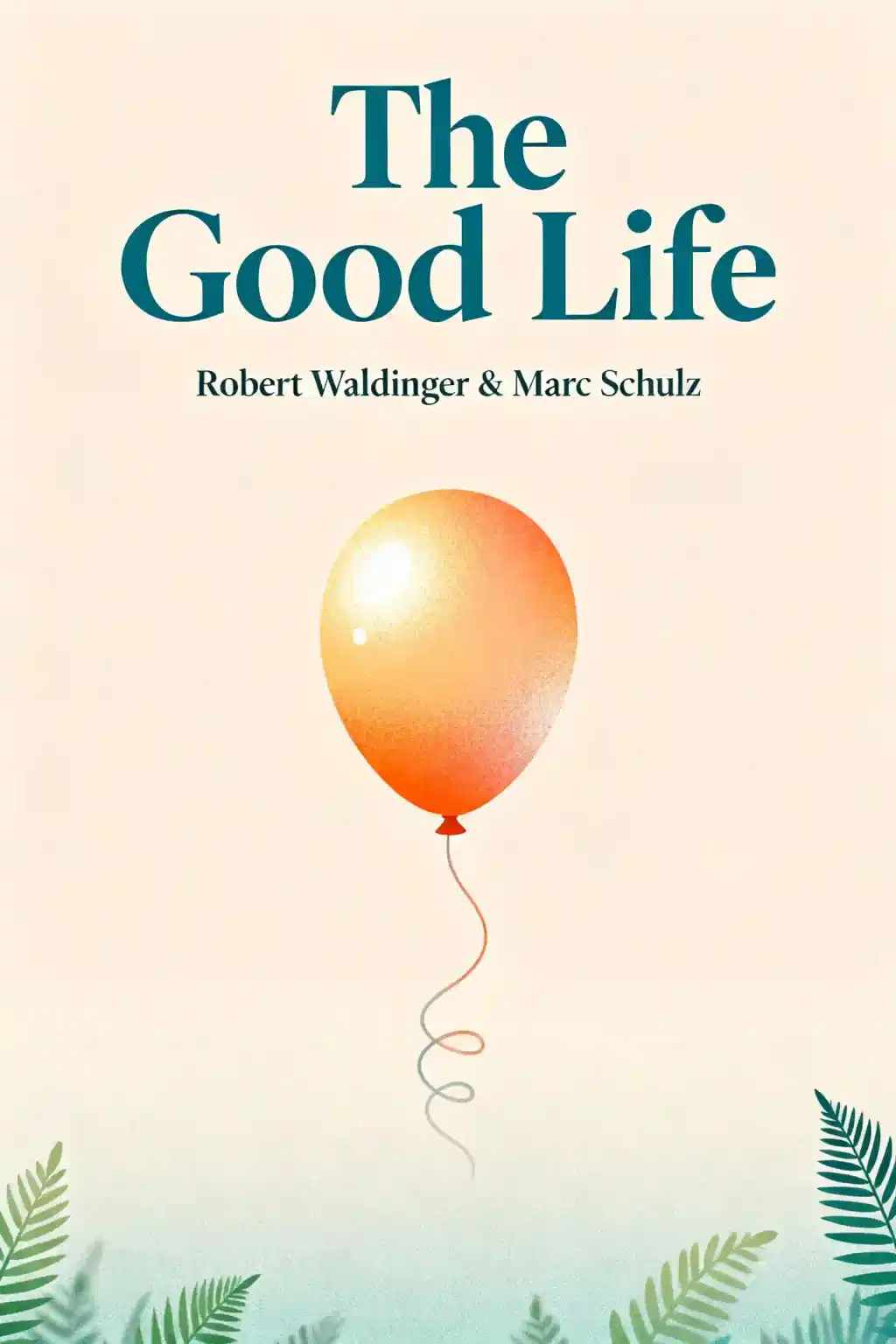
The Good Life: Lessons from the World's Longest Scientific Study of Happiness by Robert Waldinger & Marc Schulz Summary

Overview of The Good Life: Lessons from the World's Longest Scientific Study of Happiness
What if the secret to happiness isn't wealth, but relationships? Harvard's 85-year study, championed by Malcolm Gladwell, reveals why people with strong connections live longer, healthier lives - a revelation that made Dr. Waldinger's TED Talk go viral worldwide.
- Relationships are the strongest predictor of long-term health and happiness.
- Loneliness increases mortality risk equivalent to smoking 15 cigarettes daily.
- Strong social ties delay cognitive decline and chronic disease onset.
- Married individuals live 5-17 years longer than unmarried counterparts.
- Relationship quality trumps quantity for lifelong well-being per Harvard Study.
- Eudaimonic happiness stems from meaningful connections, not career success.
- Midlife relationship improvements enhance late-life health outcomes dramatically.
- Social engagement protects against mental decline in aging adults.
- Building fulfilling relationships remains possible even after age 70.
- Childhood adversity can be overcome through intentional adult relationships.
- Daily casual interactions boost happiness as much as deep bonds.
- Harvard Study: Relationships outrank wealth, IQ, and genetics for longevity.
About the Author of The Good Life: Lessons from the World's Longest Scientific Study of Happiness
Robert Waldinger and Marc Schulz, authors of The Good Life: Lessons From the World’s Longest Scientific Study of Happiness, are renowned psychiatrists and psychologists leading the Harvard Study of Adult Development—a groundbreaking 85-year research project tracking generations of participants to uncover the keys to lifelong well-being.
Waldinger is a Harvard Medical School psychiatry professor and Zen master. Schulz is a clinical psychologist and data science director at Bryn Mawr College.
Together, they blend scientific rigor with compassionate storytelling to explore themes of relationships, purpose, and resilience. Their work has been featured in The New York Times, The Washington Post, and TED Talks, with Waldinger’s 2015 TED Talk amassing over 45 million views.
The book, a New York Times bestseller, distills insights from tracking 1,300+ descendants of the original study cohort, offering actionable advice backed by decades of data. It has been translated into 30+ languages and praised for bridging academic research with practical self-help.
FAQs About The Good Life: Lessons from the World's Longest Scientific Study of Happiness
What is The Good Life by Robert Waldinger about?
The Good Life reveals findings from the 80+ year Harvard Study of Adult Development, showing that strong relationships—not wealth or fame—are the cornerstone of lifelong happiness and health. Robert Waldinger and Marc Schulz blend scientific data with personal stories to demonstrate how social connections shape mental, emotional, and physical well-being.
Who should read The Good Life?
This book is ideal for psychology enthusiasts, self-help readers, and anyone seeking to improve their relationships or navigate life transitions. Its insights resonate with professionals, parents, and retirees aiming to build more meaningful connections.
Is The Good Life by Robert Waldinger worth reading?
Yes—it’s a New York Times bestseller backed by decades of research, offering actionable advice to enhance relationships. With over 42 million TED Talk views and praise from experts like Jay Shetty and Daniel Pink, it’s a trusted guide to thriving through human connection.
What are the main lessons from The Good Life?
Key takeaways include:
- Relationships matter more than career success or wealth.
- Quality of connections (not quantity) predicts long-term happiness.
- Investing in relationships at any age improves health and fulfilment.
How does The Good Life define happiness?
Waldinger and Schulz define happiness as rooted in love and social bonds, captured by the quote: “Happiness is love. Full stop.” Their research shows loneliness harms health as severely as smoking, while strong relationships buffer stress and delay cognitive decline.
What are the criticisms of The Good Life?
Critics note the Harvard Study initially focused only on white men, limiting early insights. However, the study later expanded to include spouses, descendants, and more diverse participants, strengthening its conclusions.
What are key quotes from The Good Life?
Notable quotes include:
- “The people who fared best were the ones who leaned into relationships.”
- “Loneliness is a toxin.” These emphasize prioritizing connections and avoiding social isolation.
How can I apply The Good Life’s principles to my life?
Nurture existing relationships through active listening and shared activities. Join clubs, volunteer, or reconnect with old friends. Small, consistent efforts—like weekly calls with family—build lasting bonds that enhance well-being.
How does The Good Life compare to Atomic Habits?
While Atomic Habits focuses on individual behavior change, The Good Life highlights relational health as the foundation of happiness. Waldinger’s work complements habit-building by showing how social support sustains personal growth.
How does The Good Life address loneliness?
The book identifies loneliness as a public health crisis and stresses that even superficial interactions (like chatting with neighbors) reduce isolation. Deeper relationships, however, provide the greatest emotional and physical benefits.
How long did the Harvard Study of Adult Development last?
The study has tracked 724 men and their families for over 80 years, making it the world’s longest-running research on human flourishing. It began in 1938 and continues under Waldinger’s leadership.
How does Robert Waldinger’s TED Talk relate to The Good Life?
Waldinger’s 2016 TED Talk summarizes the Harvard Study’s findings, with over 42 million views. The book expands on these insights, offering deeper research, case studies, and practical steps to cultivate fulfilling relationships.
Feel the book through the author's voice
Turn knowledge into engaging, example-rich insights
Capture key ideas in a flash for fast learning
Enjoy the book in a fun and engaging way
Key Themes in The Good Life: Lessons from the World's Longest Scientific Study of Happiness
Quotes from The Good Life: Lessons from the World's Longest Scientific Study of Happiness
Loneliness kills. It’s as powerful as smoking or alcoholism.
The people who fared the best were the people who leaned into relationships, with family, with friends, with community.
Good relationships keep us happier, healthier, and help us live longer.
Our ancient brains focus on what's visible and immediate.
Money can be counted, achievements listed, followers tracked-while relationship value remains ephemeral.
Characters in The Good Life: Lessons from the World's Longest Scientific Study of Happiness
Quick Summary Mode - Read or listen to The Good Life: Lessons from the World's Longest Scientific Study of Happiness Summary in 11 Minutes

Break down key ideas from The Good Life: Lessons from the World's Longest Scientific Study of Happiness into bite-sized takeaways to understand how innovative teams create, collaborate, and grow.

Flash Card Mode - Top 10 Insights from The Good Life: Lessons from the World's Longest Scientific Study of Happiness in a Nutshell

Distill The Good Life: Lessons from the World's Longest Scientific Study of Happiness into rapid-fire memory cues that highlight key principles of candor, teamwork, and creative resilience.

Fun Mode - The Good Life: Lessons from the World's Longest Scientific Study of Happiness Lessons Told Through 23-Min Stories

Experience The Good Life: Lessons from the World's Longest Scientific Study of Happiness through vivid storytelling that turns innovation lessons into moments you'll remember and apply.
Personalize Mode - Read or listen to The Good Life: Lessons from the World's Longest Scientific Study of Happiness Summary in 0 Minutes

Ask anything, pick the voice, and co-create insights that truly resonate with you.

From Columbia University alumni built in San Francisco
"Instead of endless scrolling, I just hit play on BeFreed. It saves me so much time."


"I never knew where to start with nonfiction—BeFreed’s book lists turned into podcasts gave me a clear path."


"Perfect balance between learning and entertainment. Finished ‘Thinking, Fast and Slow’ on my commute this week."
"Crazy how much I learned while walking the dog. BeFreed = small habits → big gains."
"Reading used to feel like a chore. Now it’s just part of my lifestyle."

"Feels effortless compared to reading. I’ve finished 6 books this month already."
"BeFreed turned my guilty doomscrolling into something that feels productive and inspiring."

"BeFreed turned my commute into learning time. 20-min podcasts are perfect for finishing books I never had time for."
"BeFreed replaced my podcast queue. Imagine Spotify for books — that’s it. 🙌"

"It is great for me to learn something from the book without reading it."
"The themed book list podcasts help me connect ideas across authors—like a guided audio journey."
"Makes me feel smarter every time before going to work"
From Columbia University alumni built in San Francisco
"Instead of endless scrolling, I just hit play on BeFreed. It saves me so much time."
"I never knew where to start with nonfiction—BeFreed’s book lists turned into podcasts gave me a clear path."
"Perfect balance between learning and entertainment. Finished ‘Thinking, Fast and Slow’ on my commute this week."
"Crazy how much I learned while walking the dog. BeFreed = small habits → big gains."
"Reading used to feel like a chore. Now it’s just part of my lifestyle."
"Feels effortless compared to reading. I’ve finished 6 books this month already."
"BeFreed turned my guilty doomscrolling into something that feels productive and inspiring."
"BeFreed turned my commute into learning time. 20-min podcasts are perfect for finishing books I never had time for."
"BeFreed replaced my podcast queue. Imagine Spotify for books — that’s it. 🙌"
"It is great for me to learn something from the book without reading it."
"The themed book list podcasts help me connect ideas across authors—like a guided audio journey."
"Makes me feel smarter every time before going to work"
"Instead of endless scrolling, I just hit play on BeFreed. It saves me so much time."
"I never knew where to start with nonfiction—BeFreed’s book lists turned into podcasts gave me a clear path."
"Perfect balance between learning and entertainment. Finished ‘Thinking, Fast and Slow’ on my commute this week."
"Crazy how much I learned while walking the dog. BeFreed = small habits → big gains."
"Reading used to feel like a chore. Now it’s just part of my lifestyle."
"Feels effortless compared to reading. I’ve finished 6 books this month already."
"BeFreed turned my guilty doomscrolling into something that feels productive and inspiring."
"BeFreed turned my commute into learning time. 20-min podcasts are perfect for finishing books I never had time for."
"BeFreed replaced my podcast queue. Imagine Spotify for books — that’s it. 🙌"
"It is great for me to learn something from the book without reading it."
"The themed book list podcasts help me connect ideas across authors—like a guided audio journey."
"Makes me feel smarter every time before going to work"
"Instead of endless scrolling, I just hit play on BeFreed. It saves me so much time."
"I never knew where to start with nonfiction—BeFreed’s book lists turned into podcasts gave me a clear path."
"Perfect balance between learning and entertainment. Finished ‘Thinking, Fast and Slow’ on my commute this week."
"Crazy how much I learned while walking the dog. BeFreed = small habits → big gains."
"Reading used to feel like a chore. Now it’s just part of my lifestyle."
"Feels effortless compared to reading. I’ve finished 6 books this month already."
"BeFreed turned my guilty doomscrolling into something that feels productive and inspiring."
"BeFreed turned my commute into learning time. 20-min podcasts are perfect for finishing books I never had time for."
"BeFreed replaced my podcast queue. Imagine Spotify for books — that’s it. 🙌"
"It is great for me to learn something from the book without reading it."
"The themed book list podcasts help me connect ideas across authors—like a guided audio journey."
"Makes me feel smarter every time before going to work"

Get the The Good Life: Lessons from the World's Longest Scientific Study of Happiness summary as a free PDF or EPUB. Print it or read offline anytime.