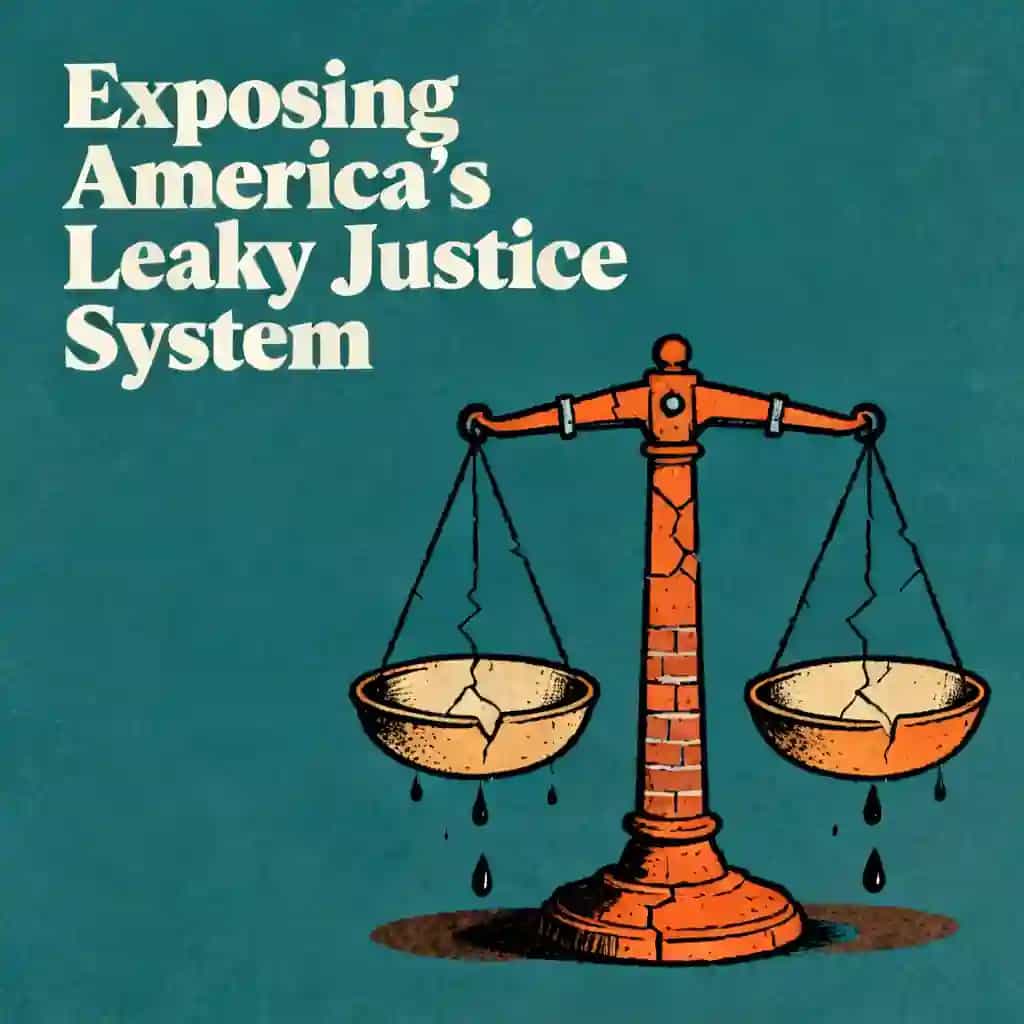
Overview of Doing Justice
Former prosecutor Preet Bharara's masterclass on justice unveils the moral complexities behind high-profile cases. Praised by Jeffrey Toobin as "a vivid memoir," this book asks: What separates fair punishment from revenge? The answer reshapes how we understand America's legal system.
- Prosecutors must prioritize truth over convictions to avoid “dangerous psychological momentum.”
- Ethical investigations demand checking facts, biases, and resisting predetermined outcomes.
- Snitches and cooperators force prosecutors into moral quicksand with no easy answers.
- Courtroom rules prohibit lies, personal attacks, and bias—unlike political rhetoric.
- Punishment requires balancing retribution, rehabilitation, and society’s moral code.
- Justice hinges on fallible people, not flawless systems—vigilance is nonnegotiable.
- Forgiveness and mercy can transcend legal outcomes, as seen in Rais Bhuiyan’s story.
- Overconfidence in investigations risks injustice; skepticism and rigor prevent errors.
- Prison reform must address dehumanization, as exemplified by Rikers Island’s failures.
- “Do the right thing, the right way, for the right reasons” defines prosecutorial integrity.
- Trials thrive on evidence and cross-examination, not assumptions or insinuations.
- The rule of law falters without empathy, deliberation, and open-mindedness.
About the Author of Doing Justice
Preetinder Singh Bharara, bestselling author of Doing Justice: A Prosecutor’s Thoughts on Crime, Punishment, and the Rule of Law, is a renowned legal expert and former U.S. Attorney for the Southern District of New York (2009–2017). His career prosecuting high-stakes cases—from terrorism and Wall Street fraud to organized crime and political corruption—anchors the book’s exploration of justice, ethics, and institutional integrity.
A Distinguished Scholar in Residence at NYU School of Law and partner at WilmerHale, Bharara amplifies his insights through the award-winning podcasts Stay Tuned with Preet and Café Insider, reaching millions globally.
His work has earned recognition from TIME (2012 "100 Most Influential People") and Bloomberg Markets, cementing his authority on legal and civic issues. Doing Justice debuted as a New York Times bestseller, reflecting its resonance in debates about fairness and accountability in modern society.
FAQs About Doing Justice
What is Doing Justice by Preet Bharara about?
Doing Justice explores the complexities of the legal system through the lens of Preet Bharara’s career as a federal prosecutor. Structured around the four stages of criminal prosecution—Inquiry, Accusation, Judgment, and Punishment—it emphasizes fairness, integrity, and moral reasoning. Bharara uses real cases, like the Madrid bombing investigation, to illustrate the challenges of uncovering truth, avoiding biases, and balancing public scrutiny with ethical duty.
Who should read Doing Justice?
This book is ideal for legal professionals, students, and anyone interested in ethics and criminal justice. It offers insights into prosecutorial decision-making, the rule of law, and societal accountability. Readers seeking a nuanced understanding of justice beyond courtroom verdicts, including its moral and philosophical dimensions, will find it compelling.
Is Doing Justice worth reading?
Yes—the book blends gripping narratives with practical wisdom, making legal concepts accessible to non-experts. Bharara’s emphasis on fair process over predetermined outcomes and his critique of systemic flaws (e.g., reliance on cooperating witnesses) provide timeless lessons for upholding justice in any field.
How does Preet Bharara define justice in Doing Justice?
Bharara defines justice as a fair process guided by rigorous inquiry, impartiality, and vigilance against biases. He argues that justice is achieved not through rigid rules but by ensuring equitable treatment for all, whether in prosecuting crimes or addressing societal inequities.
What are the main themes in Doing Justice?
- Truth-seeking: The importance of meticulous investigation to avoid errors.
- Ethical leadership: Prosecutors must resist external pressures and remain open-minded.
- Moral complexity: Balancing accountability with empathy in sentencing.
- Public trust: Restoring faith in institutions through transparency.
What does Doing Justice say about cooperating witnesses?
Bharara highlights their critical role in investigations but warns of moral risks, such as incentivizing false testimony. Prosecutors must rigorously vet cooperators’ credibility while acknowledging their motives (e.g., reduced sentences). This tension underscores the ethical tightrope in high-stakes cases.
How does Doing Justice address public corruption?
The book details Bharara’s prosecutions of corrupt officials, stressing aggressive legal action and civic engagement to combat systemic graft. He argues corruption thrives in complacency and calls for public vigilance to hold leaders accountable.
What cautionary tales does Doing Justice share about investigations?
Bharara critiques the 2004 Madrid bombings case, where rushed conclusions led to wrongful arrests. He cites Roman senator Tacitus: “Truth is confirmed by inspection and delay,” urging methodical inquiry over haste.
How does Doing Justice view the relationship between law and morality?
While laws provide structure, Bharara asserts morality requires deeper human effort—forgiveness, empathy, and grace. The law alone cannot resolve societal divides but can foster conditions for ethical behavior.
What leadership lessons does Doing Justice offer?
- Avoid groupthink: Challenge assumptions during decision-making.
- Resist “psychological momentum”: Stay open to changing course if new evidence emerges.
- Prioritize fairness: Ensure even unpopular defendants receive impartial treatment.
How does Doing Justice critique the prison system?
Bharara condemns dehumanizing conditions (e.g., Rikers Island) and advocates for rehabilitation over punitive isolation. He stresses humane treatment to reduce recidivism and uphold dignity.
What quotes from Doing Justice emphasize its core message?
- “Truth is confirmed by inspection and delay” (Tacitus)
- “A hundred suspicions don’t make a proof” (Dostoyevsky)
- “Justice is never assured, but vigilance makes it more likely”
How does Doing Justice remain relevant in 2025?
Its focus on ethical leadership, systemic accountability, and public trust resonates amid ongoing debates about policing, political corruption, and judicial reform. The book’s case studies offer timeless frameworks for addressing modern challenges.
Feel the book through the author's voice
Turn knowledge into engaging, example-rich insights
Capture key ideas in a flash for fast learning
Enjoy the book in a fun and engaging way
Key Themes in Doing Justice
Quotes from Doing Justice
Justice springs as much from the heart as from the head.
Living with constant cynicism is exhausting.
Blind trust based on appearances is foolishly naive.
True toughness comes from strength of character, not intimidation or force.
Characters in Doing Justice
Quick Summary Mode - Read or listen to Doing Justice Summary in 10 Minutes

Break down key ideas from Doing Justice into bite-sized takeaways to understand how innovative teams create, collaborate, and grow.

Flash Card Mode - Top 5 Insights from Doing Justice in a Nutshell

Distill Doing Justice into rapid-fire memory cues that highlight key principles of candor, teamwork, and creative resilience.

Fun Mode - Doing Justice Lessons Told Through 22-Min Stories

Experience Doing Justice through vivid storytelling that turns innovation lessons into moments you'll remember and apply.
Personalize Mode - Read or listen to Doing Justice Summary in 0 Minutes

Ask anything, pick the voice, and co-create insights that truly resonate with you.

From Columbia University alumni built in San Francisco
"Instead of endless scrolling, I just hit play on BeFreed. It saves me so much time."


"I never knew where to start with nonfiction—BeFreed’s book lists turned into podcasts gave me a clear path."


"Perfect balance between learning and entertainment. Finished ‘Thinking, Fast and Slow’ on my commute this week."
"Crazy how much I learned while walking the dog. BeFreed = small habits → big gains."
"Reading used to feel like a chore. Now it’s just part of my lifestyle."

"Feels effortless compared to reading. I’ve finished 6 books this month already."
"BeFreed turned my guilty doomscrolling into something that feels productive and inspiring."

"BeFreed turned my commute into learning time. 20-min podcasts are perfect for finishing books I never had time for."
"BeFreed replaced my podcast queue. Imagine Spotify for books — that’s it. 🙌"

"It is great for me to learn something from the book without reading it."
"The themed book list podcasts help me connect ideas across authors—like a guided audio journey."
"Makes me feel smarter every time before going to work"
From Columbia University alumni built in San Francisco
"Instead of endless scrolling, I just hit play on BeFreed. It saves me so much time."
"I never knew where to start with nonfiction—BeFreed’s book lists turned into podcasts gave me a clear path."
"Perfect balance between learning and entertainment. Finished ‘Thinking, Fast and Slow’ on my commute this week."
"Crazy how much I learned while walking the dog. BeFreed = small habits → big gains."
"Reading used to feel like a chore. Now it’s just part of my lifestyle."
"Feels effortless compared to reading. I’ve finished 6 books this month already."
"BeFreed turned my guilty doomscrolling into something that feels productive and inspiring."
"BeFreed turned my commute into learning time. 20-min podcasts are perfect for finishing books I never had time for."
"BeFreed replaced my podcast queue. Imagine Spotify for books — that’s it. 🙌"
"It is great for me to learn something from the book without reading it."
"The themed book list podcasts help me connect ideas across authors—like a guided audio journey."
"Makes me feel smarter every time before going to work"
"Instead of endless scrolling, I just hit play on BeFreed. It saves me so much time."
"I never knew where to start with nonfiction—BeFreed’s book lists turned into podcasts gave me a clear path."
"Perfect balance between learning and entertainment. Finished ‘Thinking, Fast and Slow’ on my commute this week."
"Crazy how much I learned while walking the dog. BeFreed = small habits → big gains."
"Reading used to feel like a chore. Now it’s just part of my lifestyle."
"Feels effortless compared to reading. I’ve finished 6 books this month already."
"BeFreed turned my guilty doomscrolling into something that feels productive and inspiring."
"BeFreed turned my commute into learning time. 20-min podcasts are perfect for finishing books I never had time for."
"BeFreed replaced my podcast queue. Imagine Spotify for books — that’s it. 🙌"
"It is great for me to learn something from the book without reading it."
"The themed book list podcasts help me connect ideas across authors—like a guided audio journey."
"Makes me feel smarter every time before going to work"
"Instead of endless scrolling, I just hit play on BeFreed. It saves me so much time."
"I never knew where to start with nonfiction—BeFreed’s book lists turned into podcasts gave me a clear path."
"Perfect balance between learning and entertainment. Finished ‘Thinking, Fast and Slow’ on my commute this week."
"Crazy how much I learned while walking the dog. BeFreed = small habits → big gains."
"Reading used to feel like a chore. Now it’s just part of my lifestyle."
"Feels effortless compared to reading. I’ve finished 6 books this month already."
"BeFreed turned my guilty doomscrolling into something that feels productive and inspiring."
"BeFreed turned my commute into learning time. 20-min podcasts are perfect for finishing books I never had time for."
"BeFreed replaced my podcast queue. Imagine Spotify for books — that’s it. 🙌"
"It is great for me to learn something from the book without reading it."
"The themed book list podcasts help me connect ideas across authors—like a guided audio journey."
"Makes me feel smarter every time before going to work"

Get the Doing Justice summary as a free PDF or EPUB. Print it or read offline anytime.