Chapter 1
The Buyer's Voice: How Understanding Purchase Decisions Transforms Marketing
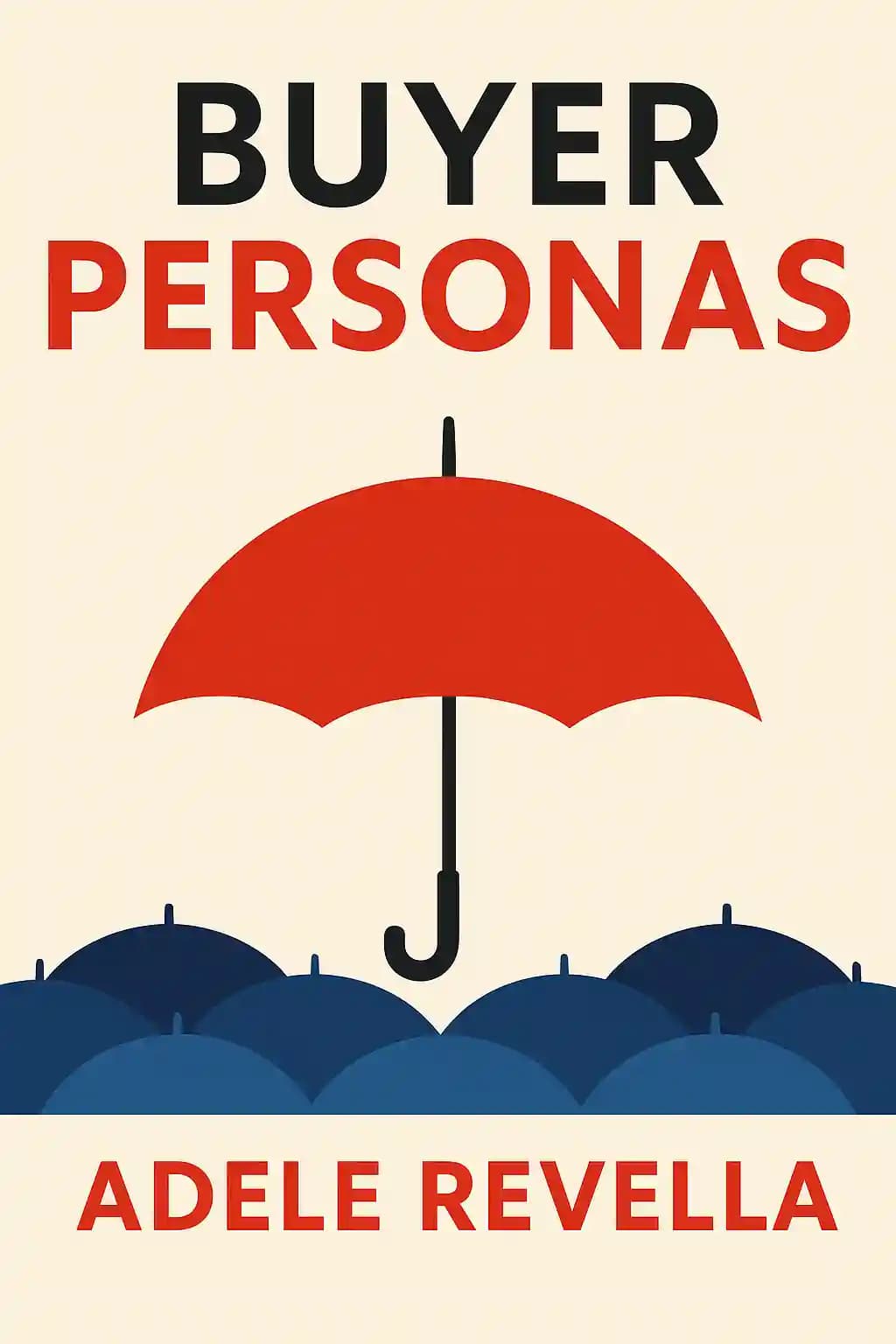
In a world flooded with marketing messages, one book has quietly revolutionized how successful companies approach their customers. "Buyer Personas" by Adele Revella and Jim Kraus isn't just another marketing manual-it's a paradigm shift in how businesses understand their customers' decision-making processes. Since its original publication in 2015 and subsequent revision, it has become required reading at leading business schools and a cornerstone methodology for marketing departments at companies like IBM, Microsoft, and Salesforce. What makes this approach so powerful? Unlike traditional demographic profiling that merely describes who buyers are, the Buyer Persona methodology reveals the hidden thought processes behind high-consideration purchases-the exact insights marketers need to create messaging that resonates and strategies that convert.
Chapter 2
Beyond Demographics: The True Nature of Buyer Personas
Most marketers have it wrong. When they create buyer personas, they typically craft fictional profiles based on demographic information, job titles, and general characteristics. These traditional personas might tell you that "Marketing Manager Mary" is 35-45 years old, works at a mid-sized company, and has certain responsibilities-but they fail to reveal what actually drives her purchasing decisions. While knowing basic demographic information can be useful for targeting, it provides little insight into the complex psychological and practical factors that influence buying behavior.
True buyer personas go much deeper. They uncover the critical factors that influence buying decisions: what triggers a buyer's search, what outcomes they expect, what concerns they have about your solution, what attributes they evaluate when comparing options, and the behind-the-scenes process they follow to make decisions. These insights-what Revella and Kraus call the "5 Rings of Buying Insight"-provide the foundation for marketing strategies that genuinely connect with buyers' needs. For example, a trigger might be a failed product launch, while an expected outcome could be increasing market share by 20% within six months.
Consider this: when making a high-consideration purchase like an enterprise software system or a family vacation, buyers don't simply compare features and prices. They evaluate options through a complex lens of personal priorities, expected outcomes, perceived risks, and specific requirements. A CTO might be primarily concerned with system integration and security protocols, while a CFO focuses on ROI and long-term cost implications. They consult multiple information sources, from peer recommendations and industry analysts to online reviews and case studies. They involve various stakeholders, each with their own priorities and concerns, and follow a decision process unique to their situation. Traditional demographic personas miss this complexity entirely.
The most successful organizations understand that effective marketing isn't about broadcasting your product's features-it's about addressing the specific concerns that buyers have during their decision journey. For instance, rather than simply highlighting a software's features, smart marketers focus on how their solution addresses common pain points like reducing implementation time by 50% or decreasing error rates by 75%. By focusing on buying decisions rather than buyer demographics, marketers can create messaging that resonates deeply with prospects and strategies that build the confidence buyers need to choose their solution.
Understanding the true nature of buyer personas also means recognizing that buying decisions are rarely linear. Buyers may move back and forth between different stages of consideration, gather information from unexpected sources, or face unforeseen obstacles in their decision-making process. Effective personas capture these nuances and help marketers develop content and strategies that support buyers throughout their entire journey, not just at the point of purchase.
Chapter 3
The Anxiety Behind High-Consideration Purchases
Imagine you're about to invest a significant portion of your budget in a solution that could either transform your business or become an expensive mistake. You've researched options online, read reviews, and spoken with sales representatives, but you still feel uncertain. Will this solution deliver the outcomes you need? Is there a better alternative you haven't discovered? What if implementation fails? This anxiety is the emotional reality for buyers making high-consideration purchases, where the stakes are high and the consequences of a wrong decision can reverberate for years.
Whether in B2B or B2C contexts, high-consideration decisions share common characteristics: they involve multiple stakeholders, require competitive evaluation, and carry significant risk. Buyers approach these decisions with understandable anxiety because they often have limited experience with such purchases and face confusing options with potentially serious consequences for choosing poorly. For example, a manufacturing company investing in new enterprise software must consider not just the immediate cost, but also training requirements, system compatibility, long-term maintenance, and potential disruption to existing operations.
The author illustrates this through a personal vacation decision between three resorts. Despite extensive research, uncertainty remained about which resort would best meet family needs while minimizing disappointment risks. One resort-Lagoon Oasis-distinguished itself by addressing specific concerns throughout the decision process: they showed pristine room photos and 360-degree virtual tours to address cleanliness worries, demonstrated knowledgeable staff credentials and detailed guest testimonials to alleviate service concerns, displayed appealing food images with full menu transparency to counter quality doubts, and provided comprehensive pricing breakdowns to eliminate fear of hidden costs. They even offered a satisfaction guarantee and detailed cancellation policies to further reduce perceived risk.
What made Lagoon Oasis successful wasn't just having better amenities-it was understanding the emotional journey of their buyers and providing the right information at the right time to build confidence. They recognized that vacation decisions aren't just about features but about alleviating anxiety and creating trust. Their approach included regular communication touchpoints, personalized recommendations based on family composition, and clear documentation of all promises made during the sales process.
This principle applies equally to B2B purchases, where the stakes are often even higher. When organizations make buyers feel confident and secure in their decisions, they typically win the business. The most effective marketers understand this dynamic and develop strategies that don't just promote products but actively build buyer confidence throughout the decision journey. This includes providing detailed case studies, offering proof points from similar organizations, creating implementation roadmaps, and maintaining transparent communication about potential challenges and solutions.
Successful vendors recognize that anxiety manifests differently at each stage of the buying process. Early on, buyers worry about making the right choice among options. During evaluation, concerns shift to implementation and ROI. Finally, as decision time approaches, anxiety often centers on personal reputation risk and stakeholder buy-in. By mapping and addressing these emotional needs throughout the journey, companies can significantly increase their chances of winning complex sales.
Chapter 4
The Five Rings of Buying Insight
At the heart of effective buyer personas lies a framework called the "5 Rings of Buying Insight." This framework transforms abstract buyer understanding into actionable marketing guidance by capturing five critical dimensions of the buying decision:
1. Priority Initiatives: What triggers buyers to invest in solutions like yours? These are the compelling reasons that move buyers from status quo to active search. Understanding priority initiatives reveals why your solution becomes relevant to buyers at specific moments.
2. Success Factors: What results do buyers expect from purchasing your solution? These are the tangible and intangible outcomes buyers hope to achieve-the value they expect in return for their investment.
3. Perceived Barriers: What concerns do buyers have about your solution? These barriers might include misconceptions about your approach, negative experiences with similar solutions, or specific fears about implementation or outcomes.
4. Decision Criteria: What features and capabilities do buyers evaluate when comparing options? These are the specific attributes buyers use to assess which solution best meets their needs.
5. Buyer's Journey: What process do buyers follow when evaluating options? This includes the information sources they trust, the people involved in the decision, and the steps they take before making a final choice.
Together, these insights serve as guardrails that keep marketing teams aligned with buyer needs rather than internal assumptions. When marketers understand these five dimensions, they can create content that addresses buyers' actual concerns rather than what the company thinks is important.
Consider a healthcare organization purchasing an MRI machine-a multi-million dollar decision with a 10-15 year impact. The priority initiative might be increasing patient throughput due to growing demand. Success factors could include reducing scan times, improving image quality, and enhancing patient comfort. Perceived barriers might involve concerns about staff training requirements or facility modifications. Decision criteria would include technical specifications, service agreements, and financing options. The buyer's journey would reveal which stakeholders influence the decision (radiologists, administrators, finance) and what resources they consult (vendor demonstrations, site visits to other hospitals, analyst reports).
With these insights, marketers can create messaging that speaks directly to buyers' priorities, addresses their concerns proactively, and provides the specific information they need at each stage of their decision process. This approach transforms marketing from generic product promotion to targeted buyer guidance.
Chapter 5
The Art of Buyer Interviews
The most valuable insights about buying decisions come from one-on-one interviews with people who have recently made the exact buying decision you're trying to influence. Unlike traditional market research that relies on focus groups or surveys with hypothetical scenarios, buyer persona interviews capture authentic stories from real decision-makers who can accurately recall their thought processes.
These interviews yield multiple benefits: buyers can precisely recall their thinking without guessing, they represent your full target market (including opportunities you're losing), they provide authentic quotes that add depth to your personas, and they create alignment across teams around "one version of the truth" about buyer needs.
The interview approach differs significantly from traditional qualitative research. Rather than following a rigid script of predetermined questions, effective buyer interviews begin with a single prompt: "Take me back to the day when you first decided to evaluate [solution category] and tell me what happened." From there, the interviewer follows the natural flow of the buyer's story, asking follow-up questions that probe for details about what actually happened rather than hypothetical scenarios.
This unstructured approach allows buyers to reveal their authentic decision journey-including aspects marketers might never think to ask about. When buyers mention evaluating specific features or consulting particular resources, the interviewer can probe deeper: "How did that information impact your choice of vendors?" When they describe eliminating options, the interviewer can ask: "How did you decide to eliminate that third company?"
Effective interviewers possess natural curiosity, good listening skills, and comfort with unscripted conversations. They don't need deep product expertise-in fact, those with less product knowledge often ask better probing questions because they don't have preconceived notions about what "should" matter to buyers.
The most revealing interviews often come from buyers who considered your solution but chose a competitor. These "lost opportunity" interviews provide invaluable insights about perception gaps and competitive differentiators. While these buyers can be difficult to locate, they're surprisingly willing to share their experiences when approached professionally.
When buyers use vague terms like "easy to use" or "cutting-edge," skilled interviewers probe for specific meanings. This reveals concrete requirements behind generic language-for example, an "easy-to-use" MRI machine might mean intuitive touchscreen interfaces, streamlined workflows for quick imaging, and advanced coil options that improve patient comfort.
By capturing these detailed insights, marketers gain a profound understanding of what truly matters to buyers-not what the company assumes should matter, but what actually influences purchase decisions in the real world.
Chapter 6
From Raw Interviews to Actionable Insights
After conducting buyer interviews, the next challenge is transforming hours of conversation into structured insights that guide marketing decisions. This process begins by marking up interview transcripts with comments that categorize buyer statements into the 5 Rings of Buying Insight.
Each relevant quotation gets highlighted and labeled according to whether it reveals a Priority Initiative, Success Factor, Perceived Barrier, Decision Criterion, or aspect of the Buyer's Journey. The key is distinguishing between related concepts-for example, Success Factors (the benefits and outcomes buyers expect) versus Decision Criteria (specific capabilities that tip decisions toward particular solutions).
These categorized quotations then populate an "Insights Aggregator" spreadsheet with five tabs-one for each insight category. For each compelling quote, you note its source, summarize its main point, and eventually craft an insight headline that captures its essence. This methodical approach transforms scattered interview data into a structured format that reveals patterns across multiple buyer conversations.
When summarizing main points, use consistent language for similar ideas and sort related quotations together. This process transforms raw interview data into organized patterns revealing what truly matters to buyers. The final "Buying Insight Headlines" should be written as if buyers were directly answering that Ring's question-for example, turning "Image Quality" into "How sharp, clear, and detailed is the imaging quality?"
For organizations conducting frequent persona development, Generative AI platforms like ChatGPT can accelerate this process by analyzing interview transcripts to identify preliminary themes. While AI can't replace human analysis, it can help spot initial patterns that human analysts can then refine and validate.
The completed Insights Aggregator becomes the foundation for communicating Buyer Insights in a format that helps align company strategies with what you've learned. The most effective approach uses presentation software to summarize insights for each of the 5 Rings, including verbatim quotes that faithfully represent buyers' thoughts and emotions.
The final step is identifying 5-8 primary themes that represent buyers' highest-order needs across the first four Rings of Buying Insight. For an MRI machine study, these themes might include reducing scan times, producing sharper images, improving patient comfort, getting up and running quickly, future-proofing operations, and partnering with an established leader. Each theme connects multiple insights from different Rings and serves as the foundation for resonant messaging.
Chapter 7
Validating and Enhancing Your Buyer Persona
While one-on-one interviews provide the foundation for buyer personas, survey research can enhance these insights in several important ways. Surveys serve as a powerful complementary tool that validates findings, increases confidence in your buyer personas, and uncovers additional nuances that might not emerge in individual conversations. The key is to use surveys strategically to build upon, rather than replace, the rich qualitative data from interviews.
Surveys with structured questions to larger buyer pools can confirm the accuracy and validity of your persona insights through quantitative validation. For instance, if interview findings suggest that ease of integration is a key concern, a survey can determine what percentage of your target market shares this priority. This approach helps determine which buyer expectations matter most, test various value propositions and messaging concepts, and identify whether different market segments require tailored marketing approaches.
When confirming Success Factors for complex purchases like an MRI machine, a multi-step approach proves most effective. First, ask buyers to freely list important outcomes they expect, avoiding any potential bias from predetermined options. Then, have them rate specific factors identified from interviews on a 10-point scale. This dual approach not only validates existing insights but can uncover additional findings. For example, while interviews might reveal concerns about training time, surveys could show that 85% of buyers also worry about maintenance costs.
To determine which buyer expectations carry the most weight, surveys can employ various sophisticated prioritization techniques:
• Top Choice Selection: Having buyers select their 1-2 most important criteria
• Full Ranking: Asking buyers to rank all criteria from most to least important
• Chip Allocation: Distributing 100 points across criteria based on relative importance
• Maximum Difference Scaling: Comparing pairs of options to determine relative preference strength
• Conjoint Analysis: Understanding trade-offs between different feature combinations
Surveys excel at testing messaging before market launch. For instance, when developing messaging for an MRI machine focused on reducing scan times, you might test multiple approaches:
• Speed-focused: "40% faster scan times"
• Patient-centric: "More comfortable, quicker experiences for patients"
• Technical: "Advanced acceleration technology for optimal throughput"
• Operational: "Increase daily patient volume without sacrificing quality"
• Financial: "Higher throughput equals greater ROI"
Market segmentation insights from surveys can reveal critical differences that warrant tailored approaches. These segments might be based on:
• Company size (small clinics vs. large hospitals)
• Industry specialization (general practice vs. specialized imaging centers)
• Geographic location (urban vs. rural settings)
• Buyer role (technical staff vs. administrative decision-makers)
• Purchase frequency (first-time buyers vs. replacement purchases)
When designing your survey participant pool, careful selection criteria are essential. Define specific characteristics that reflect your target markets, such as:
• Recent buyers (within last 3-6 months) who can provide fresh purchase experience insights
• Prospective buyers actively researching solutions
• Decision-makers with budget authority
• Technical evaluators involved in the selection process
• End-users who will work with the solution daily
Ensure sufficient sample sizes in each segment (typically 30-50 minimum per segment) for statistically reliable analysis and meaningful comparisons across different buyer groups.
Chapter 8
Turning Buyer Insights into Winning Strategies
Buyer Personas are not an end goal but a marketing tool to guide strategic decisions. The insights they provide should directly inform messaging, content creation, sales enablement, and overall marketing strategy.
In today's digital environment of continuous partial attention, capturing buyers' interest amid information overload is marketing's greatest challenge. The key is finding the intersection between what your company wants to say and what buyers actually want to hear. Your Buyer Persona insights provide the buyer's authentic voice to guide these messaging decisions.
To create effective messaging that stands out, evaluate your capabilities based on two filters: competitors' ability to make the same claim and the capability's value to buyers. After applying both filters, focus on capabilities that both communicate high value to buyers and offer competitive advantage. Sometimes the most valuable message to buyers may not be your most unique capability, but addressing their primary concerns is more important than highlighting your latest features.
When developing content strategies, use the 5 Rings of Buying Insight as your guide:
1. Priority Initiatives: Acknowledge these early in the buying journey through websites, campaigns, and thought leadership to create an initial connection that sparks interest.
2. Success Factors: Focus on desired outcomes in your messaging, develop thought leadership linking your features to these outcomes, and create case studies demonstrating how customers achieved similar results.
3. Perceived Barriers: Develop detailed marketing messages that address common concerns, include these in case studies and client references, and create FAQs and sales enablement assets to help your team overcome objections.
4. Decision Criteria: Develop FAQs for each criterion, show how meeting these criteria enables buyers to achieve their desired outcomes, and incorporate answers into sales pitches and demos.
5. Buyer's Journey: Design marketing activities that align with how buyers actually research and evaluate options, prioritizing the channels and resources they trust most.
This targeted approach dramatically increases marketing ROI while reducing the number of assets needed. Rather than creating content based on internal assumptions, you focus resources on addressing the specific concerns and information needs that actually influence buying decisions.
When sharing these insights with sales teams, focus on the intelligence that helps them anticipate buyer needs rather than presenting demographic profiles. Simply say, "We've been interviewing people who recently evaluated our solution, including those who chose us and those who bought from competitors. Here's what we learned." This approach positions marketing as a valuable resource that helps sales understand and address buyer concerns more effectively.
Chapter 9
Starting Small, Making a Big Impact
Despite the transformative potential of buyer personas, implementation often faces two common challenges: skeptical stakeholders worried about scope creep and overly enthusiastic visionaries wanting to build personas for every product and buyer immediately.
The solution? Start with one well-defined project of strategic interest that everyone agrees cannot succeed through business-as-usual approaches. Choose something challenging-entering new markets, marketing merged products, or addressing sudden competitive pressure. A small, focused initiative with dramatic results will make a lasting impression, winning allies before expanding to other areas.
When stakeholders begin trusting buyer personas, they'll view marketers as buyer experts who can guide company strategies for new markets and competitive challenges. To earn this credibility, speak with the authority of the buyer's voice in meetings. Replace "I think" statements with "We've been listening to buyers and here's what they think."
While you should conduct regular interviews to maintain current insights, buyer perspectives typically remain stable until major market shifts occur-economic changes, competitive disruptions, new regulations, or technological advances. This means your initial investment in buyer persona research continues delivering value over extended periods.
When your interviews reveal issues beyond marketing-product functionality problems, sales approach issues, or service concerns-proceed cautiously, especially with your first buyer persona project. Rather than immediately criticizing other departments, first own any marketing-related problems by addressing misperceptions through your content and sales enablement materials.
In strategic planning, where executives traditionally rely on historical patterns and analyst predictions, buyer personas offer unprecedented intelligence. Your CMO can design marketing plans based on what buyers actually say about their resources and information sources. You can justify investments that differ from industry averages because you have clear evidence about what will win business.
The power of Buyer Personas, when used correctly, transforms marketing from an art based on intuition to a science based on buyer insights. By understanding the authentic factors that drive purchase decisions, marketers can create strategies that genuinely connect with buyers' needs, build the confidence required to overcome decision paralysis, and ultimately win more business in competitive markets.