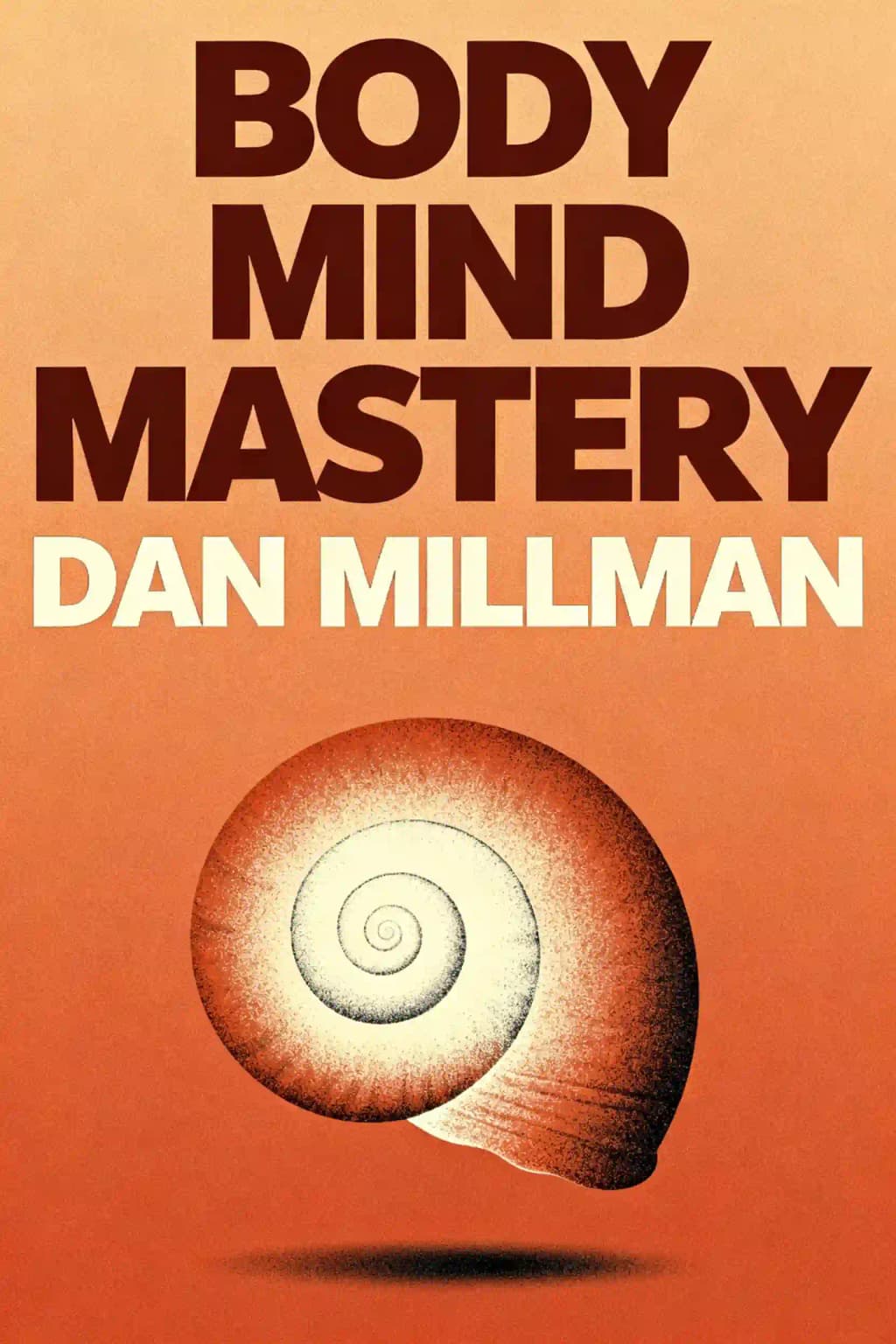
Former world champion Dan Millman's "Body Mind Mastery" transforms athletes by integrating mind and body for peak performance. This Stanford coach's holistic approach has revolutionized sports psychology, helping countless athletes achieve the mental focus and emotional balance that separates champions from competitors.
Dan Millman, bestselling author of Body-Mind Mastery: Training for Sport and Life, is a peak performance expert and former world champion athlete whose work bridges Eastern wisdom and Western pragmatism. A Stanford University gymnastics coach turned influential voice in personal development, Millman’s 18 books—including Way of the Peaceful Warrior (adapted into a 2006 film) and The Four Purposes of Life—explore themes of mindfulness, purposeful living, and holistic growth.
His insights draw from decades studying martial arts (including aikido and tai chi), teaching at Oberlin College, and leading workshops across 32 countries.
Millman’s Body-Mind Mastery distills his expertise in sports psychology and mind-body integration, reflecting his background coaching Olympic athletes and pioneering the “Life as an Art” curriculum. His teachings are embraced by leaders in health, education, and business, with translations spanning 29 languages.
A frequent keynote speaker, Millman’s Peaceful Warrior philosophy has shaped global audiences for over 30 years, underscored by his 2017 finale to the trilogy, The Hidden School.
Body Mind Mastery explores integrating physical, mental, and emotional training to achieve peak performance in sports and daily life. Dan Millman, a former world-champion athlete, blends Eastern and Western philosophies to teach principles like nonresistance, balance, and natural order. The book includes practical exercises, such as the Peaceful Warrior warmup, to help readers cultivate awareness, reduce stress, and unlock latent potential through disciplined practice.
Athletes, coaches, fitness enthusiasts, and anyone seeking personal growth will benefit from this book. It’s tailored for individuals aiming to improve skills in sports (e.g., tennis, basketball) or artistic pursuits (e.g., piano) while developing mental resilience. Millman’s insights also appeal to readers interested in mindfulness, stress reduction, and aligning with natural laws for holistic success.
Yes—the book offers actionable strategies for transcending self-imposed limits. Millman’s blend of storytelling, psychological principles, and physical training techniques provides a timeless roadmap for mastering challenges in sports, work, and relationships. Updated editions include photos and sections on aging athletes, enhancing its relevance for modern readers.
Millman’s principles extend beyond athletics: practicing nonresistance helps manage stress, while balanced effort fosters productivity. For example, accommodating incremental challenges at work mirrors athletic training, promoting growth without burnout. The book’s mindful movement exercises also improve posture and energy flow in sedentary lifestyles.
Both books blend personal anecdotes with philosophical insights, but Body Mind Mastery focuses specifically on athletic training and skill mastery. While Peaceful Warrior is a narrative, this book offers structured exercises and frameworks for tangible progress, making it more practical for coaches and performers.
Yes—its emphasis on mindfulness, emotional resilience, and stress reduction aligns with techniques used in cognitive behavioral therapy. By reframing obstacles as opportunities, readers learn to manage anxiety and build confidence in high-pressure situations.
Some readers may find its holistic approach overly abstract compared to purely technical sports guides. Additionally, the focus on self-discipline might challenge those seeking quick fixes. However, its principles remain widely praised for their depth and applicability.
As remote work and sedentary lifestyles rise, the book’s strategies for physical vitality and mental clarity resonate strongly. Its lessons on adapting to change and maintaining balance align with modern demands for resilience in fast-paced environments.
Coaches can apply its frameworks to design training programs that address athletes’ mental blocks and emotional barriers. Techniques like progressive accommodation help tailor challenges to individual growth rates, fostering sustainable improvement.
Unlike conventional sports guides, it merges biomechanics with spirituality, offering tools for both skill mastery and inner peace. The inclusion of photos, warmup routines, and aging-athlete advice adds practical value missing in similar titles.
Feel the book through the author's voice
Turn knowledge into engaging, example-rich insights
Capture key ideas in a flash for fast learning
Enjoy the book in a fun and engaging way
There is never nothing going on. There are no ordinary moments.
Talent isn't about possessing special qualities but rather the absence of obstructions.
Awareness transforms experience into wisdom and confusion into clarity.
Champions form habits of doing what others find boring or uncomfortable.
Difficulty exists only relative to preparation.
Break down key ideas from Body Mind Mastery into bite-sized takeaways to understand how innovative teams create, collaborate, and grow.
Experience Body Mind Mastery through vivid storytelling that turns innovation lessons into moments you'll remember and apply.
Ask anything, choose your learning style, and co-create insights that truly resonate with you.

From Columbia University alumni built in San Francisco
"Instead of endless scrolling, I just hit play on BeFreed. It saves me so much time."
"I never knew where to start with nonfiction—BeFreed’s book lists turned into podcasts gave me a clear path."
"Perfect balance between learning and entertainment. Finished ‘Thinking, Fast and Slow’ on my commute this week."
"Crazy how much I learned while walking the dog. BeFreed = small habits → big gains."
"Reading used to feel like a chore. Now it’s just part of my lifestyle."
"Feels effortless compared to reading. I’ve finished 6 books this month already."
"BeFreed turned my guilty doomscrolling into something that feels productive and inspiring."
"BeFreed turned my commute into learning time. 20-min podcasts are perfect for finishing books I never had time for."
"BeFreed replaced my podcast queue. Imagine Spotify for books — that’s it. 🙌"
"It is great for me to learn something from the book without reading it."
"The themed book list podcasts help me connect ideas across authors—like a guided audio journey."
"Makes me feel smarter every time before going to work"
From Columbia University alumni built in San Francisco

Get the Body Mind Mastery summary as a free PDF or EPUB. Print it or read offline anytime.
Ever notice how a toddler learns to walk? They're completely absorbed in the present moment, aligned with gravity, emotions flowing freely. According to Dan Millman, this isn't just cute-it's our natural state of mastery. We don't lose this ability as we age; it simply becomes buried under layers of tension, limiting beliefs, and emotional baggage. This insight formed the foundation of Millman's journey from world trampoline champion to philosopher of human potential, creating a bridge between Eastern wisdom and Western athletic science that has influenced everyone from NBA stars like Kobe Bryant to corporate leadership programs worldwide. The path back to this natural mastery isn't about acquiring special talents-it's about removing the obstacles that block what's already there.
The first principle of body-mind mastery is nonresistance-working with forces rather than against them. Think of how a skilled golfer uses wind and terrain, or how a martial artist redirects an opponent's energy. When someone pushes you (literally or figuratively), stepping back smoothly creates harmony rather than conflict. Most of us create unnecessary struggle by resisting what is. The second principle is accommodation-development follows demand. Progress comes from consistently asking yourself to do slightly more than comfortable, but within your capacity. Most athletes work outside their zone, experiencing burnout, while masters improve more gradually but sustainably. Balance forms the third principle-neither too much nor too little in anything. Understanding that progress naturally involves cycles-two steps forward, one step back-keeps you emotionally stable during inevitable ups and downs. The fourth principle is natural order, which governs development through time. In nature, seasons follow proper sequence without haste. Only humans rush, setting arbitrary deadlines that create unnecessary pressure and disappointment.
Have you ever started a new exercise program and felt like you were getting worse before getting better? This counterintuitive experience signals growing awareness-a crucial step toward mastery. During his early Aikido training, Millman became frustrated when noticing tension in his shoulders. Initially blaming the training for creating tension, he later realized he was simply becoming aware of what had always been there. This awareness, though uncomfortable, allowed him to move beyond these patterns. Awareness expands from gross to subtle perception. An old samurai story illustrates this: wanting to bequeath his sword to the brightest of his three sons, a samurai devised a test. He had a friend hide above his barn doorway with rice bags. The first son cut a falling bag in half after feeling it hit his head. The second son halved the bag before it hit him. But the third son, sensing something amiss, declined to enter the barn-and earned his father's sword. This demonstrates how refined awareness represents the highest level of mastery. While we have little direct control over thoughts and feelings, we have significant control over our behavior-how we move our bodies-which is the great secret of success.
Why do some talented people plateau while others continue improving? The answer often lies in preparation-the invisible foundation that supports all achievement. Three learning patterns exist: Curve A shows hasty progress that eventually plateaus due to weak foundations; Curve B represents masters who initially progress slowly while building fundamentals before accelerating consistently; and Curve C shows how plateaued performers can return to basics and eventually surpass their previous limits. Most choose shortcuts from impatience or pressure to compete, but everything remains difficult until proper preparation makes it easy. Success requires breaking complex tasks into manageable steps-whether solving physics problems or performing double-back somersaults. With proper physical, mental and emotional development, advanced skills often come easier than basic ones. When working with children, movement should prioritize enjoyment over achievement. Early play should help children feel good about their bodies, experience success through manageable challenges, and develop confidence. Success should be measured by a child's smile, not parental goals.
Our attention constantly shifts between external reality and internal thoughts. Most people experience fuzzy attention patterns, drifting through reveries, fantasies, and regrets. Body-mind masters have learned to focus their attention on the present moment-perhaps training's greatest benefit. Your progress consistently follows your expectations through self-fulfilling prophecy. If you expect to do poorly, you'll commit less time and energy, reinforcing your limiting belief. The best self-concept is none at all-children raised without exaggerated praise or blame develop a natural, experimental approach to life. Failure isn't something to fear-it's a necessary signpost guiding progress. Fear creates a vicious cycle: fear produces tension, tension constricts blood flow and slows reflexes, causing shallow breathing and reduced coordination, which ultimately creates what is most feared. To break this cycle, make peace with failure. Babe Ruth was both the home run king and strikeout king of his time. If you're playing an opponent while also opposing yourself, you'll be outnumbered. When you enter the "flow state" or "zone," life becomes simpler, more profound, and fuller. In this state, skiers know they won't fall, golfers sense energy lines to the hole, and tennis players anticipate what will happen before it occurs.
What's the difference between an average performer and a champion? Often it's not skill but motivation-emotional energy creates the critical impulse that moves you toward your goals. When emotional energy flows freely without obstructions, we feel naturally motivated, and no force is more powerful. Body-mind masters don't deny emotions but stay physically relaxed under stress. The mind imposes tension on the body, creating emotional turmoil. To break this harmful circuit, use the "Tense, Shake, Breathe, and Relax" technique: deliberately tense your whole body while holding your breath, gently shake your body, then stand tall and breathe deeply from your lower belly. Breath is the unifying link between mind and body-both reflecting and affecting your tension level. The three primary emotional obstructions each link with breathing imbalances: anger shows weak inhalation with forceful exhalation; sorrow manifests as spasmodic inhalation with weak exhalation; fear results in minimal breathing. Though you can't make negative emotions disappear, you always have power over your response. As a famous boxing coach said, "Heroes and cowards feel the same fear; heroes just act differently."
The ultimate goal isn't just skill development, but experiencing life fully. Millman learned this early - as a six-year-old in 1952, frozen on a rooftop until his friend urged, "Stop thinking and jump!" This lesson later helped him win the World Trampoline Championships when, exhausted and under pressure, he stopped thinking and simply performed. A story from feudal Japan illustrates the difference between experts and masters: A tea master, facing a samurai's challenge, so impressed his opponent with his fearless presence that the samurai became his student instead. True masters have conquered themselves, showing power and serenity in all endeavors. Your body isn't merely a vessel for your mind - it's the gateway to your fullest potential. By aligning with natural laws and integrating body, mind, and emotions, you can rediscover your innate mastery. The journey culminates in those transcendent moments when you move beyond thinking into pure being - when you stop trying and simply do.