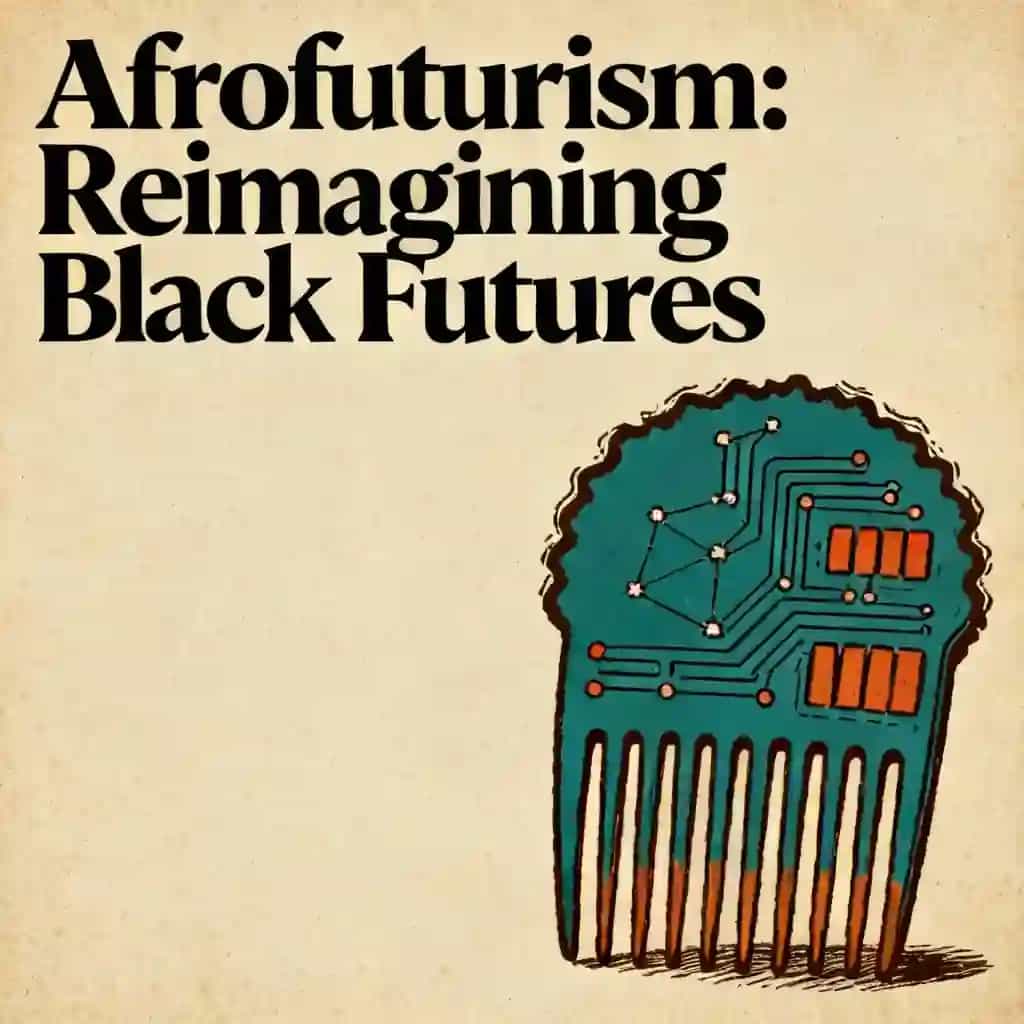
Overview of Fledgling
Octavia Butler's final masterpiece reimagines vampires through a Black lens. Currently being adapted by Issa Rae and JJ Abrams, this collector's item (some signed copies worth $1000) explores identity and power with the same genius that earned Butler her title as "the mother of Afrofuturism."
- Fledgling by Octavia Butler reimagines vampires through biological and ethical lenses
- Shori's amnesia becomes her greatest strength in challenging Ina society norms
- Butler explores genetic modification's intersection with race and identity politics
- Ina-human symbiosis challenges whether complete independence is always superior
- Fledgling questions if chosen interdependence surpasses autonomy in creating fulfillment
- Butler's protagonist transforms difference into evolutionary advantage rather than weakness
- The novel redefines what being human means beyond biological species
- Shori's genetically modified dark skin enables revolutionary daytime vampire survival
- Memory loss allows Shori to reconstruct her identity on her terms
- Fledgling shows otherness as evolutionary progress in Butler's transformative worldview
- Butler critiques racial prejudice through her innovative Ina vampire society
- The symbiotic relationship creates mutual dependence despite clear hierarchical power dynamics
About the Author of Fledgling
Octavia Estelle Butler (1947–2006) was the groundbreaking author of Fledgling and a pioneering force in science fiction, renowned for her exploration of race, identity, power, and what it means to be human.
Born in Pasadena, California, and raised by her mother and grandmother, Butler overcame dyslexia and financial hardship to become the first science fiction writer awarded a MacArthur "Genius" Grant in 1995.
Fledgling, her final novel, tells the story of a genetically modified vampire grappling with memory loss and survival—a work that exemplifies her signature blend of speculative fiction, African American spiritualism, and unflinching social commentary.
Butler's other celebrated works include Kindred, Parable of the Sower, Parable of the Talents (winner of the Nebula Award), and the Patternist and Xenogenesis series. Her short story "Bloodchild" won both Hugo and Nebula awards.
Known for waking at 2 a.m. daily to write while working various jobs, Butler's dystopian narratives addressing Black injustice, climate change, and women's rights have only grown more relevant. Today, her work is taught in over 200 colleges and universities nationwide, and her books continue to inspire adaptations including Ava DuVernay's television development of Dawn.
FAQs About Fledgling
What is Fledgling by Octavia E. Butler about?
Fledgling by Octavia E. Butler is a vampire novel about Shori Matthews, a 53-year-old genetically modified vampire who awakens in a cave with severe injuries and complete amnesia. She must discover her stolen identity while uncovering who murdered her family and continues to hunt her. The novel challenges traditional vampire mythology by exploring themes of otherness, identity, and what it means to be truly human through a science fiction lens.
Who should read Fledgling by Octavia E. Butler?
Fledgling by Octavia E. Butler is ideal for science fiction enthusiasts seeking literary depth, fans of vampire fiction wanting a fresh perspective, and readers interested in Afrofuturism and social commentary. The book appeals to those who appreciate Butler's exploration of race, power dynamics, and identity through speculative fiction. Readers who enjoyed Butler's other works like Kindred or Dawn will find Fledgling's themes of survival and difference compelling.
Is Fledgling by Octavia E. Butler worth reading?
Fledgling by Octavia E. Butler is worth reading as the final novel from a MacArthur "Genius" Grant recipient who revolutionized science fiction. The book offers Butler's signature blend of social observation, strong protagonists, and thought-provoking themes about humanity and otherness. While some reviewers found it less impactful than her earlier works, Fledgling remains captivating for its unique approach to vampire mythology and exploration of identity, making it essential reading for Butler completists and sci-fi fans.
Who was Octavia E. Butler and what was her legacy?
Octavia E. Butler was a pioneering African American science fiction author born in Pasadena, California in 1947, who passed away in 2006. She became the first science fiction writer to receive a MacArthur "Genius" Grant in 1995 and won multiple Hugo and Nebula Awards. Despite struggling with dyslexia and working menial jobs for decades, Butler created groundbreaking novels exploring Black injustice, feminism, and social disparity. Her work is now taught in over 200 colleges nationwide.
What is the main plot of Fledgling by Octavia E. Butler?
The main plot of Fledgling follows Shori's journey to uncover who orchestrated a series of violent attacks that destroyed her entire family and left her with amnesia. As she recovers her strength and abilities, Shori discovers she's part of the Ina species—vampires who live symbiotically with humans. She must navigate Ina society, rebuild relationships with human symbionts, and identify the perpetrators who want her dead because of her genetic modifications.
Who is Shori Matthews in Fledgling and why is she unique?
Shori Matthews is the protagonist of Fledgling by Octavia E. Butler—a 53-year-old vampire who appears as a young Black girl due to genetic modification. Unlike traditional vampires, Shori's dark skin allows her to stay awake during daylight, making her an evolutionary advancement for the Ina species. Her amnesia forces her to question and reconstruct Ina cultural norms rather than accepting them blindly, giving her an advantage in creating a more ethical vampire-human relationship.
What are the Ina in Fledgling by Octavia E. Butler?
The Ina in Fledgling by Octavia E. Butler are a vampire species that live symbiotically with humans, whom they call symbionts. Unlike fictional vampires, the Ina don't convert humans through biting—as Shori explains, if a dog bit a man, he wouldn't become a dog. The Ina form lifelong emotional and physical bonds with their human partners, exchanging blood for companionship and protection. This relationship challenges traditional vampire mythology by creating mutual dependency rather than predatory exploitation.
What themes does Fledgling by Octavia E. Butler explore?
Fledgling by Octavia E. Butler explores themes of identity, race, otherness, and what it means to be human. The novel examines how difference can be a survival advantage rather than a weakness, with Shori's blackness symbolizing evolutionary progress. Butler addresses power dynamics in relationships, cultural memory versus personal choice, and the ethics of symbiotic dependencies. The book questions societal norms through Shori's amnesia-driven reconstruction of identity, allowing her to challenge oppressive Ina traditions.
How does Fledgling by Octavia E. Butler address race and identity?
Fledgling by Octavia E. Butler uses Shori's genetically modified dark skin as a central exploration of race and identity. The attacks on Shori and her family are motivated by racial prejudice within Ina society, mirroring real-world discrimination. Shori's blackness isn't just aesthetic—it provides biological advantages like daytime functionality, suggesting that racial difference represents evolutionary progress rather than inferiority. Butler uses vampire mythology to examine how marginalized identities can become sources of strength and survival.
What is the symbiotic relationship in Fledgling?
The symbiotic relationship in Fledgling by Octavia E. Butler describes the mutually beneficial bond between Ina vampires and their human symbionts. Humans provide blood and companionship, while Ina venom creates addiction, extended lifespan, and disease resistance in humans. Butler proposes that both species must lose certain traits—vampires becoming more emotionally connected, humans becoming less possessive—to create a truly companionate relationship. This partnership challenges traditional vampire-human power dynamics by emphasizing interdependence.
Is Fledgling Octavia E. Butler's last novel?
Yes, Fledgling is Octavia E. Butler's last novel, published in 2005 after a seven-year writing break. Butler passed away unexpectedly on February 24, 2006, just months after Fledgling's release. The book represents the final contribution from an author whose work was beginning to gain mainstream recognition after decades of obscurity. While some critics found it less powerful than her earlier masterpieces, Fledgling remains significant as Butler's concluding statement on identity, difference, and humanity.
How does Fledgling by Octavia E. Butler compare to traditional vampire novels?
Fledgling by Octavia E. Butler radically reimagines vampire fiction by grounding it in science fiction rather than supernatural horror. Unlike traditional vampires, the Ina cannot convert humans through biting, and Shori's genetic modifications allow daytime activity—subverting classic vampire weaknesses. Butler focuses on the ethics of vampire-human relationships, consent, and symbiosis rather than predatory violence. The novel's exploration of race, identity, and cultural evolution distinguishes it from conventional vampire stories, making Fledgling a literary deconstruction of the genre.
Feel the book through the author's voice
Turn knowledge into engaging, example-rich insights
Capture key ideas in a flash for fast learning
Enjoy the book in a fun and engaging way
Key Themes in Fledgling
Quotes from Fledgling
I think I'm an experiment.
I burn, but I don't burn as fast as they do.
I awake to darkness, consumed by hunger and pain.
You are Shori Matthews.
Characters in Fledgling
Quick Summary Mode - Read or listen to Fledgling Summary in 8 Minutes

Break down key ideas from Fledgling into bite-sized takeaways to understand how innovative teams create, collaborate, and grow.

Flash Card Mode - Top 10 Insights from Fledgling in a Nutshell

Distill Fledgling into rapid-fire memory cues that highlight key principles of candor, teamwork, and creative resilience.

Fun Mode - Fledgling Lessons Told Through 18-Min Stories

Experience Fledgling through vivid storytelling that turns innovation lessons into moments you'll remember and apply.
Personalize Mode - Read or listen to Fledgling Summary in 0 Minutes

Ask anything, pick the voice, and co-create insights that truly resonate with you.

From Columbia University alumni built in San Francisco
"Instead of endless scrolling, I just hit play on BeFreed. It saves me so much time."


"I never knew where to start with nonfiction—BeFreed’s book lists turned into podcasts gave me a clear path."


"Perfect balance between learning and entertainment. Finished ‘Thinking, Fast and Slow’ on my commute this week."
"Crazy how much I learned while walking the dog. BeFreed = small habits → big gains."
"Reading used to feel like a chore. Now it’s just part of my lifestyle."

"Feels effortless compared to reading. I’ve finished 6 books this month already."
"BeFreed turned my guilty doomscrolling into something that feels productive and inspiring."

"BeFreed turned my commute into learning time. 20-min podcasts are perfect for finishing books I never had time for."
"BeFreed replaced my podcast queue. Imagine Spotify for books — that’s it. 🙌"

"It is great for me to learn something from the book without reading it."
"The themed book list podcasts help me connect ideas across authors—like a guided audio journey."
"Makes me feel smarter every time before going to work"
From Columbia University alumni built in San Francisco
"Instead of endless scrolling, I just hit play on BeFreed. It saves me so much time."
"I never knew where to start with nonfiction—BeFreed’s book lists turned into podcasts gave me a clear path."
"Perfect balance between learning and entertainment. Finished ‘Thinking, Fast and Slow’ on my commute this week."
"Crazy how much I learned while walking the dog. BeFreed = small habits → big gains."
"Reading used to feel like a chore. Now it’s just part of my lifestyle."
"Feels effortless compared to reading. I’ve finished 6 books this month already."
"BeFreed turned my guilty doomscrolling into something that feels productive and inspiring."
"BeFreed turned my commute into learning time. 20-min podcasts are perfect for finishing books I never had time for."
"BeFreed replaced my podcast queue. Imagine Spotify for books — that’s it. 🙌"
"It is great for me to learn something from the book without reading it."
"The themed book list podcasts help me connect ideas across authors—like a guided audio journey."
"Makes me feel smarter every time before going to work"
"Instead of endless scrolling, I just hit play on BeFreed. It saves me so much time."
"I never knew where to start with nonfiction—BeFreed’s book lists turned into podcasts gave me a clear path."
"Perfect balance between learning and entertainment. Finished ‘Thinking, Fast and Slow’ on my commute this week."
"Crazy how much I learned while walking the dog. BeFreed = small habits → big gains."
"Reading used to feel like a chore. Now it’s just part of my lifestyle."
"Feels effortless compared to reading. I’ve finished 6 books this month already."
"BeFreed turned my guilty doomscrolling into something that feels productive and inspiring."
"BeFreed turned my commute into learning time. 20-min podcasts are perfect for finishing books I never had time for."
"BeFreed replaced my podcast queue. Imagine Spotify for books — that’s it. 🙌"
"It is great for me to learn something from the book without reading it."
"The themed book list podcasts help me connect ideas across authors—like a guided audio journey."
"Makes me feel smarter every time before going to work"
"Instead of endless scrolling, I just hit play on BeFreed. It saves me so much time."
"I never knew where to start with nonfiction—BeFreed’s book lists turned into podcasts gave me a clear path."
"Perfect balance between learning and entertainment. Finished ‘Thinking, Fast and Slow’ on my commute this week."
"Crazy how much I learned while walking the dog. BeFreed = small habits → big gains."
"Reading used to feel like a chore. Now it’s just part of my lifestyle."
"Feels effortless compared to reading. I’ve finished 6 books this month already."
"BeFreed turned my guilty doomscrolling into something that feels productive and inspiring."
"BeFreed turned my commute into learning time. 20-min podcasts are perfect for finishing books I never had time for."
"BeFreed replaced my podcast queue. Imagine Spotify for books — that’s it. 🙌"
"It is great for me to learn something from the book without reading it."
"The themed book list podcasts help me connect ideas across authors—like a guided audio journey."
"Makes me feel smarter every time before going to work"

Get the Fledgling summary as a free PDF or EPUB. Print it or read offline anytime.