Chapter 1
Finding Identity in the Space Between Cultures
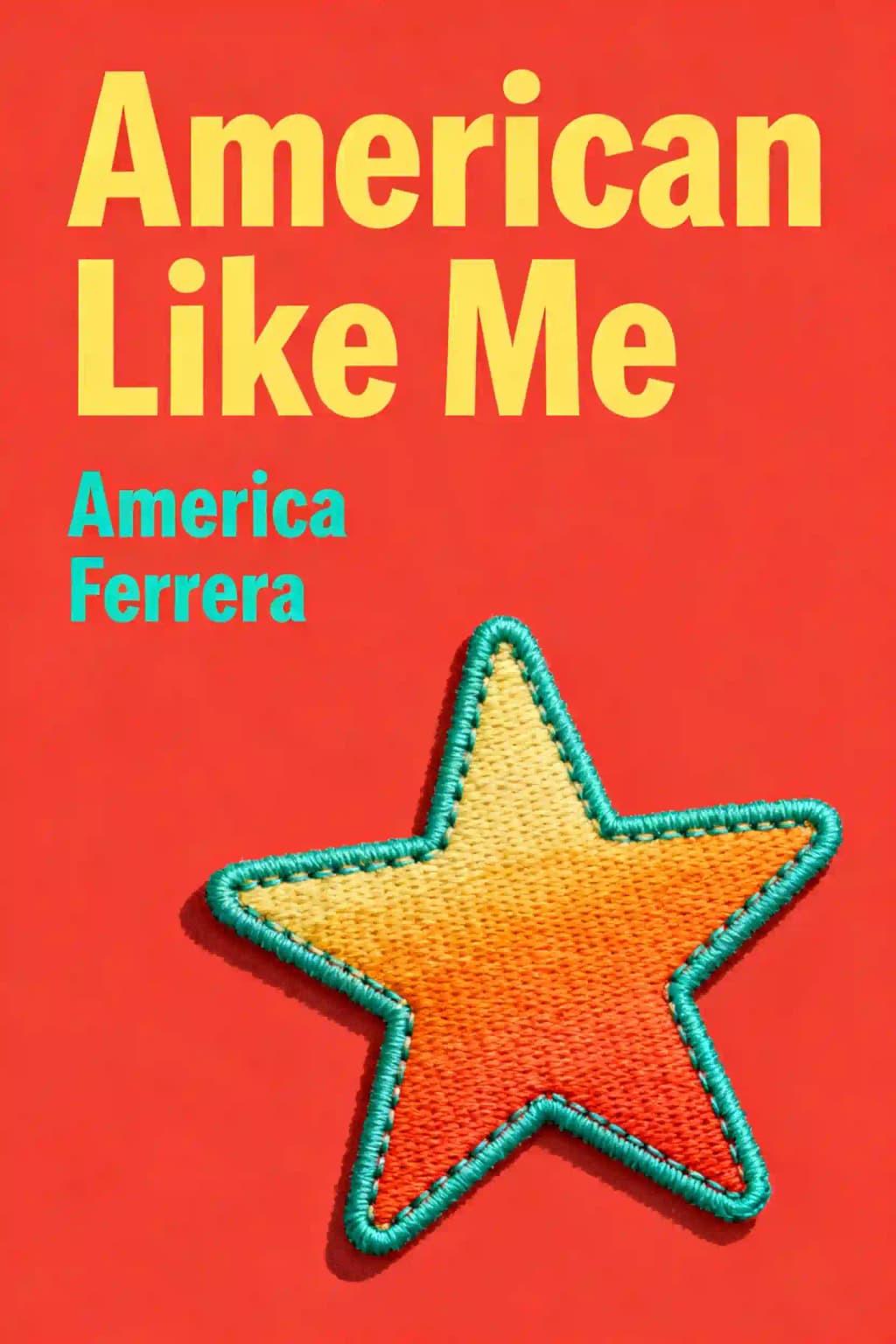
When America Ferrera was nine years old, she hated her name. Not because she disliked her country-she loved it enough to cry during the national anthem while dreaming of becoming the first girl to play for the Dodgers. She hated it because of smart-alecks who faced her during the Pledge of Allegiance, teachers who thought her name was a typo, and the American History teacher who wheeled her around the classroom singing "God Bless America" while she died inside. What people didn't understand was that she wasn't named after the United States, but after her Honduran mother, born on Dia de Las Americas, which celebrates all the Americas. This constant questioning of her identity and belonging would become the foundation for a powerful exploration of what it means to be "American like me"-a collection of stories from immigrants and children of immigrants navigating the complex terrain between cultures.
Chapter 2
The Hyphen Between Cultures: Navigating Multiple Identities
For many Americans with immigrant parents, life exists in the hyphen between identities - a complex space where cultures collide, blend, and sometimes clash. Reshma Saujani, daughter of Ugandan-Indian refugees, grew up in suburban Illinois constantly searching for her name on souvenir key chains at Kmart, finding "Rainbow" but never "Reshma." This seemingly simple childhood experience exemplified the broader challenges of straddling two worlds. Her parents immediately Americanized their names - Mukund became "Mike" and Mrudula became "Meena" - to help them find jobs in a society that often viewed foreign names as obstacles. Yet they named her Reshma, meaning "silken; she who has silky skin," preserving a connection to their heritage even as they adapted to their new home. As the only Indian in her school, she endured constant bullying about her skin color, becoming skilled at pretending to laugh along with the taunts while internally wrestling with shame and confusion about her identity.
This pattern of adaptation appears throughout these stories - the art of shape-shifting to fit different contexts becomes a survival skill passed down through generations. America Ferrera describes becoming a master at this, "decoding expectations and transforming into whatever version pleased people most." At school, she was the perfect English-speaking student; at home, she was the dutiful Latina daughter; and in Hollywood, she learned to navigate the complex expectations of being a Latina actress in an industry that often traded in stereotypes. For Bambadjan Bamba, who moved from Cote d'Ivoire to the South Bronx in winter 1992, adaptation meant complete reinvention. Placed in a Spanish ESL class despite speaking French, with a name that immediately made him a target for bullying, he learned English through TV shows like "Fresh Prince of Bel-Air" and "Martin," worked bagging groceries to buy trendy sneakers, and embraced hip-hop culture to hide his African identity. His story reveals how immigrant children often become cultural chameleons, adapting not just to American culture but to specific subcultures that offer protection and belonging.
The pressure to assimilate often creates painful choices that ripple through generations. Al Madrigal's grandfather, Liborio, came to America with nothing but a stab wound after fleeing Mexico, shaping a family tradition of frugality and resourcefulness that persisted even after achieving financial security. This complex relationship with abundance and scarcity is echoed in Jenny Zhang's family story. Having survived China's devastating famine, her family found the American promise embodied in Sizzler's all-you-can-eat buffet - a rare indulgence where they could "eat like a bunch of sloppy Americans" and go home happy, in pain, and vowing to return. These meals became ritual celebrations of survival and abundance, even as they highlighted the cultural gaps between first and second generations.
What emerges from these stories is not just the struggle but the strength found in navigating multiple identities. As Padma Lakshmi reflects on her journey from rejecting her Hindu heritage - refusing to wear bindis and hiding her mother's prayers from friends - to eventually reconnecting with it through her biracial daughter Krishna, we see how these cultural negotiations ultimately create unique, multifaceted individuals. These hyphenated Americans often develop a kind of cultural fluency that allows them to move between worlds, translating not just languages but entire worldviews. Their experiences reveal how American identity is continuously reshaped by each new generation of immigrants, who find ways to honor their origins while creating something entirely new.
Chapter 3
Family Sacrifice and Intergenerational Dreams
Behind nearly every story in this collection stands the shadow of parental sacrifice - the leaving behind of homeland, language, status, and comfort for the promise of something better for the next generation. Michelle Kwan's parents embodied this completely, working multiple jobs to pay for skates, costumes, and coaching. Her father drove an old beat-up Pinto with a 4-5 hour daily commute to take her to training, often sleeping in the car between his various jobs to save time. Her mother stayed up late sewing beads onto costumes, her fingers raw and bleeding from countless needle pricks. They even sold their house to move into a smaller one to fund her skating dreams, cramming their family of four into a two-bedroom apartment near the rink.
For Kumail Nanjiani, who moved alone from Pakistan to Grinnell, Iowa for college, America's vastness and abundance of choices was initially overwhelming. "In Pakistan, we had just four types of bread, but here grocery stores had endless varieties," he recalls. The culture shock extended beyond consumer choices - everything from social interactions to educational expectations felt foreign. Despite feeling trapped at first in what seemed like an alien landscape, he discovered beauty in uniquely American experiences. Seeing snow for the first time was magical, "like watching the world in slow motion." He found himself captivated by small-town midwest life, where strangers would wave hello and community gatherings centered around high school football games. Though access to opportunity isn't equal for everyone, he's built a wonderful life with his wife that neither could have imagined a decade ago, transitioning from computer science graduate to successful actor and writer.
Congressman Joaquin Castro learned about sacrifice through his grandmother Victoria's stories. Born in Mexico around 1914 and orphaned young, she immigrated to San Antonio where she faced "NO DOGS OR MEXICANS ALLOWED" signs in store windows and restaurants. Despite minimal formal education, she taught herself English and Spanish, spending nights studying by candlelight after long days of domestic work. She became a U.S. citizen during Kennedy's presidency after forty years as a legal resident, proudly wearing her Sunday best to take the oath. Victoria worked as a maid, cook, and babysitter, ensuring her children could attend school rather than work. Castro reflects that the American dream isn't measured solely in material terms but as a generational relay, where each generation builds upon the previous one's sacrifices - a perpetual passing of the torch of opportunity.
This intergenerational perspective appears throughout the collection. Kal Penn, whose father left India with just $12 in his pocket and a suitcase full of engineering books, eventually found himself flying on Air Force One as an aide to the first Black president. His father worked multiple jobs while earning his degree, sending money home to family in India while building a new life in America. "America is where the impossible becomes possible," he writes, "where we can transform our deepest insecurities and communities' fears into something incredible for each other." Penn's journey from his parents' garage - where he practiced acting while they slept - to Hollywood and the White House exemplifies how immigrant dreams can expand beyond mere survival to encompass artistic and civic ambitions.
Chapter 4
Cultural Pride and Authenticity
For many contributors, the journey to self-acceptance involves reclaiming cultural heritage that they once rejected or felt disconnected from. Anjelah Johnson-Reyes grew up wrestling with what she perceived as insufficient Latino identity credentials. Without a "spicy Latina name" ending in "ez" and unable to speak Spanish fluently, she desperately wanted to embody the chola aesthetic - complete with dark lip liner, perfectly positioned bandanna, meticulously feathered hair, and pristine white Nike Cortez shoes. She spent years trying to compensate for what she saw as cultural deficiencies, until she finally understood she was seeking something deeper: cultural pride and inherent strength. This realization led to a profound truth: "you can't be 'more' of something you inherently are" - authenticity isn't measured in degrees but in self-acceptance.
Uzo Aduba's experience reflects the intentional preservation of cultural identity through language and tradition. Her Nigerian mother steadfastly refused to compromise her sophisticated vocabulary or adopt simplified English, even when others suggested she should. She viewed language as a bridge to heritage, insisting on speaking "the Queen's English" while seamlessly weaving in Igbo proverbs and cultural references. Through regular community gatherings, traditional celebrations, and family storytelling sessions, she created an environment where her children could embrace their Nigerian identity. When young Uzo felt self-conscious about her tooth gap and pleaded for braces, her mother transformed this insecurity by revealing it as the "Anyaoku gap" - a distinguished family trait celebrated for generations as a mark of beauty and wisdom, telling her daughter: "You have history in your mouth." This reframing helped Uzo see physical features as connections to ancestry rather than flaws to correct.
Linda Sarsour's upbringing in Brooklyn's Sunset Park neighborhood exemplifies how cultural identity can flourish within America's multicultural landscape. In her vibrant community, where "families and neighbors were one in the same," she witnessed the seamless integration of Palestinian traditions with American life. As a Palestinian-American Muslim woman, she became not just a family translator but a cultural bridge-builder from an early age. Her parents' insistence on maintaining Arabic fluency while navigating American society created a rich bilingual foundation. The Palestinian community fostered cultural pride through regular concerts featuring traditional music, festivals celebrating ancestral customs, and dedicated cultural education programs. This created a powerful support system where "every mother in our community was a mother to all" - establishing a collective responsibility for preserving and passing down cultural heritage.
Frank Waln's perspective as a Lakota artist from the Rosebud Indian Reservation adds a crucial dimension to understanding cultural pride in the context of historical trauma. His work acknowledges that "we all descend from those who survived genocide, carrying both strength and trauma" - a dual inheritance that shapes identity and purpose. He draws inspiration from his grandmother's resilience, who transformed meager government rations into nourishing meals filled with not just sustenance but love and oral history. Through his music and activism, Waln carries these ancestral stories worldwide, challenging colonial narratives and artificial borders while asserting indigenous sovereignty. His art becomes a form of cultural resistance and healing, transforming historical pain into contemporary power and pride.
Chapter 5
Finding Representation and Creating New Narratives
The power of representation emerges as a central theme throughout these stories. Martin Sensmeier, who grew up in the small fishing village of Yakutat, Alaska, remembers how seeing La Bamba changed everything for him-showing a character he could identify with who wasn't portrayed as a stereotypical "Indian." Until then, the only Native people he'd seen in media were caricatures in westerns that bore no resemblance to the actual Native people in his community.
America Ferrera describes how, despite constant discouragement ("Actresses don't look like you. You're brown, short, and chubby"), she pursued acting wherever possible. When doors began opening at sixteen, she discovered Hollywood's boxes were even more suffocating. At her first audition, a casting director asked her to "sound more Latina"-she wanted broken English from someone who was actually Latina. For seventeen years, she's witnessed how representation impacts lives-people telling her how seeing themselves reflected in her characters inspired them to pursue college, accept their bodies, or come out to their parents.
Jeremy Lin faced similar challenges in basketball, constantly battling others' perceptions as an Asian player. At public pickup games, he struggled to gain respect or even court time. Coaches assumed he'd be a benchwarmer, and opponents fought over who got to guard "the easy one." Throughout high school, he faced racist comments from crowds calling him "an import from China" despite being American-born. When he finally made it to the NBA, security guards mistook him for a trainer. Now he tells kids: "It doesn't matter if no one else looks like you. You still belong as long as you believe you do."
For Geena Rocero, a transgender woman from the Philippines, finding representation meant discovering transgender beauty pageants at age seven. Though there was no word for "transgender" in their vocabulary, she knew she was like the glamorous contestants. At fifteen, she met Tigerlily, her trans mother figure, who introduced her to pageant culture that provided validation and community. When she immigrated to San Francisco at seventeen, she found new community through the Asia and Pacific Islander Wellness Center, eventually competing in an American trans pageant supported by dozens of Filipino community members-just like at Fiesta back home.
Chapter 6
Traditions That Bridge Worlds
Cultural traditions often serve as bridges between worlds, providing continuity amid change. Lin-Manuel Miranda describes how the Three Kings Day celebration created a special bond among the five Latino kids in his predominantly Jewish/Christian elementary school. While their classmates compared Christmas and Hanukkah gifts in January, the Latino children knew their holiday haul wasn't over yet. They'd gather hay for the Three Kings' camels, placing shoeboxes of dead grass by their beds. On January 6, they'd wake to presents and scattered grass-evidence of magical camels who visited in the night. "For one day, we five Latino kids are the chosen ones, bonded by this special tradition that makes us feel as special as Jesus himself."
Tanaya Winder connects to her Pyramid Lake Paiute heritage through her grandmother's songs about falling leaves dancing in the wind and stories like the Stone Mother who created a lake from her tears. Her Grandma, a boarding school survivor, never stopped singing-even when the government tried to erase their culture by forbidding Native languages and traditions. "Each time I sing or write, I'm lighting my fire to show my ancestors I'm okay-carrying on our traditions in a world that once tried to silence them."
For Laurie Hernandez, the first US-born Latina gymnast to make the Olympic team in more than thirty years, family dance parties provided cultural continuity. Her parents would salsa dance to Marc Anthony and Ricky Martin while her grandmother demonstrated how they danced "back in Puerto Rico." These dance sessions gave her a natural rhythm that helped with her gymnastics floor routines. Though her grandmother's health prevented her from traveling to Rio for the Olympics, "she had been there every step of the way, helping me become who I am."
Carmen Carrera, one of the world's highest-profile transgender women, found strength in her Peruvian heritage while navigating gender identity. In a letter to her younger self, she describes growing up surrounded by strong Peruvian women while hiding her femininity. She encourages her younger self to see her mother and Peruvian heritage as sources of strength rather than limitations. Her journey culminates in a trip to Peru with her grandmother and her legal name change to Gabriella Costa-Roman, honoring both parents while embracing her true self.
Chapter 7
Confronting Stereotypes and Expectations
Nearly every contributor describes confronting limiting stereotypes and expectations. Ravi V. Patel and his sister Geeta both quit finance careers to pursue creative paths-he started a poker magazine and became an actor, while she pursued screenwriting. Their parents were horrified that they'd thrown away stability to become struggling artists. When pressured to get married traditionally, they created a documentary called "Meet the Patels" that eventually won awards, became a hit on Netflix, and made their parents minor celebrities.
Issa Rae describes how her identity shifted between contexts. In America, she became an "awkward black girl" after moving from a mostly white school in Maryland to a predominantly black school in Los Angeles where she was criticized for "acting white." But in Senegal, her father's homeland, her awkwardness disappeared in translation. She had currency there because she lived near Hollywood and brought American pop culture. "I was cool there, unlike in America where I humiliated myself by calling Tupac 'Two-Pack' after his death and being mocked for my 'Valley girl accent' and natural hair."
Diane Guerrero's story highlights how media representation shapes expectations. Growing up with dolls and TV characters whose lives weren't like hers, she still related to their dreams-just "from a concrete stoop instead of a charming village." As she pursued acting, she struggled to believe she was worthy of her "impossible dream" in an industry where people like her were rarely represented. Now working on shows like Orange Is the New Black and Jane the Virgin, she visits schools to tell young people to love themselves and be proud of where they came from, because "our immigrant stories matter."
For Anna Akana, confronting expectations meant reconciling her parents' different approaches to heritage. Though her mother is Filipino, she refused to raise her children with that heritage, considering it "too crass and low-class." Instead, she enforced her Japanese father's values. Between her mother's artistic influence and her father's discipline, Anna became "the perfect balance of artist and businesswoman, with both the passion for creativity and the structure needed to build a thriving career."
Chapter 8
The Journey Home: Reconciling Past and Present
Many contributors describe a journey of returning-physically or emotionally-to reconnect with their roots. America Ferrera shares a powerful moment of standing at her estranged father's grave in Honduras, twenty years after last seeing him. Though she didn't go to Honduras seeking this connection, finding herself surrounded by tombstones bearing the Ferrera name forced her to confront the part of her identity she had long denied. "Honduras was my phantom limb-always felt but never seen or touched."
For Auli'i Cravalho, growing up mixed-Puerto Rican, Portuguese, Hawaiian, Chinese, and Irish-meant facing questions about her identity. In sixth grade, a classmate told her "You're too white" to be what she claimed, saying she "just don't look like anything you said you are." She was crushed, wishing her culture would show itself more visibly. It took years to realize she didn't need to defend herself: "I am who I am-a loving Hawaiian Portuguese who grew up barefoot and climbing trees, eating fried plantains, reciting Pacific folklore, celebrating Chinese New Year with noodles and Saint Patrick's Day with corned beef."
Randall Park used his contribution to this book as an excuse to interview his Korean immigrant parents at Factor's Famous Deli. To his surprise, "the floodgates opened." He learned about their childhoods in Taegu, their college years, his father's unexpected wanderlust studying in San Francisco and Paris, and their practical "arranged" meeting. His mother confessed her disappointment arriving in America to find poverty instead of Hollywood glamour, and explained why they didn't emphasize Korean culture-she was struggling with depression, language barriers, and raising children alone while his father worked constantly. "Through this interview, I gained a deeper understanding of my upbringing, my parents' opposition to my acting career, and my own identity as both American and Korean."
Roxane Gay reflects on how her Haitian parents love without boundaries, something her therapist initially found hard to believe. Growing up as the daughter of Haitian immigrants, she held multiple identities-"Haitian at home, American at school." The older she gets, the more she understands why her family loves this way: "My parents and their siblings came to the United States with no money, not speaking the language, with no guarantee the American dream would extend to them. All they had was each other and a fierce kind of love."
Chapter 9
Redefining American Identity
In her conclusion, America Ferrera reflects on the irony that embracing her unique identity-"brown, short, chubby"-rather than shedding it brought her career-making roles. She discovered a larger community struggling with identity and belonging, which inspired this collection. These contributors represent "the grandchildren of survival, inheritors of warrior blood, and slayers of 'impossible' who create whole selves from fragments of what was broken. They live as citizens of a country that doesn't always see them, yet continue building toward America's promise."
Joy Cho's journey exemplifies this redefinition of American identity. As a child, she made it her mission to teach her parents how to be "American parents"-instructing them to make mac and cheese instead of Thai dishes, asking to use forks instead of chopsticks, begging them not to reuse takeout containers. She requested turkey sandwiches for school lunch instead of Thai curry to avoid classmates asking "What's that smell?" However, as she grew older, she stopped "parenting" her parents about being American. She became less embarrassed about her love of Thai food and wanted to share it with friends. Most importantly, she realized "the best part of ME is how I stood out from the crowd" and no longer wanted to be like everyone else.
Wilmer Valderrama finds humor in his journey, noting that his first regular TV role was playing Fez-"foreign exchange student"-on That '70s Show, with the running joke being that no one knew what country he came from. Ironically, while developing Fez's mysterious accent, he was working through his own thick accent, becoming truly fluent in English at seventeen while filming the show.
These stories collectively redefine what it means to be American-not as a single identity but as a complex tapestry of experiences, traditions, languages, and dreams. They challenge us to see America not as a melting pot where differences disappear, but as what Liza Koshy calls a "salad bowl"-distinct ingredients tossed together to create something delicious. In this vision of America, we recognize our differences, point them out, and even have fun with them, creating a richer, more inclusive definition of American identity.