Chapter 1
The Lotus Seed's Promise: A Journey Across Time and Identity
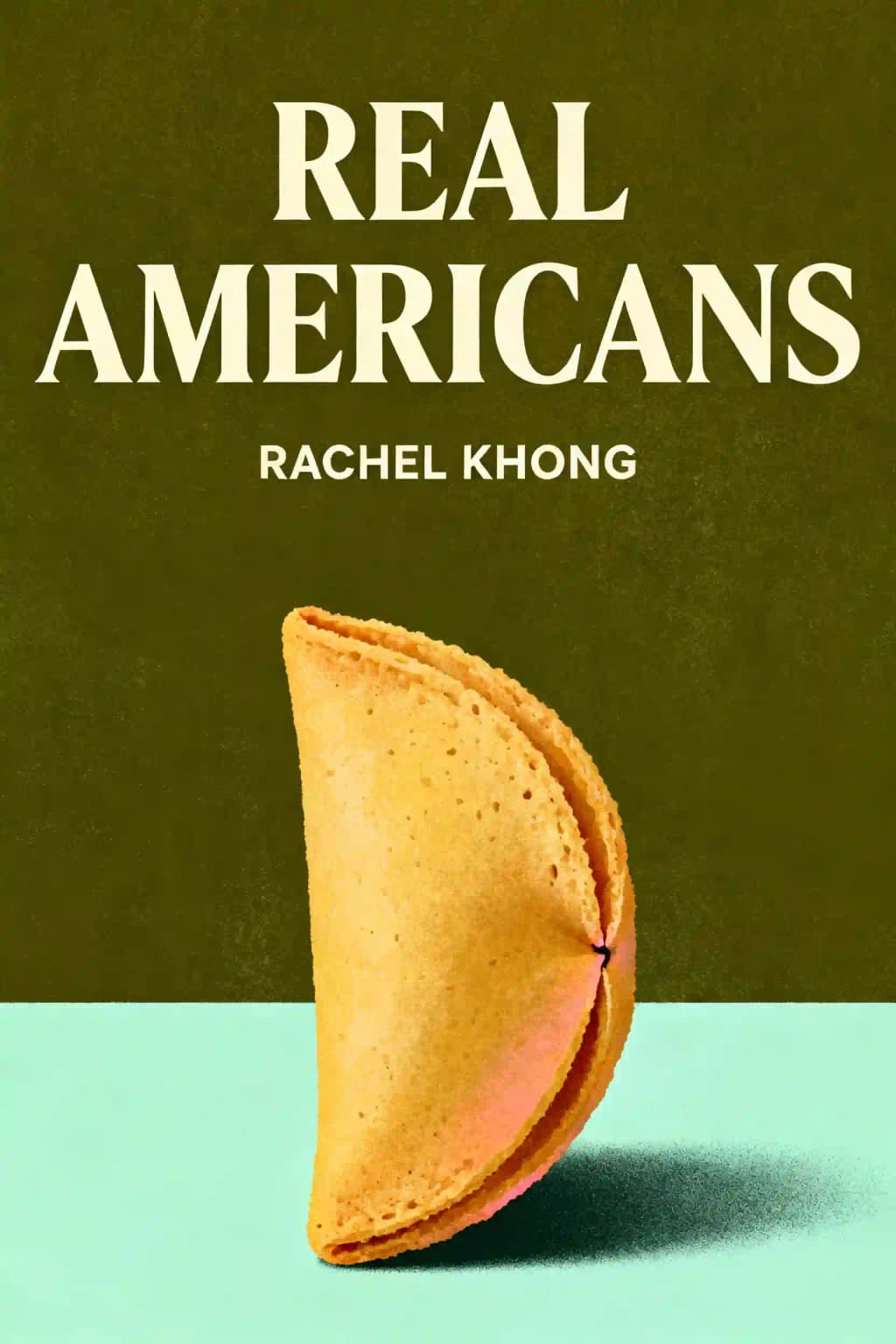
In Rachel Khong's "Real Americans," a stolen lotus seed becomes more than just a mythical wish-granter-it's the catalyst for generations of choices that ripple across continents and decades. Published in 2023, this novel quickly captured readers' attention for its unflinching examination of immigrant experiences, genetic manipulation, and the meaning of identity in America. Praised by The New York Times as "a sweeping intergenerational saga that questions the very nature of what it means to belong," the book resonated particularly with Asian American readers while finding a broader audience through its universal themes of family secrets and self-discovery. Khong, who previously won the California Book Award for "Goodbye, Vitamin," brings her characteristic emotional precision to this ambitious narrative that spans from 1960s Beijing to present-day America.
Chapter 2
Stolen Wishes and Shattered Glass: The Seeds of Escape
In 1966 Beijing, as the Cultural Revolution's chaos begins to engulf China, a young woman named May and her companion Ping stand before a glass case of ancient artifacts. With the Red Guards destroying cultural treasures throughout the city, they make a desperate decision to protect these historical items from destruction. May shatters the display case with a hammer, and as they secure the treasures, she secretly pockets an ancient lotus seed said to grant wishes. This moment of theft-both brave preservation and selfish acquisition-sets in motion a multi-generational story about desire, ambition, and the lengths people will go to create the lives they want.
May's early life unfolds against the backdrop of Mao's China, where her academic brilliance offers a path out of rural poverty. As a biology student at Peking University, she falls in love with her lab partner Ping while studying lotus plants-a fitting metaphor for her own life as she sees herself "growing from mud but blossoming untouched in the sun." Their romance flourishes in stolen moments by the university lake, where they dream of scientific breakthroughs and possible futures abroad. But as the Cultural Revolution intensifies, their academic pursuits become dangerous, and their dreams narrow from changing the world to simply surviving together.
When May is publicly humiliated by Red Guards-including her own niece who throws urine in her face and knocks out her tooth-the reality of China's transformation becomes brutally personal. After university students are sent to labor in the countryside, May and Ping are separated. They plan a desperate escape attempt, but when another option presents itself through Wen, a teaching assistant who has always harbored feelings for May, she makes the pragmatic choice. Abandoning her plan to meet Ping, May escapes with Wen on a boat to Hong Kong, swallowing the lotus seed before departure-her scientific mind still half-believing in its wish-granting power.
Chapter 3
Reinvention in America: The Price of New Beginnings
In America, May and Wen reinvent themselves as May and Charles Chen, working in a genetics laboratory under the mentorship of a Chinese-American scientist named Yang. May's brilliance quickly becomes apparent as she masters English and impresses Otto Maier, the wealthy pharmaceutical heir funding their research. When May unexpectedly becomes pregnant, she experiences a transformative love for her daughter Lily that she hadn't anticipated. This maternal devotion, however, takes a troubling turn when May secretly begins experimenting with genetic manipulation.
The narrative shifts between May's past and the present-day story of her grandson Nick, revealing how May's scientific ambitions and personal choices have shaped subsequent generations. After Otto's wife commits suicide, leaving him concerned about his children inheriting her depression, May develops a controversial therapy using simian polio virus to deliver genes that could prioritize one parent's genetic contribution over the other. In a decision that will haunt multiple generations, May convinces Otto they should use this experimental therapy on both his son Thomas and her daughter Lily-suppressing Charles's genetic contribution to give Lily "the chance to live the life May might have had if born American."
What makes this section so compelling is how Khong refuses to paint May as either villain or hero. Her actions stem from complex motivations-love for her daughter, ambition for her research, and a desperate desire to control what she couldn't in her own life. When May tells her grandson, "We were influenced by propaganda about what to value," she acknowledges how her choices were shaped by forces larger than herself, raising questions about how free any of us truly are when society makes us "value certain lives over others and always want more."
Chapter 4
The Genetic Inheritance: Lily's Search for Identity
The narrative shifts to follow Lily in 1999 New York, where she grapples with inexplicable temporal anomalies - moments when time seems to freeze completely, leaving her alone in a suspended world. These episodes, which she's experienced since childhood, have become so routine that she's stopped trying to explain them to others, having faced skepticism and confusion too many times. Working as an unpaid intern at an online travel magazine, struggling to make ends meet in the bustling city, Lily meets Matthew Allen during a last-minute assignment to cover a boutique hotel opening.
Matthew, a charismatic investment banker with piercing blue eyes and an easy charm, transforms her life with a whirlwind romance, culminating in a spontaneous trip to Paris where they spend three days exploring hidden cafes and midnight-lit streets. Their relationship deepens rapidly, but Lily increasingly feels like an outsider in Matthew's world of charity galas and Hampton weekends. The disparity becomes more pronounced when she discovers his true identity - he isn't simply Matthew Allen, but Matthew Allen Maier, heir to the Maier pharmaceutical empire, a dynasty worth billions. His deliberate concealment of this fact creates the first crack in their seemingly perfect relationship.
Despite her misgivings about the wealth disparity and Matthew's initial deception, Lily accepts his marriage proposal, delivered at sunset on a private yacht off the coast of Maine. They have a son, Nick, whose birth brings unprecedented joy but also marks the beginning of their troubles. Lily's subsequent attempts to have a second child result in a series of devastating miscarriages - three in eighteen months. Comprehensive medical testing reveals unusual genetic markers that doctors can't explain, prompting Lily to question everything she knows about her own history.
The truth begins unraveling during a business trip to Beijing, where Lily meets Professor Xue Ping, her mother's former colleague at the Beijing Botanical Institute. Over tea in a centuries-old courtyard house, Ping shares a disturbing account of May's past: beyond merely stealing an ancient lotus seed from the Qin dynasty, May had been involved in ethically questionable research. Ping's carefully preserved letter reveals that May had "crossed lines that shouldn't be crossed" and possibly harmed colleagues to "achieve what she wanted."
Through a series of revelations, Lily uncovers the full scope of her mother's actions: May and Otto Maier had collaborated on experimental genetic therapies, using their own children as test subjects. Fragments of memory return to Lily - sterile rooms, strange equipment, her mother's determined face alongside Otto's calculating presence. The weight of this truth, combined with the realization that her own genetic makeup had been artificially altered without her knowledge, drives Lily to make a dramatic decision. She flees with Nick, severing all ties with both the Maier family and her mother.
The painful irony of the situation becomes devastatingly clear - May's desperate attempt to give her daughter a "perfect" life through genetic manipulation creates exactly the kind of mother-daughter separation she herself had experienced when leaving China. The cycle of loss and separation repeats itself, but this time driven by science rather than politics, by choice rather than necessity.
Chapter 5
Nick's Journey: Discovering the Truth About His Origins
Sixteen years later, Nick Chen lives on a remote island in Washington state's Puget Sound with his mother Lily, who has maintained a careful silence about his father, sharing only the bare minimum - a first name, Matthew, and a dismissive wave whenever Nick presses for details. Growing up in their modest island home, Nick's curiosity about his paternal heritage gradually transforms into an obsession. When he secretly orders a DNA test using birthday money saved over three years, the results connect him to the prestigious Maier family and reveal a half-brother named Samuel living in Seattle. The physical resemblance between Nick and Matthew proves undeniable - the same deep-set hazel eyes, ash brown hair, long pianist fingers, and even their shared left-handedness - shattering his mother's carefully constructed narrative that his father wanted nothing to do with him.
Nick begins orchestrating clandestine meetings with Matthew at a coffee shop in Seattle, taking the ferry over after school under the pretense of SAT prep classes. Each encounter pulls him deeper into a world of privilege he never imagined - private school connections, summer homes in the Hamptons, and casual conversations about legacy admissions. During the college application process, Matthew makes a calculated suggestion that sends Nick's moral compass spinning: use the Maier surname on applications since "Asian students face discrimination in admissions." After weeks of internal debate, Nick follows this advice without informing his mother, resulting in acceptance letters from every Ivy League school he targets. During a whirlwind college tour of the East Coast, Nick experiences one of his mysterious time-stopping episodes in a Boston coffee shop. Later that night, unable to sleep in his hotel room, he discovers an online forum post from 1999 by "TimelessinNY" describing identical symptoms - his first indication that this inexplicable ability might be inherited from his mother.
At Yale, Nick's life seems to finally fall into place when he meets Miranda in his comparative literature seminar. Their relationship blooms over late-night study sessions and weekend adventures in New Haven, making it all the more devastating when she leaves him for a charismatic coworker at her summer internship. In his emotional vulnerability, Nick reaches out to Matthew, who finally reveals the complete truth about Nick's origins: May's experimental fertility treatment had left Lily unable to conceive naturally, necessitating IVF for Nick's conception. With Nick's embryo, they had attempted an enhanced version of the therapy, deliberately amplifying Matthew's genetic contribution - a modification that explains Nick's striking resemblance to his father despite being half-Chinese. This revelation forces Nick to reevaluate everything: his identity as a biracial person, his mother's years of protective silence, and the complex web of choices that brought him into existence.
Chapter 6
Generations of Secrets: The Weight of Unspoken Truths
As the narrative progresses, we see how secrets and unspoken truths have shaped three generations of this family, creating a complex web of deception that impacts relationships across decades. May never told Lily the full truth about her experimental treatments or her relationship with Otto Maier - a silence that stemmed from both shame and a misguided desire to protect her daughter from the darker aspects of her past. The treatments, which involved early genetic manipulation techniques, left lasting effects that May feared might manifest in future generations.
Lily, inheriting this pattern of secrecy, hid Nick's paternity from him and fabricated an elaborate story about his father being a visiting scholar who returned to Germany, never wanting contact. This deception shaped Nick's entire childhood and young adult identity, leading him to develop a deep-seated fear of abandonment and difficulty forming lasting relationships. Matthew kept his relationship with Nick secret from his other son Samuel for nearly two decades, creating a poisonous atmosphere of resentment when Samuel notices his father's preferential treatment of Nick at the Maier Foundation. This favoritism manifests in subtle ways - private lunches, shared scientific discussions, and Matthew's tendency to mentor Nick more closely in foundation matters.
The weight of these secrets becomes increasingly unbearable as the characters age, manifesting in physical and psychological symptoms. In present-day San Francisco, Nick works in epigenetic pharmacology, developing groundbreaking therapies for heart disease and cancer - partly to prove he can achieve success without the wealthy Maiers, with whom he's no longer in contact. His work focuses specifically on genetic markers that can be influenced by trauma and stress, unconsciously mirroring his own family's legacy of buried truths.
Meanwhile, May lives alone in a modest Chinatown apartment, surrounded by notebooks filled with her old research and photographs she never shows anyone. Though estranged from her daughter Lily, she forms a deep and meaningful relationship with her grandson Nick, who visits her regularly. During these visits, they speak in Mandarin and share traditional meals, but carefully avoid discussing family history - creating yet another layer of unspoken truth between them.
When Nick's employer, BioTech Solutions, develops controversial genetic selection technologies similar to what May and Otto once worked on, Nick faces a moral dilemma that profoundly echoes his grandmother's past choices. The technology promises to eliminate certain genetic predispositions but carries risks of creating unforeseen consequences for future generations. After reconnecting with his father Matthew at a biotechnology conference, Nick convinces him to buy and dissolve the company, preventing the technology from being misused. This act of ethical intervention stands in stark contrast to May and Otto's hubris decades earlier, suggesting Nick has learned from his family's mistakes - though he doesn't yet fully understand the extent of those mistakes or his own connection to them.
Chapter 7
The Science of Being Human: Ethics and Genetic Manipulation
Throughout the novel, Khong explores the ethical implications of genetic manipulation with nuance and depth. May and Otto's experiments represent the dangerous allure of playing god - the belief that science can perfect human nature by selecting certain traits over others. Their work directly foreshadows contemporary debates about gene editing technologies like CRISPR, raising profound questions about whether such interventions represent genuine progress or a dangerous form of eugenics. The scientists' conviction that they can "improve" upon natural selection reflects humanity's age-old desire to control its destiny, even as their methods reveal the inherent risks of such ambition.
Nick's employer Levi epitomizes this ethical blindness when he gleefully describes genetic selection as "the American goddamn dream." His casual equation of genetic modification with consumer choice reveals how easily scientific advancement can be corrupted by market forces. His investor Pax further exposes the racist undertones of such thinking when discussing birth rates among people of color and comparing his Korean wife's cosmetic surgeries to genetic selection. These conversations illuminate how scientific "progress" often becomes entangled with existing prejudices and power structures, serving as a modern vessel for age-old biases about race, class, and human worth.
The novel's examination becomes particularly poignant in its exploration of parental love and responsibility. May's desire to give Lily a better genetic inheritance stems from maternal love as much as scientific ambition - a complex motivation that many parents might recognize in their own desires to provide advantages for their children. Her actions raise uncomfortable questions about the boundaries of parental intervention: Where is the line between wanting the best for your children and trying to control who they become? The weight of these decisions becomes even heavier when considering their irreversible nature and multi-generational impact.
Khong masterfully weaves these ethical dilemmas into broader questions about human nature and scientific progress. Through detailed laboratory scenes and intimate family moments, she demonstrates how scientific decisions are never made in a vacuum but are shaped by personal histories, emotional needs, and cultural contexts. The novel suggests that science, for all its claims to objectivity, remains inextricably linked to the subjective experiences and desires of the humans who wield it. This becomes particularly evident in the way different characters justify their choices - from May's maternal protectiveness to Levi's profit-driven enthusiasm - showing how personal values inevitably influence scientific decisions.
The author also explores the unintended consequences of genetic manipulation, highlighting how even well-intentioned interventions can have far-reaching and unexpected effects. Through various character perspectives, she demonstrates that the promise of perfection often masks deeper questions about identity, authenticity, and what it truly means to be human in an age of increasing technological capability.
Chapter 8
Reconciliation and Acceptance: Coming Full Circle
In the novel's final chapters, May falls gravely ill with pneumonia-a consequence of her compassionate but reckless decision to give away her savings to a homeless mother and daughter during a heavy rainstorm. The scene poignantly mirrors May's own past struggles as an immigrant mother, suggesting that despite her hardships, she never lost her capacity for empathy. As her condition deteriorates rapidly, Nick defies hospital protocols to help her return home, understanding his mother's deep-rooted need to die in her own space, surrounded by the artifacts of the life she built.
When Nick offers her access to his company's experimental life-extension drug-still unapproved but promising-May's refusal becomes a powerful statement about accepting mortality on her own terms. Her decision reflects both wisdom and weariness, though it's tinged with profound regret about her unresolved relationship with Lily. Through her feverish conversations with Nick, she reveals layers of guilt and longing that she's carried silently for decades.
The story achieves its emotional crescendo when Lily appears unexpectedly at May's apartment door in the final scene. This moment of potential reconciliation deliberately echoes the novel's opening image of the lotus seed-a symbol of rebirth and renewal emerging from muddy waters. The seed, which can remain dormant for centuries before blooming, represents the dormant possibility of healing that has existed between mother and daughter all along. Though Khong leaves their actual conversation unwritten, the heavy silence between them carries the weight of thirty years of unspoken words and the possibility of forgiveness.
Through the interconnected stories of three generations-May, Lily, and Nick-Khong masterfully explores the complex terrain of what it means to be "real Americans" in a country built on the twin pillars of reinvention and self-determination. Each character navigates their own unique journey of belonging: May through her immigrant experience, Lily through her rebellion against cultural expectations, and Nick through his attempt to bridge both worlds. Their struggles reveal that true Americanness isn't about erasing one's past or choosing between identities, but rather about integrating multiple truths into a complex, often contradictory present.
The lotus seed that May impulsively stole and swallowed decades ago didn't grant wishes in any magical sense, but it served as a catalyst for transformation. Like the seed itself, May's decision to come to America planted the seeds of a new life-one that, despite its complications and heartbreaks, created opportunities for her descendants that would have been unimaginable in her village in China. The novel suggests that real growth, like the lotus emerging from mud, often comes from embracing rather than escaping our messy origins.
Chapter 9
The Inheritance of Memory: What Makes Us Who We Are
At its heart, "Real Americans" explores the intricate tapestry of identity formation - examining how genes, choices, and narratives interweave to create who we become. Nick's inheritance manifests in both tangible and intangible ways: his father's piercing blue eyes and his mother's mysterious time-stopping episodes represent the physical legacy, while May's unwavering determination and Lily's profound capacity for love exemplify the emotional and psychological inheritance that shapes his character. These transmissions across generations demonstrate how identity transcends mere genetic code, emerging instead from a complex dance between biological predisposition, historical circumstance, and individual agency.
The novel masterfully illustrates how family traits ripple through generations in unexpected ways. May's scientific precision finds new expression in Nick's methodical approach to understanding his past. Lily's artistic sensibility transforms into Nick's ability to see beauty in life's imperfections. Even the time-stopping episodes - a metaphor for moments of profound disconnect from one's surroundings - pass from mother to son, suggesting that even our most peculiar characteristics have deeper roots than we might imagine.
The story presents a nuanced view of what it means to be a "real American" - revealing how this identity encompasses countless variations of the immigrant experience. May's transformation from a village girl in rural China to an accomplished American scientist represents one path. Lily's rebellion against her mother's carefully laid plans charts another. Nick's journey to reconcile his mixed heritage - neither fully Chinese nor typically American - illustrates yet another variation. Each character's story demonstrates how American identity is not a fixed destination but a continuous process of becoming.
The novel's wisdom crystallizes in May's late-life reflection that her existence wasn't "built" according to American ideals of self-determination, but rather accumulated like "a heap of unplanned experiences." This insight challenges the American myth of carefully constructed success stories. Instead, it suggests that our lives more closely resemble organic growth - shaped by countless small moments, unexpected turns, and the persistent influence of those who came before us. Like the lotus flower May so often references - emerging beautiful and whole from muddy waters - human identity develops not through careful planning but through the mysterious alchemy of circumstance, inheritance, and choice.
This metaphor of the lotus extends throughout the narrative, suggesting that our truest selves emerge not from achieving perfection but from embracing the complete story of our origins - including the messy, complicated, and sometimes painful aspects of our inheritance. The characters learn that authenticity comes not from fitting into predetermined categories but from accepting the full spectrum of their experiences and influences.