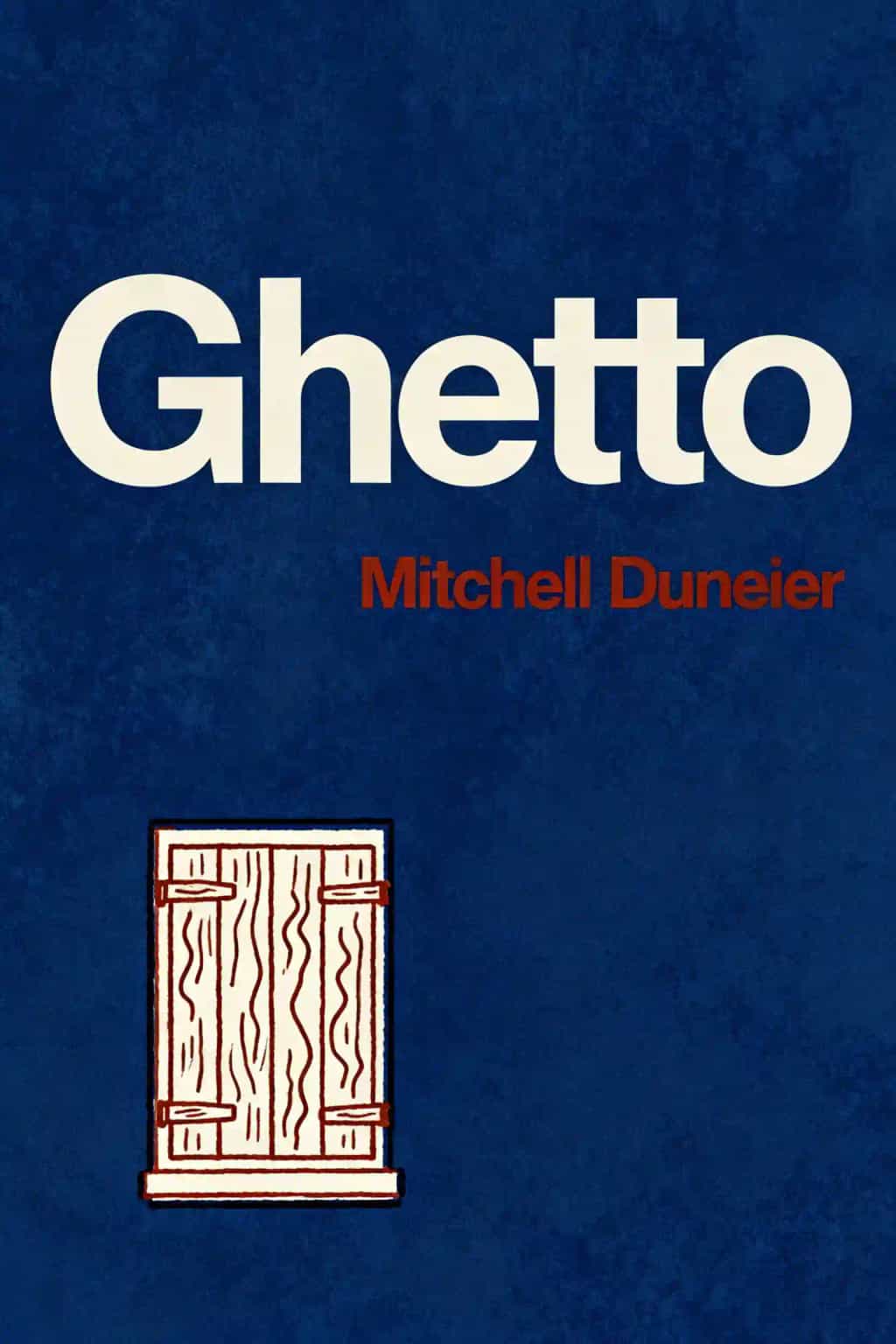

Overview of Ghetto
Duneier's "Ghetto" traces a loaded term from 16th-century Venice to modern America, challenging us to see segregation as deliberate policy, not natural occurrence. Shortlisted for the Emerson Award, it reveals how entire nations might become ghettoized as economic divides deepen.
- The term “ghetto” originated in 16th-century Venice as state-enforced Jewish segregation.
- Black intellectuals redefined “ghetto” to expose systemic racism in 1930s America.
- Nazi ghettos and U.S. segregation shared tools of racial subordination and control.
- Postwar sociologists debunked the dehumanizing myth of Black “self-segregation” in cities.
- Urban ghettos aren’t natural—they’re engineered through policy and economic exclusion.
- William Julius Wilson’s underclass theory accidentally justified Reagan-era welfare cuts.
- Harlem Children’s Zone’s neoliberal model masks corporate complicity in inequality.
- Historical Jewish ghettos allowed cultural flourishing; American ghettos enforce disintegration.
- Real estate and finance industries perpetuate modern ghettos through external domination.
- Kenneth Clark’s Dark Ghetto linked psychological trauma to systemic segregation.
- Geoffrey Canada’s poverty solutions prioritized philanthropy over structural accountability.
- Economic segregation may replace racial segregation as America’s next “ghetto.”
About the Author of Ghetto
Mitchell Duneier, author of Ghetto: The Invention of a Place, the History of an Idea, is an award-winning sociologist and Princeton University professor renowned for his immersive urban ethnography.
Specializing in race, poverty, and social inequality, Duneier traces the evolution of segregated spaces across centuries in Ghetto, blending historical analysis with insights from African American intellectuals. A pioneer of street-level research, he spent years documenting marginalized communities for previous works like Sidewalk (winner of the Los Angeles Times Book Prize) and Slim’s Table (American Sociological Association award recipient).
His books, taught widely in sociology programs, reflect a commitment to amplifying underrepresented voices through meticulous fieldwork. Ghetto earned the 2017 Zócalo Book Prize for its groundbreaking examination of systemic racism and was shortlisted for the Ralph Waldo Emerson Award.
Duneier’s research has been featured in NPR, The New York Times, and partnerships with documentary filmmakers, cementing his influence on public discourse about urban life.
FAQs About Ghetto
What is Ghetto: The Invention of a Place, the History of an Idea about?
Ghetto traces the 500-year evolution of segregated spaces, from 16th-century Venetian Jewish quarters to modern African American neighborhoods. Mitchell Duneier examines how systemic racism, restrictive policies, and intellectual frameworks shaped ghettos, highlighting parallels between historical Jewish segregation and 20th-century Black urban experiences. The book combines historical analysis with profiles of key sociologists like Horace Cayton and Kenneth Clark.
Who should read Ghetto: The Invention of a Place, the History of an Idea?
This book is essential for sociologists, urban planners, and historians studying systemic inequality, as well as readers interested in racial justice and urban policy. It’s also valuable for educators seeking historical context on segregation’s lasting impacts. Duneier’s accessible narrative makes complex ideas approachable for general audiences.
Is Ghetto: The Invention of a Place, the History of an Idea worth reading?
Yes—Duneier’s rigorous research and engaging storytelling offer critical insights into how ghettos became symbols of racial exclusion. The book’s analysis of policies like restrictive covenants and its critique of flawed sociological theories (e.g., the Moynihan Report) remain urgently relevant to debates on poverty and policing.
How does Ghetto redefine the concept of systemic racism?
Duneier argues that systemic racism is embedded in institutional practices like housing discrimination and unequal resource allocation. He links historical examples (e.g., 1930s redlining) to modern disparities, showing how ghettos emerged from deliberate policy choices rather than organic community formation.
What are the key historical milestones covered in Ghetto?
- 1516: Venice’s Jewish ghetto, the first legally enforced segregation.
- Early 20th century: Restrictive covenants and “sundown towns” in the U.S.
- 1960s: Kenneth Clark’s Harlem studies and the Moynihan Report’s controversies.
- 1980s-2000s: William Julius Wilson’s analysis of deindustrialization’s impact.
How does Ghetto compare Jewish and African American experiences?
Duneier highlights parallels: both groups faced state-enforced isolation, economic marginalization, and stereotyping. However, African American ghettos were shaped by chattel slavery’s legacy and uniquely racialized violence, unlike European Jewish ghettos tied to religious identity.
What critiques of Ghetto exist among scholars?
Some argue the book focuses too narrowly on intellectual history rather than grassroots resistance. Others note it underemphasizes contemporary issues like gentrification. Despite this, critics praise its nuanced exploration of segregation’s ideological roots.
How does Ghetto address the Moynihan Report?
Duneier critiques the 1965 report for blaming Black family structures for poverty, ignoring systemic barriers like employment discrimination. This misstep, he argues, diverted attention from policy reforms needed to address structural inequality.
What frameworks does Ghetto use to analyze urban segregation?
- Spatial isolation: Physical separation from resources and opportunities.
- Social control: Policing and surveillance in marginalized areas.
- Intellectual activism: How scholars like Geoffrey Canada reimagined community empowerment.
How is Ghetto relevant to modern movements like Black Lives Matter?
The book contextualizes protests against police brutality by tracing how ghettos became sites of over-policing. Duneier’s analysis of power imbalances informs discussions on defunding police and reinvesting in communities.
What lessons does Ghetto offer for urban policy?
Duneier advocates for affordable housing investments, equitable school funding, and job programs to dismantle segregation’s legacy. He emphasizes learning from past failures, like top-down “urban renewal” projects that displaced Black residents.
How does Ghetto relate to Mitchell Duneier’s earlier works?
Like Sidewalk (which examined NYC street vendors), Ghetto blends ethnography with structural analysis. Both books highlight how marginalized communities navigate systemic exclusion, though Ghetto adopts a broader historical lens.
Feel the book through the author's voice
Turn knowledge into engaging, example-rich insights
Capture key ideas in a flash for fast learning
Enjoy the book in a fun and engaging way
Key Themes in Ghetto
Quotes from Ghetto
The papal decree aimed officially to pressure Jews into conversion, but it primarily created a mechanism separating "us" from "them."
The ghetto presented a paradox: while creating disadvantages, it also allowed Jewish institutional life to continue and sometimes flourish.
When Hitler likened his plans to Catholic tradition, he deliberately misrepresented history.
Nazi segregation was purely racial.
Everything has a history, even the chair I am sitting in.
Characters in Ghetto
Quick Summary Mode - Read or listen to Ghetto Summary in 9 Minutes

Break down key ideas from Ghetto into bite-sized takeaways to understand how innovative teams create, collaborate, and grow.

Flash Card Mode - Top 10 Insights from Ghetto in a Nutshell

Distill Ghetto into rapid-fire memory cues that highlight key principles of candor, teamwork, and creative resilience.

Fun Mode - Ghetto Lessons Told Through 22-Min Stories

Experience Ghetto through vivid storytelling that turns innovation lessons into moments you'll remember and apply.
Personalize Mode - Read or listen to Ghetto Summary in 0 Minutes

Ask anything, pick the voice, and co-create insights that truly resonate with you.

From Columbia University alumni built in San Francisco
"Instead of endless scrolling, I just hit play on BeFreed. It saves me so much time."


"I never knew where to start with nonfiction—BeFreed’s book lists turned into podcasts gave me a clear path."


"Perfect balance between learning and entertainment. Finished ‘Thinking, Fast and Slow’ on my commute this week."
"Crazy how much I learned while walking the dog. BeFreed = small habits → big gains."
"Reading used to feel like a chore. Now it’s just part of my lifestyle."

"Feels effortless compared to reading. I’ve finished 6 books this month already."
"BeFreed turned my guilty doomscrolling into something that feels productive and inspiring."

"BeFreed turned my commute into learning time. 20-min podcasts are perfect for finishing books I never had time for."
"BeFreed replaced my podcast queue. Imagine Spotify for books — that’s it. 🙌"

"It is great for me to learn something from the book without reading it."
"The themed book list podcasts help me connect ideas across authors—like a guided audio journey."
"Makes me feel smarter every time before going to work"
From Columbia University alumni built in San Francisco
"Instead of endless scrolling, I just hit play on BeFreed. It saves me so much time."
"I never knew where to start with nonfiction—BeFreed’s book lists turned into podcasts gave me a clear path."
"Perfect balance between learning and entertainment. Finished ‘Thinking, Fast and Slow’ on my commute this week."
"Crazy how much I learned while walking the dog. BeFreed = small habits → big gains."
"Reading used to feel like a chore. Now it’s just part of my lifestyle."
"Feels effortless compared to reading. I’ve finished 6 books this month already."
"BeFreed turned my guilty doomscrolling into something that feels productive and inspiring."
"BeFreed turned my commute into learning time. 20-min podcasts are perfect for finishing books I never had time for."
"BeFreed replaced my podcast queue. Imagine Spotify for books — that’s it. 🙌"
"It is great for me to learn something from the book without reading it."
"The themed book list podcasts help me connect ideas across authors—like a guided audio journey."
"Makes me feel smarter every time before going to work"
"Instead of endless scrolling, I just hit play on BeFreed. It saves me so much time."
"I never knew where to start with nonfiction—BeFreed’s book lists turned into podcasts gave me a clear path."
"Perfect balance between learning and entertainment. Finished ‘Thinking, Fast and Slow’ on my commute this week."
"Crazy how much I learned while walking the dog. BeFreed = small habits → big gains."
"Reading used to feel like a chore. Now it’s just part of my lifestyle."
"Feels effortless compared to reading. I’ve finished 6 books this month already."
"BeFreed turned my guilty doomscrolling into something that feels productive and inspiring."
"BeFreed turned my commute into learning time. 20-min podcasts are perfect for finishing books I never had time for."
"BeFreed replaced my podcast queue. Imagine Spotify for books — that’s it. 🙌"
"It is great for me to learn something from the book without reading it."
"The themed book list podcasts help me connect ideas across authors—like a guided audio journey."
"Makes me feel smarter every time before going to work"
"Instead of endless scrolling, I just hit play on BeFreed. It saves me so much time."
"I never knew where to start with nonfiction—BeFreed’s book lists turned into podcasts gave me a clear path."
"Perfect balance between learning and entertainment. Finished ‘Thinking, Fast and Slow’ on my commute this week."
"Crazy how much I learned while walking the dog. BeFreed = small habits → big gains."
"Reading used to feel like a chore. Now it’s just part of my lifestyle."
"Feels effortless compared to reading. I’ve finished 6 books this month already."
"BeFreed turned my guilty doomscrolling into something that feels productive and inspiring."
"BeFreed turned my commute into learning time. 20-min podcasts are perfect for finishing books I never had time for."
"BeFreed replaced my podcast queue. Imagine Spotify for books — that’s it. 🙌"
"It is great for me to learn something from the book without reading it."
"The themed book list podcasts help me connect ideas across authors—like a guided audio journey."
"Makes me feel smarter every time before going to work"

Get the Ghetto summary as a free PDF or EPUB. Print it or read offline anytime.