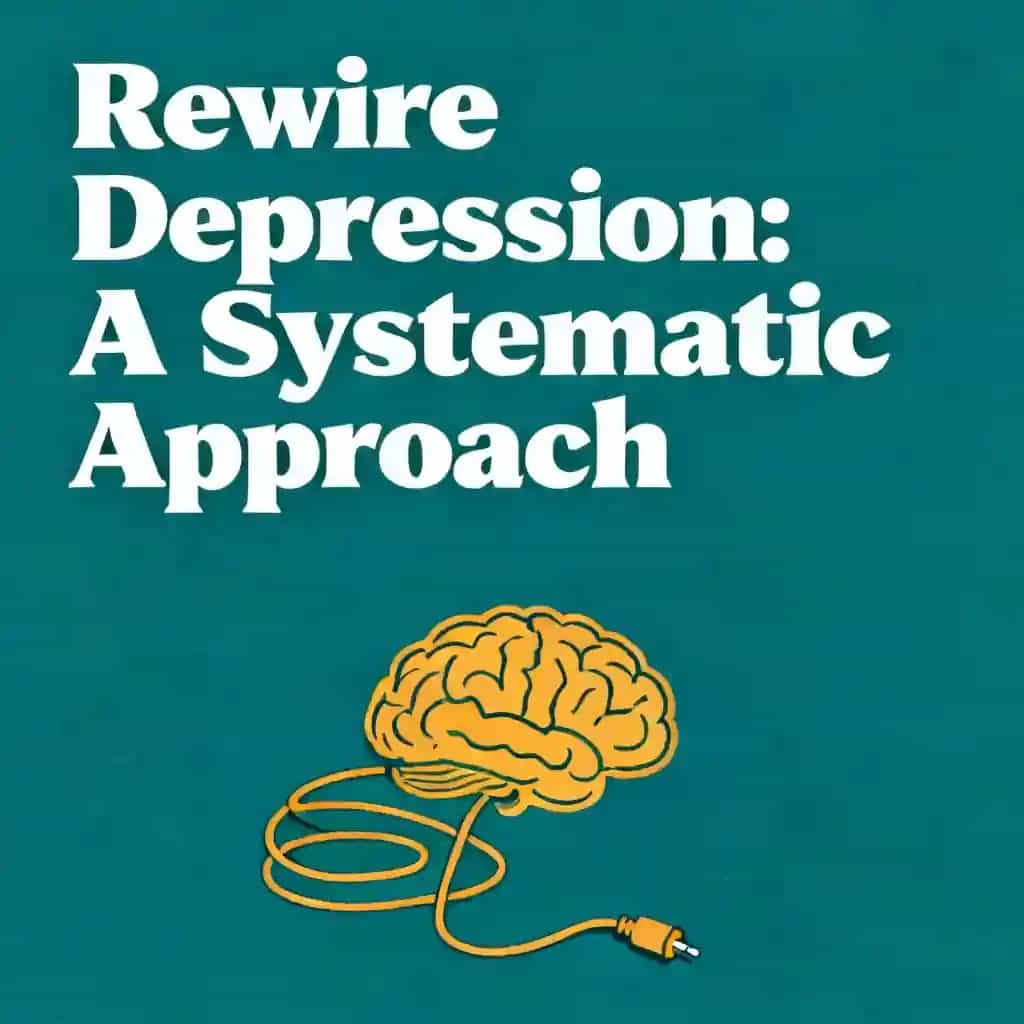
Discover the clinically-proven path through depression that's helped hundreds of thousands find relief. Endorsed by top psychologists and integrated into VA programs, this mindfulness approach offers what conventional treatments miss - a way to break the cycle of chronic unhappiness forever.
Mark Williams, John Teasdale, Zindel Segal, and Jon Kabat-Zinn are the pioneering authors of The Mindful Way Through Depression, blending clinical psychology expertise with mindfulness innovation.
Williams is an Emeritus Professor of Clinical Psychology at the University of Oxford. He co-founded the Oxford Mindfulness Centre and developed Mindfulness-Based Cognitive Therapy (MBCT) to prevent depressive relapse. Teasdale, a Fellow of the British Academy, contributed groundbreaking research on cognitive vulnerability models. Segal, a Distinguished Professor at the University of Toronto, advanced MBCT’s clinical applications.
Kabat-Zinn is the creator of the Mindfulness-Based Stress Reduction program and author of 15 seminal books. He bridges scientific rigor with Buddhist mindfulness traditions. Together, their work has redefined depression treatment, merging cognitive therapy with meditative practices.
Williams’ later works, including Mindfulness: A Practical Guide to Finding Peace in a Frantic World and Deeper Mindfulness, further solidify his leadership in evidence-based mindfulness. The Mindful Way Through Depression has been translated into over 20 languages and has sold more than one million copies, remaining a cornerstone text for mental health professionals and readers worldwide.
The Mindful Way Through Depression combines mindfulness practices with cognitive therapy to help break the cycle of chronic unhappiness. It teaches readers to observe negative thoughts without judgment, using techniques like breath awareness and body scans to disrupt rumination. The book includes guided meditations and exercises rooted in Mindfulness-Based Cognitive Therapy (MBCT), a clinically proven approach to reducing depressive relapse.
This book is ideal for anyone experiencing depression, anxiety, or chronic stress, as well as those interested in mindfulness. It’s also valuable for mental health professionals seeking evidence-based tools. The authors emphasize that even individuals without clinical diagnoses can benefit from its methods to enhance emotional resilience.
Yes, it’s widely praised for its practical, accessible approach to managing depression. Readers appreciate its blend of scientific rigor and mindfulness wisdom, with step-by-step exercises and audio meditations by Jon Kabat-Zinn. Clinical studies show MBCT reduces depressive relapse by 50%, making it a trusted resource.
Key ideas include:
Yes, the book comes with an audio program of guided meditations narrated by Jon Kabat-Zinn. These practices, such as the "breathing space" exercise, help readers apply mindfulness techniques daily, making the approach actionable and immersive.
The book is co-authored by Mark Williams, John Teasdale, Zindel Segal, and Jon Kabat-Zinn—leading experts in cognitive psychology and mindfulness. Williams and Kabat-Zinn are particularly renowned for pioneering MBCT and mindfulness-based stress reduction (MBSR).
Unlike traditional self-help emphasizing positive thinking, this book focuses on non-judgmental awareness to disarm negative thought patterns. It avoids quick fixes, instead offering a structured, evidence-based program rooted in neuroscience and psychotherapy.
“Our reactions to unhappiness can transform what might otherwise be a brief, passing sadness into persistent dissatisfaction.” This highlights the book’s core premise: how resisting negative emotions amplifies suffering, while mindful acceptance fosters healing.
Some readers note the program requires consistent practice to see results, which may challenge those in acute depressive episodes. However, the workbook adaptation (The Mindful Way Workbook) offers a more structured 8-week plan for deeper engagement.
The workbook provides daily exercises, worksheets, and meditation trackers to systematize the book’s teachings. Designed for self-guided or therapeutic use, it reinforces skills like emotion regulation and thought defusion, deepening the main text’s concepts.
Yes, the book teaches resilience by reframing setbacks as temporary and manageable. Methods like “sideways learning” (observing thoughts indirectly) help build emotional flexibility, reducing vulnerability to future stressors.
It identifies “autopilot” behaviors and cognitive habits that perpetuate low mood, offering mindfulness tools to interrupt these patterns. By cultivating awareness, readers learn to respond to challenges with clarity rather than reactive negativity.
Feel the book through the author's voice
Turn knowledge into engaging, example-rich insights
Capture key ideas in a flash for fast learning
Enjoy the book in a fun and engaging way
Our very efforts to escape depression keep us trapped in it.
Depression persists because we have emotional reactions to our own emotions.
We can't outrun our thoughts and feelings.
Rumination only spreads the distress.
Mindfulness is paying attention differently.
Break down key ideas from Mindful Way Through Depression into bite-sized takeaways to understand how innovative teams create, collaborate, and grow.
Distill Mindful Way Through Depression into rapid-fire memory cues that highlight key principles of candor, teamwork, and creative resilience.

Experience Mindful Way Through Depression through vivid storytelling that turns innovation lessons into moments you'll remember and apply.
Ask anything, pick the voice, and co-create insights that truly resonate with you.

From Columbia University alumni built in San Francisco
"Instead of endless scrolling, I just hit play on BeFreed. It saves me so much time."
"I never knew where to start with nonfiction—BeFreed’s book lists turned into podcasts gave me a clear path."
"Perfect balance between learning and entertainment. Finished ‘Thinking, Fast and Slow’ on my commute this week."
"Crazy how much I learned while walking the dog. BeFreed = small habits → big gains."
"Reading used to feel like a chore. Now it’s just part of my lifestyle."
"Feels effortless compared to reading. I’ve finished 6 books this month already."
"BeFreed turned my guilty doomscrolling into something that feels productive and inspiring."
"BeFreed turned my commute into learning time. 20-min podcasts are perfect for finishing books I never had time for."
"BeFreed replaced my podcast queue. Imagine Spotify for books — that’s it. 🙌"
"It is great for me to learn something from the book without reading it."
"The themed book list podcasts help me connect ideas across authors—like a guided audio journey."
"Makes me feel smarter every time before going to work"
From Columbia University alumni built in San Francisco

Get the Mindful Way Through Depression summary as a free PDF or EPUB. Print it or read offline anytime.
What if the very thing you're doing to escape depression is precisely what keeps you trapped in it? Over 264 million people worldwide wrestle with depression, and most approach it the same way: they think harder, analyze deeper, and search desperately for answers. Yet this mental effort-the rumination, the self-criticism, the endless attempts to think our way out of darkness-actually tightens the grip of depression. There's a different path, one that feels almost counterintuitive: instead of fighting our thoughts and feelings, we learn to change our relationship with them. This approach, backed by neuroscience and proven to cut relapse rates in half, offers something revolutionary-not a cure through force, but freedom through awareness.