The secret piano
from Mao's labor camps to Bach's Goldberg variations
Overview of The secret piano
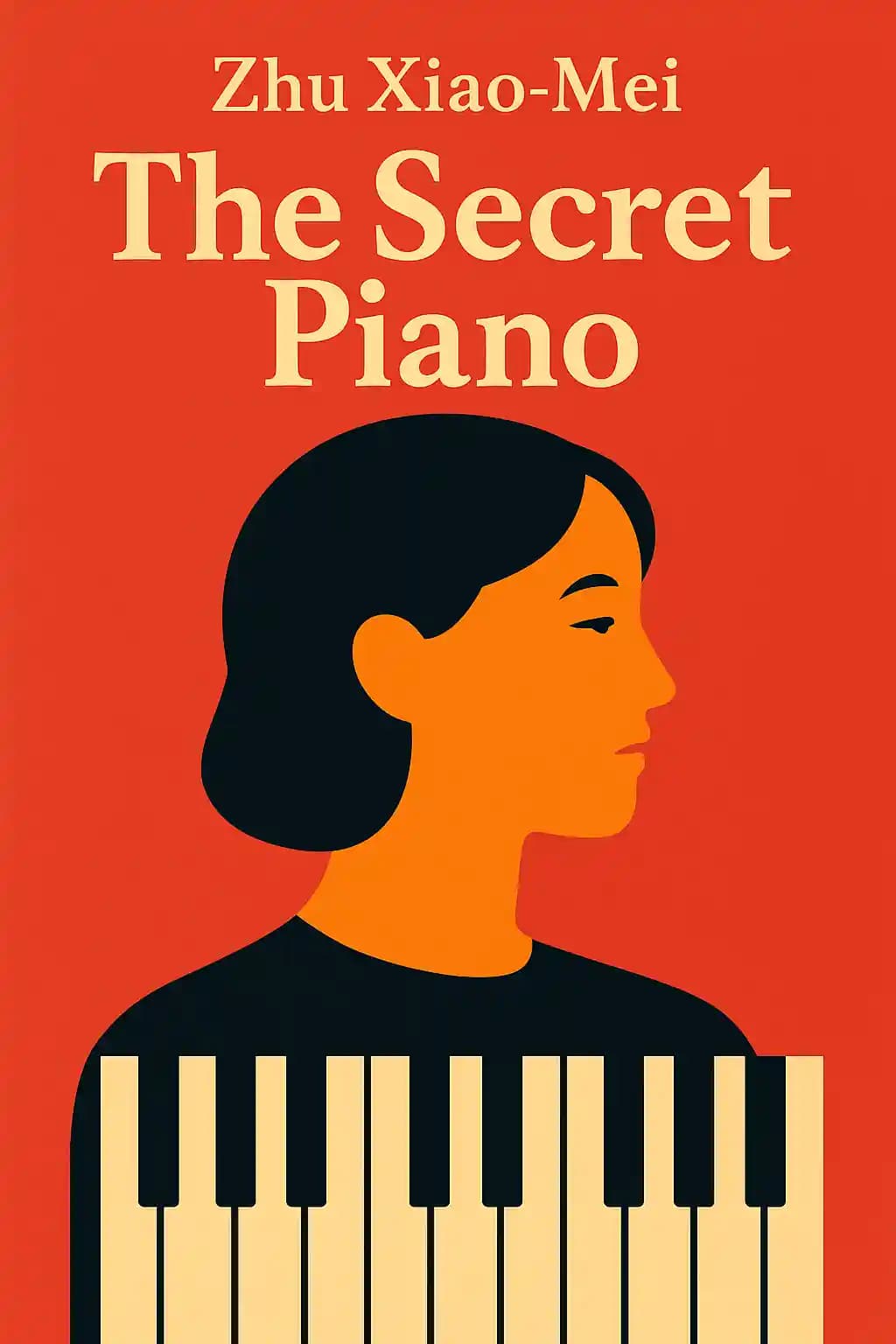
During Mao's Cultural Revolution, pianist Zhu Xiao-Mei survived labor camps by secretly playing Bach. Her memoir - structured like the 30 Goldberg Variations she mastered - reveals how music became her salvation when everything else was forbidden.

Key Themes in The secret piano
- cultural revolution survival
- musical resilience
- maoist political persecution
- western classical music
- chinese diaspora memoir
Quotes from The secret piano
Never again will the Chinese people be enslaved.
Invincibility is in ourselves.
And what if I jumped?
You cannot play the piano well if, deep inside, you are hostile to the regime.
This piano was acquired by exploiting the people, through their sweat and blood.
Characters in The secret piano
- Zhu Xiao-MeiThe protagonist and pianist who wrote the memoir
- RuyingXiao-Mei's mother and first music teacher
- QixienXiao-Mei's father, a detached and demanding man
- Professor PanXiao-Mei's piano teacher at the Conservatory
- AizhenA student who secretly helped Xiao-Mei
About the Author
About the Author of The secret piano
Zhu Xiao-Mei, celebrated pianist and author of The Secret Piano, is renowned for her profound interpretations of Bach’s Goldberg Variations.
Born in China, she began playing piano as a child and entered the Beijing Conservatory at age ten, only to have her education disrupted by the Cultural Revolution.
Her memoir, a gripping blend of personal memoir and historical narrative, chronicles her five years in a Mongolian labor camp, her eventual escape to the West, and her rise as a globally acclaimed musician. Themes of resilience, artistic passion, and music’s redemptive power anchor her story.
A professor at Paris’s Conservatoire National Supérieur de Musique since 1984, Zhu has performed on six continents and recorded seminal works like Bach’s English Suites and The Art of Fugue. Her writing, including La Rivière et son Secret, reflects her journey from political oppression to artistic mastery.
The Secret Piano has been translated into over 15 languages, resonating with readers worldwide as a testament to the transformative power of art.
Download Summary of The secret piano
Get the The secret piano summary as a free PDF or EPUB. Print it or read offline anytime.
FAQs About This Book
The Secret Piano is a memoir chronicling Zhu Xiao-Mei’s journey from a prodigy in Maoist China to an acclaimed concert pianist. It details her resilience during the Cultural Revolution, including five years in a labor camp, and her eventual escape to pursue music in the West. Central themes include survival through art, the transformative power of Bach’s Goldberg Variations, and the enduring legacy of familial and cultural bonds.
This book appeals to readers interested in memoirs of perseverance, classical music enthusiasts, and those exploring China’s Cultural Revolution. Historians, pianists, and fans of stories about reclaiming identity through art will find it compelling. Its blend of personal struggle and musical philosophy also resonates with readers seeking inspiration from unconventional career paths.
Yes, it offers a gripping account of resilience and artistry. Reviews praise its vivid portrayal of Mao-era China and Zhu’s philosophical reflections on music. While some note slower pacing in later sections, the memoir’s emotional depth and historical insights make it a standout read for lovers of biography and music history.
Zhu describes forced labor, ideological indoctrination, and the suppression of artistic expression. She recounts confiscated pianos, public humiliations, and the systemic erasure of intellectualism. Her family’s hidden piano becomes a symbol of resistance, while Bach’s music serves as a mental refuge during her five-year re-education in Inner Mongolia.
The Goldberg Variations symbolize Zhu’s spiritual and artistic rebirth. She interprets the piece as a metaphor for life’s complexities, weaving its structure into the memoir’s 30-chapter format. Zhu’s performances of the work, described as introspective and unconventional, reflect her journey from trauma to triumph.
Key quotes highlight music’s redemptive power:
- “In Bach, I found a language that transcended politics and suffering.”
- “The piano was not just an instrument; it was a companion in silence.”
- “To play freely, you must first free your mind.”
These lines underscore Zhu’s belief in art as liberation.
Unlike purely historical accounts, Zhu’s memoir integrates musical theory and metaphor. It shares themes with Wild Swans but stands out for its focus on art’s survival under oppression. Critics note its unique blend of personal narrative and analytical reflections on Western classical music’s role in Maoist China.
Some readers find the post-China sections less compelling than the Cultural Revolution narrative. A minority critique the philosophical tangents about music as overly abstract. However, most agree these elements deepen the exploration of art’s relationship to trauma.
As a Beijing Conservatory prodigy turned labor camp survivor, Zhu’s dual identity as artist and dissident shapes the memoir. Her teaching career in Paris adds depth to discussions of cross-cultural artistry. The book reflects her belief that technical mastery must coexist with emotional authenticity in music.
Its themes of artistic censorship and political resilience resonate amid global debates on free expression. Aspiring musicians gain insights into overcoming creative barriers, while historians value its firsthand account of China’s ideological purges. The memoir’s emphasis on mental fortitude offers universal lessons for navigating adversity.
The family’s hidden piano represents cultural preservation under oppression. Its eventual destruction mirrors China’s broader erasure of Western art, while Zhu’s mental rehearsals on an imaginary keyboard symbolize hope’s indestructibility. The metaphor underscores how creativity persists even when tools are confiscated.
Zhu’s performances blend technical precision with emotional rawness, shaped by her traumatic past. She emphasizes the Goldberg Variations’ introspective qualities over showmanship, a style reviewers call “hauntingly meditative.” This approach reflects her view of music as a vehicle for healing rather than mere performance.