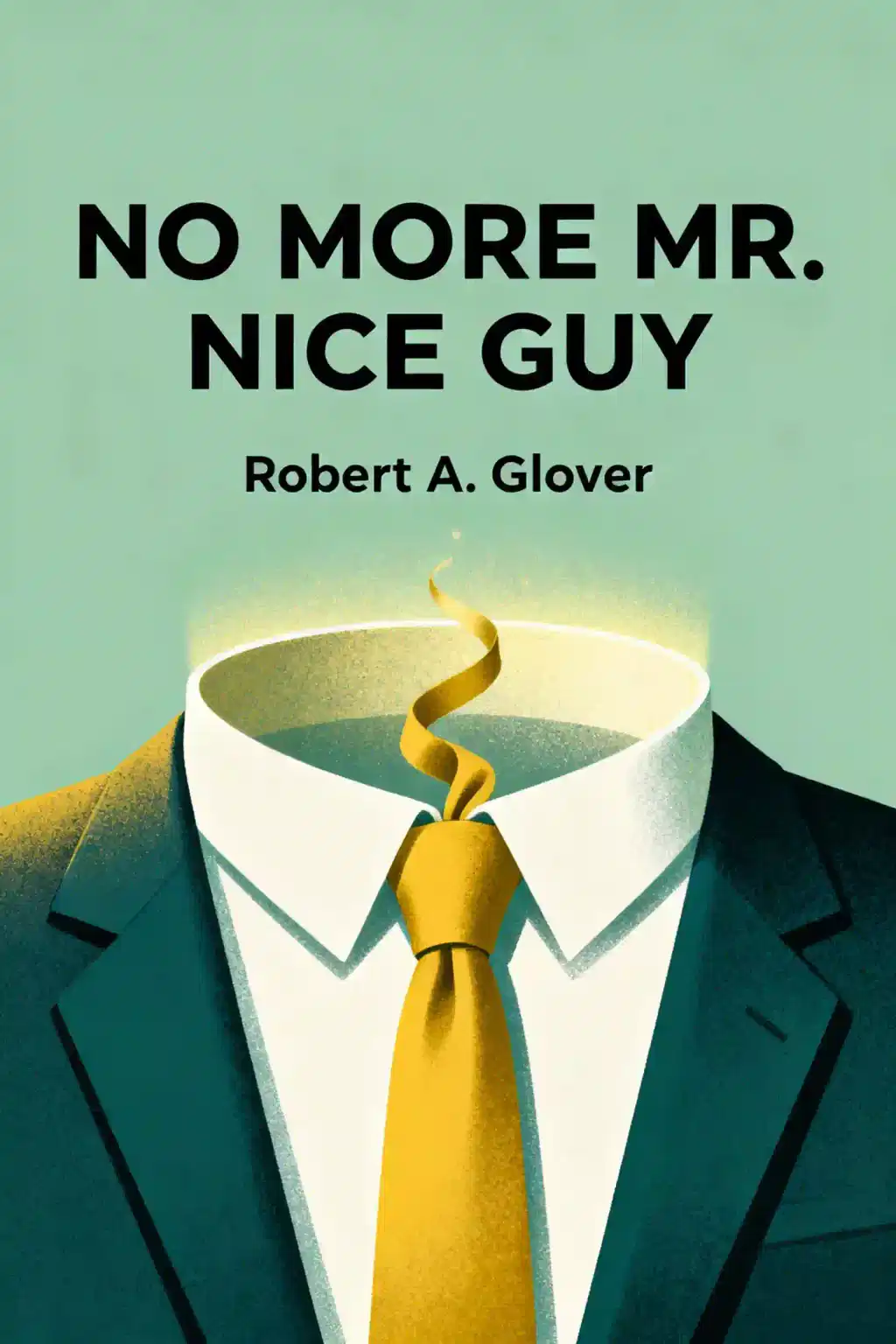
Not Nice: Stop People Pleasing, Staying Silent, & Feeling Guilty... and Start Speaking Up, Saying No, Asking Boldly, and Unapologetically Being Yourself by Aziz Gazipura Summary

Overview of Not Nice
Break free from the prison of people-pleasing with Dr. Gazipura's life-changing bestseller. Tired of feeling responsible for everyone's emotions? This confidence expert reveals why "niceness" is sabotaging your relationships and success. Readers call it transformative - the ultimate guide to authentic self-expression without guilt.
- Stop people-pleasing by embracing healthy selfishness over superficial harmony
- Replace amplified guilt with self-trust to unlock authentic decision-making power
- Build unshakable confidence through deliberate boundary-setting exercises and scripted refusals
- Transform conflict avoidance into courageous truth-telling using Gazipura’s four-step assertion framework
- Escape niceness-induced stagnation by normalizing discomfort as growth fuel
- Reclaim emotional freedom through shadow work integration (per Carl Jung’s model)
- Rewire approval-seeking reflexes using cognitive restructuring for lasting behavior change
- Master Gazipura’s 5-second rule to override automatic people-pleasing responses
- Convert resentment into assertive communication using direct “I want” statements
- Adopt strategic self-focus to prevent burnout and nurture sustainable relationships
- Replace false agreeableness with calibrated honesty for deeper social connections
- Break niceness addiction through daily micro-rejections and preference declarations
About the Author of Not Nice
Dr. Aziz Gazipura, clinical psychologist and bestselling author of Not Nice: Stop People Pleasing, Staying Silent, & Feeling Guilty…, is a leading authority on social confidence and assertive communication. A Stanford-trained expert, he founded The Center for Social Confidence to address themes central to his work—overcoming shyness, setting boundaries, and cultivating unapologetic self-expression.
His insights stem from personal triumphs over social anxiety and two decades of clinical practice, reflected in other works like The Solution to Social Anxiety and The Art of Extraordinary Confidence.
Gazipura hosts the popular Shrink For The Shy Guy podcast and has shared transformative strategies through 50+ interviews and global workshops. His no-nonsense, compassion-driven approach merges cognitive-behavioral techniques with actionable frameworks for interpersonal empowerment.
Not Nice ranks among Goodreads’ top-rated self-help titles, with over 38,000 shelvings and 5,000+ ratings, solidifying its status as a modern guide to reclaiming authenticity.
FAQs About Not Nice
What is Not Nice by Aziz Gazipura about?
Not Nice critiques society’s obsession with niceness, arguing that excessive people-pleasing harms mental health and relationships. Dr. Aziz Gazipura, a clinical psychologist, provides strategies to overcome social anxiety, set boundaries, and prioritize authenticity over approval. The book emphasizes reclaiming self-worth by saying “no” confidently and embracing discomfort for personal growth.
Who should read Not Nice?
This book is ideal for individuals struggling with assertiveness, chronic people-pleasing, or social anxiety. It’s particularly relevant for those seeking to improve relationships, reduce resentment, and build self-confidence without guilt. Professionals in high-stress roles or caregivers prone to self-sacrifice will find actionable tools to balance others’ needs with their own well-being.
Is Not Nice worth reading?
Yes, Not Nice offers a transformative perspective on breaking free from societal expectations. With practical exercises, relatable anecdotes, and psychological insights, it helps readers dismantle ingrained habits of over-apologizing and avoidance. Critics praise its blunt yet compassionate approach to fostering authenticity.
What are the main ideas in Not Nice?
- Niceness vs. Authenticity: Prioritizing others’ comfort often masks fear of rejection.
- Boundary-Setting: Saying “no” strengthens relationships and self-respect.
- Guilt Reduction: You’re not responsible for others’ emotions.
- Growth Through Discomfort: Avoiding conflict stifles personal development.
How does Not Nice help with setting boundaries?
Gazipura provides a four-step framework: 1) Identify non-negotiable values, 2) Communicate limits clearly, 3) Tolerate pushback without capitulation, and 4) Reinforce boundaries consistently. Case studies illustrate how this reduces resentment and fosters mutual respect in personal and professional relationships.
What are key quotes from Not Nice?
- “You are not responsible for other people’s feelings”
- “Fear is the only thing in the world that gets smaller as you run towards it”
- “Comfort as a prerequisite for action guarantees stagnation”
How does Not Nice address social anxiety?
Gazipura reframes social anxiety as a habit reinforced by avoidance. Techniques include gradual exposure to uncomfortable interactions, challenging negative self-talk, and embracing imperfection. His clinical background provides evidence-based strategies to build confidence through small, courageous acts.
What criticisms exist about Not Nice?
Some critics argue the book oversimplifies cultural nuances of politeness, particularly in collectivist societies. Others note its confrontational tone might overwhelm sensitive readers. However, most agree its core message about self-advocacy remains universally applicable.
How does Not Nice compare to The Art of Extraordinary Confidence?
While both books focus on self-empowerment, Not Nice specifically targets people-pleasing, whereas The Art of Extraordinary Confidence addresses broader confidence-building. Gazipura’s later work incorporates more case studies and actionable exercises, refining concepts introduced in his earlier titles.
Why is Not Nice relevant in 2025?
Post-pandemic work cultures and remote collaboration demand clear communication and boundary-setting. The book’s lessons on balancing empathy with assertiveness align with trends in mental health advocacy and workplace well-being initiatives.
What does Aziz Gazipura say about guilt?
Gazipura identifies guilt as a manipulative tool used by others to control behavior. He advises reframing guilt as a signal of boundary violations, not a moral failing. Practical exercises help readers differentiate healthy empathy from self-sabotaging compliance.
How to apply Not Nice principles in the workplace?
- Decline non-essential tasks without over-explaining.
- Negotiate promotions or raises using direct language.
- Address conflicts promptly rather than suppressing frustrations. Gazipura emphasizes that professionalism includes advocating for your needs, not just accommodating others’.
Feel the book through the author's voice
Turn knowledge into engaging, example-rich insights
Capture key ideas in a flash for fast learning
Enjoy the book in a fun and engaging way
Key Themes in Not Nice
Quotes from Not Nice
Being 'nice' isn't about goodness—it's driven by fear of disapproval.
The opposite of nice isn't being a jerk—it's being real.
Not nice means being willing to have difficult conversations.
I'm willing to do whatever it takes.
Without boundaries, there is no 'you' to speak up for.
Characters in Not Nice
Quick Summary Mode - Read or listen to Not Nice Summary in 8 Minutes

Break down key ideas from Not Nice into bite-sized takeaways to understand how innovative teams create, collaborate, and grow.

Flash Card Mode - Top 6 Insights from Not Nice in a Nutshell

Distill Not Nice into rapid-fire memory cues that highlight key principles of candor, teamwork, and creative resilience.

Fun Mode - Not Nice Lessons Told Through 23-Min Stories

Experience Not Nice through vivid storytelling that turns innovation lessons into moments you'll remember and apply.
Personalize Mode - Read or listen to Not Nice Summary in 0 Minutes

Ask anything, pick the voice, and co-create insights that truly resonate with you.

From Columbia University alumni built in San Francisco
"Instead of endless scrolling, I just hit play on BeFreed. It saves me so much time."


"I never knew where to start with nonfiction—BeFreed’s book lists turned into podcasts gave me a clear path."


"Perfect balance between learning and entertainment. Finished ‘Thinking, Fast and Slow’ on my commute this week."
"Crazy how much I learned while walking the dog. BeFreed = small habits → big gains."
"Reading used to feel like a chore. Now it’s just part of my lifestyle."

"Feels effortless compared to reading. I’ve finished 6 books this month already."
"BeFreed turned my guilty doomscrolling into something that feels productive and inspiring."

"BeFreed turned my commute into learning time. 20-min podcasts are perfect for finishing books I never had time for."
"BeFreed replaced my podcast queue. Imagine Spotify for books — that’s it. 🙌"

"It is great for me to learn something from the book without reading it."
"The themed book list podcasts help me connect ideas across authors—like a guided audio journey."
"Makes me feel smarter every time before going to work"
From Columbia University alumni built in San Francisco
"Instead of endless scrolling, I just hit play on BeFreed. It saves me so much time."
"I never knew where to start with nonfiction—BeFreed’s book lists turned into podcasts gave me a clear path."
"Perfect balance between learning and entertainment. Finished ‘Thinking, Fast and Slow’ on my commute this week."
"Crazy how much I learned while walking the dog. BeFreed = small habits → big gains."
"Reading used to feel like a chore. Now it’s just part of my lifestyle."
"Feels effortless compared to reading. I’ve finished 6 books this month already."
"BeFreed turned my guilty doomscrolling into something that feels productive and inspiring."
"BeFreed turned my commute into learning time. 20-min podcasts are perfect for finishing books I never had time for."
"BeFreed replaced my podcast queue. Imagine Spotify for books — that’s it. 🙌"
"It is great for me to learn something from the book without reading it."
"The themed book list podcasts help me connect ideas across authors—like a guided audio journey."
"Makes me feel smarter every time before going to work"
"Instead of endless scrolling, I just hit play on BeFreed. It saves me so much time."
"I never knew where to start with nonfiction—BeFreed’s book lists turned into podcasts gave me a clear path."
"Perfect balance between learning and entertainment. Finished ‘Thinking, Fast and Slow’ on my commute this week."
"Crazy how much I learned while walking the dog. BeFreed = small habits → big gains."
"Reading used to feel like a chore. Now it’s just part of my lifestyle."
"Feels effortless compared to reading. I’ve finished 6 books this month already."
"BeFreed turned my guilty doomscrolling into something that feels productive and inspiring."
"BeFreed turned my commute into learning time. 20-min podcasts are perfect for finishing books I never had time for."
"BeFreed replaced my podcast queue. Imagine Spotify for books — that’s it. 🙌"
"It is great for me to learn something from the book without reading it."
"The themed book list podcasts help me connect ideas across authors—like a guided audio journey."
"Makes me feel smarter every time before going to work"
"Instead of endless scrolling, I just hit play on BeFreed. It saves me so much time."
"I never knew where to start with nonfiction—BeFreed’s book lists turned into podcasts gave me a clear path."
"Perfect balance between learning and entertainment. Finished ‘Thinking, Fast and Slow’ on my commute this week."
"Crazy how much I learned while walking the dog. BeFreed = small habits → big gains."
"Reading used to feel like a chore. Now it’s just part of my lifestyle."
"Feels effortless compared to reading. I’ve finished 6 books this month already."
"BeFreed turned my guilty doomscrolling into something that feels productive and inspiring."
"BeFreed turned my commute into learning time. 20-min podcasts are perfect for finishing books I never had time for."
"BeFreed replaced my podcast queue. Imagine Spotify for books — that’s it. 🙌"
"It is great for me to learn something from the book without reading it."
"The themed book list podcasts help me connect ideas across authors—like a guided audio journey."
"Makes me feel smarter every time before going to work"

Get the Not Nice summary as a free PDF or EPUB. Print it or read offline anytime.