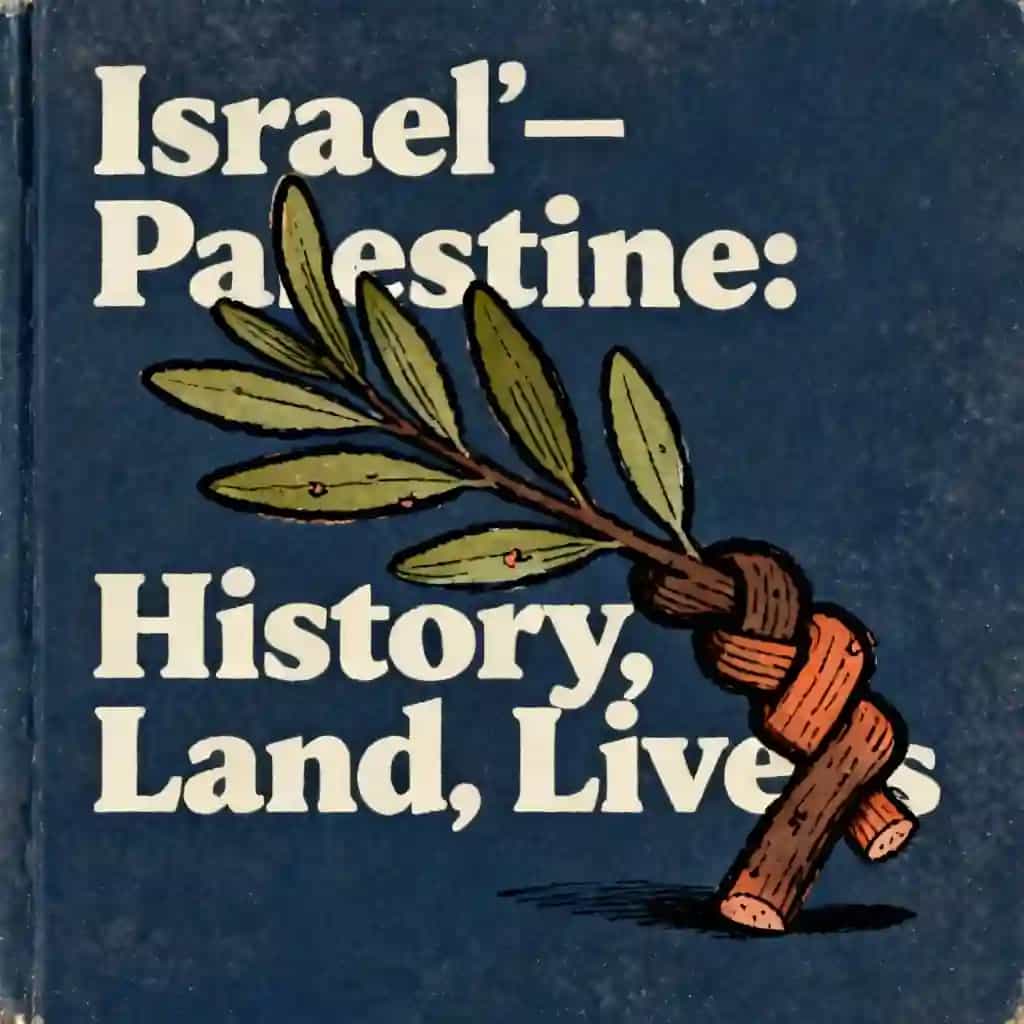
Overview of Hundred Years War on Palestine,
Pulitzer Prize-winning chronicle exposing a century of colonial warfare against Palestinians. Drawing from untapped archives and his own family's legacy, Columbia historian Rashid Khalidi challenges mainstream narratives, earning acclaim from The New Yorker and Financial Times. What truth remains hidden in this contested history?
- Rashid Khalidi frames Palestine's struggle as a 100-year settler colonial war backed by global powers
- The Balfour Declaration marked the first declaration of war by denying Palestinian self-determination
- Plan Dalet’s 1948 ethnic cleansing displaced 700,000 Palestinians before Israel’s formal establishment
- Western narratives falsely equate Palestinian resistance with Israeli colonialism as equal national movements
- Six key declarations of war showcase escalating colonial violence from 1917 to modern Gaza sieges
- US sponsorship enabled Israel’s 1982 Lebanon invasion and Sabra-Shatila refugee camp massacres
- Palestinian archives and family histories counter Zionist erasure in mainstream historical accounts
- Israel’s rejection of two-state solutions reveals its foundational opposition to Palestinian sovereignty
- The Nakba’s trauma forged generations of resistance against displacement and occupation
- Arab regimes’ complicity with colonial powers deepened Palestinian geopolitical isolation
- Western media bias perpetuates dehumanizing myths about Palestine’s right to self-defense
- Khalidi’s personal narratives humanize statistics of displacement in ongoing settler colonial projects
About the Author of Hundred Years War on Palestine,
Rashid Khalidi, author of The Hundred Years’ War on Palestine: A History of Settler-Colonial Conquest and Resistance, is a Palestinian-American historian and leading scholar of modern Middle Eastern studies.
As the Edward Said Professor Emeritus of Modern Arab Studies at Columbia University, Khalidi brings decades of academic authority to his exploration of Palestine’s struggle against colonialism. He draws from his family’s deep roots in Jerusalem and his advisory role in the 1990s Palestinian peace negotiations.
His expertise spans Ottoman-era governance, Western imperialism, and the construction of Palestinian identity, themes central to his acclaimed works like Palestinian Identity: The Construction of Modern National Consciousness (winner of the Middle East Studies Association’s Albert Hourani Book Award) and The Iron Cage: The Story of the Palestinian Struggle for Statehood.
Khalidi’s analysis has shaped global discourse through his editorship of the Journal of Palestine Studies, media appearances, and lectures at institutions worldwide. The Hundred Years’ War on Palestine has been widely praised for reframing the conflict through indigenous narratives, solidifying his reputation as a vital voice in decolonial historiography.
FAQs About Hundred Years War on Palestine,
What is The Hundred Years’ War on Palestine about?
The Hundred Years’ War on Palestine by Rashid Khalidi examines the Palestinian-Israeli conflict as a settler-colonial struggle spanning 1917–2017. It highlights six pivotal declarations of war against Palestinians, emphasizing systemic displacement, Western imperial backing of Zionist aims, and Palestinian resilience. Khalidi blends archival research with personal family narratives to present a rarely documented indigenous perspective.
Who should read The Hundred Years’ War on Palestine?
This book suits readers interested in decolonization, Middle Eastern history, or anti-imperialist movements. Academics, policymakers, and activists will value its rigorous analysis of geopolitical power dynamics, while general audiences gain insight into Palestinian agency amid prolonged conflict. Khalidi’s accessible prose bridges scholarly and mainstream audiences.
Is The Hundred Years’ War on Palestine worth reading?
Yes, for its groundbreaking Palestinian-centered narrative and critical acclaim. The book challenges mainstream Western historiography by centering indigenous voices, offering fresh interpretations of Balfour, Nakba, and Oslo events. Its blend of personal memoir and academic rigor makes it a vital resource for understanding modern Middle Eastern geopolitics.
What are the main arguments in The Hundred Years’ War on Palestine?
Khalidi argues that the conflict stems from settler-colonialism enabled by British and U.S. support for Zionist territorial claims. He critiques Arab leadership failures, underscores Palestinian grassroots resistance, and rejects the notion of the conflict as intractable, instead framing it as a deliberate project of displacement.
How does Rashid Khalidi use his family’s history in the book?
Khalidi weaves his family’s experiences—including their leadership in early Palestinian nationalism and exile—into the broader historical narrative. This personal lens humanizes systemic oppression, illustrating how elite and ordinary Palestinians navigated colonialism, war, and diplomacy.
What role did external powers play in the conflict according to Khalidi?
Khalidi identifies Britain and the U.S. as key enablers of Zionist colonization, from the 1917 Balfour Declaration to post-1948 American military and diplomatic support for Israel. He argues Western powers prioritized strategic interests over Palestinian self-determination, perpetuating regional instability.
How does the book address Palestinian resistance?
The book highlights organized political movements (e.g., PLO) and grassroots acts of defiance (e.g., First Intifada) as evidence of sustained Palestinian agency. Khalidi challenges stereotypes of passive victimhood, showcasing cultural preservation and diplomatic efforts amid systemic erasure.
Does Khalidi offer solutions for peace in the book?
While critical of the Oslo Accords and U.S.-led peace processes, Khalidi advocates for a rights-based approach prioritizing Palestinian sovereignty, refugee rights, and equality. He calls for international accountability and grassroots solidarity to counterbalance asymmetrical power dynamics.
What criticisms exist about The Hundred Years’ War on Palestine?
Some critics argue the book minimizes Israeli security concerns or overemphasizes Western culpability. Pro-Israel advocates reject its settler-colonial framing, while others note limited exploration of intra-Palestinian divisions. Khalidi acknowledges these complexities but maintains a focus on structural oppression.
How does this book compare to other histories of the Israeli-Palestinian conflict?
Unlike accounts centering Israeli or Western perspectives, Khalidi’s work prioritizes Palestinian voices and archival evidence often excluded from mainstream discourse. It complements works like Ilan Pappé’s The Ethnic Cleansing of Palestine by detailing colonialism’s enduring legacy.
What sources does Khalidi use in his research?
Khalidi draws on British Mandate archives, U.N. documents, Palestinian press, and personal family papers, including correspondence with figures like Haj Amin al-Husseini. This multidisciplinary approach combines academic rigor with lived experience to challenge historical erasure.
Why is The Hundred Years’ War on Palestine relevant today?
The book contextualizes ongoing issues like Gaza blockades, settlement expansion, and U.S. policy shifts. Its analysis of cyclical violence and international law violations remains critical for interpreting current events, making it a timely resource for activists and scholars.
Feel the book through the author's voice
Turn knowledge into engaging, example-rich insights
Capture key ideas in a flash for fast learning
Enjoy the book in a fun and engaging way
Key Themes in Hundred Years War on Palestine,
Quotes from Hundred Years War on Palestine,
who would think of sending them away?
a gun pointed at their heads
Strangers in Our Own Land
always intended to violate.
strangers in their own land
Characters in Hundred Years War on Palestine,
Quick Summary Mode - Read or listen to Hundred Years War on Palestine, Summary in 9 Minutes

Break down key ideas from Hundred Years War on Palestine, into bite-sized takeaways to understand how innovative teams create, collaborate, and grow.

Flash Card Mode - Top 8 Insights from Hundred Years War on Palestine, in a Nutshell

Distill Hundred Years War on Palestine, into rapid-fire memory cues that highlight key principles of candor, teamwork, and creative resilience.

Fun Mode - Hundred Years War on Palestine, Lessons Told Through 20-Min Stories

Experience Hundred Years War on Palestine, through vivid storytelling that turns innovation lessons into moments you'll remember and apply.
Personalize Mode - Read or listen to Hundred Years War on Palestine, Summary in 0 Minutes

Ask anything, pick the voice, and co-create insights that truly resonate with you.

From Columbia University alumni built in San Francisco
"Instead of endless scrolling, I just hit play on BeFreed. It saves me so much time."


"I never knew where to start with nonfiction—BeFreed’s book lists turned into podcasts gave me a clear path."


"Perfect balance between learning and entertainment. Finished ‘Thinking, Fast and Slow’ on my commute this week."
"Crazy how much I learned while walking the dog. BeFreed = small habits → big gains."
"Reading used to feel like a chore. Now it’s just part of my lifestyle."

"Feels effortless compared to reading. I’ve finished 6 books this month already."
"BeFreed turned my guilty doomscrolling into something that feels productive and inspiring."

"BeFreed turned my commute into learning time. 20-min podcasts are perfect for finishing books I never had time for."
"BeFreed replaced my podcast queue. Imagine Spotify for books — that’s it. 🙌"

"It is great for me to learn something from the book without reading it."
"The themed book list podcasts help me connect ideas across authors—like a guided audio journey."
"Makes me feel smarter every time before going to work"
From Columbia University alumni built in San Francisco
"Instead of endless scrolling, I just hit play on BeFreed. It saves me so much time."
"I never knew where to start with nonfiction—BeFreed’s book lists turned into podcasts gave me a clear path."
"Perfect balance between learning and entertainment. Finished ‘Thinking, Fast and Slow’ on my commute this week."
"Crazy how much I learned while walking the dog. BeFreed = small habits → big gains."
"Reading used to feel like a chore. Now it’s just part of my lifestyle."
"Feels effortless compared to reading. I’ve finished 6 books this month already."
"BeFreed turned my guilty doomscrolling into something that feels productive and inspiring."
"BeFreed turned my commute into learning time. 20-min podcasts are perfect for finishing books I never had time for."
"BeFreed replaced my podcast queue. Imagine Spotify for books — that’s it. 🙌"
"It is great for me to learn something from the book without reading it."
"The themed book list podcasts help me connect ideas across authors—like a guided audio journey."
"Makes me feel smarter every time before going to work"
"Instead of endless scrolling, I just hit play on BeFreed. It saves me so much time."
"I never knew where to start with nonfiction—BeFreed’s book lists turned into podcasts gave me a clear path."
"Perfect balance between learning and entertainment. Finished ‘Thinking, Fast and Slow’ on my commute this week."
"Crazy how much I learned while walking the dog. BeFreed = small habits → big gains."
"Reading used to feel like a chore. Now it’s just part of my lifestyle."
"Feels effortless compared to reading. I’ve finished 6 books this month already."
"BeFreed turned my guilty doomscrolling into something that feels productive and inspiring."
"BeFreed turned my commute into learning time. 20-min podcasts are perfect for finishing books I never had time for."
"BeFreed replaced my podcast queue. Imagine Spotify for books — that’s it. 🙌"
"It is great for me to learn something from the book without reading it."
"The themed book list podcasts help me connect ideas across authors—like a guided audio journey."
"Makes me feel smarter every time before going to work"
"Instead of endless scrolling, I just hit play on BeFreed. It saves me so much time."
"I never knew where to start with nonfiction—BeFreed’s book lists turned into podcasts gave me a clear path."
"Perfect balance between learning and entertainment. Finished ‘Thinking, Fast and Slow’ on my commute this week."
"Crazy how much I learned while walking the dog. BeFreed = small habits → big gains."
"Reading used to feel like a chore. Now it’s just part of my lifestyle."
"Feels effortless compared to reading. I’ve finished 6 books this month already."
"BeFreed turned my guilty doomscrolling into something that feels productive and inspiring."
"BeFreed turned my commute into learning time. 20-min podcasts are perfect for finishing books I never had time for."
"BeFreed replaced my podcast queue. Imagine Spotify for books — that’s it. 🙌"
"It is great for me to learn something from the book without reading it."
"The themed book list podcasts help me connect ideas across authors—like a guided audio journey."
"Makes me feel smarter every time before going to work"

Get the Hundred Years War on Palestine, summary as a free PDF or EPUB. Print it or read offline anytime.