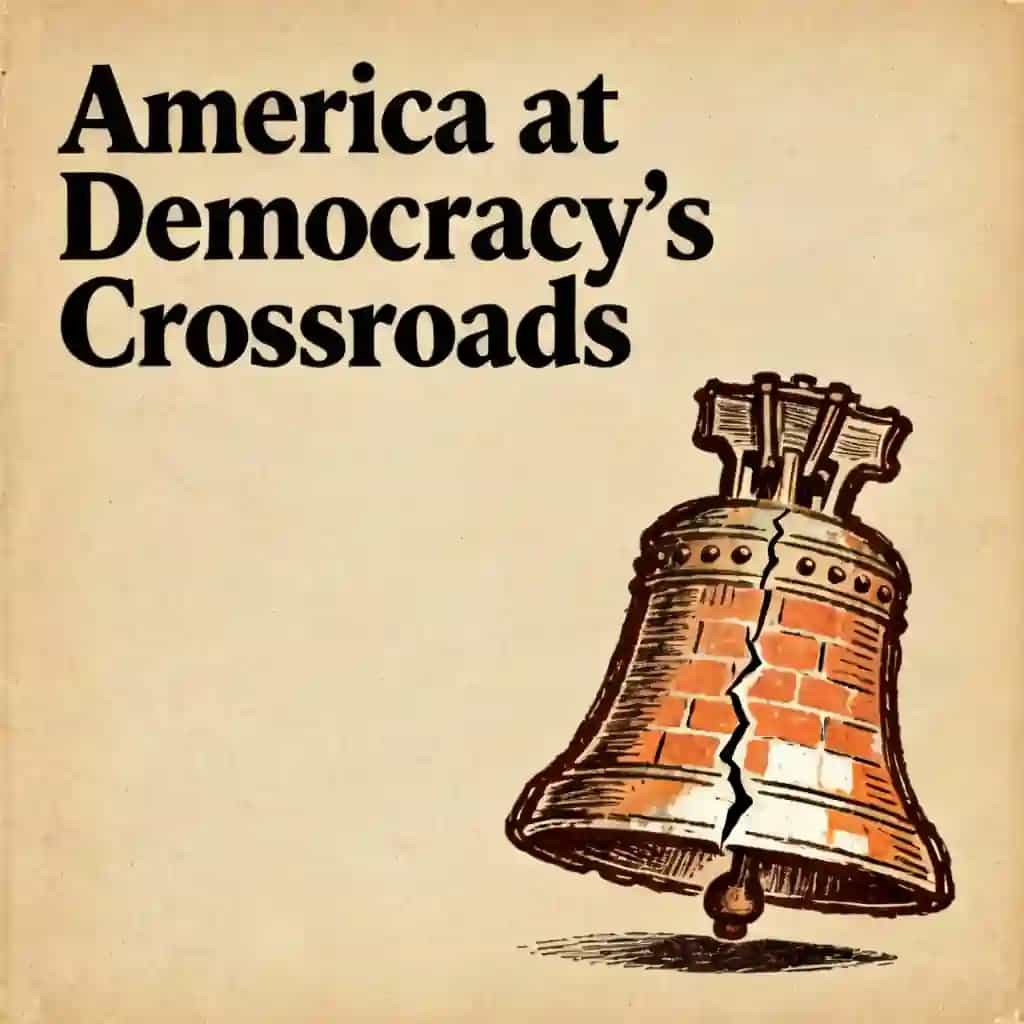
Overview of Autocracy, Inc
Pulitzer Prize-winner Anne Applebaum's "Autocracy, Inc." dissects the global rise of authoritarian regimes with chilling precision. As democracy erodes worldwide, this timely analysis asks: how did autocrats create a borderless network of mutual support - and can free societies still fight back?
- Modern autocracies collaborate globally through transactional networks dubbed Autocracy Inc.
- Kleptocratic financial systems fuel authoritarian regimes by enabling cross-border corruption and money laundering.
- Regime survival packages combine propaganda, surveillance tech, and military aid for mutual protection.
- Autocracies exploit democratic vulnerabilities through coordinated disinformation campaigns and cyberattacks.
- Western enablers - banks, lawyers, politicians - sustain autocratic power through financial complicity.
- Democracies must counter with international anticorruption alliances to freeze illicit assets and transactions.
- Evidence-based governance fights disinformation by linking policy solutions to measurable public benefits.
- Technology decoupling from authoritarian states is critical for protecting democratic infrastructure.
- Grassroots activists need protected communication channels to bypass state-controlled media.
- Hybrid autocracies mimic democratic institutions while systematically dismantling checks on power.
- Corporate transparency laws must expose shell companies hiding autocrats' wealth in democracies.
- Cold War-style ideological blocs gave way to profit-driven authoritarian partnerships.
About the Author of Autocracy, Inc
Anne Applebaum, Pulitzer Prize-winning historian and journalist, is the acclaimed author of Autocracy, Inc.: The Dictators Who Want to Run the World.
A leading expert on authoritarian regimes and disinformation, Applebaum draws on decades of research into communist and post-communist Europe, including her Pulitzer-winning Gulag: A History and National Book Award finalist Iron Curtain: The Crushing of Eastern Europe. As a staff writer for The Atlantic and Senior Fellow at Johns Hopkins University’s SNF Agora Institute, she leads research on modern propaganda networks.
Her work has been translated into over 30 languages and recognized with major honors, including the Duff Cooper Prize (twice) and the Lionel Gelber Prize. Applebaum’s incisive analysis of 21st-century autocratic alliances builds on her groundbreaking studies of 20th-century totalitarianism, cementing her reputation as a vital voice on global democratic resilience.
In 2024, she received the Peace Prize of the German Book Trade for her contributions to political discourse.
FAQs About Autocracy, Inc
What is Autocracy, Inc. about?
Autocracy, Inc. by Anne Applebaum examines how modern authoritarian regimes collaborate globally to undermine democracies, using kleptocratic financial systems, disinformation campaigns, and shared tactics to consolidate power. The book highlights networks like Russia, China, and Iran that weaponize corruption, suppress dissent, and erode institutional trust while evading accountability.
Who should read Autocracy, Inc.?
This book is essential for policymakers, journalists, and readers interested in global politics, authoritarianism, or democratic resilience. Applebaum’s insights appeal to those analyzing systemic threats to freedom, from disinformation to transnational corruption, making it timely for understanding 21st-century geopolitical conflicts.
Is Autocracy, Inc. worth reading?
Yes—Applebaum’s rigorous analysis of autocratic alliances offers critical perspective on looming threats to democracy. While some critics note a lack of concrete solutions, the book’s examination of kleptocracy, propaganda, and institutional decay makes it a vital resource for navigating modern geopolitics.
How do autocracies collaborate according to Anne Applebaum?
Autocracies form pragmatic networks to share tactics like election interference, cyberattacks, and financial manipulation. These regimes prioritize power preservation over ideology, coordinating through shadow economies and leveraging Western institutions’ weaknesses to destabilize democracies.
What role does disinformation play in Autocracy, Inc.?
Disinformation is central to modern autocratic strategy, eroding public trust in facts and institutions. Applebaum details how states like Russia and China use social media, bots, and state media to spread conspiracy theories, polarize societies, and legitimize authoritarian narratives globally.
What are the main critiques of Autocracy, Inc.?
Some reviewers argue the book focuses more on diagnosing autocratic systems than offering actionable solutions. Others note its grim tone but acknowledge its value in exposing transnational kleptocracy and the urgency of democratic reform.
How does Applebaum suggest combating autocratic networks?
Solutions include enhancing financial transparency (e.g., tracking oligarchs’ assets), regulating social media to curb disinformation, and strengthening international alliances. Applebaum emphasizes preemptive intelligence efforts and countering authoritarian influence in democratic institutions.
How does Autocracy, Inc. relate to Applebaum’s previous work?
It expands on themes from her Pulitzer-winning Gulag and Iron Curtain, shifting from historical analysis of Soviet repression to modern authoritarianism’s globalized tactics. The book connects past totalitarian strategies to contemporary threats like cyberwarfare and kleptocracy.
What is the significance of kleptocracy in the book?
Kleptocracy—rule by thieves—enables autocrats to loot state resources, buy foreign influence, and entrench power. Applebaum traces how illicit funds flow through offshore accounts, real estate, and Western banks, undermining legal and economic systems.
Why is Autocracy, Inc. relevant in 2025?
As autocracies deepen alliances and refine hybrid warfare tactics, the book’s warnings about financial corruption, election meddling, and institutional fragility remain urgent. It contextualizes current crises, from AI-driven disinformation to transnational repression.
How does Autocracy, Inc. compare to Masha Gessen’s rules for surviving autocracy?
While Gessen’s rules focus on individual resilience (e.g., “believe the autocrat”), Applebaum analyzes systemic autocratic networks. Both highlight institutional vulnerability, but Autocracy, Inc. emphasizes globalized collaboration among dictators versus domestic survival strategies.
What frameworks does Applebaum present in Autocracy, Inc.?
Key frameworks include:
- Kleptocratic financial systems: Moving illicit wealth globally to evade sanctions.
- Disinformation ecosystems: Weaponizing social media to distort reality.
- Transnational repression: Collaborating to silence dissent across borders.
Feel the book through the author's voice
Turn knowledge into engaging, example-rich insights
Capture key ideas in a flash for fast learning
Enjoy the book in a fun and engaging way
Key Themes in Autocracy, Inc
Quotes from Autocracy, Inc
Corruption and illiberalism might flow back to democratic ones.
Commerce would naturally transform dictatorships into democracies.
This isn't just another foreign policy book-it's a wake-up call.
Modern autocracies aren't built primarily on ideology but on corruption.
The Kyrgyz regime was emboldened by the huge influx of Russian money.
Characters in Autocracy, Inc
Quick Summary Mode - Read or listen to Autocracy, Inc Summary in 9 Minutes

Break down key ideas from Autocracy, Inc into bite-sized takeaways to understand how innovative teams create, collaborate, and grow.

Flash Card Mode - Top 10 Insights from Autocracy, Inc in a Nutshell

Distill Autocracy, Inc into rapid-fire memory cues that highlight key principles of candor, teamwork, and creative resilience.

Fun Mode - Autocracy, Inc Lessons Told Through 26-Min Stories

Experience Autocracy, Inc through vivid storytelling that turns innovation lessons into moments you'll remember and apply.
Personalize Mode - Read or listen to Autocracy, Inc Summary in 0 Minutes

Ask anything, pick the voice, and co-create insights that truly resonate with you.

From Columbia University alumni built in San Francisco
"Instead of endless scrolling, I just hit play on BeFreed. It saves me so much time."


"I never knew where to start with nonfiction—BeFreed’s book lists turned into podcasts gave me a clear path."


"Perfect balance between learning and entertainment. Finished ‘Thinking, Fast and Slow’ on my commute this week."
"Crazy how much I learned while walking the dog. BeFreed = small habits → big gains."
"Reading used to feel like a chore. Now it’s just part of my lifestyle."

"Feels effortless compared to reading. I’ve finished 6 books this month already."
"BeFreed turned my guilty doomscrolling into something that feels productive and inspiring."

"BeFreed turned my commute into learning time. 20-min podcasts are perfect for finishing books I never had time for."
"BeFreed replaced my podcast queue. Imagine Spotify for books — that’s it. 🙌"

"It is great for me to learn something from the book without reading it."
"The themed book list podcasts help me connect ideas across authors—like a guided audio journey."
"Makes me feel smarter every time before going to work"
From Columbia University alumni built in San Francisco
"Instead of endless scrolling, I just hit play on BeFreed. It saves me so much time."
"I never knew where to start with nonfiction—BeFreed’s book lists turned into podcasts gave me a clear path."
"Perfect balance between learning and entertainment. Finished ‘Thinking, Fast and Slow’ on my commute this week."
"Crazy how much I learned while walking the dog. BeFreed = small habits → big gains."
"Reading used to feel like a chore. Now it’s just part of my lifestyle."
"Feels effortless compared to reading. I’ve finished 6 books this month already."
"BeFreed turned my guilty doomscrolling into something that feels productive and inspiring."
"BeFreed turned my commute into learning time. 20-min podcasts are perfect for finishing books I never had time for."
"BeFreed replaced my podcast queue. Imagine Spotify for books — that’s it. 🙌"
"It is great for me to learn something from the book without reading it."
"The themed book list podcasts help me connect ideas across authors—like a guided audio journey."
"Makes me feel smarter every time before going to work"
"Instead of endless scrolling, I just hit play on BeFreed. It saves me so much time."
"I never knew where to start with nonfiction—BeFreed’s book lists turned into podcasts gave me a clear path."
"Perfect balance between learning and entertainment. Finished ‘Thinking, Fast and Slow’ on my commute this week."
"Crazy how much I learned while walking the dog. BeFreed = small habits → big gains."
"Reading used to feel like a chore. Now it’s just part of my lifestyle."
"Feels effortless compared to reading. I’ve finished 6 books this month already."
"BeFreed turned my guilty doomscrolling into something that feels productive and inspiring."
"BeFreed turned my commute into learning time. 20-min podcasts are perfect for finishing books I never had time for."
"BeFreed replaced my podcast queue. Imagine Spotify for books — that’s it. 🙌"
"It is great for me to learn something from the book without reading it."
"The themed book list podcasts help me connect ideas across authors—like a guided audio journey."
"Makes me feel smarter every time before going to work"
"Instead of endless scrolling, I just hit play on BeFreed. It saves me so much time."
"I never knew where to start with nonfiction—BeFreed’s book lists turned into podcasts gave me a clear path."
"Perfect balance between learning and entertainment. Finished ‘Thinking, Fast and Slow’ on my commute this week."
"Crazy how much I learned while walking the dog. BeFreed = small habits → big gains."
"Reading used to feel like a chore. Now it’s just part of my lifestyle."
"Feels effortless compared to reading. I’ve finished 6 books this month already."
"BeFreed turned my guilty doomscrolling into something that feels productive and inspiring."
"BeFreed turned my commute into learning time. 20-min podcasts are perfect for finishing books I never had time for."
"BeFreed replaced my podcast queue. Imagine Spotify for books — that’s it. 🙌"
"It is great for me to learn something from the book without reading it."
"The themed book list podcasts help me connect ideas across authors—like a guided audio journey."
"Makes me feel smarter every time before going to work"

Get the Autocracy, Inc summary as a free PDF or EPUB. Print it or read offline anytime.