Ancient wisdom meets modern business: McNeilly translates Sun Tzu's military genius into six strategic principles embraced by Fortune 500 giants like Microsoft and FedEx. What battlefield secret helped Wall Street executives win without fighting? The answer revolutionizes competitive advantage.
Mark R. McNeilly, author of Sun Tzu and the Art of Business: Six Strategic Principles for Managers, is a globally recognized strategist and professor at UNC Kenan-Flagler Business School, where he teaches marketing, leadership, and organizational behavior. His expertise in translating ancient military philosophy into modern business strategy stems from his 25-year career as a corporate executive at IBM and Lenovo, where he led global marketing and branding initiatives. McNeilly’s work bridges historical wisdom with contemporary challenges, earning recognition through media features on BBC, C-SPAN, and the History Channel’s Art of War documentary.
In addition to his Sun Tzu-based strategies, McNeilly penned George Washington and the Art of Business, applying leadership lessons from America’s first commander-in-chief to corporate governance. He shares cutting-edge insights on innovation and decision-making through his Substack newsletter, Mimir’s Well, and serves as an executive coach for Fortune 500 leaders.
His frameworks are taught in MBA programs and implemented by organizations worldwide, cementing his reputation as a pioneer in actionable leadership philosophy. Sun Tzu and the Art of Business has been hailed as a modern classic, with its principles integrated into military academies and business schools alike.
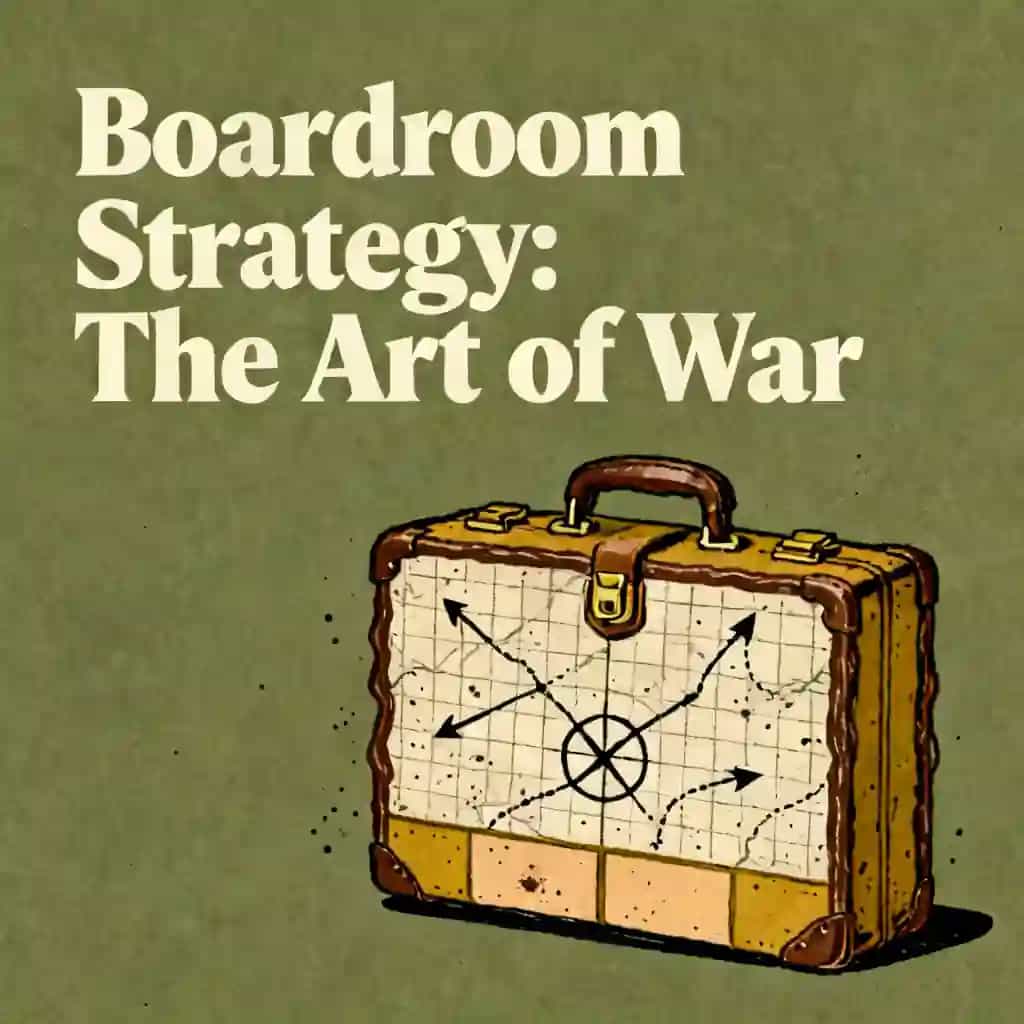
Sun Tzu and the Art of Business by Mark R. McNeilly adapts ancient military strategies from The Art of War to modern business, outlining six principles for competitive advantage. These include avoiding destructive competition, leveraging market intelligence, and rapid execution. Examples from companies like Google, Amazon, and Starbucks illustrate how to apply these timeless tactics. The book also includes Samuel B. Griffith’s translation of Sun Tzu’s original text.
This book is ideal for executives, managers, and entrepreneurs seeking strategic frameworks to outmaneuver competitors. It’s also valuable for students of leadership or military strategy transitioning to business roles. McNeilly’s practical examples make it accessible for professionals in marketing, operations, or organizational development.
Yes, for its actionable blend of historical wisdom and modern case studies. Readers gain tools to avoid price wars, exploit competitors’ weaknesses, and lead with integrity. The revised edition addresses globalization and digital disruption, ensuring relevance for today’s markets.
McNeilly links Sun Tzu’s teachings to contemporary successes, like Starbucks avoiding direct coffee wars by creating a “third place” experience. He also discusses Zappos using customer service as a weakness-turned-strength. The book emphasizes agility, such as Amazon’s rapid logistics, to mirror Sun Tzu’s focus on speed.
McNeilly is a 30-year marketing executive (IBM, Lenovo) and UNC Kenan-Flagler Business School professor. He’s authored multiple strategy books and advised organizations globally. His experience in branding and market intelligence informs the book’s practical insights.
Unlike abstract interpretations, McNeilly provides structured frameworks (e.g., the six principles) and concrete examples, like Tata Motors’ low-cost car strategy. The inclusion of Griffith’s translation allows direct comparison between ancient text and modern applications.
Some argue the book oversimplifies Sun Tzu’s teachings for corporate settings, potentially neglecting cultural nuances of the original text. Others note that smaller businesses may lack resources to replicate strategies used by giants like Google.
While Good to Great focuses on sustained excellence and Blue Ocean on uncontested markets, McNeilly’s work emphasizes tactical agility and psychological maneuvering. It’s more adversarial, teaching readers to actively destabilize competitors vs. avoiding them.
McNeilly recommends auditing competitors’ vulnerabilities, building rapid-response teams, and fostering leadership authenticity. A case study highlights Singapore Airlines’ use of foreknowledge to refine customer experiences ahead of rivals.
With AI accelerating market shifts, the book’s emphasis on agility (e.g., preempting disruptions) and ethical leadership remains critical. Updated examples on globalization and digital alliances address post-pandemic challenges.
Feel the book through the author's voice
Turn knowledge into engaging, example-rich insights
Capture key ideas in a flash for fast learning
Enjoy the book in a fun and engaging way
Achieve market dominance or risk extinction.
War is a grave matter requiring careful consideration.
Attack him when he does not expect it.
To be strong everywhere is to be strong nowhere.
The supreme excellence in war is to attack the enemy's plans.
Break down key ideas from Sun Tzu and the Art of Business into bite-sized takeaways to understand how innovative teams create, collaborate, and grow.
Distill Sun Tzu and the Art of Business into rapid-fire memory cues that highlight key principles of candor, teamwork, and creative resilience.

Experience Sun Tzu and the Art of Business through vivid storytelling that turns innovation lessons into moments you'll remember and apply.
Ask anything, pick the voice, and co-create insights that truly resonate with you.

From Columbia University alumni built in San Francisco
"Instead of endless scrolling, I just hit play on BeFreed. It saves me so much time."
"I never knew where to start with nonfiction—BeFreed’s book lists turned into podcasts gave me a clear path."
"Perfect balance between learning and entertainment. Finished ‘Thinking, Fast and Slow’ on my commute this week."
"Crazy how much I learned while walking the dog. BeFreed = small habits → big gains."
"Reading used to feel like a chore. Now it’s just part of my lifestyle."
"Feels effortless compared to reading. I’ve finished 6 books this month already."
"BeFreed turned my guilty doomscrolling into something that feels productive and inspiring."
"BeFreed turned my commute into learning time. 20-min podcasts are perfect for finishing books I never had time for."
"BeFreed replaced my podcast queue. Imagine Spotify for books — that’s it. 🙌"
"It is great for me to learn something from the book without reading it."
"The themed book list podcasts help me connect ideas across authors—like a guided audio journey."
"Makes me feel smarter every time before going to work"
From Columbia University alumni built in San Francisco

Get the Sun Tzu and the Art of Business summary as a free PDF or EPUB. Print it or read offline anytime.
Twenty-five centuries ago, a Chinese military strategist penned insights that would outlive empires, survive technological revolutions, and end up dog-eared on the desks of Fortune 500 CEOs. Sun Tzu's "The Art of War" wasn't written for quarterly earnings calls or hostile takeovers, yet its wisdom has proven eerily prescient for modern business. Why? Because beneath the surface differences between battlefield and boardroom lies a deeper truth: competition is competition, whether you're defending territory or market share. The challenge isn't accessing Sun Tzu's text-it's translating ancient military principles into actionable business strategy. Most executives display the slim volume as intellectual decoration, but few have cracked the code of applying "attack the enemy's strategy" when your enemy is a competitor with better distribution networks. This is where strategy becomes art, where understanding the principles matters less than knowing when and how to deploy them. All the strategic brilliance in the world collapses without character-based leadership. Sun Tzu calls this quality "the precious jewel of the state"-leaders who genuinely put others' needs before their own. This isn't about charismatic speeches or vision statements plastered on office walls; it's about consistent actions that demonstrate wisdom, sincerity, humanity, courage, and discipline.