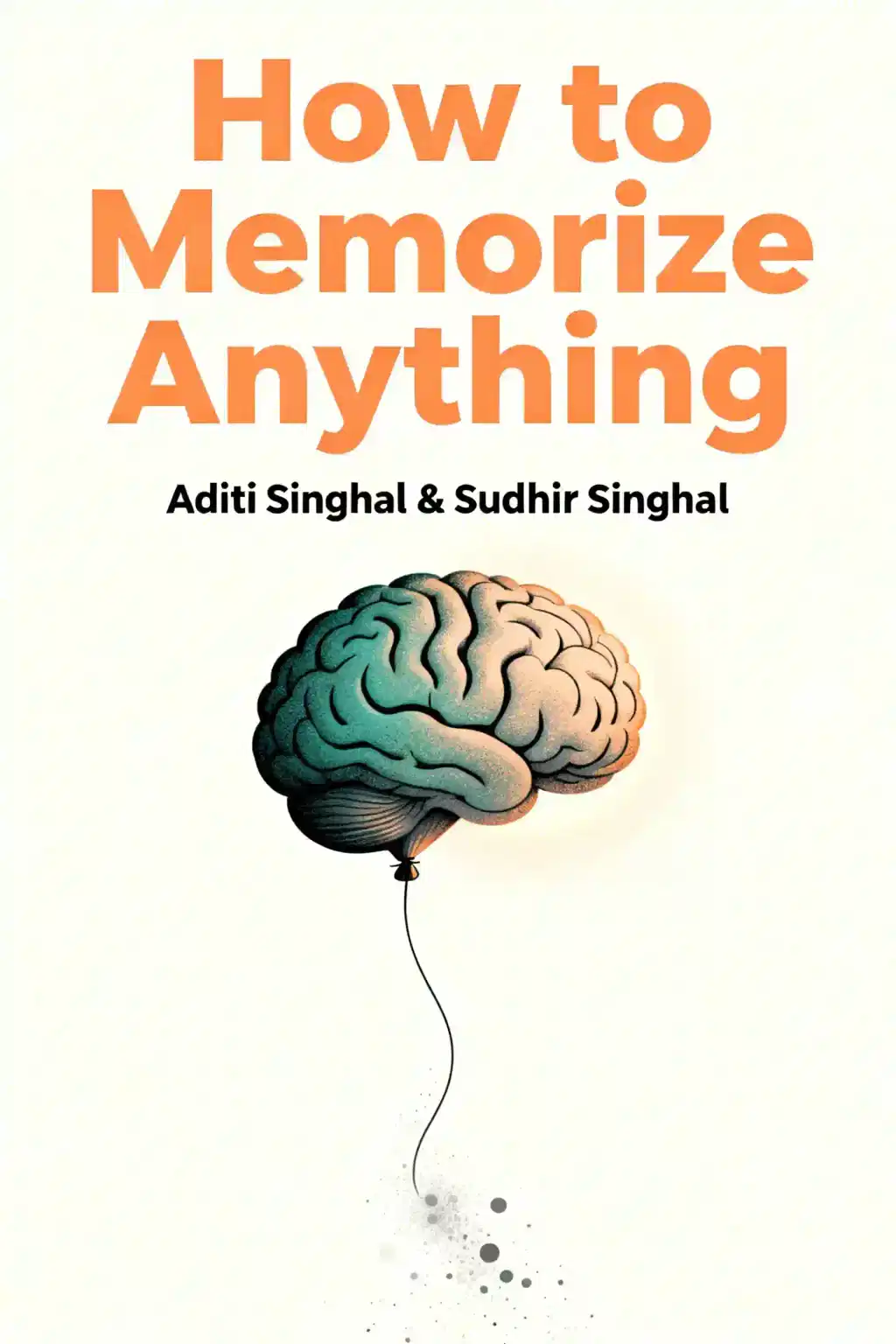
How to Memorize Anything: The Ultimate Handbook to Explore and Improve Your Memory by Aditi Singhal & Sudhir Singhal Summary

Overview of How to Memorize Anything
Unlock your memory's limitless potential with the Guinness World Record holders' masterclass. What if you could memorize anything - appointments, formulas, languages - using simple techniques trusted by Miss India? Transform your brain from forgetful to phenomenal.
- Transform abstract data into memorable stories using vivid mental imagery.
- Master the Peg System to anchor numbers to visual objects effortlessly.
- Build a semantic web of knowledge by linking new and existing information.
- Replace rote repetition with Chain Method sequencing for complex list retention.
- Amplify recall by pairing emotional music playlists with study material review.
- Create visual habit triggers by aligning new practices with routine activities.
- Develop spatial memory through 3D model manipulation of geometric concepts.
- Convert names into image associations using phonetic similarity and distinctive features.
- Strengthen neural connections through weekly summary writing without reference materials.
- Apply Mind Map color-coding to categorize and prioritize academic subject matter.
- Enhance presentation recall by mentally placing key points in familiar rooms.
- Aditi Singhal’s techniques transform temporary knowledge into lifelong cognitive architecture.
About the Author of How to Memorize Anything
Aditi Singhal and Sudhir Singhal, bestselling authors of How to Memorize Anything, are internationally recognized memory trainers and mathematics educators. As the founders of the Dynamic Minds Group, they specialize in cognitive enhancement and learning strategies. Their work blends practical memory techniques with Vedic Maths principles, helping students and professionals optimize academic and professional performance.
The duo has co-authored multiple educational guides, including How to Be a Mathemagician and Crack the Code. These works simplify complex mathematical concepts through innovative problem-solving frameworks. Their YouTube channel features tutorials on mental math and memory mastery, reaching a global audience of lifelong learners.
Aditi, a certified Vedic Maths expert, and Sudhir, a seasoned motivational speaker, have dedicated their careers to empowering individuals with tools for accelerated learning. Their books are widely recommended in educational circles and have become essential resources for competitive exam preparation. How to Memorize Anything has solidified their reputation as pioneers in memory science, consistently ranking among top self-help titles for students.
FAQs About How to Memorize Anything
What is How to Memorize Anything about?
How to Memorize Anything by Aditi Singhal and Sudhir Singhal is a practical guide to mastering memory through scientifically-backed techniques like the Chain Method, Peg System, and Mind Maps. It covers memory fundamentals, applications for daily tasks/academics, and lifestyle adjustments to boost focus. The book emphasizes that strong memory is a trainable skill, not an innate gift.
Who should read How to Memorize Anything?
This book is ideal for students, professionals, and anyone seeking to improve recall. It’s particularly useful for memorizing lists, academic material (e.g., formulas, historical dates), or presentation content. The authors, Guinness World Record holders in memory training, tailor strategies for diverse needs.
Is How to Memorize Anything worth reading?
Yes—the book combines expert insights from renowned memory trainers with actionable methods. Readers gain tools to enhance retention, such as visualization and association techniques, alongside real-world examples. Its structured approach makes it a valuable resource for personal and professional growth.
What memory techniques are taught in How to Memorize Anything?
Key methods include:
- Chain Method: Linking items through vivid stories.
- Peg System: Associating numbers with visual images.
- Mind Maps: Organizing information spatially.
These techniques help transform abstract data into memorable patterns.
How does How to Memorize Anything address common memory myths?
The book debunks myths like “memory declines with age” by explaining neuroplasticity. It argues that techniques like creating “knowledge webs” (connecting new info to existing knowledge) and leveraging emotions can overcome perceived limitations.
Can How to Memorize Anything help with exam preparation?
Absolutely. The book provides strategies for memorizing complex subjects, such as using acronyms for formulas or constructing memory palaces for historical timelines. Case studies show improved academic performance through systematic practice.
What lifestyle tips does the book recommend for better memory?
Aditi and Sudhir Singhal stress the importance of sleep, nutrition (e.g., omega-3s), and mindfulness exercises. They also advise minimizing distractions and using visual cues to reinforce habits, like placing vitamins near a coffee maker.
How does How to Memorize Anything compare to the authors’ other books?
Unlike How to Become a Human Calculator (focused on math), this book offers broader memory-enhancement strategies. However, both emphasize structured learning and Vedic principles, reflecting the authors’ expertise in cognitive training.
What critiques exist about How to Memorize Anything?
While praised for practicality, some readers note the techniques require consistent practice. The academic focus may feel overwhelming for casual learners, but the book’s modular structure allows skipping to relevant sections.
Why is How to Memorize Anything relevant in 2025?
In an era of information overload, its emphasis on selective attention and systematic recall remains critical. The rise of AI tools makes human memory differentiation (e.g., creative association) even more valuable.
What are the key takeaways from How to Memorize Anything?
- Memory is a skill, not a talent.
- Use visualization and storytelling to encode information.
- Regular practice and lifestyle adjustments sustain cognitive performance.
- Adapt techniques to personal learning styles for optimal results.
Feel the book through the author's voice
Turn knowledge into engaging, example-rich insights
Capture key ideas in a flash for fast learning
Enjoy the book in a fun and engaging way
Key Themes in How to Memorize Anything
Quotes from How to Memorize Anything
Memory isn't fixed at birth; it can be trained and developed like any other skill.
Emotions function as memory's glue.
Memory isn't innately 'good' or 'poor'—it's simply trained or untrained.
Attention acts as a spotlight that allows the brain to focus on specific information.
The key lies not in having a 'good memory,' but in developing good memory habits.
Characters in How to Memorize Anything
Quick Summary Mode - Read or listen to How to Memorize Anything Summary in 8 Minutes

Break down key ideas from How to Memorize Anything into bite-sized takeaways to understand how innovative teams create, collaborate, and grow.

Flash Card Mode - Top 11 Insights from How to Memorize Anything in a Nutshell

Distill How to Memorize Anything into rapid-fire memory cues that highlight key principles of candor, teamwork, and creative resilience.

Fun Mode - How to Memorize Anything Lessons Told Through 24-Min Stories

Experience How to Memorize Anything through vivid storytelling that turns innovation lessons into moments you'll remember and apply.
Personalize Mode - Read or listen to How to Memorize Anything Summary in 0 Minutes

Ask anything, pick the voice, and co-create insights that truly resonate with you.

From Columbia University alumni built in San Francisco
"Instead of endless scrolling, I just hit play on BeFreed. It saves me so much time."


"I never knew where to start with nonfiction—BeFreed’s book lists turned into podcasts gave me a clear path."


"Perfect balance between learning and entertainment. Finished ‘Thinking, Fast and Slow’ on my commute this week."
"Crazy how much I learned while walking the dog. BeFreed = small habits → big gains."
"Reading used to feel like a chore. Now it’s just part of my lifestyle."

"Feels effortless compared to reading. I’ve finished 6 books this month already."
"BeFreed turned my guilty doomscrolling into something that feels productive and inspiring."

"BeFreed turned my commute into learning time. 20-min podcasts are perfect for finishing books I never had time for."
"BeFreed replaced my podcast queue. Imagine Spotify for books — that’s it. 🙌"

"It is great for me to learn something from the book without reading it."
"The themed book list podcasts help me connect ideas across authors—like a guided audio journey."
"Makes me feel smarter every time before going to work"
From Columbia University alumni built in San Francisco
"Instead of endless scrolling, I just hit play on BeFreed. It saves me so much time."
"I never knew where to start with nonfiction—BeFreed’s book lists turned into podcasts gave me a clear path."
"Perfect balance between learning and entertainment. Finished ‘Thinking, Fast and Slow’ on my commute this week."
"Crazy how much I learned while walking the dog. BeFreed = small habits → big gains."
"Reading used to feel like a chore. Now it’s just part of my lifestyle."
"Feels effortless compared to reading. I’ve finished 6 books this month already."
"BeFreed turned my guilty doomscrolling into something that feels productive and inspiring."
"BeFreed turned my commute into learning time. 20-min podcasts are perfect for finishing books I never had time for."
"BeFreed replaced my podcast queue. Imagine Spotify for books — that’s it. 🙌"
"It is great for me to learn something from the book without reading it."
"The themed book list podcasts help me connect ideas across authors—like a guided audio journey."
"Makes me feel smarter every time before going to work"
"Instead of endless scrolling, I just hit play on BeFreed. It saves me so much time."
"I never knew where to start with nonfiction—BeFreed’s book lists turned into podcasts gave me a clear path."
"Perfect balance between learning and entertainment. Finished ‘Thinking, Fast and Slow’ on my commute this week."
"Crazy how much I learned while walking the dog. BeFreed = small habits → big gains."
"Reading used to feel like a chore. Now it’s just part of my lifestyle."
"Feels effortless compared to reading. I’ve finished 6 books this month already."
"BeFreed turned my guilty doomscrolling into something that feels productive and inspiring."
"BeFreed turned my commute into learning time. 20-min podcasts are perfect for finishing books I never had time for."
"BeFreed replaced my podcast queue. Imagine Spotify for books — that’s it. 🙌"
"It is great for me to learn something from the book without reading it."
"The themed book list podcasts help me connect ideas across authors—like a guided audio journey."
"Makes me feel smarter every time before going to work"
"Instead of endless scrolling, I just hit play on BeFreed. It saves me so much time."
"I never knew where to start with nonfiction—BeFreed’s book lists turned into podcasts gave me a clear path."
"Perfect balance between learning and entertainment. Finished ‘Thinking, Fast and Slow’ on my commute this week."
"Crazy how much I learned while walking the dog. BeFreed = small habits → big gains."
"Reading used to feel like a chore. Now it’s just part of my lifestyle."
"Feels effortless compared to reading. I’ve finished 6 books this month already."
"BeFreed turned my guilty doomscrolling into something that feels productive and inspiring."
"BeFreed turned my commute into learning time. 20-min podcasts are perfect for finishing books I never had time for."
"BeFreed replaced my podcast queue. Imagine Spotify for books — that’s it. 🙌"
"It is great for me to learn something from the book without reading it."
"The themed book list podcasts help me connect ideas across authors—like a guided audio journey."
"Makes me feel smarter every time before going to work"

Get the How to Memorize Anything summary as a free PDF or EPUB. Print it or read offline anytime.