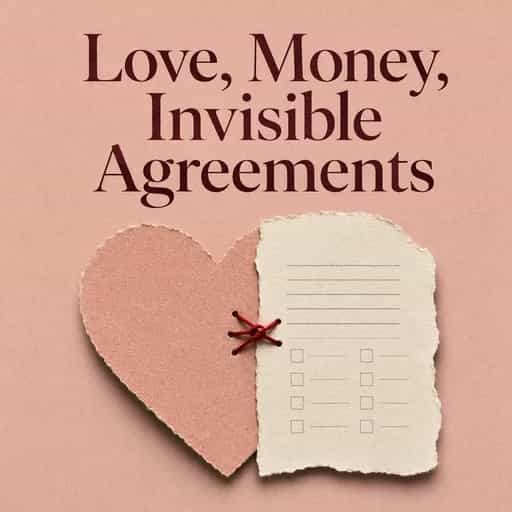
Money for Couples: No More Stress. No More Fights. Just a 10-Step Plan to Create Your Rich Life Together by Ramit Sethi Summary

Overview of Money for Couples
Ramit Sethi's NYT bestseller tackles couples' thorniest money conflicts with life-changing clarity. Featured in Wirecutter's Wedding Gift Guide as "possibly the most important gift," this Webby Award-winner transforms financial conversations from relationship-killers into intimacy builders. What's your money script?
- Ramit Sethi teaches couples to design a shared Rich Life together
- Money for Couples recommends joint accounts with individual spending freedom
- The Conscious Spending Plan automates money into four spending categories
- Couples should start with dreams and experiences not expense tracking spreadsheets
- Both partners should manage money together not just one person
- Have individual accounts but never keep their existence a secret
- Your future is together so your accounts should reflect that philosophy
- Complementary money personalities like spender and saver can strengthen relationships
- Financial incompatibility requires honest conversations about potential separation
- Prioritize joint guilt-free spending over your individual no questions asked money
- Money psychology helps transform finances from stress into connection and possibility
- Chapter nine provides exact account setups to make money work together
About the Author of Money for Couples
Ramit Sethi is the bestselling author of Money for Couples and a leading personal finance expert known for helping people design their "Rich Life." Born in 1982 to Indian immigrant parents, Sethi earned both his bachelor's and master's degrees from Stanford University, studying technology, psychology, and sociology.
His insights on money and relationships stem from over two decades of research and teaching, beginning with his website IWillTeachYouToBeRich.com, which he launched in 2004 while still a student.
Sethi's groundbreaking work includes his New York Times bestseller I Will Teach You To Be Rich, which has guided over a million readers, and his popular podcast where he interviews couples about their financial dynamics. He is also the host of Netflix's How to Get Rich series, which brought his pragmatic, psychology-driven approach to a global audience.
As founder of GrowthLab.com and co-founder of PBworks, Sethi combines entrepreneurial experience with behavioral psychology to help couples navigate money conversations without conflict. His work has been featured in The Wall Street Journal, CNBC, and NPR, establishing him as a trusted voice in relationship finance.
FAQs About Money for Couples
What is Money for Couples by Ramit Sethi about?
Money for Couples by Ramit Sethi is a New York Times bestseller that helps partners navigate money challenges without boring budgets or restrictive plans. The book presents a 10-step program to help couples stop fighting over money, align their financial goals, and design their "Rich Life Vision" together. Sethi combines real-world couple stories from his podcast with practical tools, scripts for difficult conversations, and strategies to create a monthly money meeting you'll actually look forward to.
Who should read Money for Couples by Ramit Sethi?
Money for Couples by Ramit Sethi is ideal for life partners in serious relationships, engaged couples, or newlyweds looking to improve how they handle finances together. The book targets those needing foundational guidance rather than advanced investment strategies. It's particularly valuable for couples struggling with Saver vs. Spender dynamics, avoiding money conversations, or feeling stuck in financial disagreements. Single people preparing for future relationships will also find the frameworks useful.
Is Money for Couples worth reading?
Money for Couples is worth reading if you're seeking to improve financial communication and alignment with your partner rather than advanced investment tactics. The book excels at addressing couple dynamics, providing conversation scripts, and helping partners create shared money values. Reviews praise its emphasis on designing your "Rich Life" together and practical guidance for parents teaching kids about money. However, couples already well-versed in personal finance may find the advice introductory.
Who is Ramit Sethi and why did he write Money for Couples?
Ramit Sethi is a New York Times bestselling author of "I Will Teach You To Be Rich," Netflix star, and personal finance expert who hosts a popular podcast interviewing couples about money. He graduated from Stanford studying technology and psychology, and his blog attracts over 300,000 monthly readers. Sethi wrote Money for Couples drawing on deep experience working with couples to help them navigate the tricky waters of handling money in serious relationships.
What is the Rich Life Vision in Money for Couples?
The Rich Life Vision in Money for Couples is a foundational concept where partners define what truly matters to them and how they want to live together in the future. Ramit Sethi emphasizes starting with what you want to do rather than what you don't want your partner to do. By creating a shared vision—like traveling once yearly or living in safe neighborhoods—couples can orient their finances around their values instead of wasting money on things they don't care about.
What are the 3 couples dynamics Ramit Sethi describes in Money for Couples?
Money for Couples identifies three problematic couples dynamics: Sitcom (partners take jabs at each other to entertain others rather than truly communicating), Chaser/Avoider (one partner pursues financial discussions while the other withdraws), and Innocent Doe/Enabler (one partner pleads ignorance while the other takes all responsibility). For each dynamic, Ramit Sethi provides specific strategies to break dysfunctional patterns, create meaningful communication, and scripts showing what healthy money conversations look like.
How does Money for Couples help stop fighting over money?
Money for Couples helps partners stop fighting by establishing shared "Money Rules" and creating alignment through the Rich Life Vision before tackling spending details. Ramit Sethi explains that without a shared vision, couples spend their lives fighting over pointless expenses like Target trips or grocery lemons. The book provides scripts for navigating touchy conversations about debt, prenups, major purchases, and teaching kids about money, helping couples move from pointing fingers to working toward common goals.
Does Money for Couples by Ramit Sethi require budgeting?
Money for Couples explicitly rejects boring budgets and restrictive spending plans in favor of values-based financial planning. Ramit Sethi's approach focuses on consciously deciding what your rich life looks like and aligning spending accordingly. The program emphasizes using money to live a more adventurous, spontaneous, and generous life together rather than tracking every penny. Couples create Money Rules based on their priorities—like experiences, security, or relationship investments—instead of traditional budget categories.
What is the 10-step plan in Money for Couples?
The 10-step plan in Money for Couples is a structured 10-week program that guides partners from financial frustration to joy. Readers begin by identifying their deeply instilled attitudes about money and how these affect relationships. Partners then design a Rich Life vision together, have frank money conversations, crunch numbers to assess financial health, and create a practical financial plan. The program concludes with establishing monthly money meetings and learning to make financial changes as life evolves.
How does Ramit Sethi recommend setting up bank accounts for couples?
Ramit Sethi recommends in Money for Couples that everyone should have their own individual account with money for no-questions-asked spending on trips or personal purchases. However, he emphasizes that your future should be structurally together, with shared accounts reflecting joint goals. Partners should know roughly how much is in each other's accounts—secrecy is a red flag worth examining. Chapter nine provides the exact simple couples setup for organizing accounts to balance independence with shared financial futures.
What topics does Money for Couples by Ramit Sethi cover?
Money for Couples covers essential financial conversations including paying off debt, signing prenups, saving for major purchases or homes, and teaching children about money. The book addresses reconciling when one partner is the Saver and the other the Spender, getting both partners to participate in finances, and taking control of debt. Ramit Sethi also addresses when financial disagreements indicate fundamental incompatibility and when couples should consider separation, using direct language instead of euphemisms.
What are the criticisms of Money for Couples by Ramit Sethi?
The main criticism of Money for Couples is that individuals or couples already well-versed in personal finance will find much of the advice introductory rather than advanced. The target audience is those needing foundational guidance on communication and shared values. Some reviewers note that Ramit Sethi's conversational and direct style would translate better to audiobook format, making listening a more dynamic experience than reading. Despite these limitations, the book receives praise for its practical frameworks and relationship focus.
Feel the book through the author's voice
Turn knowledge into engaging, example-rich insights
Capture key ideas in a flash for fast learning
Enjoy the book in a fun and engaging way
Key Themes in Money for Couples
Quotes from Money for Couples
Money cannot be delegated to just one person.
Talking about money shouldn't feel weird.
Vulnerability creates connection.
Avoid saying 'budget' (universally hated).
Characters in Money for Couples
Quick Summary Mode - Read or listen to Money for Couples Summary in 8 Minutes

Break down key ideas from Money for Couples into bite-sized takeaways to understand how innovative teams create, collaborate, and grow.

Flash Card Mode - Top 10 Insights from Money for Couples in a Nutshell

Distill Money for Couples into rapid-fire memory cues that highlight key principles of candor, teamwork, and creative resilience.

Fun Mode - Money for Couples Lessons Told Through 24-Min Stories

Experience Money for Couples through vivid storytelling that turns innovation lessons into moments you'll remember and apply.
Personalize Mode - Read or listen to Money for Couples Summary in 0 Minutes

Ask anything, pick the voice, and co-create insights that truly resonate with you.

From Columbia University alumni built in San Francisco
"Instead of endless scrolling, I just hit play on BeFreed. It saves me so much time."


"I never knew where to start with nonfiction—BeFreed’s book lists turned into podcasts gave me a clear path."


"Perfect balance between learning and entertainment. Finished ‘Thinking, Fast and Slow’ on my commute this week."
"Crazy how much I learned while walking the dog. BeFreed = small habits → big gains."
"Reading used to feel like a chore. Now it’s just part of my lifestyle."

"Feels effortless compared to reading. I’ve finished 6 books this month already."
"BeFreed turned my guilty doomscrolling into something that feels productive and inspiring."

"BeFreed turned my commute into learning time. 20-min podcasts are perfect for finishing books I never had time for."
"BeFreed replaced my podcast queue. Imagine Spotify for books — that’s it. 🙌"

"It is great for me to learn something from the book without reading it."
"The themed book list podcasts help me connect ideas across authors—like a guided audio journey."
"Makes me feel smarter every time before going to work"
From Columbia University alumni built in San Francisco
"Instead of endless scrolling, I just hit play on BeFreed. It saves me so much time."
"I never knew where to start with nonfiction—BeFreed’s book lists turned into podcasts gave me a clear path."
"Perfect balance between learning and entertainment. Finished ‘Thinking, Fast and Slow’ on my commute this week."
"Crazy how much I learned while walking the dog. BeFreed = small habits → big gains."
"Reading used to feel like a chore. Now it’s just part of my lifestyle."
"Feels effortless compared to reading. I’ve finished 6 books this month already."
"BeFreed turned my guilty doomscrolling into something that feels productive and inspiring."
"BeFreed turned my commute into learning time. 20-min podcasts are perfect for finishing books I never had time for."
"BeFreed replaced my podcast queue. Imagine Spotify for books — that’s it. 🙌"
"It is great for me to learn something from the book without reading it."
"The themed book list podcasts help me connect ideas across authors—like a guided audio journey."
"Makes me feel smarter every time before going to work"
"Instead of endless scrolling, I just hit play on BeFreed. It saves me so much time."
"I never knew where to start with nonfiction—BeFreed’s book lists turned into podcasts gave me a clear path."
"Perfect balance between learning and entertainment. Finished ‘Thinking, Fast and Slow’ on my commute this week."
"Crazy how much I learned while walking the dog. BeFreed = small habits → big gains."
"Reading used to feel like a chore. Now it’s just part of my lifestyle."
"Feels effortless compared to reading. I’ve finished 6 books this month already."
"BeFreed turned my guilty doomscrolling into something that feels productive and inspiring."
"BeFreed turned my commute into learning time. 20-min podcasts are perfect for finishing books I never had time for."
"BeFreed replaced my podcast queue. Imagine Spotify for books — that’s it. 🙌"
"It is great for me to learn something from the book without reading it."
"The themed book list podcasts help me connect ideas across authors—like a guided audio journey."
"Makes me feel smarter every time before going to work"
"Instead of endless scrolling, I just hit play on BeFreed. It saves me so much time."
"I never knew where to start with nonfiction—BeFreed’s book lists turned into podcasts gave me a clear path."
"Perfect balance between learning and entertainment. Finished ‘Thinking, Fast and Slow’ on my commute this week."
"Crazy how much I learned while walking the dog. BeFreed = small habits → big gains."
"Reading used to feel like a chore. Now it’s just part of my lifestyle."
"Feels effortless compared to reading. I’ve finished 6 books this month already."
"BeFreed turned my guilty doomscrolling into something that feels productive and inspiring."
"BeFreed turned my commute into learning time. 20-min podcasts are perfect for finishing books I never had time for."
"BeFreed replaced my podcast queue. Imagine Spotify for books — that’s it. 🙌"
"It is great for me to learn something from the book without reading it."
"The themed book list podcasts help me connect ideas across authors—like a guided audio journey."
"Makes me feel smarter every time before going to work"

Get the Money for Couples summary as a free PDF or EPUB. Print it or read offline anytime.