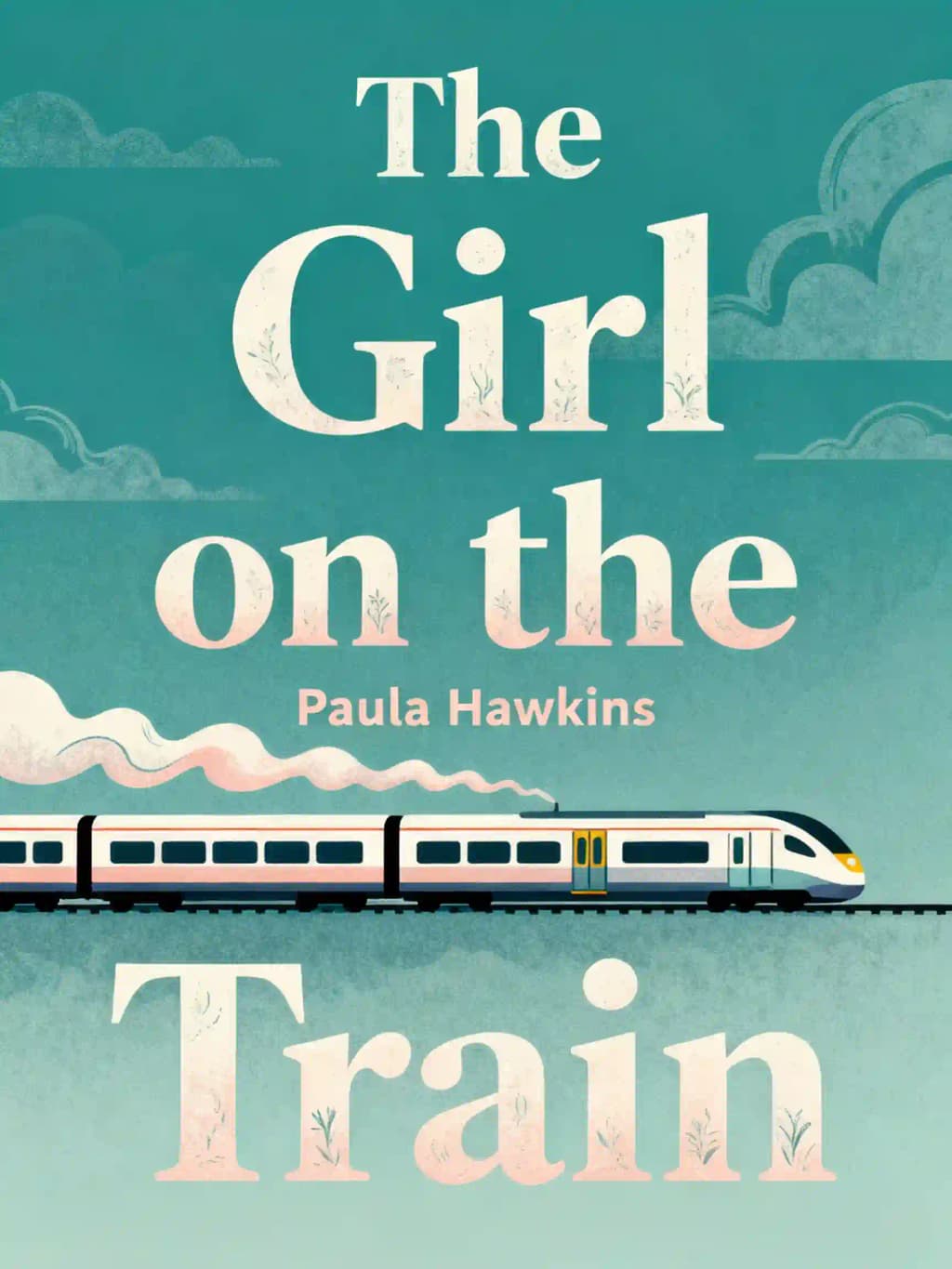
The Girl On the Train
Overview of The Girl On the Train
Witness Rachel's alcoholic haze unravel a chilling mystery that became the fastest-selling adult novel in history. Stephen King and Reese Witherspoon praised this suburban thriller that sparked global conversations about domestic violence. What shocking truth awaits when daily commutes become windows to murder?

Key Themes in The Girl On the Train
- unreliable narration
- domestic gaslighting
- alcoholism and memory
- suburban voyeurism
- repressed trauma
Quotes from The Girl On the Train
I have lost control over everything, even the simplest act of keeping myself alive.
I’m not the girl they think I am.
Hollowness: that I understand. I’m intimately acquainted with hollowness.
I'm not the girl I used to be, but I'm not sure who I am now.
Characters in The Girl On the Train
- Rachel WatsonAn alcoholic commuter with fractured memories
- Megan HipwellA restless woman with a tragic, secret past
- Tom WatsonRachel's ex-husband now married to Anna
- Scott HipwellMegan's devoted but controlling husband
- Anna WatsonTom's new wife and mother of his child
About the Author
About the Author of The Girl On the Train
Paula Hawkins, the British bestselling author of the psychological thriller The Girl on the Train, is renowned for crafting intense narratives exploring memory, deception, and domestic violence.
Born in Rhodesia (now Zimbabwe) and raised in London, Hawkins transitioned from a 15-year journalism career to becoming a global literary phenomenon.
Her debut thriller’s examination of unreliable narration and suburban darkness resonated widely, establishing her expertise in suspense-driven plots with morally ambiguous characters. Hawkins’ subsequent works, including Into the Water and A Slow Fire Burning, further showcase her talent for weaving intricate mysteries anchored in psychological depth.
The Girl on the Train became a cultural landmark, adapted into a 2016 film starring Emily Blunt, with over 23 million copies sold and translations into 50+ languages worldwide.
Download Summary of The Girl On the Train
Get the The Girl On the Train summary as a free PDF or EPUB. Print it or read offline anytime.
FAQs About This Book
The Girl on the Train is a psychological thriller following Rachel Watson, an alcoholic divorcée who becomes obsessed with a missing woman, Megan Hipwell, after witnessing unsettling events from her daily train commute. As Rachel investigates, she uncovers lies, infidelity, and her own fractured memories, blurring reality and illusion. The novel explores addiction, domestic abuse, and the consequences of self-deception.
Fans of twist-driven psychological thrillers like Gone Girl or The Silent Patient will enjoy this book. It appeals to readers interested in unreliable narrators, dark family secrets, and suspenseful pacing. Those exploring themes of alcoholism, gaslighting, or trauma may also find the story gripping.
Yes—it’s a #1 New York Times bestseller praised for its Hitchcockian tension and layered storytelling. The 2016 film adaptation starring Emily Blunt further cemented its cultural relevance. While some criticize its slow start, the novel’s shocking twists and exploration of memory distortion make it a page-turner.
Key themes include addiction’s destructive cycles, the unreliability of memory, and societal perceptions of women. The story critiques voyeurism and the façades of suburban life, exposing hidden violence and manipulation in relationships.
Rachel’s blackouts and fragmented memories create narrative uncertainty, forcing readers to question her credibility. Her addiction isolates her, fuels obsessive behavior, and drives her to insert herself into Megan’s investigation, ultimately leading to confrontation with her abusive ex-husband.
The train symbolizes Rachel’s stagnation and escapism—a repetitive ritual masking her unemployment and grief. It also frames her voyeuristic obsession with “Jess and Jason” (Megan and Scott), reflecting her longing for the life she lost.
“I have never understood how people can blithely disregard the damage they do by following their hearts.”
This line underscores Rachel’s bitterness toward her ex-husband’s infidelity and the novel’s focus on selfishness and betrayal.
Rachel confronts Tom, her abusive ex-husband, after realizing he murdered Megan to hide an affair. She defeats him in a struggle, clears her name, and begins recovery through Alcoholics Anonymous. The ending highlights her shift from passive observer to active survivor.
Both feature unreliable narrators and explore marital deceit, but Hawkins’ novel focuses more on addiction and class dynamics, while Gone Girl satirizes media sensationalism. The Girl on the Train’s slower pacing emphasizes psychological tension over plot-driven twists.
Some readers find the characters unlikeable or the pacing uneven. Others argue Megan’s subplot (involving her therapist) distracts from Rachel’s core narrative. However, its exploration of trauma and gaslighting remains widely praised.
Hawkins’ reporting experience sharpens her ability to craft suspense through fragmented timelines and shifting perspectives. Her research into addiction and abuse adds authenticity to Rachel and Megan’s struggles.
The film condenses subplots and alters Megan’s backstory but retains the novel’s tense atmosphere. Emily Blunt’s portrayal of Rachel earned acclaim for capturing the character’s vulnerability and rage.
Its themes of addiction, domestic violence, and societal judgment of women remain pressing issues. The novel’s critique of “perfect life” façades resonates in the social media age.
Fans might enjoy Hawkins’ Into the Water (small-town secrets) or The Woman in the Window by A.J. Finn (voyeurism and mental health). Gillian Flynn’s Sharp Objects also explores familial trauma and unreliable narration.





