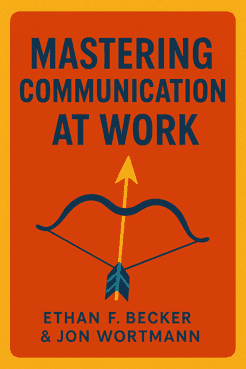
Communication Book: 44 Ideas for Better Conversations Every Day by Mikael Krogerus & Roman Tschäppeler Summary

Overview of Communication Book
Discover the international bestseller that transformed everyday conversations into powerful connections. "The Communication Book" offers 44 practical ideas that business leaders swear by. Ever wonder why some people command attention effortlessly? This compact guide reveals their secrets.
- Replace accusatory "you" statements with "I" language to reduce defensiveness
- Use Aristotle's ethos-pathos-logos triangle to balance credibility, emotion, and logic
- Identify Drama Triangle roles (victim/persecutor/rescuer) to break toxic communication patterns
- Apply Johari Window technique to align self-perception with others' observations
- Master strategic silence to create space for reflection during tense discussions
- Reframe criticism as "here's what I need" statements using positive language
- Lead with vulnerability using Krogerus' reciprocity principle to build trust faster
- Replace assumption ladder with fact-checking questions to prevent misunderstandings
- Optimize praise frequency using the 3:1 positive-negative feedback ratio rule
- Apply negotiation chess strategy by letting counterparts "win" secondary points
- Use Mikael Krogerus' perspective flip technique to validate before problem-solving
- Implement the 4-second pause rule before responding to emotional triggers
About the Author of Communication Book
Mikael Krogerus and Roman Tschäppeler, internationally bestselling authors and communication strategists, co-wrote The Communication Book: 44 Ideas for Better Conversations Every Day as part of their acclaimed smart-thinking series.
Blending psychology, neuroscience, and practical frameworks, the book distills 44 communication models for improving workplace dynamics, relationships, and self-expression. Krogerus, a Finnish-Swedish journalist and former advertising copywriter, pairs with Tschäppeler, a Swiss creative producer, to merge theoretical rigor with accessible visuals—a hallmark of their collaborative works including The Decision Book and The Test Book, both summarized on this site.
Graduates of Denmark’s innovative Kaospilot School, they’ve spent decades refining tools for decisive thinking and effective dialogue, contributing to media outlets like Das Magazin and delivering TEDx talks.
Their books, translated into over 20 languages, are leveraged by professionals and educators worldwide for transforming abstract concepts into actionable strategies. The Communication Book alone has been adopted by corporate training programs and recommended by leadership coaches for its concise, illustration-driven approach to mastering everyday interactions.
FAQs About Communication Book
What is The Communication Book by Mikael Krogerus about?
The Communication Book by Mikael Krogerus and Roman Tschäppeler offers 44 actionable strategies to enhance everyday conversations, covering work, relationships, self-improvement, and language. It blends theoretical frameworks with practical tips, such as using open-ended questions, improving body language, and resolving conflicts. The book emphasizes adaptability, clarity, and empathy across personal and professional interactions.
Who should read The Communication Book?
Professionals, team leaders, and individuals seeking to refine their communication skills will benefit most. It’s ideal for those navigating workplace negotiations, improving personal relationships, or mastering public speaking. The concise, structured advice also suits busy readers wanting quick, applicable insights.
Is The Communication Book worth reading?
Yes, its succinct, research-backed strategies—like using “I” statements and active listening—make it a valuable resource. The book’s focus on real-world applications, such as conflict resolution and effective meetings, ensures practicality. Readers praise its ability to transform abstract theories into actionable steps.
What are the key communication strategies in The Communication Book?
Key ideas include:
- Prioritizing open-ended questions to foster deeper dialogue.
- Leveraging body language and tone to reinforce messages.
- Using feedback loops to adjust communication dynamically.
- Applying the “advice-seeking” tactic to build rapport quickly. These methods aim to reduce misunderstandings and enhance collaboration.
How does The Communication Book address nonverbal communication?
The authors stress that posture, eye contact, and facial expressions often convey more than words. For example, mirroring others’ gestures can build trust, while avoiding crossed arms signals openness. These nonverbal cues are framed as critical for aligning intent with perception.
What role does empathy play in The Communication Book?
Empathy is central to resolving conflicts and fostering connections. The book advises understanding others’ perspectives through active listening and reframing statements like “You’re wrong” into “Help me understand.” This approach minimizes defensiveness and promotes mutual respect.
How can The Communication Book improve workplace meetings?
It recommends banning smartphones, using timers, and standing meetings to boost efficiency. The authors also advocate for clear agendas and assigning roles (e.g., “devil’s advocate”) to ensure productive discussions. These tactics aim to reduce distractions and encourage accountability.
Does The Communication Book discuss conflict resolution?
Yes, it offers frameworks for navigating disagreements by focusing on shared goals rather than differences. Techniques include separating the issue from the person, using neutral language, and seeking win-win outcomes. The goal is to transform conflicts into opportunities for collaboration.
What are notable quotes from The Communication Book?
- “Ask for advice—people love giving it.” This builds intimacy and reduces resistance.
- “Silence is a weapon.” Pauses encourage reflection and prevent rushed decisions.
- “The medium is the message.” Channels (e.g., email vs. face-to-face) shape perceptions.
How does The Communication Book approach cultural differences in communication?
While not a focus, it acknowledges introverted vs. extroverted tendencies (e.g., Finnish reservedness) and advises adapting styles to audience preferences. Tips include observing social norms and adjusting formality based on context.
What criticisms exist about The Communication Book?
Some readers note its brevity limits depth on complex topics like cultural nuances. However, its strength lies in distilling essentials, making it more a quick-reference guide than an exhaustive manual.
How does The Communication Book compare to other communication guides?
Unlike theoretical textbooks, it prioritizes brevity and immediacy. Similar to Crucial Conversations but with a stronger focus on everyday interactions. Its unique structure—44 micro-lessons—appeals to those seeking actionable takeaways over abstract concepts.
Feel the book through the author's voice
Turn knowledge into engaging, example-rich insights
Capture key ideas in a flash for fast learning
Enjoy the book in a fun and engaging way
Key Themes in Communication Book
Quotes from Communication Book
We value what's rare or diminishing in availability.
Meetings dominate modern work life, yet they remain mysterious rituals.
Great leaders evaluate work rigorously but go easy on personal criticism.
Complimenting ordinary performance actually lowers standards.
Characters in Communication Book
Quick Summary Mode - Read or listen to Communication Book Summary in 9 Minutes

Break down key ideas from Communication Book into bite-sized takeaways to understand how innovative teams create, collaborate, and grow.

Flash Card Mode - Top 7 Insights from Communication Book in a Nutshell

Distill Communication Book into rapid-fire memory cues that highlight key principles of candor, teamwork, and creative resilience.

Fun Mode - Communication Book Lessons Told Through 22-Min Stories

Experience Communication Book through vivid storytelling that turns innovation lessons into moments you'll remember and apply.
Personalize Mode - Read or listen to Communication Book Summary in 0 Minutes

Ask anything, pick the voice, and co-create insights that truly resonate with you.

From Columbia University alumni built in San Francisco
"Instead of endless scrolling, I just hit play on BeFreed. It saves me so much time."


"I never knew where to start with nonfiction—BeFreed’s book lists turned into podcasts gave me a clear path."


"Perfect balance between learning and entertainment. Finished ‘Thinking, Fast and Slow’ on my commute this week."
"Crazy how much I learned while walking the dog. BeFreed = small habits → big gains."
"Reading used to feel like a chore. Now it’s just part of my lifestyle."

"Feels effortless compared to reading. I’ve finished 6 books this month already."
"BeFreed turned my guilty doomscrolling into something that feels productive and inspiring."

"BeFreed turned my commute into learning time. 20-min podcasts are perfect for finishing books I never had time for."
"BeFreed replaced my podcast queue. Imagine Spotify for books — that’s it. 🙌"

"It is great for me to learn something from the book without reading it."
"The themed book list podcasts help me connect ideas across authors—like a guided audio journey."
"Makes me feel smarter every time before going to work"
From Columbia University alumni built in San Francisco
"Instead of endless scrolling, I just hit play on BeFreed. It saves me so much time."
"I never knew where to start with nonfiction—BeFreed’s book lists turned into podcasts gave me a clear path."
"Perfect balance between learning and entertainment. Finished ‘Thinking, Fast and Slow’ on my commute this week."
"Crazy how much I learned while walking the dog. BeFreed = small habits → big gains."
"Reading used to feel like a chore. Now it’s just part of my lifestyle."
"Feels effortless compared to reading. I’ve finished 6 books this month already."
"BeFreed turned my guilty doomscrolling into something that feels productive and inspiring."
"BeFreed turned my commute into learning time. 20-min podcasts are perfect for finishing books I never had time for."
"BeFreed replaced my podcast queue. Imagine Spotify for books — that’s it. 🙌"
"It is great for me to learn something from the book without reading it."
"The themed book list podcasts help me connect ideas across authors—like a guided audio journey."
"Makes me feel smarter every time before going to work"
"Instead of endless scrolling, I just hit play on BeFreed. It saves me so much time."
"I never knew where to start with nonfiction—BeFreed’s book lists turned into podcasts gave me a clear path."
"Perfect balance between learning and entertainment. Finished ‘Thinking, Fast and Slow’ on my commute this week."
"Crazy how much I learned while walking the dog. BeFreed = small habits → big gains."
"Reading used to feel like a chore. Now it’s just part of my lifestyle."
"Feels effortless compared to reading. I’ve finished 6 books this month already."
"BeFreed turned my guilty doomscrolling into something that feels productive and inspiring."
"BeFreed turned my commute into learning time. 20-min podcasts are perfect for finishing books I never had time for."
"BeFreed replaced my podcast queue. Imagine Spotify for books — that’s it. 🙌"
"It is great for me to learn something from the book without reading it."
"The themed book list podcasts help me connect ideas across authors—like a guided audio journey."
"Makes me feel smarter every time before going to work"
"Instead of endless scrolling, I just hit play on BeFreed. It saves me so much time."
"I never knew where to start with nonfiction—BeFreed’s book lists turned into podcasts gave me a clear path."
"Perfect balance between learning and entertainment. Finished ‘Thinking, Fast and Slow’ on my commute this week."
"Crazy how much I learned while walking the dog. BeFreed = small habits → big gains."
"Reading used to feel like a chore. Now it’s just part of my lifestyle."
"Feels effortless compared to reading. I’ve finished 6 books this month already."
"BeFreed turned my guilty doomscrolling into something that feels productive and inspiring."
"BeFreed turned my commute into learning time. 20-min podcasts are perfect for finishing books I never had time for."
"BeFreed replaced my podcast queue. Imagine Spotify for books — that’s it. 🙌"
"It is great for me to learn something from the book without reading it."
"The themed book list podcasts help me connect ideas across authors—like a guided audio journey."
"Makes me feel smarter every time before going to work"

Get the Communication Book summary as a free PDF or EPUB. Print it or read offline anytime.