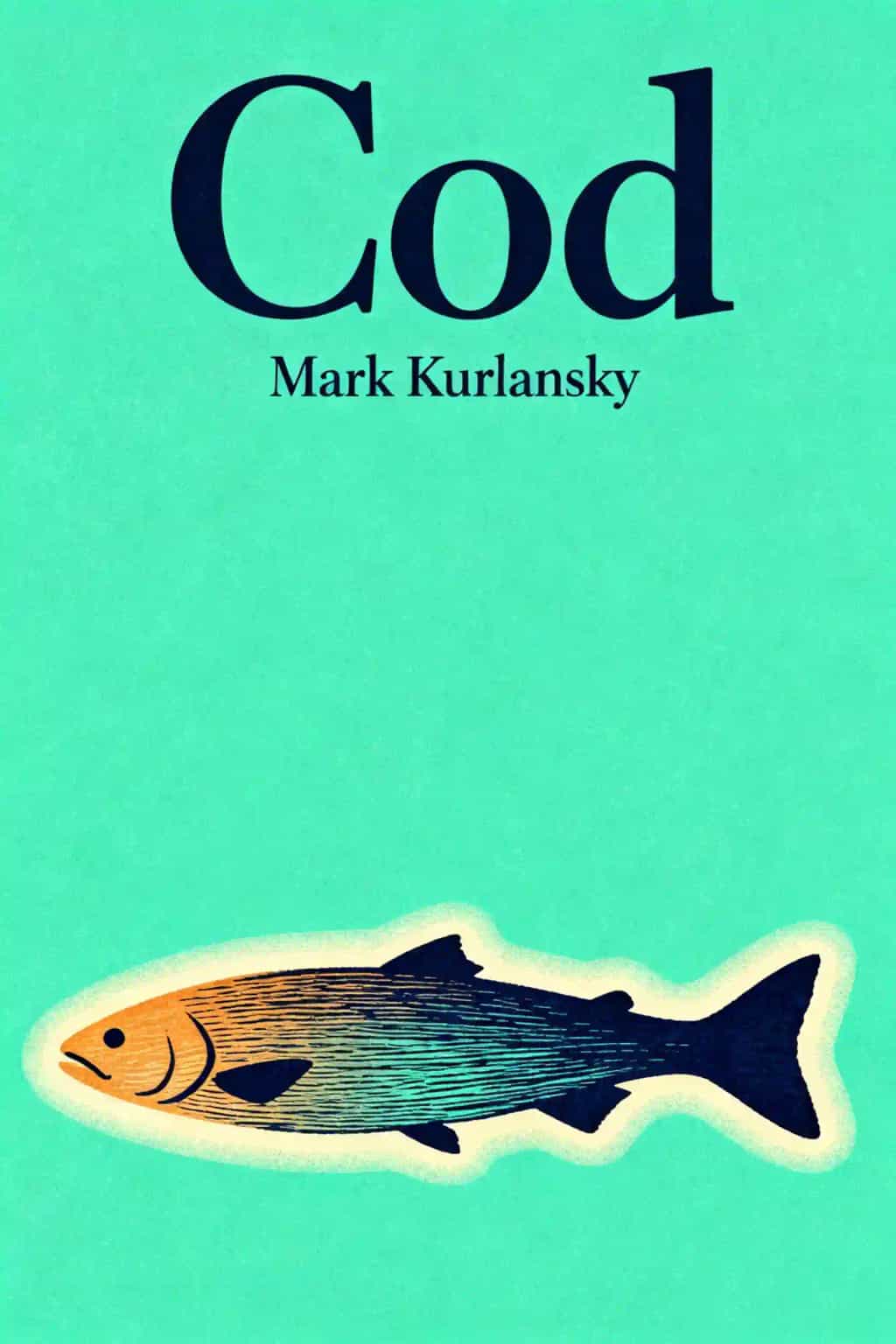

Overview of Cod
How a humble fish shaped civilization: "Cod" reveals the species that funded empires, fed Vikings, and discovered America. Praised by David McCullough as "pure delight," this ecological fable asks: could our oceans' most influential creature disappear forever?
- Cod’s salted legacy enabled transatlantic exploration by preserving food for long voyages.
- Overfishing driven by profit collapsed cod stocks despite centuries of abundance.
- The Cod Wars reshaped maritime law as nations fought dwindling fishing zones.
- Mark Kurlansky traces cod’s role in slavery, wars, and colonial expansion.
- Viking voyages to Newfoundland relied on dried cod as a protein staple.
- Industrial trawlers and frozen food tech turned cod from staple to scarcity.
- Catholic fasting traditions elevated salted cod as a dietary and economic force.
- Iceland’s cod conservation laws pioneered modern sustainable fishing practices.
- Cod recipes spanning 1,000 years reveal its cultural and culinary paradox.
- The “cod diaspora” shaped New England, Caribbean, and European trade routes.
- Erik the Red’s cod-driven settlement foreshadowed ecological exploitation patterns.
- Cod warns that human ingenuity often accelerates natural resource depletion.
About the Author of Cod
Mark Kurlansky, bestselling author of Cod: A Biography of the Fish That Changed the World, is celebrated for weaving meticulous historical research with compelling narratives centered on everyday subjects. Born in Hartford, Connecticut, in 1948, Kurlansky began his career as a playwright and journalist, serving as a foreign correspondent for The International Herald Tribune and The Miami Herald before turning to nonfiction.
His exploration of cod’s profound impact on global trade, environmental sustainability, and cultural identity reflects his signature approach of using singular lenses to unpack complex histories.
A prolific writer with 39 books spanning nonfiction, fiction, and children’s literature, Kurlansky’s works like Salt: A World History and 1968: The Year That Rocked the World similarly illuminate overlooked facets of human civilization. Recognized with the James Beard Award and the Dayton Literary Peace Prize, his books have been translated into over 30 languages. Cod remains an international bestseller, praised for blending gastronomy, ecology, and economics into a groundbreaking narrative that has sold millions of copies worldwide.
FAQs About Cod
What is Cod: A Biography of the Fish That Changed the World about?
Cod explores the 1,000-year history of how a single fish shaped global economies, fueled wars, and influenced culinary traditions. Mark Kurlansky traces cod’s role in Viking expeditions, colonial conflicts, and modern industrial fishing, while warning of ecological collapse from overexploitation. The book blends history, gastronomy, and environmentalism to reveal humanity’s complex relationship with natural resources.
Who should read Cod by Mark Kurlansky?
History enthusiasts, foodies, and environmental advocates will find this book compelling. Its interdisciplinary approach appeals to readers interested in how natural resources drive geopolitical shifts, as well as those curious about sustainable fishing practices. Educators and students studying ecological history or marine biology also benefit from its detailed case studies.
Is Cod by Mark Kurlansky worth reading?
Yes—Cod offers a gripping narrative that transforms a mundane subject into a lens for understanding globalization and environmental stewardship. Kurlansky’s blend of anecdotes, recipes, and historical analysis (like salted cod’s role in the slave trade) makes it both informative and engaging. Its cautionary message about overfishing remains critically relevant today.
What are the main themes in Cod?
- Resource-driven conflict: Cod wars between Iceland and Britain.
- Culinary legacy: How preserved cod fed explorers, enslaved people, and European armies.
- Ecological hubris: The collapse of Newfoundland’s fisheries in the 1990s.
- Technological impact: How trawlers and sonar exacerbated overfishing.
How does Cod explain the Basques’ role in fishing history?
Kurlansky credits Basque fishermen as pioneers of Atlantic cod exploitation, using salt preservation to create a tradable commodity. Their secrecy about North American fishing grounds preceded Columbus’s voyages, shaping early European colonization and trade networks.
What critiques exist about Cod?
Some reviewers note the book’s narrow focus on Western perspectives and its limited analysis of Indigenous fishing practices. Others praise its accessibility but argue it oversimplifies complex geopolitical events linked to cod, such as the American Revolution.
How does Cod relate to Mark Kurlansky’s other works?
Like Salt and The Basque History of the World, Cod uses a microhistorical lens to explore how mundane subjects shape civilizations. Kurlansky’s signature blend of cultural storytelling and environmental advocacy unites his bibliography.
What iconic quotes appear in Cod?
- “The cod fishery has been the very life of New England”—John Adams, highlighting cod’s economic importance.
- “The Vikings’ path to immortality was paved with cod”—linking Norse exploration to dried cod provisions.
How does Cod address modern sustainability issues?
The book condemns industrialized fishing’s short-term greed, exemplified by Canada’s 1992 cod moratorium. Kurlansky argues for balanced harvesting and traditional methods, warning that ignoring ecological limits risks irreversible marine collapse.
What lessons can businesses learn from Cod?
- Adaptation: Basque and Viking survival tied to cod innovation.
- Resource management: Overreliance on technology without sustainability planning leads to collapse.
- Cultural preservation: Recipes like bacalao reflect cod’s enduring legacy despite scarcity.
How does Cod compare to The Secret Life of Lobsters?
While both explore marine species’ cultural impact, Cod emphasizes historical sweep and ecological warnings, whereas The Secret Life of Lobsters focuses on contemporary fishery science and community resilience. They complement each other for readers interested in oceanic ecosystems.
Why is Cod still relevant in 2025?
With climate change accelerating ocean acidification and overfishing, Cod’s lessons about resource exploitation resonate strongly. Its stories of collapsed fisheries serve as urgent metaphors for managing modern water, energy, and food systems.
Feel the book through the author's voice
Turn knowledge into engaging, example-rich insights
Capture key ideas in a flash for fast learning
Enjoy the book in a fun and engaging way
Key Themes in Cod
Quotes from Cod
The history of cod is the history of the North Atlantic.
The French gabelle (salt tax) was so hated it became a grievance leading to the French Revolution.
The Basques preferred secrecy over glory.
Cod offer little resistance when caught, simply rising to the surface like waterlogged pillows.
The cod is also remarkably efficient as food-nearly every part is consumable.
Characters in Cod
Quick Summary Mode - Read or listen to Cod Summary in 9 Minutes

Break down key ideas from Cod into bite-sized takeaways to understand how innovative teams create, collaborate, and grow.

Flash Card Mode - Top 10 Insights from Cod in a Nutshell

Distill Cod into rapid-fire memory cues that highlight key principles of candor, teamwork, and creative resilience.

Fun Mode - Cod Lessons Told Through 25-Min Stories

Experience Cod through vivid storytelling that turns innovation lessons into moments you'll remember and apply.
Personalize Mode - Read or listen to Cod Summary in 0 Minutes

Ask anything, pick the voice, and co-create insights that truly resonate with you.

From Columbia University alumni built in San Francisco
"Instead of endless scrolling, I just hit play on BeFreed. It saves me so much time."


"I never knew where to start with nonfiction—BeFreed’s book lists turned into podcasts gave me a clear path."


"Perfect balance between learning and entertainment. Finished ‘Thinking, Fast and Slow’ on my commute this week."
"Crazy how much I learned while walking the dog. BeFreed = small habits → big gains."
"Reading used to feel like a chore. Now it’s just part of my lifestyle."

"Feels effortless compared to reading. I’ve finished 6 books this month already."
"BeFreed turned my guilty doomscrolling into something that feels productive and inspiring."

"BeFreed turned my commute into learning time. 20-min podcasts are perfect for finishing books I never had time for."
"BeFreed replaced my podcast queue. Imagine Spotify for books — that’s it. 🙌"

"It is great for me to learn something from the book without reading it."
"The themed book list podcasts help me connect ideas across authors—like a guided audio journey."
"Makes me feel smarter every time before going to work"
From Columbia University alumni built in San Francisco
"Instead of endless scrolling, I just hit play on BeFreed. It saves me so much time."
"I never knew where to start with nonfiction—BeFreed’s book lists turned into podcasts gave me a clear path."
"Perfect balance between learning and entertainment. Finished ‘Thinking, Fast and Slow’ on my commute this week."
"Crazy how much I learned while walking the dog. BeFreed = small habits → big gains."
"Reading used to feel like a chore. Now it’s just part of my lifestyle."
"Feels effortless compared to reading. I’ve finished 6 books this month already."
"BeFreed turned my guilty doomscrolling into something that feels productive and inspiring."
"BeFreed turned my commute into learning time. 20-min podcasts are perfect for finishing books I never had time for."
"BeFreed replaced my podcast queue. Imagine Spotify for books — that’s it. 🙌"
"It is great for me to learn something from the book without reading it."
"The themed book list podcasts help me connect ideas across authors—like a guided audio journey."
"Makes me feel smarter every time before going to work"
"Instead of endless scrolling, I just hit play on BeFreed. It saves me so much time."
"I never knew where to start with nonfiction—BeFreed’s book lists turned into podcasts gave me a clear path."
"Perfect balance between learning and entertainment. Finished ‘Thinking, Fast and Slow’ on my commute this week."
"Crazy how much I learned while walking the dog. BeFreed = small habits → big gains."
"Reading used to feel like a chore. Now it’s just part of my lifestyle."
"Feels effortless compared to reading. I’ve finished 6 books this month already."
"BeFreed turned my guilty doomscrolling into something that feels productive and inspiring."
"BeFreed turned my commute into learning time. 20-min podcasts are perfect for finishing books I never had time for."
"BeFreed replaced my podcast queue. Imagine Spotify for books — that’s it. 🙌"
"It is great for me to learn something from the book without reading it."
"The themed book list podcasts help me connect ideas across authors—like a guided audio journey."
"Makes me feel smarter every time before going to work"
"Instead of endless scrolling, I just hit play on BeFreed. It saves me so much time."
"I never knew where to start with nonfiction—BeFreed’s book lists turned into podcasts gave me a clear path."
"Perfect balance between learning and entertainment. Finished ‘Thinking, Fast and Slow’ on my commute this week."
"Crazy how much I learned while walking the dog. BeFreed = small habits → big gains."
"Reading used to feel like a chore. Now it’s just part of my lifestyle."
"Feels effortless compared to reading. I’ve finished 6 books this month already."
"BeFreed turned my guilty doomscrolling into something that feels productive and inspiring."
"BeFreed turned my commute into learning time. 20-min podcasts are perfect for finishing books I never had time for."
"BeFreed replaced my podcast queue. Imagine Spotify for books — that’s it. 🙌"
"It is great for me to learn something from the book without reading it."
"The themed book list podcasts help me connect ideas across authors—like a guided audio journey."
"Makes me feel smarter every time before going to work"

Get the Cod summary as a free PDF or EPUB. Print it or read offline anytime.


