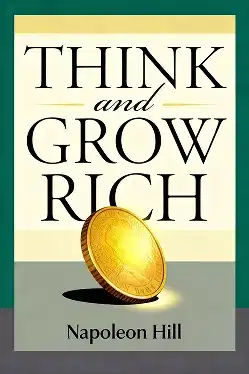
Overview of Think and Grow Rich
Discover the Depression-era masterpiece that sold 20 million copies worldwide. Napoleon Hill's principles transformed countless lives, including business titans like Henry Ford. Even today, this controversial blueprint for wealth creation remains the secret weapon of ambitious entrepreneurs everywhere.
- Definite purpose precedes riches—vague goals breed financial stagnation.
- Auto-suggestion shapes reality: visualize wealth daily to reprogram subconscious drives.
- Persistence outweighs talent—consistent action breaks resistance’s grip.
- Mastermind alliances amplify success: surrounding yourself with experts accelerates goal attainment.
- Specialized knowledge + organized planning > general intelligence in wealth creation.
- Burning desire transcends fear: obsession with your “why” overcomes obstacles.
- Indecision attracts failure—Napoleon Hill’s 500 interviewees shared decisive urgency.
- Faith in unseen outcomes activates subconscious problem-solving for financial breakthroughs.
- Procrastination reflects weak desire: Hill’s “definite chief aim” formula kills delays.
- Money magnetism starts with giving value first—riches follow service excellence.
- Brain as “broadcasting station”: focused thoughts attract opportunities and resources.
- Ego dissolution for wealth: Hill’s success blueprint requires cooperative leadership.
About the Author of Think and Grow Rich
Napoleon Hill (1883–1970), the pioneering self-help author of Think and Grow Rich, dedicated over two decades to studying the habits of successful individuals like Andrew Carnegie and Thomas Edison.
Born into poverty in Virginia, Hill’s work bridges practical success strategies and mindset development, crystallizing his research into 13 principles that include desire, faith, and organized planning.
A cornerstone of the personal development genre, Think and Grow Rich builds upon his earlier 1928 work The Law of Success, which outlined 16 foundational laws of achievement. Hill’s philosophy emphasizes the subconscious mind’s power and collaborative mastermind groups as keys to unlocking prosperity.
With over 20 million copies sold worldwide, this enduring classic continues to influence entrepreneurs and motivators, cementing Hill’s legacy as a foundational voice in success literature.
FAQs About Think and Grow Rich
What is Think and Grow Rich by Napoleon Hill about?
Think and Grow Rich by Napoleon Hill is a foundational self-help book outlining 13 principles for achieving wealth and success through mindset shifts. It emphasizes desire, faith, specialized knowledge, and persistence, arguing that mental discipline and a "Master Mind" alliance are critical to transforming ambitions into reality.
Who should read Think and Grow Rich?
The book targets anyone seeking personal or professional growth, particularly entrepreneurs and individuals pursuing financial independence. Its principles on goal-setting, resilience, and strategic planning resonate with readers aiming to cultivate a success-oriented mindset.
Is Think and Grow Rich worth reading?
Yes—its timeless strategies on mindset and action have influenced generations. The book’s focus on psychological empowerment over mere tactics makes it a staple for those prioritizing long-term success. Over 100 million copies sold underscore its enduring relevance.
What are the 13 principles in Think and Grow Rich?
Napoleon Hill’s 13 steps to riches include:
- Desire: Cultivate a burning ambition.
- Faith: Believe unwaveringly in your goal.
- Autosuggestion: Use affirmations to reprogram your mind.
- Specialized Knowledge: Acquire niche expertise.
- Imagination: Visualize success.
- Organized Planning: Create actionable steps.
- Decision: Avoid procrastination.
- Persistence: Overcome setbacks.
- Master Mind: Build a supportive network.
- Sex Transmutation: Redirect creative energy.
- Subconscious Mind: Leverage inner intuition.
- The Brain: Think strategically.
- Sixth Sense: Trust gut instincts.
How does the Master Mind principle work in Think and Grow Rich?
The "Master Mind" involves forming a group of like-minded individuals who collaborate to achieve shared goals. Hill argues collective intelligence and accountability accelerate success by merging diverse expertise and motivation.
What is sex transmutation in Think and Grow Rich?
Sex transmutation redirects sexual energy into creative or productive pursuits, channeling primal drive into ambition. Hill posits this focus enhances determination and clarity, fueling progress toward wealth.
How important is imagination in Think and Grow Rich?
Imagination is pivotal for visualizing goals and innovating solutions. Hill distinguishes synthetic imagination (rearranging existing ideas) from creative imagination (generating original concepts), both essential for problem-solving and growth.
What role does the subconscious mind play in Think and Grow Rich?
The subconscious mind acts as a bridge between desire and reality, storing beliefs and habits. Hill advises feeding it positive affirmations to align subconscious patterns with conscious goals, enabling automatic, success-driven behavior.
How does Think and Grow Rich compare to Rich Dad Poor Dad?
While both address wealth-building, Think and Grow Rich focuses on mindset and psychological principles, whereas Rich Dad Poor Dad emphasizes financial literacy and investment strategies. Hill’s work is more philosophical, while Kiyosaki’s is tactical.
What are key quotes from Think and Grow Rich and their meanings?
- “Whatever the mind can conceive and believe, it can achieve”: Highlights the power of belief in manifesting goals.
- “Set your mind on a definite goal and observe how quickly the world stands aside to let you pass”: Stresses unwavering focus.
How to apply Think and Grow Rich principles in real life?
- Write goals daily to reinforce desire.
- Join a Master Mind group for accountability.
- Use autosuggestion (e.g., affirmations) to build faith.
- Develop specialized skills through continuous learning.
Why is Think and Grow Rich still relevant today?
Its emphasis on mindset, adaptability, and resilience aligns with modern challenges like career pivots and entrepreneurship. Updated editions referencing figures like Bill Gates keep its lessons fresh for 21st-century readers.
Feel the book through the author's voice
Turn knowledge into engaging, example-rich insights
Capture key ideas in a flash for fast learning
Enjoy the book in a fun and engaging way
Key Themes in Think and Grow Rich
Quotes from Think and Grow Rich
Thoughts are things, and powerful things at that, when mixed with definiteness of purpose, persistence, and a burning desire for their translation into riches, or other material objects.
There is no substitute for persistence. The person who makes persistence his watch-word, discovers that "Old Man Failure" finally becomes tired, and makes his departure.
Wishing will not bring riches. But desiring with a state of mind that becomes an obsession, then planning definite ways and means to acquire riches, and backing those plans with persistence which does not recognize failure, will bring riches.
More gold has been mined from the thoughts of men than has ever been taken from the earth.
Characters in Think and Grow Rich
Quick Summary Mode - Read or listen to Think and Grow Rich Summary in 9 Minutes

Break down key ideas from Think and Grow Rich into bite-sized takeaways to understand how innovative teams create, collaborate, and grow.

Flash Card Mode - Top 11 Insights from Think and Grow Rich in a Nutshell

Distill Think and Grow Rich into rapid-fire memory cues that highlight key principles of candor, teamwork, and creative resilience.

Fun Mode - Think and Grow Rich Lessons Told Through 23-Min Stories

Experience Think and Grow Rich through vivid storytelling that turns innovation lessons into moments you'll remember and apply.
Personalize Mode - Read or listen to Think and Grow Rich Summary in 0 Minutes

Ask anything, pick the voice, and co-create insights that truly resonate with you.

From Columbia University alumni built in San Francisco
"Instead of endless scrolling, I just hit play on BeFreed. It saves me so much time."


"I never knew where to start with nonfiction—BeFreed’s book lists turned into podcasts gave me a clear path."


"Perfect balance between learning and entertainment. Finished ‘Thinking, Fast and Slow’ on my commute this week."
"Crazy how much I learned while walking the dog. BeFreed = small habits → big gains."
"Reading used to feel like a chore. Now it’s just part of my lifestyle."

"Feels effortless compared to reading. I’ve finished 6 books this month already."
"BeFreed turned my guilty doomscrolling into something that feels productive and inspiring."

"BeFreed turned my commute into learning time. 20-min podcasts are perfect for finishing books I never had time for."
"BeFreed replaced my podcast queue. Imagine Spotify for books — that’s it. 🙌"

"It is great for me to learn something from the book without reading it."
"The themed book list podcasts help me connect ideas across authors—like a guided audio journey."
"Makes me feel smarter every time before going to work"
From Columbia University alumni built in San Francisco
"Instead of endless scrolling, I just hit play on BeFreed. It saves me so much time."
"I never knew where to start with nonfiction—BeFreed’s book lists turned into podcasts gave me a clear path."
"Perfect balance between learning and entertainment. Finished ‘Thinking, Fast and Slow’ on my commute this week."
"Crazy how much I learned while walking the dog. BeFreed = small habits → big gains."
"Reading used to feel like a chore. Now it’s just part of my lifestyle."
"Feels effortless compared to reading. I’ve finished 6 books this month already."
"BeFreed turned my guilty doomscrolling into something that feels productive and inspiring."
"BeFreed turned my commute into learning time. 20-min podcasts are perfect for finishing books I never had time for."
"BeFreed replaced my podcast queue. Imagine Spotify for books — that’s it. 🙌"
"It is great for me to learn something from the book without reading it."
"The themed book list podcasts help me connect ideas across authors—like a guided audio journey."
"Makes me feel smarter every time before going to work"
"Instead of endless scrolling, I just hit play on BeFreed. It saves me so much time."
"I never knew where to start with nonfiction—BeFreed’s book lists turned into podcasts gave me a clear path."
"Perfect balance between learning and entertainment. Finished ‘Thinking, Fast and Slow’ on my commute this week."
"Crazy how much I learned while walking the dog. BeFreed = small habits → big gains."
"Reading used to feel like a chore. Now it’s just part of my lifestyle."
"Feels effortless compared to reading. I’ve finished 6 books this month already."
"BeFreed turned my guilty doomscrolling into something that feels productive and inspiring."
"BeFreed turned my commute into learning time. 20-min podcasts are perfect for finishing books I never had time for."
"BeFreed replaced my podcast queue. Imagine Spotify for books — that’s it. 🙌"
"It is great for me to learn something from the book without reading it."
"The themed book list podcasts help me connect ideas across authors—like a guided audio journey."
"Makes me feel smarter every time before going to work"
"Instead of endless scrolling, I just hit play on BeFreed. It saves me so much time."
"I never knew where to start with nonfiction—BeFreed’s book lists turned into podcasts gave me a clear path."
"Perfect balance between learning and entertainment. Finished ‘Thinking, Fast and Slow’ on my commute this week."
"Crazy how much I learned while walking the dog. BeFreed = small habits → big gains."
"Reading used to feel like a chore. Now it’s just part of my lifestyle."
"Feels effortless compared to reading. I’ve finished 6 books this month already."
"BeFreed turned my guilty doomscrolling into something that feels productive and inspiring."
"BeFreed turned my commute into learning time. 20-min podcasts are perfect for finishing books I never had time for."
"BeFreed replaced my podcast queue. Imagine Spotify for books — that’s it. 🙌"
"It is great for me to learn something from the book without reading it."
"The themed book list podcasts help me connect ideas across authors—like a guided audio journey."
"Makes me feel smarter every time before going to work"

Get the Think and Grow Rich summary as a free PDF or EPUB. Print it or read offline anytime.