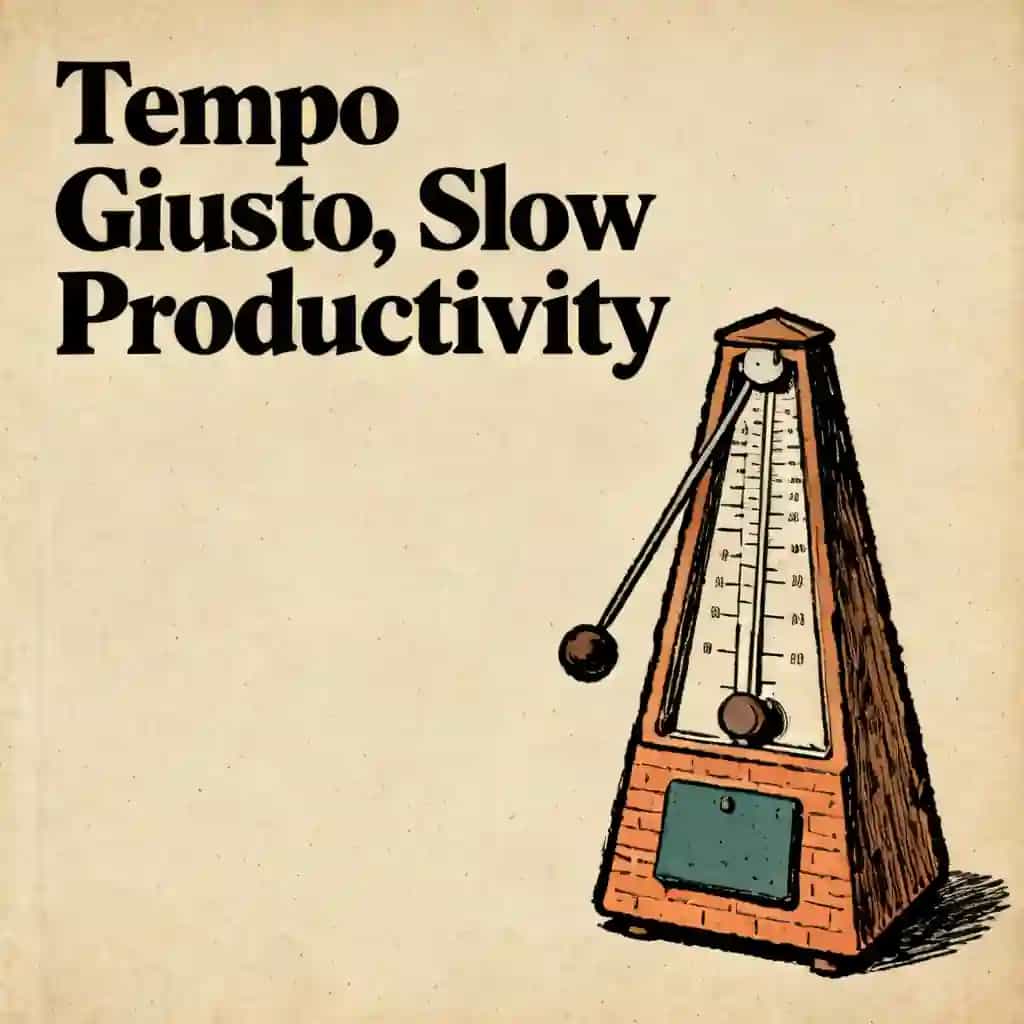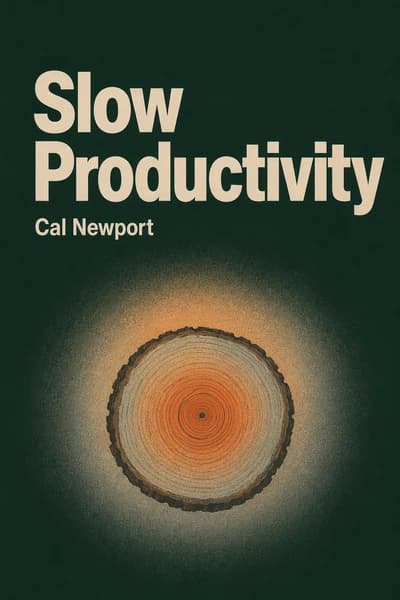
In "Slow Productivity," Cal Newport challenges our frantic work culture with a revolutionary approach: do less, work naturally, and obsess over quality. Like the Slow Food movement, it's sparking a cultural shift that even inspired the Beatles' most iconic album. Ready to stop the burnout cycle?
Cal Newport, bestselling author of Slow Productivity: The Lost Art of Accomplishment Without Burnout, is a Georgetown University computer science professor and leading voice in productivity and work culture. His book blends practical strategies with cultural critique, challenging modern hustle mentalities by advocating for sustainable, quality-focused work rhythms—themes informed by his academic research on distributed systems and digital ethics.
Newport’s expertise spans eight books, including Deep Work (a New York Times bestseller) and Digital Minimalism, which have collectively sold over 2 million copies worldwide and been translated into 40+ languages.
He expands his reach through the Deep Questions podcast, a weekly newsletter with 100,000+ subscribers, and contributions to The New Yorker.
A MIT-trained scholar, Newport’s work is frequently cited in executive education programs and tech-industry discussions about balancing productivity with well-being. His 2012 New York Times op-ed on passionless career success remains one of the paper’s most-emailed articles.
Slow Productivity challenges modern "pseudo-productivity" by advocating for three principles: doing fewer tasks, working at a natural pace, and prioritizing quality over speed. Drawing from historical figures like Jane Austen and Isaac Newton, Newport argues that sustainable achievement comes from focused effort, seasonal work rhythms, and rejecting burnout-inducing busyness. The book blends cultural critique with actionable strategies for redefining productivity in knowledge work.
Professionals overwhelmed by constant busyness, managers seeking sustainable team workflows, and creatives struggling with burnout will find this book transformative. It’s particularly relevant for remote workers, freelancers, and anyone questioning hustle culture. Newport’s research-backed approach appeals to readers of Deep Work and Atomic Habits seeking a humane alternative to industrial-era productivity norms.
Yes—Newport’s framework combats burnout by redefining success through timeless principles rather than frantic activity. Critics praise its blend of historical analysis (e.g., Galileo’s project pacing) and modern applications like email management. While some find its rejection of hustle culture idealistic, the step-by-step guidance on workload reduction and seasonal planning offers practical value.
Unlike efficiency-focused systems (e.g., Getting Things Done), slow productivity rejects busyness as a success metric. Instead of maximizing output, it emphasizes deliberate project selection, restorative downtime, and mastery—mirroring how historical innovators like Georgia O’Keeffe sustained creativity without burnout.
Absolutely. Newport suggests tactics like “autopilot scheduling” for admin tasks (e.g., fixed email hours) and project “queues” to prevent overload. Remote teams can adopt asynchronous communication and seasonal goals to reduce meeting fatigue while maintaining progress.
Some argue Newport underestimates systemic workplace pressures (e.g., corporate performance metrics) that hinder adopting his principles. Others note his examples primarily feature privileged historical figures, though he counters with modern adaptations like “seasonal freelancing”.
While Deep Work focuses on concentration tactics, Slow Productivity addresses workload design. The newer book critiques organizational habits (e.g., excessive meetings) more sharply and offers team-level strategies, whereas Deep Work targets individual focus habits.
For team-focused approaches, try Essentialism by Greg McKeown. Four Thousand Weeks by Oliver Burkeman explores similar time philosophy themes, while Indistractable by Nir Eyal addresses modern distraction hurdles. Newport’s Digital Minimalism complements Slow Productivity for tech-related focus.
With AI accelerating work rhythms and 63% of remote workers reporting burnout (per Newport’s research), the book’s emphasis on sustainable pacing addresses post-pandemic work trends. Its principles align with growing movements toward 4-day workweeks and outcome-based performance metrics.
Feel the book through the author's voice
Turn knowledge into engaging, example-rich insights
Capture key ideas in a flash for fast learning
Enjoy the book in a fun and engaging way
This isn't just another productivity book - it's a permission slip.
Visible activity has become a proxy for actual accomplishment.
The pandemic created a unique opportunity to rethink knowledge work.
Do fewer things. By reducing commitments to essentials, we create space.
Break down key ideas from Slow Productivity into bite-sized takeaways to understand how innovative teams create, collaborate, and grow.
Distill Slow Productivity into rapid-fire memory cues that highlight key principles of candor, teamwork, and creative resilience.

Experience Slow Productivity through vivid storytelling that turns innovation lessons into moments you'll remember and apply.
Ask anything, pick the voice, and co-create insights that truly resonate with you.

From Columbia University alumni built in San Francisco
"Instead of endless scrolling, I just hit play on BeFreed. It saves me so much time."
"I never knew where to start with nonfiction—BeFreed’s book lists turned into podcasts gave me a clear path."
"Perfect balance between learning and entertainment. Finished ‘Thinking, Fast and Slow’ on my commute this week."
"Crazy how much I learned while walking the dog. BeFreed = small habits → big gains."
"Reading used to feel like a chore. Now it’s just part of my lifestyle."
"Feels effortless compared to reading. I’ve finished 6 books this month already."
"BeFreed turned my guilty doomscrolling into something that feels productive and inspiring."
"BeFreed turned my commute into learning time. 20-min podcasts are perfect for finishing books I never had time for."
"BeFreed replaced my podcast queue. Imagine Spotify for books — that’s it. 🙌"
"It is great for me to learn something from the book without reading it."
"The themed book list podcasts help me connect ideas across authors—like a guided audio journey."
"Makes me feel smarter every time before going to work"
From Columbia University alumni built in San Francisco

Get the Slow Productivity summary as a free PDF or EPUB. Print it or read offline anytime.
In a world obsessed with hustle culture and 80-hour workweeks, what if working less-but with greater intention-is the actual secret to meaningful achievement? This counterintuitive approach forms the heart of "Slow Productivity," which arrives at a critical moment when workplace burnout has reached epidemic levels, with 77% of professionals reporting exhaustion from always-on work cultures. The fundamental problem? Knowledge work resists simple metrics. Unlike manufacturing or agriculture, where outputs can be clearly quantified against inputs, the value of knowledge work is ambiguous and constantly shifting. Without clear measurements, we've defaulted to visual proxies: packed calendars, rapid email responses, and constant presence-creating an illusion of value while fostering a culture obsessed with appearing busy rather than being effective. Technology has only intensified this problem. Studies show knowledge workers check their inboxes every six minutes on average, creating a perpetual cycle of shallow activity that masquerades as productivity while undermining it. We're exhausting ourselves with activity that doesn't translate to impact. But what if there's a better way? What if sustainable success comes not from doing more, but from focusing intensely on what truly matters?