第 1 章
Navigating Life's Emotional Currents: A Journey to Authentic Self
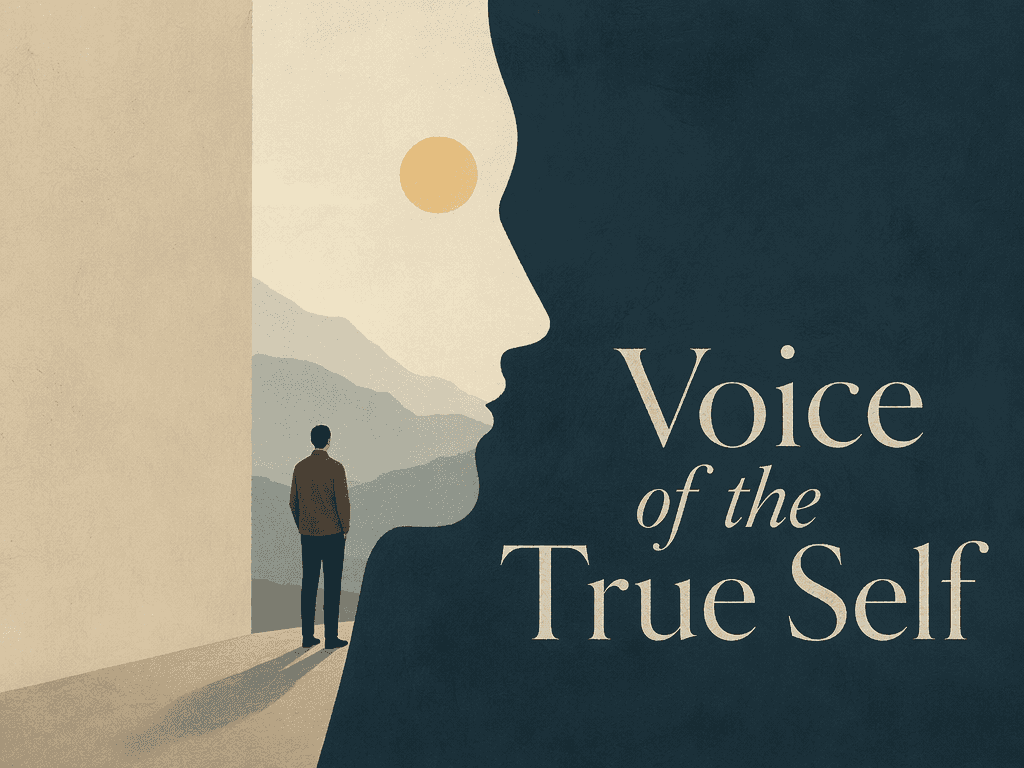
In a world where we're constantly performing, comparing, and seeking validation, Kathleen Smith's "True to You" arrives like a breath of fresh air. This groundbreaking work has quietly become a cornerstone text for those seeking deeper authenticity in relationships, earning praise from renowned psychologists and therapists across the country. Smith, whose insights have been featured in The New York Times and whose previous work was named one of the best self-help books by NPR, draws on Murray Bowen's revolutionary family systems theory to explain why we so often lose ourselves in relationships and how we can find our way back. What makes this book particularly powerful is how it challenges our fundamental assumptions about human behavior-revealing that many of our most frustrating patterns aren't personal failings but predictable responses to relationship anxiety. Whether you're struggling with people-pleasing, overworking, or distancing from loved ones, Smith offers a roadmap not just to understanding these patterns, but to transforming them through greater self-awareness and emotional maturity.
第 2 章
The Hidden Patterns That Keep Us Stuck
We humans are masters of pretending. We appear composed on the outside while chaos reigns within. This disconnect stems from our evolutionary heritage as social creatures designed to read others and cooperate. But this gift becomes a curse when we forget ourselves, losing our individuality in togetherness and borrowing calmness from others.
Consider Marie, a 28-year-old fundraiser who embodies this pattern. She lives a borrowed life-working at her mother's alma mater and adopting her boyfriend Jake's social circle rather than developing her own. When she grows tired of his routine, she can't articulate what she wants instead. She's lost herself.
We're hardwired to avoid rejection, which makes us excellent cultural learners but also susceptible to excessive influence. Being "relationship-oriented" means investing enormous energy trying to manage others' reactions while they manage ours, leaving little energy for self-direction. We become mind-readers and approval-seekers, attempting to control others' behaviors rather than defining ourselves.
When upset, we typically resort to three predictable reactions: accommodating (becoming what others want), acting out (rebelling or attacking), or avoiding (distancing or cutting off). These automatic responses lack self-direction and prevent more thoughtful ways of relating.
The path forward involves developing what Bowen called "differentiation of self"-emotional maturity that allows us to define our thinking while remaining connected to important relationships. This isn't about abandoning relationships but adding more self-direction to them. When Marie began shifting from trying to manage Jake's reactions to defining her own thinking, she reconnected with friends, shared more authentically with her parents despite potential disapproval, and created meaningful connection points with Jake while respecting their differences.
By reducing relationship orientation, Marie relieved pressure on her relationship to regulate her emotions or direct her life, allowing it to become what it was meant to be-a place where both could be themselves.
第 3 章
The Exhausting Dance of Keeping Others Happy
When fusion runs high in relationships, we make decisions prioritizing harmony over our own thinking. This evolutionary tendency helps humans cooperate but intensifies during anxious times, creating a roller coaster of emotions as we try to manage others' feelings.
Alex and Dan exemplify this pattern. Their fusion made it difficult to separate their emotions from each other-Dan couldn't tolerate Alex's discomfort with his new life, causing him to stall invitations or cancel last-minute. Fusion manifests as needing emotional support, sensitivity to others' anxiety, quickly adopting others' beliefs, creating good impressions, feeling pressured by others' opinions, succeeding with praise, and struggling when others express themselves.
In highly fused relationships, people quickly accommodate others, spending energy trying to be what others want. This creates temporary calm but at tremendous cost. Accommodation robs us of learning to tolerate disagreement, defining our beliefs, letting others be responsible, pursuing our interests, maintaining boundaries, enjoying our children's independence, preserving free time, and self-regulating during others' anxiety.
Accommodation isn't just being a doormat-it's making minor adjustments based on audience and mood. Though Dan and Alex seemed unaccommodating, both made anxious attempts to calm each other: Alex attended therapy to appease her dad, while Dan stopped asking her to visit his new family. Their excessive accommodation cost them both-Dan missed seeing Alex build relationships with his stepfamily, while Alex lost energy worrying about her father's texts.
To resolve fusion, we must examine how relationships manage anxiety through predictable patterns Bowen called the "emotional process." Dan and Alex were caught in a cycle: Dan would feel sad late at night and text Alex his distress; annoyed but accommodating, Alex would agree to lunch or awkward stepfamily dinners; feeling resentful, Alex would become prickly; Dan would shower her with attention; allergic to this focus, Alex would distance herself; this distance kept things calm until Dan felt upset again and restarted the cycle with another text.
Breaking this cycle requires emotional courage-not doing what normally calms things down. When one person functions differently, the pattern changes and new possibilities emerge. Differentiation offers a "third way" to relate without giving in to relationship pressure or abandoning the relationship. It means staying connected while thinking and acting for oneself.
Higher differentiation doesn't mean rugged individualism but a flexible capacity for connection and self-direction. It's less about how we relate and more about the intensity of relating. Working on differentiation means finding yourself in significant relationships and stepping outside predictable patterns.
第 4 章
The Invisible Forces Behind Our Beliefs
At seventy-three, Margaret faces social pressures in her retirement community while reflecting on a life where decisions often aimed to please others rather than express her beliefs. From marrying a Catholic against her Southern Baptist family's wishes to navigating pandemic tensions between her sons and community, Margaret struggles with relationship orientation versus self-determination.
Humans evolved to blend with their groups for survival, making conformity a powerful instinct. We experience constant tension between individuality (determining our own thoughts and behaviors) and togetherness (thinking and acting like others). This struggle appears in teenagers wanting both uniqueness and belonging, and in adults who encourage independence only within acceptable parameters.
During anxious times like the pandemic, togetherness forces often override individual judgment, with people compromising safety to avoid hurting feelings. In groups high in togetherness, decisions revolve around others' reactions, while groups balancing individuality and togetherness treat members as capable and give space for independent thinking.
Our difficulty trusting individual thinking stems from the evolutionary advantage of group intelligence. "Swarm intelligence" often produces better results than individual judgment, as demonstrated by the accuracy of averaged guesses. Animals from cockroaches to chimpanzees rely on group decisions for survival, with dominant members influencing choices.
The hormone oxytocin promotes conformity when we feel calm and connected, making us more cooperative. This biological tendency to imitate others, especially those we admire or who receive attention, serves as social glue that binds communities together. As researcher Robert Sapolsky notes, our brains register group disagreement in less than 200 milliseconds, with a bias toward conformity in under a second.
Modern humans face a unique dilemma of belonging to multiple groups with competing beliefs. Our minds become buffets of borrowed ideas from family, coworkers, friends, and media. We readily criticize others' belief adoption while failing to examine our own processes, focusing on content rather than how beliefs are formed.
These borrowed beliefs comprise what Bowen called our "pseudo-self"-a collection of ideas that shift based on social context. We adopt beliefs to please others or reject them to rebel. This pseudo-self is highly negotiable, drawing from family, experts, political parties, religious groups, peers, therapists, celebrities, social media, and desperate Google searches.
Our brain's default mode network activates when we're not focused on specific tasks, performing deep social calculations about past and future interactions. This "mentalizing" ability-guessing what others think or feel-develops earlier in humans than any other species. While this obsession with others' thoughts makes us more empathetic and cooperative, it can distract from knowing our own minds.
Humans uniquely possess meta-cognition-the ability to think about our own thinking. Increasing maturity involves becoming more of a "mind knower" rather than just a "mind reader," shifting from pseudo-self to solid self.
第 5 章
When Helping Becomes Hurting
In relationships, we often fall into patterns where one person becomes over-responsible while another becomes under-responsible. This overfunctioning/underfunctioning dynamic emerges as a way to manage anxiety within relationship systems. When someone we care about is distressed, we may swoop in to solve their problems, lending them our capabilities.
Susan found herself in this dynamic with her mother Maureen after her father's death, quickly stepping into her father's role as the over-responsible one. While this arrangement provided temporary stability, it came with hidden costs for both parties. Creating a family diagram helped Susan see how these patterns had played out across generations in her family, giving her a chance to step outside them rather than being defined by her sibling position.
The overfunctioner and underfunctioner both benefit from their dynamic initially. The overfunctioner gains pseudo-maturity from being the responsible one, while the underfunctioner has everything done for them. This symbiosis provides protection, but at a cost. Underfunctioners become more vulnerable to helplessness and may develop physical symptoms or substance issues. Overfunctioners become increasingly sensitive to others' distress and can't tolerate watching them struggle, leading to burnout.
Oldest children and those in helping professions are particularly prone to overfunctioning, deriving mood boosts from being needed. Signs of pseudo-maturity include only feeling comfortable when in charge, needing to be the expert, speaking for others, focusing only on controllable things, and experiencing mood dips when not leading.
Overfunctioning isn't about the actions themselves but the process behind them-are we living out our beliefs or just managing our own discomfort? Common ways we overfunction include making decisions for others, finishing people's sentences, giving unsolicited advice, taking on tasks rather than teaching others, managing others' schedules, being overly accommodating, hiding our beliefs to prevent anxiety, reminding people of things they could remember themselves, creating backup plans when we expect others to fail, and speaking for people who could speak for themselves.
Susan's overfunctioning extended beyond her mother to her brother Steven, whom she constantly instructed on how to interact with their mom. At work, she mentored new employees at the expense of her own productivity. By playing coach in relationships, Susan avoided the vulnerability of authentic connection. When we're always coaching others, they stop thinking about managing themselves. Similarly, Susan played cruise director in friendships, planning perfect gatherings and managing everyone's experience to avoid discomfort.
Stepping back from overfunctioning is only part of differentiation-you must also step up by being present while functioning as a separate individual. Bowen theory distinguishes between being responsible for people versus being responsible to them. Being responsible for someone means assuming you know their thoughts, trying never to upset them, and managing their distress. Being responsible to someone involves curiosity about their thinking, honesty about your own beliefs, showing up for important events, and promoting their independent functioning.
第 6 章
The Subtle Art of Underfunctioning
Underfunctioning emerges as the reciprocal pattern to overfunctioning, creating a relationship seesaw where both parties participate. When anxiety increases in relationships, people tend to borrow or lend "self" to manage the tension, often resulting in one person becoming less capable while the other takes on more responsibility.
Luis and Drew's marriage illustrates this pattern. Drew's organizational skills and responsibility initially complemented Luis's laid-back nature. But under increased stress-Drew's work demands and his mother's cancer diagnosis-their dynamic became strained. Drew resented overfunctioning while Luis felt paralyzed, unable to step up. Living with Drew had improved Luis's financial security but stunted his growth in financial literacy and decision-making. The relationship had interrupted Luis's development of adult capabilities he might have gained as a single person.
Humans readily borrow self from groups, gaining temporary boosts in functioning and motivation. Research shows individuals who believe they're part of a team work 50% longer on tasks and report greater interest. Luis, raised in a large Salvadoran family and fundamentalist church, inherited his mother's love of togetherness. While his mother sought confidence from weight loss programs and multilevel marketing, his father overfunctioned for her. Luis thrived in group settings-marching band, residential advising, office cheerleading-where the psychological togetherness boosted his functional level of differentiation, making him appear more capable than his basic level of maturity.
The Netflix documentary "Cheer" highlighted "mat talk"-enthusiastic encouragement from teammates-which resonated during pandemic isolation. While external encouragement provides temporary motivation, Luis recognized he needed to develop internal resources. Rather than relying on Drew's mood or workplace vibes, Luis began shifting from "mat talk" to "prep talk"-asking himself questions that fostered curiosity and self-observation rather than seeking external validation.
The self-improvement industry offers endless content promising motivation and techniques, yet ironically contains little actual "self." Consuming books, podcasts, and social media becomes another way of borrowing self to ease anxiety rather than developing genuine internal resources. While there's nothing wrong with consuming content, many get stuck in the consumption phase where thinking about change feels like progress but avoids the difficult gap between setting goals and accomplishing them.
Underfunctioning exists as part of a relationship pattern that requires courage to interrupt. When stepping up to take more responsibility, you'll need to explicitly tell overfunctioners to back off-sometimes repeatedly. This creates tension, as Luis discovered in his marriage with Drew, but ultimately leads to more flexible and fulfilling relationships.
There is no single path to maturity, which frustrates those accustomed to being told what to do. Questions that spark thinking are more valuable than borrowed answers that merely calm distress. Luis began defining how he wanted to show up in his marriage-managing his reactivity to Drew's complaints and finding small ways to bring more self to his actions. The goal wasn't conforming to Drew's expectations or rebelling against them, but being true to his own definition of a responsible life.
第 7 章
The Hidden Cost of Emotional Distance
Distance serves as another anxiety management pattern in relationships. When Sylvie's father reconnected with her estranged grandmother after twenty years, Sylvie's intense physical reaction revealed how powerful emotional processes in families can be. Distance, whether physical or emotional, helps manage fusion-the pressure to think and feel as one unit. We create emotional distance by hiding our thinking, beliefs, and true selves from others.
Distance manifests in various forms-preferring geographic separation from family members, limiting conversations to superficial topics, escaping into work, checking phones during meals, or creating exit strategies from social situations. Distancing behaviors range from becoming busy with work, using substances to avoid sober conversations, moving far from family, sticking to safe topics like sports or weather, canceling plans, texting instead of calling, avoiding voicemails, discussing only children with spouses, lying about beliefs, making duty visits, deflecting personal questions, ghosting dates, or claiming to be "good" when you're not.
While distance has its uses in certain situations, it often serves as a quick relief that comes with significant costs-preventing us from building stronger relationships, working on our maturity, being responsible to groups, defining our thinking, self-regulating anxiety, and reducing reactivity to others' distress.
High levels of chronic anxiety in relationships lead to emotional distance and precarious connections. Unlike acute anxiety from temporary problems, chronic anxiety stems from relationship tension and keeps us stuck in relationship orientation. At higher anxiety levels, we become hypersensitive to others, crave approval, resist closeness, mind-read constantly, worry about reactions, and grow less tolerant. This shuts down flexibility, leaving us with limited responses: attack, take over, give in, give up, or run away.
Developing authentic person-to-person relationships is crucial for maturity and differentiation. These connections require talking about your own beliefs and experiences, avoiding focus on third parties, and moving beyond impersonal topics. This doesn't mean oversharing inappropriately, but rather stepping outside automatic relationship patterns to represent yourself authentically.
Many relationships remain trapped in superficial exchanges using "safe questions" that invite routine responses: How are you? How's work? What are your holiday plans? While these questions build basic rapport, they rarely lead to meaningful connection. Person-to-person questions dig deeper: What excites you lately? What do you wish others knew about you? What challenges are you facing? What keeps you awake at night? When have you felt freest?
When attempting to operate more thoughtfully in relationships, many people stumble by keeping score-tracking who initiates contact, who asks more questions, or who seems more invested. This anxious focus on communication imbalances signals relationship orientation, where we become frustrated when others don't match our level of consideration. Working on differentiation doesn't mean putting up with abuse, but it might mean reconnecting with that aunt who fell off the radar or speaking up when a friend is inconsiderate instead of quietly sulking.
第 8 章
Breaking Free from the Blame Game
Lucas was a surprise baby to parents Dave and Cindy, who had assumed they'd never have children. Though brilliant and creative, Lucas approached life cautiously and struggled socially. At twenty-eight, he lived alone but remained financially dependent on his parents, with Dave handling his errands and Cindy covering his expenses. When Cindy threatened to limit Lucas's finances due to his spending habits, he would call Dave in panic, who secretly gave him cash behind Cindy's back. This family dynamic raises the question: who's to blame?
Bowen theory identifies triangles as a fourth anxiety-managing pattern, where two-person relationships pull in a third person to stabilize tension. This can manifest as gossiping, venting, worrying about, or blaming a third person. Triangles appear throughout nature-from chimpanzees seeking protection from dominant males to wolf packs picking on omega members.
The family projection process occurs when parents manage their anxiety by intensely focusing on a child, who then reacts anxiously, confirming parental worries. Children who catch this focus might be oldest or youngest, born during stressful times, or have early medical challenges. This pattern shapes the child's sensitivities, making them more relationship-oriented and potentially less differentiated.
Dave, Cindy, and Lucas formed an anxious triangle where each blamed others for their problems. Dave believed reconciliation between Cindy and Lucas would solve everything; Cindy thought Dave needed to stop enabling Lucas; Lucas felt his parents were inconsistent and colluding against him. Like the parable of blind men describing different parts of an elephant, each clung to their perspective while missing the whole system.
When anxiety rises, we focus on comfort rather than clarity, missing how patterns connect across generations. We fail to see the "whole elephant" when we insist others must change, focus on personalities rather than patterns, or ignore how anxiety influences behavior. True progress requires seeing the entire emotional system at work.
In times of stress, we prioritize comfort over clarity, seeking relief through triangling, gossiping, or focusing on "fixing" others. Dave, Cindy, and Lucas each sought comfort at others' expense-Dave through overfunctioning and rescuing, Cindy through cutting off contact, and Lucas through allowing others to overfunction for him.
Chronic anxiety distorts our perception of others, making them seem needier, more annoying, or more aloof than they truly are. The parent-child relationship exemplifies this paradox-we focus so intensely on each other that we cease to truly know one another. Children invite anxious focus while parents invite underfunctioning, creating a cycle where reactions address personal anxiety rather than actual needs.
Working toward differentiation means accepting initial pushback from the system. When Dave and Cindy began developing more thoughtful responses to their son Lucas, they faced resistance. Dave refused to rush home from a trip for a non-emergency plumbing issue, instead trusting Lucas to handle it while maintaining connection. Cindy apologized for past inconsistencies and worked to rebuild relationships with extended family. Their differentiation efforts didn't guarantee specific responses from Lucas but allowed them to bring more solid selves to their relationships.
第 9 章
The Journey to Authentic Self-Definition
Julian embodied the "go-getter" mentality, graduating high school early and relentlessly pursuing achievements. Yet the satisfaction from each accomplishment quickly evaporated, requiring ever more validation. After breaking his leg during study abroad and returning home, burnout set in. When COVID-19 confined him to a tiny apartment with his girlfriend Lauren, their relationship deteriorated into mutual criticism. After a fight, Lauren fled back to Utah, leaving Julian questioning his productivity and future as his carefully constructed identity began to crumble.
Washington, DC, can be a tough place to feel successful with its aggressively motivated people. But our obsession with status isn't unique to DC-it's hardwired into social mammals. We evolved to care about hierarchy, mimicking those who outrank us and constantly comparing ourselves to others. Julian had always tried to outrank his peers, but as graduation approached without a job lined up, he felt himself slipping down the imaginary leaderboard.
Our brains respond to praise much like they do to chocolate cake, releasing dopamine that keeps us motivated. The unpredictable nature of compliments actually increases our craving for them-we get more dopamine from a 50% chance of reward than a guaranteed one. We're also constantly aware of being watched, even carrying the watchful eyes of others in our minds when alone.
Like Hyacinth Bucket from the British sitcom "Keeping Up Appearances," we expend tremendous energy trying to look put together and impress others. Julian's addiction to approval was deeply rooted in his family system. His grandmother treated life like a zero-sum game, constantly comparing relatives' successes and failures, while his accomplished mother (now a judge) held high expectations. Julian felt everyone holding their breath before his graduation, wondering if he'd make them proud. He realized these borrowed beliefs about success didn't reflect his best thinking-he didn't judge his friends by their accomplishments, so why make himself the exception?
Making decisions that are true to yourself requires tolerating distress rather than seeking immediate anxiety relief. Dr. Michael Kerr calls these "grown-up solutions." Julian learned to distinguish between anxious attention (focused on quick relief through managing others or abandoning his thinking) and thoughtful attention (managing anxiety before responding, gathering facts, and sitting with discomfort).
At his crossroads, Julian chose thoughtful attention-scheduling twenty minutes daily to face his fears. His grown-up solutions emerged: building professional relationships on his own terms, communicating clearly with his girlfriend rather than trying to win her back, making realistic financial plans, and maintaining family connections without seeking their approval. Julian discovered that being a grown-up and being "impressive" aren't always the same thing-his maturity, thoughtfulness and patience were his true superpowers.
第 10 章
Embracing Life's Complexity with Courage
In a world constantly demanding we take positions on every issue, finding authentic courage becomes increasingly difficult. When anxiety runs high, families and societies respond similarly-becoming less flexible, distancing from issues, overfunctioning or underfunctioning, finding scapegoats, and seeking quick fixes rather than principled solutions. These patterns appear in everything from family dynamics to national politics.
Bowen theory distinguishes between true responsibility and being "irresponsibly overinvolved." Railing against others' opinions isn't taking a position but managing one's own reactivity through attack. True positions involve responsible engagement with challenges, not just emotional reactions.
Under high anxiety, we use relationship pressure as our compass, adopting the "three A's"-accommodating others' views, acting out in rebellion, or avoiding issues entirely. These are all "no-self" positions in different packaging.
Our togetherness instinct can mobilize quick responses to crises, but often at the cost of addressing root causes. While social pressure can discourage antisocial behavior, "no one has ever been pressured, pulled, or bullied into greater maturity." Only you can bring yourself to maturity, which requires time, energy, and discomfort.
Before standing up for beliefs, we must first "sit down"-doing the thoughtful work of developing those beliefs. This involves educating ourselves, building relationships with knowledgeable people, defining beliefs based on reason and values, remaining open to new evidence, and thoughtfully activating this thinking.
Developing one's beliefs may seem self-indulgent or boring, yet we often dedicate hours to trivial pursuits while neglecting serious reflection. Having time to develop beliefs is a privilege that comes with responsibility-the world needs people who stay engaged with problems longer than the news cycle.
Courage isn't just about cinema-worthy moments of grand stands. Often it appears in smaller, daily opportunities to live out our thinking and define ourselves to others without being guided by relationship pressure. These mini-positions might include moving toward someone we'd prefer to avoid, addressing hurtful comments, or honoring commitments when we're tempted to cancel. Bowen described differentiation as a series of mini-steps based on our own thinking.
More than ever, the world needs grown-ups. The more we learn about differentiation, the more we see how our actions often prioritize keeping things calm over doing what's right. By sticking to what's automatic, we purchase stability at great cost. Harnessing our ability to act outside the bounds of a panicked, reptilian brain is what makes us human. By being true to our best thinking, we become more responsible to others and our world.
Our relationships are suffering. A quarter of Americans are cut off from a family member, with twenty-five million experiencing estrangement from parents or children. We're also disconnected from multigenerational relationships, with millennials less likely to have intergenerational friendships. The health risks of isolation rival smoking fifteen cigarettes daily, with over one-third of adults reporting frequent loneliness.
We're intensely worried about our children, with legitimate concerns about rising rates of anxiety, depression, and self-harm in teenagers. But how much of our societal anxiety is managed through our intense focus on the next generation? Research shows that parental over-engagement predicts poorer self-regulation in children.
We touch our phones over 2,600 times daily, using them to manage distress. Constant task-switching limits our brains and relationships. Social media turns everyone into their own brand, making us increasingly performative and competitive, leading to negative self-image and hopelessness, especially among teen girls.
Despite the chaotic chatter, some people continue to do slow, steady work, staying engaged with complex problems over the long haul. These individuals can tolerate the discomfort of knowing we can't quick-fix or rage-post our way out of these challenges. Our unique capacity to learn and teach is our greatest strength. There has never been a better time for our best thinking and cooperation.