第 1 章
A Mother's Mission Against Africa's Most Notorious Warlord
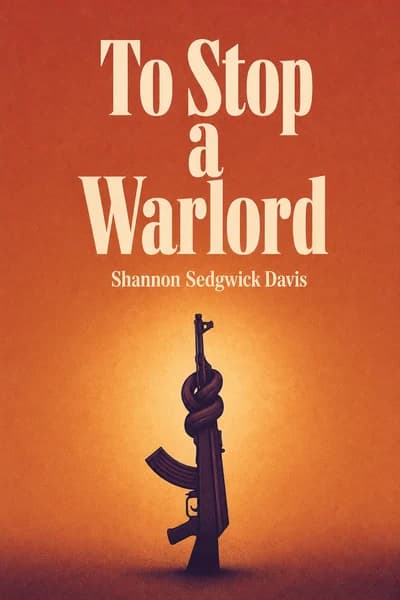
In the heart of Central Africa, a decades-long nightmare unfolded as Joseph Kony's Lord's Resistance Army terrorized four countries, killing over 100,000 people and abducting 30,000 children. While governments and international organizations struggled to respond effectively, an unlikely hero emerged: a Texas mother of two who decided that enough was enough. Shannon Sedgwick Davis, CEO of the Bridgeway Foundation, embarked on an unprecedented mission to stop Kony's reign of terror by assembling a remarkable coalition of military forces, humanitarian organizations, and private citizens. Her memoir "To Stop a Warlord" became an instant sensation, praised by luminaries from Bill Clinton to Richard Branson, and was named one of Desmond Tutu's "Books That Inspire." The story challenges our assumptions about what's possible when ordinary people refuse to stand by while atrocities unfold, revealing how maternal instinct can transform into a powerful force for global justice.
第 2 章
When Evil Demands a Response
The call came after midnight. Shannon Sedgwick Davis moved quickly to her back porch, where she typically took early morning calls from Africa, feeling as distant from her sleeping family as during her trips to the continent. Laren Poole's urgent voice came through his satellite phone with their coded phrase: "Boss, it's time to bet the farm."
This was the signal to go all in on their mission to catch Joseph Kony, whose Lord's Resistance Army had terrorized four African countries for over 25 years. After years of Kony being like a ghost, their cobbled-together alliance of military, humanitarian, and private organizations had finally identified his hideout in Kafia Kingi. If they succeeded, they could end his reign of terror; if they failed, he would likely disappear again, potentially unleashing more violence in retaliation.
The mission began years earlier when Shannon, scanning emails while rocking her newborn son, discovered a disturbing Human Rights Watch report about LRA "Christmas Massacres" that killed 620 people. The LRA had attacked villages across northeastern Congo, tying up victims with bicycle tire strips before crushing their skulls with sticks. They shot off children's legs, abducted girls, and attempted to twist off toddlers' heads. Despite 16,000 UN peacekeepers in Congo, only 200 were deployed in LRA-affected areas, leaving fifty villages completely unprotected.
During a subsequent Bridgeway Foundation board meeting, Shannon blurted out, "We're not being true to our mission statement." Their partners were doing important work researching violence and making policy recommendations, but "We're picking up the pieces and patching up victims. It's like we're just putting Band-Aids on bullet holes." She proposed they either change their mission or truly commit to stopping conflict, starting with Africa's longest-running war.
On paper, ending the LRA conflict should have been straightforward. Unlike other complex humanitarian crises, this wasn't a state actor requiring one country to declare war on another. Global consensus held that the LRA was clearly in the wrong. But it wasn't that simple. No one knew where Kony and his splinter groups were hiding. Reports of attacks came too late to save lives, if they came at all. Despite political momentum in Washington, the National Security Council seemed more concerned with what was politically viable than with developing a strategy to decisively end LRA violence.
第 3 章
The Boy Who Was Forced to Choose
David Ocitti was born in northern Uganda in 1986 as hostilities intensified between northern and southern regions. Despite the unrest, growing up in his large extended family's homestead gave him a sense of protection. His grandmother taught him about latwok, the brightest star that would guide lost hunters home.
Life followed predictable rhythms until the LRA began abducting Acholi children to fill its ranks. David's village, Pabbo, became the largest displacement camp in northern Uganda, housing 67,000 people under military curfew. At sixteen, while home on school break, David was awakened by rebels who set fire to the camp and gathered families. A commander demanded David choose which parent he loved most. When David reluctantly answered "my father," the rebels beat all the fathers to death before forcing David and other children to march into the darkness.
During a brief rest from marching, David exchanged words with Maxwell, another captive boy. When Commander Odhiambo noticed, he forced a machete into David's hand, ordering him to kill Maxwell for talking. David refused, saying "Take my life. I'm not taking his." Instead of killing David, Odhiambo struck him with the machete handle and made Maxwell beat David. As punishment, David had to carry a forty-pound pack of salt for three days through muddy trails.
Later, Odhiambo forced David's group to attack a village, killing all adults and abducting children under twelve-making them perpetrate the same violence they had once survived. David's sensitivity to horror gradually numbed as a survival mechanism-constant vigilance and emotional distancing became his only protection. The guilt of having implicated his father haunted him, though he knew others suffered worse, forced to kill their own parents with machetes.
David finally decided to escape after witnessing a commander brutally kill a crying infant by smashing him against a tree. He and his friend Maxwell ran, but gunshots erupted behind them. Maxwell was shot in the thigh and told David to go on without him. David fled for four days, guided by the brightest star as his grandmother taught him. When he finally reached Pabbo, he found strangers living in his mother's hut who had never heard of her. Exhausted, wounded, and alone, he discovered that while Pabbo was the same town he left six months ago, it no longer felt like home.
第 4 章
From Boardrooms to Battlefields
Shannon's journey to stop Kony took her from comfortable boardrooms to some of the world's most dangerous places. When she asked US Army Lieutenant Colonel Greg Joachim what was needed to stop the LRA, the answer was consistent: military training for Ugandan forces and improved communications among vulnerable villages. Though Greg supported the cause, he delivered disappointing news-the State Department couldn't accept Bridgeway Foundation's financial support for these operations, despite acknowledging their necessity.
Undeterred, Shannon invited Laren to join her in Congo to speak with UN representatives and LRA attack survivors. At UN headquarters in Bunia, Shannon met with numerous officials to discuss the LRA crisis. When she questioned how 18,653 UN troops couldn't stop roughly 600 LRA combatants, the officials laughed at her naivety. General Zia mentioned they needed just two inflatable boats costing $10,000 total. Though willing to provide the funds, Shannon sensed that even with these resources, the UN officials didn't truly believe anything would change.
In Bangadi, Shannon and her team interviewed survivors from recent massacres. Community leaders eagerly shared handwritten logs of those killed and abducted in LRA attacks. Shannon was struck by the survivors' resilience and the ongoing danger they faced daily, with regional forces and UN peacekeepers failing to protect them despite being nearby with sufficient weapons and mandate. The most heartbreaking moment came when they met a nine-year-old girl who approached with lowered head to share her story of being captured, raped, and escaping the LRA while her friend remained behind.
Based on recommendations from Human Rights Watch, the US State Department, and local organizations, Shannon identified two critical needs: better communications between communities and better-trained troops to stop the LRA. During a stopover in Kampala, she and Laren met with Uganda's Minister of State for Foreign Affairs, who confirmed their intention was to capture Kony and bring him to The Hague. They decided to start by addressing the communications need, supporting Father Abbe Benoit Kinalegu's proposal to expand an existing high-frequency radio network in Congo.
第 5 章
The Iron Lady's Impossible Mission
Shannon proposed helping Uganda's military capture Kony by providing resources. General Aronda revealed he had already ordered counter-LRA troop allocations cut in half due to upcoming elections requiring security at home. Despite this setback, Aronda identified specific needs: intelligence support, fixed-wing aircraft for surveillance, and helicopters for troop movement. When Shannon asked about using private military contractors to train troops, Aronda cautiously agreed.
After meeting with General Aronda, Shannon established non-negotiable terms for any military contractor: no extra fees beyond basic expenses and salaries, proper vetting of soldiers to prevent human rights abuses, Ugandan military bearing operational costs, and preferably hiring an African company. Laren warned these terms were unrealistic in the private military world, but Shannon remained firm.
Shannon's first meeting with a potential contractor went poorly. James Acker focused almost exclusively on money, making disparaging comments about African corruption and warning Shannon not to be taken advantage of. Without asking for details about the mission, he declared no contractor would accept the job for less than a $25 million fee plus costs.
In late July, Laren called Shannon from Johannesburg saying he'd found their man. They flew to South Africa to meet Eeben Barlow, chairman of STTEP International. Despite Shannon's concerns about Barlow's past working for the apartheid government, she was surprised by his warm demeanor. When Shannon presented her non-negotiable terms, Barlow unexpectedly agreed to all of them, saying, "I'm African. And Africans are the solution to Africa's problems."
Just before Christmas, Shannon received an unusual meeting request from Muneer Satter, a Goldman Sachs partner willing to fly to San Antonio just for a one-hour lunch. At their meeting, Satter revealed he knew details about Shannon's secret mission against Kony. Looking for "Jedi warriors" making extraordinary impact, he told Shannon, "Whatever you're doing to stop Kony, I want in at half."
第 6 章
Operation Viper Takes Shape
In Pretoria, Shannon attended a pre-deployment briefing where Eeben told his team there was "no magic solution" to the difficult mission ahead. She struggled to connect with Eeben's team of trainers, who were polite but reserved and physically imposing. Eeben explained the immense challenges of tracking the LRA through 360,000 square kilometers of jungle with difficult terrain that favored the enemy.
When Shannon addressed the team, she appealed to their humanity rather than just tactical concerns, emphasizing that stopping atrocities relies on individuals with hearts and souls, not institutions. Though initially stone-faced, some trainers began to respond, with one approaching her afterward to affirm that this mission represented "doing the right thing."
Camp Bondo, the Ugandan military training facility in northwestern Uganda, was a remote outpost with spartan conditions. The camp consisted of metal-roofed barracks for Ugandan troops, an operations tent doubling as kitchen, ground tents for trainers and leadership, pit latrines, and improvised showers using sun-warmed water bags behind thatched grass curtains.
Camp life ended each evening with showers from limited water supplies and storytelling around the campfire, where the trainers bonded through gentle ribbing and sharing experiences. In quieter moments, conversation turned to Joseph Kony's motivations. Some believed he was delusional while Eeben suggested he fed off fear and the power over life and death.
The comprehensive training program covered navigation, tracking, contact drills, and human rights, while building the soldiers' confidence in themselves and their teammates. After selection, soldiers learned critical skills like GPS navigation, pseudo operations (disguising themselves as traders or LRA members), and advanced tactical maneuvers.
In mid-June, 136 Ugandan soldiers graduated as the Special Operations Group (SOG). When Shannon addressed the soldiers, she was overcome with emotion, humbled by their willingness to risk their lives. General Katumba Wamala, commander of Uganda's land forces, congratulated the graduates in Swahili, emphasizing their resilience and urging them to protect their lives and maintain "esprit de corps."
第 7 章
Into the Heart of Darkness
After graduation, the Special Operations Group deployed to forward bases in South Sudan, Democratic Republic of Congo, and Central African Republic. Despite their training and motivation, the first month proved extremely challenging. The SOG operated in an intelligence vacuum, lacking information about LRA locations and movements. The SOG split into small teams of four or five men who tracked through the jungle for weeks, searching for subtle signs of LRA passage.
A critical shortage of air support hampered the mission. The US State Department provided only two Mi-8 helicopters with predetermined flight restrictions-limited hours, fuel amounts, and operational areas. Based in South Sudan, far from primary operations, these helicopters had to return by day's end and could only use landing zones secured by Ugandan military, making them unsuitable for remote tactical missions.
Despite meeting with legislators who expressed disgust at Kony's atrocities, Shannon received disappointing news: the US government wouldn't fund additional helicopters for something "not in our national security interest." Senator Kirk warned her to be ready for failure, suggesting it might take three attempts to succeed.
A few weeks later, encouraging news arrived: LRA attacks and civilian casualties had decreased significantly since the SOG deployment. More exciting news followed-the SOG made their first contact with the LRA. A SOG team tracking LRA fighters in the Democratic Republic of Congo set an ambush at a river crossing, initiating a firefight. Though the LRA scattered and escaped, this early contact proved something crucial: tracking the elusive fighters through the dense jungle was indeed possible.
In September 2011, a squad tracking LRA movements discovered multiple groups converging, suggesting a major meeting that Kony himself might attend. Captain Kommando established a mobile command post and divided his forces: two groups to flank the target location and one "pseudo group" disguised as LRA women gathering yams to penetrate the camp's security perimeter.
The strategy worked brilliantly. The pseudo group reached the inner encampment, where they identified not only Okot "the Butcher" Odhiambo and Dominic Ongwen, but Joseph Kony himself. A fierce firefight erupted with the LRA firing RPGs and mortars. Though some LRA members were killed and intelligence was recovered, they missed capturing Kony in what would have been the most significant opportunity in years.
第 8 章
The Jungle's Deadly Embrace
Beyond the LRA, the terrain itself proved a deadly enemy for the SOG teams. The soldiers battled constant dampness from swamps, rivers, and rain, developing debilitating blisters that became bone-deep wounds. Food was limited to two meager meals daily: canned corned beef, beans in tomato sauce, dry crackers, or posho and beans cooked over fire.
Disease struck without warning. One soldier, Feni, collapsed with malaria, suffering seizures, high fever, and chills while deep in the bush. Though he survived, malaria became commonplace among the troops and even Laren contracted it nearly a dozen times. The standard prophylactic medications were only 60-70% effective and not designed for years of continuous use.
The jungle teemed with lethal wildlife. Constrictor snakes up to forty feet long, hooded cobras, black and green mambas, tarantulas, scorpions, and poisonous centipedes posed constant threats, with little access to antivenom in the field. One night, an entire SOG camp awakened screaming as safari ants swarmed their tents-millions of flesh-pinching insects forming three-foot towers, forcing soldiers to douse them with cooking fuel.
Even bees proved dangerous. The aggressive Central African bees, attracted to sweat, swarmed in massive numbers during meal preparation. Soldiers protected themselves with jackets, scarves, tight sunglasses-anything to keep the potentially lethal insects from their eyes and faces as they cooked their evening posho in the unforgiving jungle.
The environment claimed lives in unexpected ways. Lightning struck a northern Ugandan private as he slept, killing him instantly. Another soldier barely escaped a crocodile attack while crossing the Vovodo River, but had to spend an agonizing night with his mutilated leg in the bush because no night-rated aircraft was available-underscoring the critical need for better air support.
第 9 章
Operation Merlin: The Hunt for Kony
In October 2011, President Obama deployed approximately one hundred US Special Operations forces to the region to assist partner nations against the LRA. Though they wouldn't directly engage the LRA except in self-defense, this marked a significant shift from traditional American foreign policy of avoiding military involvement in sub-Saharan Africa.
Shannon's mission capabilities improved further with the arrival of Howard Buffett's funded Bell 412 helicopter and Cessna Caravan, providing crucial air support for troop movements, defector pickups, and medical evacuations. Meanwhile, the SOG forces made multiple successful contacts, recovering weapons and rescuing abducted children and mothers.
A breakthrough came when Major General Caesar Acellam, one of Kony's right hands and head of LRA intelligence, surrendered. Surprisingly forthcoming, Acellam revealed he feared Kony might kill him and confirmed Kony was hiding in Darfur. He also disclosed that Sudan still supplied the LRA with medicine, ammunition, and uniforms, and claimed 75-80% of LRA fighters wanted to come home.
After positioning troops based on intelligence from a defector named Okello, SOG soldiers encountered Lieutenant Colonel Binany-the Makombo massacre orchestrator. During the firefight, Binany started a diversionary brushfire but became trapped and burned alive. In his backpack, soldiers discovered crucial intelligence: ledgers of looted goods, ivory poaching records, LRA unit locations, and most importantly, a GPS device that revealed one location where Binany had remained stationary for weeks.
With US Special Forces approval to fly surveillance drones over the GPS coordinates, aerial images revealed grass-thatched huts arranged in clusters-not obviously a military base, but strategically positioned near water in remote terrain with significant agriculture. When Okello confirmed the drone images matched his map, identifying Kony's hut and other structures, they had located "Camp Merlin," Kony's stronghold.
Operation Merlin needed immediate launch. The Special Operations Group built replica thatch huts to rehearse their night assault, planning to navigate surrounding fields without raising alarms. They also prepared for potential resistance from nearby Sudanese forces who might protect Kony with antiaircraft weapons.
But when surveillance finally flew over Merlin before the assault, the camp was completely empty. Just like Operation Lightning Thunder in 2008, somehow Kony had been tipped off. When SOG troops reached the camp two days later, they found only empty huts, drying platforms, pumpkins, marijuana, and opium fields-all abandoned for at least a week.
第 10 章
Cutting the Snake Off the Head
After Operation Merlin's failure, Shannon and Laren faced a crucial decision about whether to withdraw. Their resources were depleted after chartering helicopters, and a coup in the Central African Republic had forced US Special Forces to abandon their base in Djemah.
When Shannon consulted John Montgomery, he advised: "In investing, the worst mistake we often make is to pull out when the market takes a dive. When you're at the lowest, that's when you should double down." Shannon recalled Senator Kirk's words that stopping Kony might take three tries.
Meeting with Colonel Kabango, they developed a new strategy: instead of targeting Kony directly, they would focus on his key officers to isolate him and cut his stability. "We've been trying to cut the head off the snake," Shannon said. "But maybe ending this war is about cutting the snake off the head."
Their approach would combine military pursuit of Kony's leaders with expanded defection messaging to erode the LRA from within. They needed to counter the propaganda and fear that kept fighters from leaving-Kony's lies about AIDS ravaging Uganda, poisoned defection flyers, and threats of prosecution or spiritual retribution.
In the summer after Operation Merlin, HF-radio intercepts showed the LRA was on the move again. With Kony's group disconnected from others, Okot Odhiambo had been tasked with moving between LRA groups to spread Kony's orders. The Ugandan army decided to track Odhiambo rather than Kony directly.
Captain Charles's tracking team located Odhiambo's group and pursued them relentlessly, sacrificing comfort and equipment for speed. At dawn, they assaulted Odhiambo's camp, triggering a gun battle that sent the LRA fleeing. Though initially inconclusive, radio intercepts later revealed a "Big man wounded" and Odhiambo's call sign disappeared from communications. Eighteen months later, his remains were found and confirmed through DNA testing.
第 11 章
The Path Home: Healing and Redemption
After escaping the LRA and searching for his mother, David finally found her at Alero camp. When she first saw him, she was suspicious, fearing he'd returned to lead LRA fighters back to kill them. But when David began crying, she recognized her son and embraced him, repeating "My baby, my baby." She tenderly cleaned and bandaged his wounds-the first gentle touch he'd felt in six months. To David, her loving gaze "felt like the face of God."
When David returned to school, he was devastated to find his classmates treating him as an outcast-refusing to sit near him and maintaining distance as though he was contaminated, forever marked as someone who "walked a dirty path." One day, a boy approached David, initially giving him hope that someone might befriend him. Instead, the boy accusingly stated, "You were in the group of LRA who killed my dad." David remembered how the LRA deliberately pushed child recruits to the front during attacks to ensure communities would identify children as perpetrators, making it impossible for them to return home.
Despite these challenges, David started a Peace Club at his school, acknowledging their shared experience: everyone in northern Uganda had been affected by the LRA, whether through family members killed, abducted, or through personal captivity. Rather than hiding, he aimed to create awareness about abduction experiences. By David's graduation, Peace Clubs had spread across northern Uganda, conducting trust-building activities, organizing debates on forgiveness, performing charity work in displaced persons camps, and teaching peaceful political change.
Nine years after his abduction, David was two years into a business degree at Gulu University on a scholarship. When he learned about an organization called Invisible Children that supported LRA victims, he immediately visited their office. "I want to go raise money," David declared. "I have a story to tell about my captivity, and I want to help my friends go to school." David traveled across America as a "roadie" for Invisible Children, sharing his story and recruiting students to take action against the LRA conflict. For David, who once felt completely alone in his suffering, it was empowering to transform his pain into compassion and peace-building efforts.
第 12 章
The Beginning of the End
In early December 2013, a hunter near Zemio in the Central African Republic encountered LRA rebels who wanted to surrender. With local assistance, a blue-eyed LRA commander named Lieutenant Colonel Okello Okuti led nineteen men, women, and children out of the bush-one of the largest groups ever to escape the LRA. Okuti had been one of Kony's most trusted commanders but had fallen out with him. After reaching safety, Okuti recorded a message urging others still in the bush to "think about the value of your life and come back home."
David received Bridgeway grants to improve conditions at the transit center where returnees were processed, fixing latrines and expediting amnesty certificates. He emphasized that physical and legal security were just the beginning-returnees needed purpose and self-forgiveness to truly heal. He proposed funding public ceremonies in returnees' communities for spiritual cleansing and vocational training to help them rediscover their pre-LRA dreams.
Okuti's desire to help others escape led to a strategic breakthrough-targeting specific commanders by name with personalized defection messages. David's reintegration work expanded to tracing families of potential defectors, though this meant asking families to risk renewed heartbreak. When he found one commander's mother, her message was simple but powerful: "Dwag paco"-Come home.
After weeks of broadcasting Okuti's targeted messages, Opio Sam escaped the LRA. On June 24, after 24 years in captivity, he emerged from the bush near Nzako. Before even changing from his dirty fatigues, Opio Sam eagerly volunteered to help others defect: "I heard those voices in the jungle-now I want them to hear my voice calling them home."
When it was time for Opio Sam to return to Uganda, David drove him to his home village. When they arrived, the entire community of about one hundred people gathered to welcome him. After stepping on an egg in a cleansing ceremony symbolizing his break from the past, Opio Sam was reunited with his mother. The community then performed mato oput, a ritual where both victims and perpetrators drink bitter root tea together, acknowledging shared pain and becoming free of guilt and blame-allowing them to face the future together.
第 13 章
Victory Beyond Capture
In January 2015, almost two years after Operation Merlin, a chief near Kafia Kingi contacted the Ugandan army about an LRA defector disguised as a nomadic cattle herder calling himself "Ali." US Special Forces retrieved him and discovered he was actually Dominic Ongwen, the last International Criminal Court indictee besides Kony remaining in the bush.
Once popular among LRA fighters for standing up to Kony's brutality, Ongwen had been marginalized before escaping with help from sympathetic LRA members. He became the first indicted LRA leader to come out alive and face accountability at The Hague-a significant victory for the mission that Shannon had launched six years earlier after reading about the Christmas massacres Ongwen had led.
Shortly after Ongwen's defection, seven LRA combatants in Kafia Kingi attempted the first-ever assassination of Kony from within the organization. Though unsuccessful, they later surrendered in Obo, further reducing Kony's personal group to just sixteen combatants.
Though Kony remained at large, Shannon decided it was time to end Bridgeway's involvement in the mission. The LRA's civilian killings had dropped dramatically-from nearly eight hundred the year before deployment to just thirteen in the previous year. In June 2015, when the last helicopter pulled out of Central Africa, Shannon had her first uninterrupted sleep in five years.
Though the mission had ended with Kony still free, Shannon showed her son Connor the tiny camouflage uniform worn by a rescued child soldier-tangible proof that hundreds of children were now free. She had learned that peace was bigger than one man's capture; it was about tilting the balance in favor of life and embracing shared humanity.
Despite the mission's successes in reducing LRA violence, Joseph Kony remains at large. Northern Uganda has seen rapid growth and development since people resettled from displacement camps. David Ocitti continues his advocacy work, having covered 116,000 miles to support LRA defectors and reintegration. "Peace is a mission for me," he says. "No matter what the situation, I hope you always come home."