第 1 章
A Warrior's Heart: The Woman Who Brought Peace to Liberia
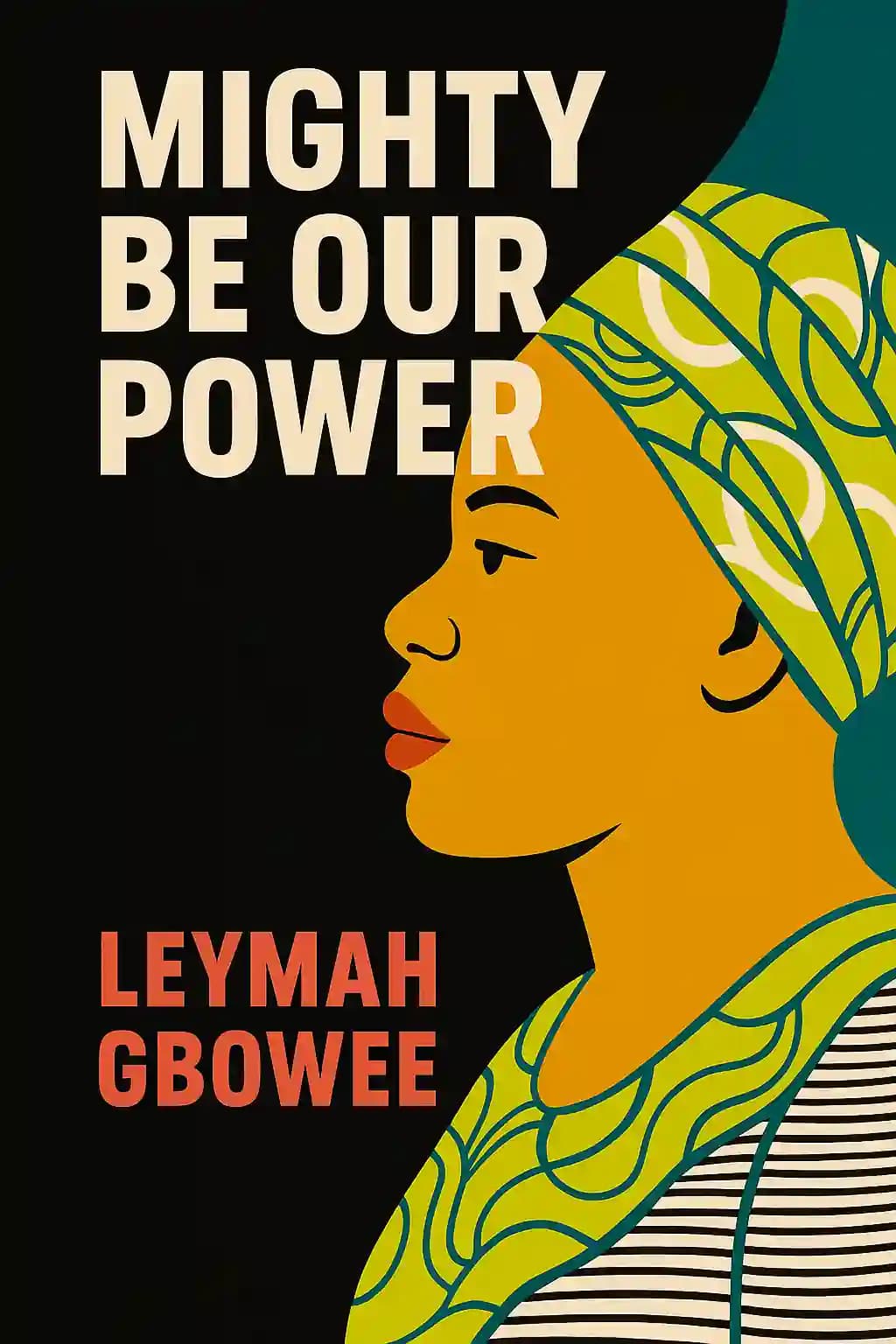
When war tears through a nation, we often hear only of the men who wage it - the commanders, the soldiers, the warlords with their displays of brutal power. But in Liberia's darkest hours, a different kind of army emerged: women dressed in white, armed with nothing but moral clarity and unbreakable determination. Their leader was Leymah Gbowee, whose memoir "Mighty Be Our Powers" has become required reading in peace studies programs worldwide and inspired the award-winning documentary "Pray the Devil Back to Hell." Oprah Winfrey called her story "a lesson in the power of women to change the destiny of a nation," while Archbishop Desmond Tutu praised her as "an example of how one person can truly make a difference." This remarkable account of how ordinary women created an extraordinary movement culminated in Gbowee sharing the 2011 Nobel Peace Prize - a testament to how grassroots activism can topple even the most entrenched tyranny.
第 2 章
From Dreams to Devastation: A Young Life Interrupted
At seventeen, Leymah Gbowee's future stretched before her with limitless possibility. Growing up in a comfortable middle-class home in Monrovia, she dreamed of becoming a doctor, marrying well, and perhaps owning a mansion on Payne Avenue. Her parents had worked hard to create this life - her father rising from rural poverty to become a government radio technician, her mother overcoming childhood abandonment to help build a stable home for their five daughters. In Liberia's complex social hierarchy, where descendants of freed American slaves (known as "Americo-Liberians") and those rescued from slave ships (called "Congo People") formed an elite above indigenous tribes, the Gbowee family had achieved remarkable success despite their Kpelle tribal origins.
On New Year's Eve 1989, Leymah joined her church congregation in writing her hopes on paper before burning them, symbolically sending these wishes to God. Her prayers were innocent - good grades, interesting professors, safety for loved ones. She felt completely secure, believing God heard her prayers and that her world was stable.
Within six months, everything would change.
When armed rebels led by Charles Taylor crossed from Cote d'Ivoire into northern Liberia, few recognized the looming catastrophe. Leymah's parents, having survived previous political instability, remained unconcerned even as they moved into a beautiful new suburban home. Under Samuel Doe's rule since 1980, Liberia had experienced deepening tribal divisions as he favored his fellow Krahn people while excluding other groups. This simmering resentment provided fertile ground for Taylor's rebellion.
As gunfire erupted near their home, the reality of war crashed into Leymah's sheltered existence. Relatives fleeing violence filled their house. Eventually, an embassy van arrived with orders from her father to evacuate. Grabbing only essential belongings, they abandoned their beautiful new home, taking refuge in St. Peter's church compound as Taylor's forces advanced toward Monrovia. There, seventeen-year-old Leymah would confront mortality in ways she never imagined.
第 3 章
When Death Becomes Ordinary: The Brutal Reality of Civil War
"I am too young to die!" This thought consumed Leymah as violence engulfed Monrovia. Death, once abstract, became horrifyingly concrete when soldiers shot a boy in the street simply for wearing clothes associated with rebels. Soon, death was everywhere - her professor killed with his family, girls raped, a boy shot for his sneakers. Her friend Koffa, who dreamed of becoming a U.S. Marine, was murdered when enemies came for his father, their bodies left in the street as warnings.
Each evening, refugees gathered for prayers at six, but afterward came the shooting. Every morning revealed newly looted stores and soldiers selling stolen goods. Just blocks away at the beach, executions took place - the screams audible, the smell of decomposing bodies eventually reaching the compound. Leymah's faith wavered as their prayers seemed to go unanswered.
The brutality reached its peak when government forces stormed the church compound on a Sunday morning. After one woman was shot and others taken, the remaining refugees were herded into an office and beaten. Leymah pulled her nephew onto her lap to hide her bare legs, certain they would die. Miraculously, a relative appeared and convinced the commander to release them.
That night, they heard terrible screams from St. Peter's chapel where nearly a thousand refugees had been massacred despite seeking sanctuary. Bodies littered the streets - men, women, even babies and pregnant women. The war's savagery was undeniable, with Charles Taylor's forces (including child soldiers) advancing and committing atrocities while Prince Johnson's troops controlled other areas.
What does such violence do to the human spirit? For Leymah, it created a profound transformation. When she finally reunited with her father at the U.S. embassy compound, she collapsed onto a sofa, shutting down completely to escape the horror. The innocent girl she had been just months before had disappeared completely, leaving nothing but bone. This emotional numbness would become both a survival mechanism and a burden she would carry for years.
第 4 章
Exile and Exploitation: The Refugee Experience
Three weeks after reaching the U.S. embassy, Leymah's family boarded the Ghanaian cargo ship Tano River, evacuating to Ghana rather than their expected destination of Sierra Leone. They settled at Buduburam refugee camp, a bleak 144-acre former prayer camp outside Accra. Though initially housing just hundreds, it would eventually hold 50,000 Liberians. Their home was a partially built cement house without furniture, windows, or running water.
Life as a refugee demanded resilience and adaptation. Leymah's mother quickly built a palm-thatch hut for shade, stuffed grass mattresses, and planted a garden. Leymah sold doughnuts while her sister Geneva worked at the camp clinic. Meanwhile, news from home remained grim. President Doe was captured and tortured to death by Prince Johnson's forces - an execution filmed and sold on Monrovia's streets. Despite initial jubilation and the installation of a new government under Amos Sawyer, Charles Taylor gained territory and funded his war through control of Liberia's natural resources.
In this environment of displacement and uncertainty, nineteen-year-old Leymah entered a relationship with Daniel, a Ghanaian man working at the American embassy earning $800 monthly. The relationship offered an escape from the harsh realities of war and refugee life - he showered her with gifts, jewelry, perfume, and restaurant meals. But what began as a respite soon became another form of entrapment.
When Daniel became controlling and physically abusive, Leymah knew she should end the relationship. Instead, she became pregnant. Her family was furious, but the war had upended traditional parental authority. By July 1992, she moved into her sister Mala's apartment with Daniel, where his controlling behavior worsened. He monitored her visitors, controlled her movements, and continued the abuse.
This pattern would repeat itself over the coming years. Leymah gave birth to her son Joshua in February 1993, her daughter Amber in April 1994, and after being raped by Daniel, her third child Arthur arrived prematurely in 1996. Throughout this period, she endured not only Daniel's escalating abuse but also the indignities of poverty - going hungry so her children could eat, begging for medical care when Arthur was born dangerously underweight, and facing rejection from Daniel's family when they fled to Ghana during renewed fighting.
What makes Leymah's story remarkable isn't just that she survived these compounded traumas, but how she eventually transformed her pain into purpose. The seeds of her future activism were planted during this period of personal suffering, as she began to understand how war creates cascading vulnerabilities, particularly for women.
第 5 章
Finding Purpose Through Trauma Healing
The turning point in Leymah's life came through an opportunity with UNICEF to train as a social worker counseling war trauma victims. With recommendations from her pastor and financial help from her father, she was accepted into the program - her first step toward independence. Working with Sierra Leonean refugees, she was humbled by their resilience despite horrific experiences. One woman who'd had her breast cut off by rebels still dreamed of returning home to teach children to sing and dance. When Leymah asked how she could want to go back, the woman replied, "What else should I do? Allow them to win?"
This question would become foundational to Leymah's emerging worldview. Rather than allowing violence to have the final word, she began to see how trauma could be transformed through collective healing and action.
After fleeing Daniel and returning to Liberia with her children, Leymah sought out her old colleague Tunde from the Lutheran World Federation. Unlike Daniel, Tunde became a steadfast supporter, helping with the children and household chores. More importantly, he insisted that what Leymah needed most wasn't just a job but education: "Yes, you can," he countered whenever she doubted herself.
Working at the Trauma Healing and Reconciliation Program (THRP) broke Leymah's cycle of depression. Starting as a volunteer to qualify for Mother Patern College, she discovered purpose helping war victims. The THRP's approach involved workshops where villagers shared war experiences and learned conflict resolution strategies.
Her first workshop with women from Lofa County proved successful when she connected through her own war experiences. This led to opportunities traveling with researchers to northern Liberia, where she witnessed devastating rural poverty - destroyed homes, blown bridges, and fallow fields. In one village, a mother begged her to take her education-seeking 14-year-old daughter, whose determination to stay in school had made her an outcast.
Through this work, Leymah developed her understanding of peace-building as more than simply ending conflict: "It's healing war victims, making them strong again, and helping victimizers rediscover their humanity. It's teaching conflict resolution without violence and repairing damaged societies to make them not just whole, but better."
第 6 章
Creating Safe Spaces for Women's Voices
During her trauma healing sessions, Leymah made a crucial innovation - creating private nighttime spaces for women to share their experiences. She'd begin by sharing her own stories, then gently draw out others: "I'm sure no one here experienced rape or watching their babies starve..." This approach inevitably led to emotional breakthroughs.
The stories were devastating - women who'd been gang-raped, mutilated with knives, or conceived through family rape. In Africa, where even mothers rarely discussed sex with daughters, this open sharing was revolutionary. Many rape victims never told their families due to stigma. Leymah realized women were society's emotional sponges, absorbing everyone's trauma while never expressing their own pain.
At a West Africa Network for Peacebuilding (WANEP) conference in Ghana, watching Gandhi's story alongside fellow peace advocates proved transformative. His words - "There may be tyrants and murderers, and for a time, they may seem invincible, but in the end, they always fail" - convinced Leymah that nonviolence could overcome even Charles Taylor's brutality. She wondered who would be Liberia's Gandhi.
There she met Thelma Ekiyor, a sophisticated Nigerian lawyer who would become a lifelong friend and collaborator. Despite their differences - Thelma educated abroad while Leymah raised children - they shared a passion for women's empowerment. Thelma confided her vision of creating a women's peace-building network, which perfectly aligned with the growing international recognition that women were excluded from peace processes.
This led to the launch of the Women in Peacebuilding Network (WIPNET), bringing together women from sixteen West African nations. During their first session, Leymah introduced herself simply as "plain Leymah, mother of four" and revealed her full journey, including the week spent on the hospital floor with her premature son. This unburdening, which they later called "The Shedding of the Weight," healed her shame.
WIPNET's energy was transformative - it united everything Leymah believed in: trauma healing requires peace, peace requires women's involvement, and women need emotional release to access their strength. When Thelma selected her to coordinate Liberia's first WIPNET chapter, Leymah faced resistance from established women's groups. The godmother of the women's movement, Sugars Cooper, pulled her aside and offered crucial advice: "Dry your eyes and stop that shit! If those women smell fear on you, they will use you for the rest of your life."
第 7 章
Mass Action for Peace: Women in White Take a Stand
By early 2003, with presidential elections scheduled but unlikely to happen, Liberia was under attack from two rebel groups - LURD and MODEL. Taylor refused international pressure for peace talks, claiming he wouldn't negotiate with "terrorists" or allow foreign troops on Liberian soil. Meanwhile, 360,000 displaced people suffered in camps across five counties and neighboring countries.
On April 1, after learning of fighting just ten miles from Monrovia, WIPNET women gathered in their small office, determined to take action. They drafted a statement demanding "The women of Liberia want peace now!" and managed to get it published in the Enquirer newspaper and broadcast on Radio Veritas. Their message spread quickly, drawing nearly a hundred women to Monrovia by April 5.
After another rebel attack on a displaced persons camp on April 9, they planned a gathering at city hall despite Taylor's ban on street marches. They sent word through radio: "If you want peace, come to Monrovia city hall at 8 A.M. Wear white."
On April 11, hundreds, perhaps a thousand women in white filled the steps of city hall, along with religious leaders and media. Their demands were simple: immediate ceasefire, peace talks between government and rebels, and an international intervention force. When Taylor failed to appear or respond within their three-day deadline, they escalated to a sit-down protest at a strategic location on Tubman Boulevard where Taylor passed twice daily.
Their protest was meticulously planned - all participants wore white without makeup or jewelry, like "sackcloth and ashes" from the Book of Esther. They allowed only nonpartisan signs focusing on peace, not politics. Despite the danger of opposing Taylor, whose security forces tortured and killed opponents, they had no choice. They'd been pushed to their limits and discovered a new source of power: each other.
What made this movement revolutionary was its deliberate bridging of religious divides. When Asatu, the only Muslim at an early Christian gathering, stood up and announced, "I'm going to move it forward with the Muslim women," she reached across a very old divide - Christians and Muslims had never worked together politically before. Their slogan became: "Does the bullet know Christian from Muslim?"
Day after day they sat in scorching heat or pouring rain. Their bodies suffered - skin darkened, rashes appeared - but the physical pain gave them focus: "Oh Lord, I give my time to you. You will not let my sitting here be in vain." They sent delegations to picket on major streets with signs reading "WE WANT PEACE, NO MORE WAR!" Often passersby would offer money, saying, "Thank you, mothers."
第 8 章
From Protest to Peace: Women's Direct Action Changes History
When ECOWAS and the UN scheduled peace talks in Ghana, the women mobilized over five hundred Liberian women to protest despite not being officially invited. The talks stalled as the warlords enjoyed luxury hotel stays while Monrovia descended into chaos.
In July, as fighting intensified in Liberia with rebels capturing food warehouses and famine spreading, Leymah reached her breaking point. After seeing news of shells hitting the U.S. embassy compound where refugees sheltered, killing dozens including children, her despair turned to rage. She led two hundred women to block the entrance to the negotiating hall, declaring "We are holding these delegates hostage. They will feel the pain of what our people are feeling at home."
When security threatened to arrest her, she began to strip naked - invoking a powerful traditional curse in African culture. General Abubakar intervened, supporting their protest and warning the warlords not to leave until peace was negotiated. This action transformed the talks from "circus-like to somber."
On August 11, Charles Taylor resigned and went into exile. By August 18, the Accra Comprehensive Peace Agreement was signed, establishing a transitional government under Gyude Bryant. When the women returned to Liberia, people throughout Monrovia thanked them in the streets. Their Mass Action had succeeded in bringing peace, though they knew their work was far from over.
The war's devastation was staggering: 250,000 dead (a quarter being children), one-third of the population displaced, a million people at risk of disease, and over 75% of infrastructure destroyed. The psychological trauma was even worse - young men who only knew life with guns, women who had experienced unimaginable violence, neighbors who had turned against each other.
Understanding that peace isn't a moment but a process, the women continued their activism. They extended their reach beyond the peace agreement, working to ensure women's involvement in every aspect of rebuilding. When UN peacekeepers attempted disarmament without local input, creating chaos, WIPNET stepped in, recruiting volunteers to explain the process in local languages.
This pattern repeated itself throughout the peace-building process - international organizations failing to understand local dynamics, while grassroots women's groups stepped in with effective solutions. As Leymah observed, "People who've lived through war may be desperate but aren't stupid - they have good ideas about building peace, especially women who know their communities intimately."
第 9 章
Legacy and Global Impact: From Liberia to the World Stage
Though Western media largely ignored them initially, WIPNET became celebrated in conflict resolution and women's movement circles. Leymah began presenting papers at regional meetings, speaking on radio programs, and was increasingly included in consultations about Liberia's future. In 2004, she made her first trip outside Africa to speak at USAID conferences in New York about women's role in disarmament.
As her international profile grew, she studied conflict resolution theory extensively, attending a transformative month-long program at Eastern Mennonite University in Virginia. There she learned concepts like "restorative justice" that aligned with African traditions of repairing harm rather than simply punishing offenders - validating her approach to working with child soldiers and divided communities.
The 2005 Liberian election presented another opportunity for women's activism. When Leymah discovered women weren't registering to vote, she mobilized WIPNET volunteers to target marketplaces, offering to watch stalls or carry babies so women could register. By the time registration closed, they had documented bringing in 7,477 women. When they began, only 15 percent of registered voters were women; when finished, it was 51 percent. This directly contributed to Ellen Johnson Sirleaf's historic election as Africa's first modern-day female head of state.
In 2006, Leymah, Thelma, and Ecoma Alaga founded the Women in Peace and Security Network (WIPSEN), expanding their focus from West Africa to the entire continent. Despite legal challenges from their former organization, they persisted in building programs focused on reforming security forces, documenting women's peace strategies, and ensuring generational continuity by involving young women.
Their work gained international recognition through the documentary "Pray the Devil Back to Hell," which premiered at the Tribeca Film Festival in 2008 and won Best Documentary Feature. The film resonated globally, screening in conflict zones worldwide. With the film's success came recognition - the Blue Ribbon for Peace from Harvard, the Kennedy Profile in Courage Award, and ultimately the Nobel Peace Prize in 2011, which Leymah shared with Ellen Johnson Sirleaf and Yemeni activist Tawakkol Karman.
第 10 章
The Story Continues: Building a Lasting Peace
In August 2010, Leymah led Liberia's first President's Peer Review, where President Ellen Johnson Sirleaf listened for seven hours to women's concerns - the first time in the nation's history a sitting president had done so. The room buzzed with female energy - rural and urban women, Americo-Liberians and indigenous, women from every tribe in brilliant African dress.
Despite progress, Liberia still struggles with damaged infrastructure, high unemployment, and widespread poverty. Yet the country has enjoyed years of peace, the university has reopened, and women's status has improved through the National Gender Policy, stronger anti-rape laws, and increased female representation in government. Ironically, the war itself created this opportunity by compelling women to step into the public arena.
The impact of Leymah's work extends far beyond Liberia. Through WIPSEN's annual West African Women's Policy Forum, women from different countries and parties discuss common issues. They've established the first women's elections observer team and worked to bring ordinary women into electoral processes throughout the region.
When reporters ask if what the WIPNET women achieved can be replicated elsewhere, Leymah points out it's already happening. In Zimbabwe, Women of Zimbabwe Arise leaders frequently face imprisonment but continue calling for political reform. In Congo, where Leymah led workshops bringing women's groups together, she found not helpless victims but women of strength and determination amid horrific violence.
The story of Leymah Gbowee and the Liberian women's peace movement offers profound lessons about the power of ordinary people to create extraordinary change. By refusing to accept war as inevitable, by crossing religious and ethnic divides, and by persisting when all seemed hopeless, they demonstrated that nonviolent resistance can succeed even against the most brutal regimes.
Perhaps most importantly, they showed that women's leadership in peace processes isn't optional but essential. As Leymah observed, "This is not just a Liberian story. This is a story of how women everywhere are working for peace, even when no one is watching." In a world still plagued by conflict, their example reminds us that the path to peace begins with the courage to stand together and say: enough.