第 1 章
The Workplace Revolution: Building Resilient Cultures in an Age of Burnout
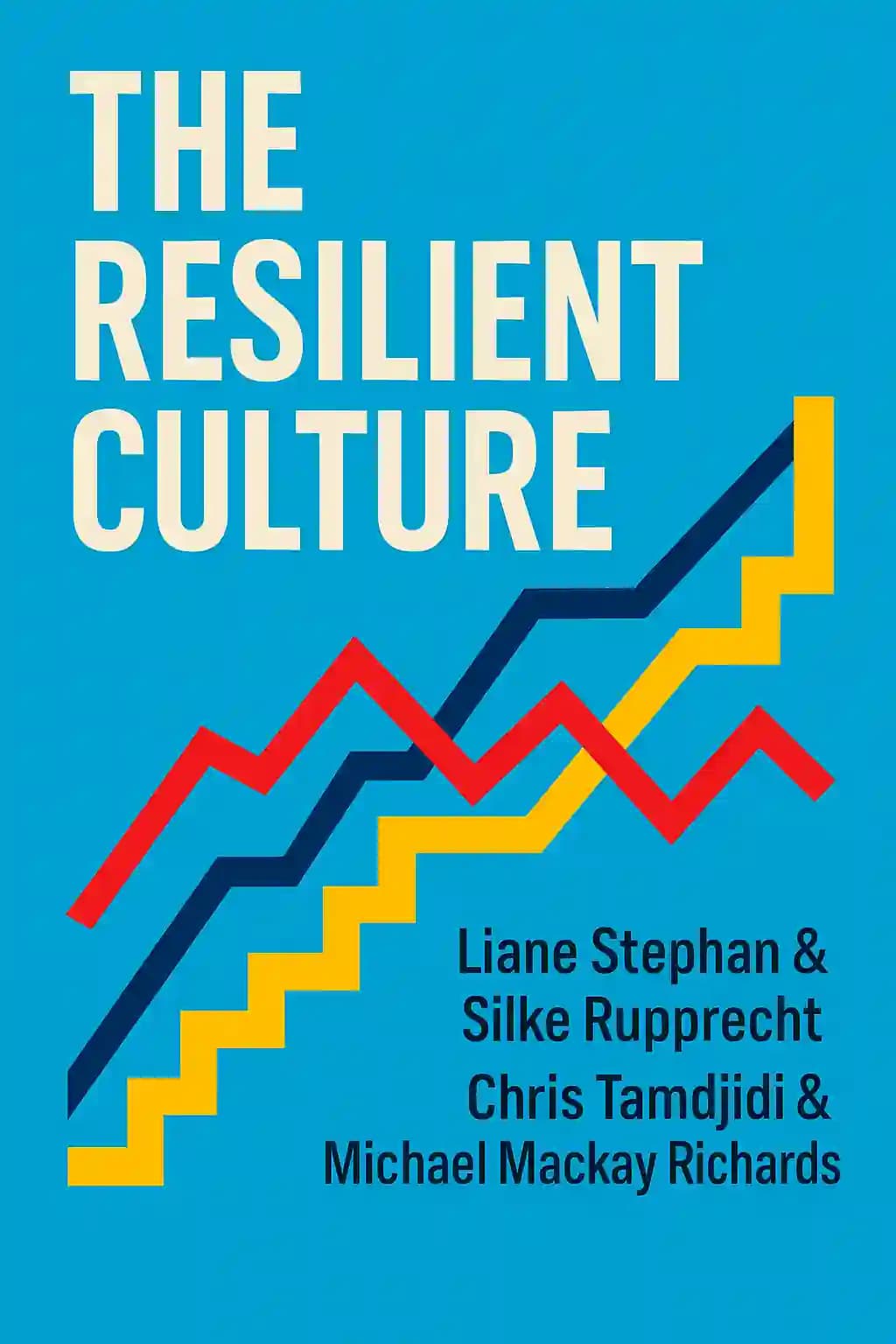
In a world where 44% of workers report feeling burned out, "The Resilient Culture" arrives as a timely antidote to our collective exhaustion. This groundbreaking work has been hailed by global leaders as an "indispensable resource for 21st-century leadership" precisely because it challenges conventional wisdom about resilience. While most workplace wellness initiatives focus on individual endurance, authors Tamdjidi, Stephan, Rupprecht, and Richards reveal a revolutionary approach: "We-silience" - the idea that true resilience emerges not from solitary grit but from collective strength. Drawing on data from 2,000 individuals across 150 teams and 30 organizations, the book has become required reading for forward-thinking executives at companies like DHL, Novartis, and Bosch who recognize that resilience isn't just a wellness concept but a pivotal business strategy in our increasingly unpredictable world.
第 2 章
The Resilience Misconception: Why Endurance Isn't Enough
We've all witnessed the glorification of workplace martyrdom - the exhausted colleague on their fifth coffee boasting about late-night emails and minimal sleep. This celebration of endurance reflects our fundamental misunderstanding of resilience. True resilience isn't about withstanding pressure indefinitely; it's about adaptability - the capacity to shift between different internal states as circumstances require.
This misconception stems partly from resilience's origins in materials science, where it described "the power of a material to return to its original form after being bent or stretched." When applied to humans in workplace contexts, this definition morphed into celebrating those who endure excessive workloads without breaking - the "hero leader" who powers through despite exhaustion.
But chronic stress actually makes us less adaptable, not more resilient. As neurobiologist Robert Sapolsky notes, stress makes us "in a rut, set in our ways, running on automatic." When stressed, we become perseverative - repeating ineffective behaviors with increasing intensity rather than adapting creatively to challenges.
Another common myth is that resilience is an innate trait - some have it, others don't. This belief often manifests when certain leaders are perceived as "naturally tough," functioning on minimal sleep or handling pressure effortlessly. However, deeper investigation typically reveals these "naturally resilient" individuals actually practice specific resilience behaviors without recognizing them as such. During one revealing town hall, a leader who claimed to be "just tough" admitted he regularly practiced deep breathing, ensured family dinner time, and exercised weekly - all effective resilience behaviors.
While genetics do influence resilience (about 30%), lifestyle choices and behaviors (40%) play a larger role. Resilience isn't fixed by upbringing either. The authors share their personal journeys: Liane overcame a difficult childhood by developing resilience skills despite trauma, while Chris had a privileged upbringing that naturally supported resilience. Both became highly resilient through different paths, demonstrating that resilience can be developed through intentional practice regardless of one's starting point.
Perhaps most dangerously, many organizations believe resilience is someone else's responsibility, leading to finger-pointing: management blames junior employees for lacking toughness, junior employees blame excessive workloads and leadership, and HR feels powerless between them. The reality is that resilience requires shared responsibility across all organizational levels.
By moving beyond these misconceptions, we can embrace a more accurate understanding of resilience as the ability to shift both internal states and external environments in response to challenges - a skill that can be systematically developed at individual and organizational levels.
第 3 章
Navigating Our Inner Landscape: The Physiology of Resilience
To understand resilience, we must first comprehend how our bodies respond to stress. Two key biological systems govern our automatic responses: the autonomic nervous system and the reward system. The autonomic nervous system operates through two opposing branches - the sympathetic "fight or flight" response that increases heart rate and releases energy through cortisol and adrenaline, and the parasympathetic "rest and digest" response that slows heart rate, deepens breathing, and activates digestive and immune functions.
Not all stress is harmful. "Eustress" describes optimal stress that enhances performance, while "distress" occurs when stress becomes excessive or prolonged. The relationship follows an inverted U-curve: too little stimulation impairs attention, while too much leads to disorganized behavior and potential burnout. The sweet spot allows for focused attention, emotional balance, and rational thinking.
Our emotional responses can be mapped on a circumplex model with two axes: valence (positive to negative) and arousal (high to low). This creates four key internal states that we naturally cycle through:
1. Stressed (high arousal, negative valence): Provides necessary energy for urgent tasks but promotes avoidance behaviors and isn't conducive to long-term learning.
2. Growing (high arousal, positive valence): Combines energy with positive emotions like curiosity, making it ideal for knowledge work as it enhances information retention and strengthens pro-social behaviors through dopamine release.
3. Regenerating (low arousal, positive valence): Enables subtle but profound learning through reflection and consolidation, while preventing burnout.
4. Letting Go (low arousal, negative valence): Though not optimal for new learning, allows for necessary unlearning and releasing what no longer serves us - an often overlooked aspect of resilience.
True resilience requires the ability to navigate fluidly through all four states rather than getting stuck in any single one. Just as cycling through seasons is natural, so is cycling through these states - it's an expression of resilience. Problems arise when we get stuck in one state or struggle to navigate between them.
Data from stress assessments with over 2,000 participants across 20+ companies reveals that many workers spend 70-80% of their day in a stressed state. This prolonged stress has severe consequences: it depletes bodily resources, damages mental health and social connections, and narrows our "window of tolerance" - the range within which we can function well and regulate our state.
Modern workers often cycle between high arousal states (work stress followed by artificial excitement) and "zombie-ing out" through video games, alcohol, or mindless television. This pattern prevents healthy time in the growing zone, as the artificial arousal is too high for proper learning or regeneration.
Resilience isn't about enduring high stress, focusing solely on regeneration, avoiding negative states, or always maintaining wellbeing. Rather, resilience is fundamentally the ability to shift between states - adapting to situations with a healthy balance of responses. This ability to shift states is necessary not just individually but at the organizational level to build resilient cultures.
第 4 章
The Twelve Resilience Skills: Building Your Adaptability Toolkit
Resilience emerges when we learn to regulate stress activation and its valence - specifically, when we can shift through the four physiological zones described earlier. This state-shifting ability comprises specific learnable behaviors that can be developed with varying proficiency.
Drawing from work with 250 businesses and 50,000 employees, plus data from over 2,000 people across 150 teams and 30 organizations, the authors have identified 12 key resilience skills organized into three domains:
Physical Domain:
• Movement/exercise: Regular physical activity improves cardiovascular health and strengthens nervous, immune and digestive function.
• Sleep/recovery: Quality sleep enables cellular repair and cognitive processing.
• Healthy nutrition: Proper fuel supports energy levels and mood regulation.
• Conscious breathing: Deliberate breathing practices directly influence nervous system regulation.
Mental/Emotional Domain:
• Emotional regulation: The ability to identify, understand and manage emotional responses.
• Attention regulation: Capacity to direct and maintain focus appropriately.
• Positive outlook: Tendency to interpret situations constructively and find opportunities in challenges.
Social Domain:
• Social connection: Maintaining supportive relationships and meaningful interactions.
• Compassion/care: Extending kindness to oneself and others.
Cross-Domain Skills:
• Interoceptive awareness: Ability to sense and interpret internal bodily signals.
• Relaxation: Capacity to intentionally reduce physical and mental tension.
• Connection to purpose: Maintaining alignment with meaningful goals and values.
To conceptualize resilience, the authors use a battery metaphor. Your resilience is like a battery charge - green, orange, or red - representing your resilience balance score. Points are added for mastered skills and subtracted for undeveloped ones. While nature or nurture determines battery size, the charge level depends on engagement with resilience skills. The drain rate is determined by "stress temperature" - a combination of objective stress load and subjective stress level.
Data from 1,200 respondents confirms that engaging in resilience skills strongly correlates with improved resilience outcomes and stress reduction. Practicing resilience skills accounts for 39% of the variance in perceived stress, while stressor load explains only 18%. This means resilience skills have a bigger impact on lowering stress levels than the actual number of stressors faced.
The four resilience skills with highest correlation to resilience are positive outlook, emotional regulation, attention regulation, and self-compassion. Together, these explain 33% of resilience variance. However, the most impactful skills vary by profession and stressors faced. Legal professionals benefit most from self-compassion and positive outlook to counter perfectionism. HR professionals need social connection, especially when working remotely. Managers under high workloads gain most from attention regulation skills.
Those who persevere with learning resilience skills can transform their resilience battery from red or orange to green, slowing battery drain during stressful periods. Some people naturally gravitate toward certain resilience skills, particularly social connection and positive outlook, but all skills can be developed through consistent practice.
第 5 章
Resilience Competencies: Understanding Your Personal Profile
Beyond individual skills, there exists a meta-level of resilience competencies - broader attributes developed through mastering multiple skills. Statistical factor analysis reveals three distinct competency types that help identify individual resilience profiles:
1. Mindful Self-Regulators (26% of people)
These individuals apply mindfulness techniques regularly and are three times more likely to engage in relaxation practices like yoga or meditation. Their strengths include noticing bodily sensations to regulate stress early, countering negative self-talk with self-compassion, and maintaining focus despite distractions. They excel at internally managing difficulties and shifting mental states, leading to superior job performance and lower chronic stress. However, they may over-rely on coping alone in collaborative environments.
2. Healthy Habits (24% of people)
Those with this competency maintain consistent physical routines regardless of circumstances. Unlike most who abandon healthy practices during stress, they double down on exercise, nutrition, and sleep when pressure increases. This competency closely aligns with energy management - only 10% struggle with maintaining a healthy diet compared to a third of others. They're 2.7 times more likely to have regular bedtime routines and 81% report feeling fit versus just 22% of those outside this group.
3. Social Integration (46% of people)
Those with Social Integration competency have strong workplace connections, feel appreciated, and actively support colleagues. They're 2.8 times less likely to remain down after stressful situations and three times more likely to strongly agree they help others at work. Often functioning as what Adam Grant calls "Givers," they coach and support colleagues even at the expense of their own tasks. This approach correlates with higher self-rated performance and stronger purpose - 82% report having meaning and direction versus just 34% who score low in this competency.
Each competency addresses different challenges: Healthy Habits best manages heavy workloads through effective energy management; Mindful Self-Regulators cope best with personal demands and mental health concerns; and Social Integration has the strongest effect when dealing with change initiatives and uncertainty.
People rarely fit into just one category. About one-third of respondents display only one competency, 17% score high in two competencies, and 10% are "super-resilient" with high scores across all three. Concerningly, the largest group (41%) shows low resilience with no strong competencies. This low-resilience group scores 10% lower on performance measures and is three times more likely to experience chronic stress.
This shouldn't be viewed as a personal failing but rather indicates these employees may need additional organizational and psychological support to develop coping strategies. Those in the low resilience category typically face four or more stressors in their private or work lives, from job demands to mental health issues or family challenges.
The authors emphasize that "Each organization is only as resilient as their employees who are struggling the most." This perspective highlights why resilience must be addressed at both individual and organizational levels - a theme that becomes increasingly important throughout the book.
第 6 章
Mindfulness: The Foundation of Physiological Intelligence
Our brains represent perhaps the most complex systems in the known universe, with over 86 billion neurons forming thousands of synaptic connections each. Despite this incredible processing power, we struggle with simple mental calculations because most of our processing happens unconsciously. We can conceptualize this as having both a "thinking brain" (cognitive processes in the cerebral cortex) and a "feeling brain" (emotional processes in the limbic system).
Modern life has created an increasing disconnect between these two processing modes, primarily due to technological advancements that prioritize digital signals over bodily awareness. The average British person spends over four and a half hours daily on smartphones specifically designed to distract attention, making mind-body integration increasingly difficult.
Mindfulness has transformed from a fringe practice to mainstream acceptance, with research publications exploding from fewer than 200 annually at the millennium to over 3,000 today. A meta-review by the UK's National Institute of Health and Care Excellence examining over 150 studies concluded that "Yoga, mindfulness, and meditation were most effective overall in reducing job stress and mental health symptoms and having a positive effect on employee mental wellbeing" - outperforming leadership mental health training, mental health first aiders, and other interventions.
Mindfulness works on three distinct levels:
1. Behaviorally: It helps us notice unconscious automatic responses and practice new ones.
2. Psychologically: It allows us to observe thinking processes and fixed mindsets, enabling us to let go of limiting thoughts or cultivate more purposeful thinking.
3. Physiologically: Perhaps most powerfully, it regulates our core internal systems through posture, breathing and heightened bodily awareness.
This third dimension represents physiological intelligence - the ability to not just be aware of bodily functions but to actively regulate internal systems. Just as emotional intelligence involves awareness and regulation of emotional states, physiological intelligence encompasses awareness and regulation of bodily states.
In mindfulness practice, breathing serves as a gateway to physiological regulation. Deep breathing increases oxygen transfer to blood, allows breath to slow gradually, and lengthens the outbreath relative to the inbreath, triggering a shift from sympathetic arousal to parasympathetic recovery.
Through mindfulness practices, we can consciously regulate our nervous system via the breath, shifting between sympathetic and parasympathetic states as needed. This ability to downregulate stress and upregulate energy throughout the day allows us to spend more time in recovery mode and quickly move away from stress when necessary.
Heart rate variability (HRV) measurements provide a window into our inner physiological state. High variance between heartbeats indicates healthy balance between sympathetic and parasympathetic nervous systems. Working with thousands using HRV devices, the authors help people separate inner states from external influences by teaching breath control, posture adjustment, emotional regulation, and attention cultivation.
The authors make a bold claim: every company needs mindfulness as a foundational capacity for the future. Meta-reviews of workplace wellbeing interventions support this, recommending ongoing mindfulness, yoga or meditation for all employees. Despite being among the most effective workforce interventions for reducing stress and building wellbeing, many companies implement mindfulness superficially, offering token sessions while maintaining unsustainable work demands.
Research shows mindfulness offers unique benefits for leadership development, including stress reduction and emotional regulation that enhance decision-making and communication. It increases self-awareness, helping leaders understand their strengths, weaknesses and biases, potentially preventing them from becoming "horrible bosses."
第 7 章
From Individual to Collective: Building Team Resilience
The culture of teams is immediately observable through their interaction habits. In some teams, pre-meeting behavior shows disconnection - people stare at devices, avoid conversation, and leave quickly when meetings end. In contrast, other teams engage in warm conversations and establish human connections even briefly. These different team cultures directly impact both business performance and employee wellbeing.
Most teams assume effectiveness emerges naturally from clear goals, roles and processes, but research shows this isn't sufficient. Many teams with these elements still underperform, with studies revealing 45% of meeting time is wasted due to non-inclusive communication patterns.
Research consistently shows team success depends less on who's in the team and more on how members interact. Google's Project Aristotle found the best teams respect emotions and ensure equal contribution. Similarly, MIT research revealed "collective intelligence" correlates strongly with equal conversational turn-taking and social-emotional intelligence rather than individual member intelligence.
The authors distinguish between "habits of effectiveness" (protocols for managing goals and tasks) and "habits of interaction" (how people connect and communicate). Teams need both - those with strong effectiveness habits but poor interaction habits create stressful environments, while those with good interaction but poor effectiveness are pleasant but unproductive.
Teams with resilient cultures experience significantly less stress and burnout. Data from 104 teams shows those with more than three resilience habits had 30% lower team stress scores than those with few habits. This works both ways - resilience skills protect against stress, while excessive stress breaks down shared skills.
These collaborative habits also dramatically impact performance, with highly resilient teams three times more likely to score high on innovation. Teams practicing resilience habits are also five times more likely to experience psychological safety (53% vs 11%), show higher motivation (84% vs 59%), and demonstrate greater effectiveness (63% vs 30%).
While all team habits impact performance, certain skills prove particularly crucial. Positivity stands out dramatically - 55% of teams regularly practicing positivity scored above average in effectiveness and innovation, compared to just 3% of teams without these skills. For wellbeing specifically, emotional intelligence emerges as the critical factor, with 62% of emotionally intelligent teams scoring high on wellbeing versus 38% of less emotionally intelligent teams. Most strikingly, teams that effectively process emotions are five times less likely to experience burnout.
The authors implement their team resilience process through "ResilientTeam Labs," bringing up to 10 teams together simultaneously. This approach ensures teams share responsibility for building habits across the team rather than leaving everything to the team leader. Individual team members take responsibility for establishing, maintaining and tracking specific team habits for three months.
第 8 章
Leadership's Critical Role in Organizational Resilience
Leaders significantly impact organization-wide resilience, yet many fail to translate their theoretical understanding of resilience into practical action. Research from the Mayo Clinic demonstrates this connection clearly - leadership style correlates strongly with employee burnout (r=-0.33) and even more strongly with job satisfaction (r=0.68), explaining 46% of the variation in unit satisfaction.
Despite this impact, leaders experience significantly lower stress levels than their employees, with only 37% reporting elevated stress compared to 46% of non-management staff. This disparity stems from several factors: leaders typically have greater schedule control, more stress management experience, and are often selected for their resilience capacity (33% of leaders qualify as highly resilient versus just 21% of non-leaders).
The pandemic highlighted this divide - leaders were twice as likely to flourish as young single employees, with 35% of leaders thriving compared to 25% of non-leaders. While 61% of managers felt the pandemic improved their work-life balance, only 25% of other employees agreed. This experience gap is further widened by purpose - 85% of senior leaders feel strongly connected to purpose in their daily work, versus just 15% of other employees.
Many leaders have unconsciously developed resilience habits through sports, healthy eating, prioritizing rest, maintaining positivity, or developing strong attention regulation. Because these skills have become second nature, leaders often fail to recognize them as learnable competencies that require deliberate cultivation.
During high-pressure periods, leaders frequently abandon resilience practices to focus exclusively on output, falsely believing care and performance are in conflict. In reality, they're inseparable. When working with engineers addressing an automotive scandal, the authors found executives initially shrugged off resilience support despite crushing pressure. Only after implementing mindfulness practices, dialogue sessions, and stress monitoring did leaders recognize that prioritizing care paradoxically improved performance during crisis.
For resilience to take root organization-wide, leaders must focus on five key areas:
1. Live resilience personally - adopting positive mindsets and healthy habits that research shows can extend life by 10 years.
2. Prioritize management time - despite surveys showing many leaders spend less than 5% of their time on people management, when increasing this engagement demonstrably improves team happiness and productivity.
3. Lead well - providing a compelling vision, connecting employees to purpose, modeling healthy work-rest habits, and creating cultures where emotions can be shared rather than suppressed.
4. Support employees - actively checking in with team members and helping them access appropriate support resources.
5. Anchor business-wide habits - using their organizational influence to establish resilience-building practices throughout teams and business units.
第 9 章
Creating Truly Resilient Organizations: A Systematic Approach
While individuals bear some responsibility for developing resilience, there are clear limits to what personal resilience skills can achieve in toxic work environments. Data from 1,200 respondents shows that as workplace stressors increase, the number of people reporting "high resilience" drops significantly. In the "Goldilocks zone" of up to three strong workplace stressors, resilience skills are effective. But beyond this in the "toxic zone," there's a quicker decline in resilience as stressors multiply, making individual resilience skills less effective and requiring organizational intervention.
Just as organizations need financial planning skills, they also need human-centric resilience skills that create foundations for staff to practice resilience. Organizations have made progress in some areas like physical health (fitness centers, sports teams, ergonomic facilities) and nutrition (healthy cafeteria options), but still struggle with other critical resilience domains like rest and recovery, relaxation, attentional regulation, emotional regulation, positive outlook, and social connection.
When implementing organization-wide resilience initiatives, the authors recommend an eight-step methodology:
1. Work with appropriate group sizes - optimal results come from discrete organizational units of 150-1,000 people, with at least 30% participation.
2. Get management on board - convince leadership that staff wellbeing directly impacts performance through evidence-based practices and data-driven patterns.
3. Start with individual resilience screening - provide personalized resilience battery profiles that help employees understand their unique skills and stressors.
4. Analyze staff-wide data - generate crucial insights about overall stress levels, departmental stress loads, and strengths/weaknesses in resilience skills across the organization.
5. Select shared priorities with management - identify 3-4 key resilience skill areas based on the organization's unique characteristics and needs.
6. Build individual resilience skills consistently - implement deepening workshops, 10-day practice sprints, and ongoing app-based support for long-term skill development.
7. Build business-wide resilience skills in parallel - simultaneously implement organization-wide practices targeting high-stress areas.
8. Measure outcomes - track improvements in perceived stress, flourishing scores, practice compliance, and engagement with resilience skills.
This approach delivers remarkable outcomes: 30-35% average reductions in perceived stress, with those in high stress categories dropping from 45% to about 15%. Resilience improves by over 25% on standard scales, and employee flourishing increases by 30%. Beyond wellbeing benefits, productivity and self-efficacy typically improve by 3-8%, demonstrating clear business value.
Organizations develop a shared language around resilience and wellbeing that unites management, HR, and staff. Even high-performance environments like Formula 1 teams recognize that resilience and performance are deeply linked, not opposed. By making work more human-centric, this approach transforms not just organizational culture but individual lives.
第 10 章
The Path Forward: From "I-Resilience" to "We-Silience"
The authors conclude with a powerful message: resilience isn't solely an individual responsibility. While the 12 resilience skills and three competencies must be practiced like any skill, many employees are already too stressed to effectively self-regulate. This highlights how resilience is both a personal and organizational responsibility.
Organizations need a clear understanding of desired resilience skills and competencies, helping employees develop these consistently over years. Resilience should be measured against targets as important as KPIs. While individuals are responsible for their own resilience skills, organizations must help develop and embed these in the work fabric.
Most organizations lack the human-centric skills needed for "We-silience," but these skills aren't complex and will improve engagement, retention, innovation and sustainable performance. By shifting from individual endurance to collective strength, organizations can create cultures where people not only survive but thrive amid the challenges of modern work.
The journey from "I-resilience" to "We-silience" represents nothing less than a fundamental reimagining of how we approach work in the 21st century - one that recognizes our deeply interconnected nature and builds organizational structures that support our innate human need for both challenge and recovery, performance and care, individual growth and collective strength.