第 1 章
Beyond Disruption: The Third Way to Innovation Success
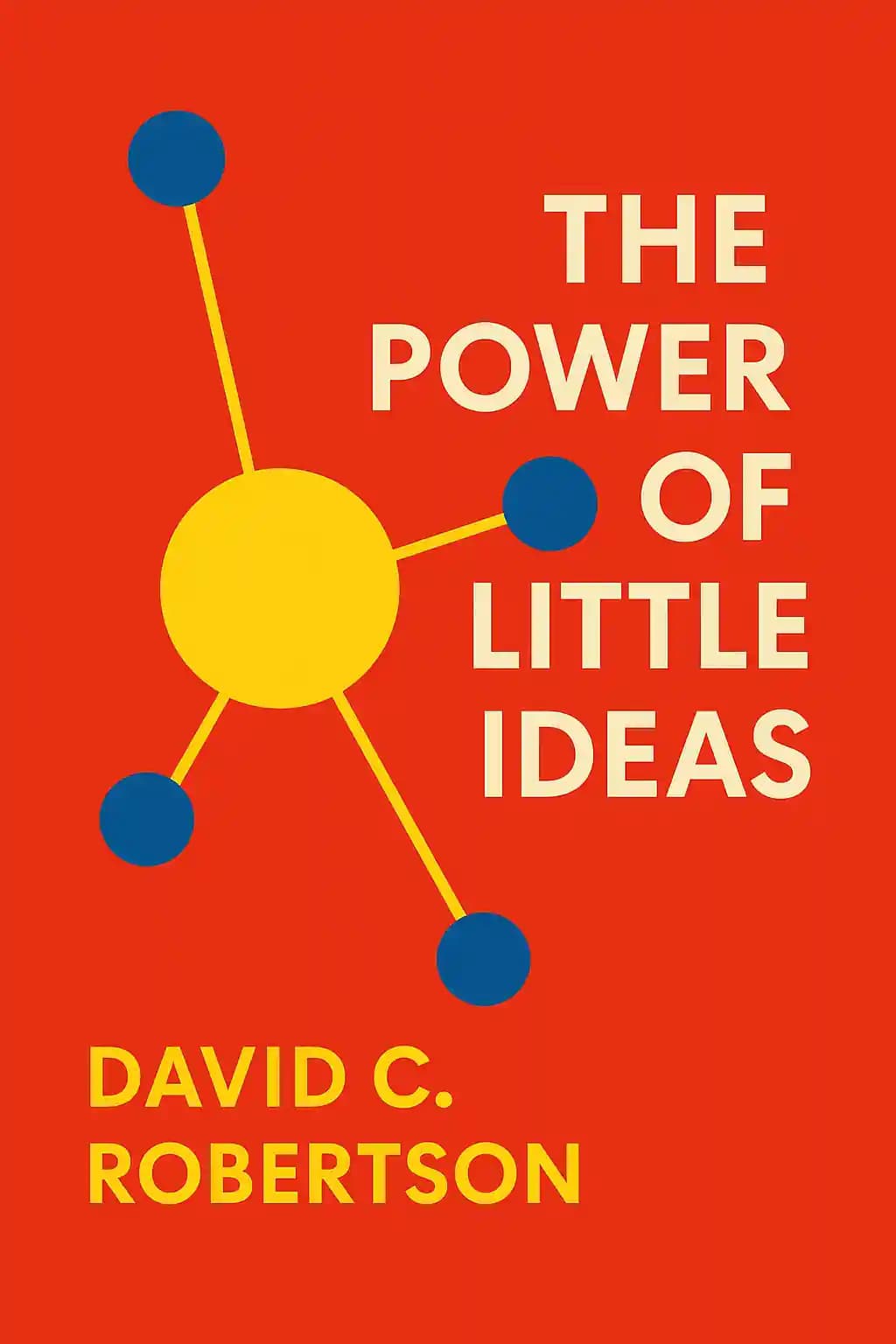
Imagine a world where innovation isn't a binary choice between incremental tweaks and radical disruption. What if there was a powerful middle path that could revitalize mature products, delight customers, and drive explosive growth without betting the company? This is the premise of "The Power of Little Ideas," which has become required reading at companies like Apple, Amazon, and Microsoft. The book reveals how iconic brands from LEGO to Gatorade achieved remarkable turnarounds not by reinventing their core products, but by surrounding them with complementary innovations that made them irresistible. When Steve Jobs returned to Apple in 1997, he didn't immediately create revolutionary new products-instead, he revitalized the Mac by surrounding it with iTunes, iPods, and Apple Stores. This "Third Way" approach has been hiding in plain sight, quietly powering some of the most successful business transformations in history while avoiding the 70-95% failure rates of disruptive innovation.
第 2 章
The Third Way: A Powerful Alternative to Binary Innovation Thinking
When Sarah Robb O'Hagan took over Gatorade in 2008, she discovered a brand in serious decline. Despite inventing the sports drink category, Gatorade's sales had dropped 10% while competitor Powerade grew 13%. The company had already tried the common innovation approach of "more" - more products, more features, more distribution channels - which had initially succeeded after PepsiCo's acquisition. But by 2007, this strategy had reached its limits.
Conventional wisdom suggested Gatorade needed radical innovation - something disruptive and revolutionary. However, Robb O'Hagan chose a different path. Rather than panicking when sales continued to decline after a logo redesign, her team analyzed their market data and discovered Gatorade was losing casual drinkers but retaining serious athletes - teenagers and older performance athletes who represented just 22% of customers but 46% of sales.
Instead of competing with Powerade on price, they refocused on these core segments and expanded beyond hydration into complete sports nutrition. The team created the G Series - a 1-2-3 system of products for before, during, and after exercise. They raised prices, shifted distribution to specialty sports retailers, redirected advertising from TV to online channels targeting serious athletes, and revived Gatorade's scientific roots through expanded research. By 2015, Gatorade had regained market share and restarted growth.
What made this approach unique wasn't product expansion alone, but that complementary innovations were created specifically to increase sales of the unchanged core drink. These innovations were diverse, targeted a specific customer segment, and posed little strategic risk.
The Third Way approach has three defining characteristics. First, it consists of multiple, diverse innovations surrounding a key product that enhance its competitiveness. Second, these innovations must function together as a cohesive system to fulfill a compelling customer promise. Third, the family of innovations requires close, central management - unlike an ecosystem of autonomous entities, each complementary innovation must be deliberately selected and actively managed.
This approach isn't appropriate for every situation - it wouldn't have saved Kodak from digital photography's disruption. However, when conventional wisdom suggests radical innovation as the only option, leaders should consider this less risky alternative. The Third Way offers particular value when your core product is mature or commoditized, breaking the link between risk and reward by allowing large returns from relatively small ideas.
第 3 章
The Great Turnarounds: How LEGO and Apple Found Their Way Back
When Steve Jobs returned to Apple in mid-1997, he faced a dire situation. Apple's market share had plummeted from 12% to 4.6%, and the company had lost $700 million in the first quarter of 1997 alone. The situation was so dire that Michael Dell suggested liquidating the company and returning money to shareholders.
Jobs immediately focused on stopping the bleeding. He slashed 70% of Apple's hardware and software products, simplifying the computer lineup to just four models. He killed the Newton PDA, Pippin gaming platform, and QuickTake cameras, and terminated all Mac clone licenses. To cut costs, Jobs outsourced manufacturing, reformed the board, brought in senior talent from NeXT, and ended the patent dispute with Microsoft.
The pivotal moment came in 2001 when Jobs unveiled his complementary innovations around the Mac: the iPod, iTunes, and Apple Stores. Most significantly, he announced the "digital hub" strategy, positioning the Mac as the central management tool for users' increasingly digital lives. Initial reactions were skeptical - the $399 iPod seemed expensive and initially only worked with Macs. Critics questioned whether Apple was becoming "a glorified consumer gimmicks firm."
In 2003, Apple launched the iTunes Music Store, giving users legal access to a vast music library for $0.99 per song. The store was an immediate success, selling five million songs in just eight weeks and capturing 70% of all legal music downloads within six months. In October 2003, iTunes for Windows launched, making the iPod ecosystem available to virtually anyone with a computer.
Between 2004 and 2007, Apple's collection of "little innovations" evolved into transformative products. The iTunes Store expanded beyond music to include TV shows, movies, and audiobooks. In 2007, Apple introduced a completely redesigned iPod with touchscreen replacing the click wheel, and the iPhone - essentially the redesigned iPod with phone capabilities. Following the iPhone launch in 2007, the App Store in 2008, and iPad in 2010, Apple's sales and profits grew dramatically.
LEGO faced a similar crisis beginning in 1993 when its 15-year growth streak suddenly halted. The company initially responded with binary thinking about innovation - first tripling its new toy releases between 1994-1998, which increased complexity while sales remained flat, then embracing disruption by abandoning its core brick-based identity for electronic toys, virtual simulations, theme parks, and video games.
By 2003, executives described the situation as "a burning platform" and "a financial disaster." In this crisis, LEGO discovered one consistent success - Bionicle. Unlike traditional LEGO toys, Bionicle featured plastic pieces that constructed action figures, a LEGO-created hero-villain storyline, and complementary innovations including comics, books, video games, direct-to-video movies, and licensed merchandise.
Bionicle literally saved LEGO, with over 190 million figures sold during its nine-year lifespan. As the only profitable product during the crisis years of 2003-2004, it inspired LEGO to reorganize its development approach around story-driven construction sets surrounded by low-risk complementary innovations. This Third Way approach produced dramatic results: 21% annual sales growth and 36% profit growth from 2007-2015.
Both Apple and LEGO demonstrated that building complementary innovations around core products can make those products more desirable and profitable while creating strong competitive positions that are difficult to match due to their complex, interdependent nature.
第 4 章
The Four Critical Decisions That Drive Third Way Success
The Third Way approach requires making four critical decisions that determine success or failure. These decisions represent key phases of activity and explain why companies like CarMax prevailed over competitors like AutoNation despite having fewer resources.
Decision 1: What Is Your Key Product?
Choosing a key product is straightforward but critical. The product must meet two requirements: First, it should be one of your "crown jewels" - a product that advances strategic goals and represents your company's identity in the marketplace. Second, it must be relatively stable and unlikely to change significantly in the medium term (3-5 years).
This decision inevitably creates winners and losers within an organization. When Steve Jobs returned to Apple in 1997, he eliminated 70% of the product line, keeping only four Mac models. This rationalization process meant positions disappeared or were downgraded, creating organizational resistance.
Another challenge is the "coral reef syndrome" - when products become encrusted with so many changes and "improvements" that they become unrecognizable, with blurred functions and confused benefits. Key products must be rehabilitated to be simple, lean and strong before implementing the Third Way.
Decision 2: What Is Your Promise for Your Key Product?
The promise is the heart of the Third Way - a commitment that ties together all complementary innovations around a key product. It's a pledge to help customers accomplish their goals beyond just delivering the product itself. The promise addresses a pressing customer need or desire that sets your offering apart from competitors.
An ideal promise has four characteristics: it addresses an important customer need; it fills a need not well-satisfied by competitors; it draws on the organization's particular expertise; and it reinforces the company's brand.
Finding a powerful promise requires deep customer understanding that rarely comes from traditional market research. Instead, it demands empathetic observation of customers in context - watching how they actually use products rather than simply asking what they want.
Victoria's Secret and Frederick's of Hollywood illustrate the power of a compelling business promise. While Frederick's maintained a lascivious image with racy undergarments, Victoria's Secret redefined itself with a promise of refined sensuality and romance. Victoria's Secret transformed its stores from Victorian bordello aesthetics to luxury shopping experiences and expanded into complementary products like swimwear, fragrances, and cosmetics. This strategic promise led Victoria's Secret to a commanding 35% market share while Frederick's closed its last physical store in 2015.
Decision 3: How Will You Innovate Around Your Key Product?
This decision involves identifying, testing, and selecting the specific innovations that fulfill your promise. First, generate multiple candidates by examining the customer activity chain (following the customer through their entire experience), the consumption chain (following the money to identify value points), and the value chain (following the product through your company's activities).
After generating ideas, narrow them down using four key filters: constrain (how crucial is the innovation to delivering your promise?), connect (how well does the innovation link to your key product and other complementary innovations?), control (how will you manage the innovation's development?), and complete (does the set of innovations represent a minimum viable portfolio of complements?).
The best way to assess innovation success is through pretotypes - quick, cheap tests that simulate how real customers buy and use the actual product. Unlike prototypes that come late in development, pretotypes come before the decision to proceed. Examples include "Wizard of Oz" tests (where humans secretly perform functions that will eventually be automated) and "fake-door" tests (offering non-existent products to gauge interest).
Decision 4: How Will You Deliver Your Innovations?
Delivering innovations requires identifying who will be responsible for each one - people spread throughout the organization and potentially outside experts with unique skills your company lacks. The solution integrator must lead a cross-functional team that works through all four decisions while maintaining a customer-centric mindset.
The fundamental challenge is coordinating groups that have never worked together before - teams that speak different languages, pursue different goals, and measure success by different standards. This requires installing new management practices and creating cross-functional collaboration.
Organizations must also navigate the financial tensions that arise when some complementary innovations must forgo profits for the good of the whole. Apple's iTunes Store initially sold music at cost because sending revenue to music companies served Apple's larger strategy.
第 5 章
How GoPro Outmaneuvered Sony with Complementary Innovation
GoPro illustrates the power of a compelling business promise and ecosystem-based thinking. Founded in 2002 by surfer Nick Woodman, who initially sought to solve his own problem of capturing surfing footage, GoPro transformed from a simple waterproof camera company into a $1.6 billion business selling 6.6 million cameras annually by 2015. Their promise wasn't just to sell cameras but to help customers capture and share their greatest adventures, from extreme sports to everyday moments.
While competitors like Sony offered technically superior cameras with better image quality, higher resolution, and more advanced features, GoPro built an extensive ecosystem of complementary innovations around their core promise. This ecosystem included over 100 different mounting accessories for every conceivable scenario - from helmet mounts for skiing to chest harnesses for mountain biking, and even dog harnesses for pet perspectives. They developed waterproof housings that worked at depths up to 197 feet, stabilization gimbals, and specialized lighting solutions for different environments.
GoPro's ecosystem extended beyond hardware. They created free editing software (GoPro Studio) that simplified video editing for beginners, mobile apps for instant sharing, and cloud storage solutions for backing up footage. The company fostered a vibrant content-sharing community through their GoPro Awards program, which offered cash prizes for the best user-generated content. This system allowed users to record adventures from their first-person perspective rather than as spectators, then easily edit and share these experiences across multiple platforms.
The impact of this ecosystem-based approach was dramatic. GoPro's YouTube channel gained over three million subscribers and billions of views, while Sony's Action Cam channel struggled with fewer than 100,000 subscribers. Their social media presence became self-sustaining as users eagerly shared their GoPro-captured moments, providing free marketing and inspiration for others. By focusing on this comprehensive promise, GoPro achieved a remarkable 91% annual growth rate over five years and captured 42% market share in the action camera segment, compared to Sony's modest 8%.
Sony's approach highlighted the limitations of traditional product-focused thinking. Their product managers created a technically superior camera with better specs but failed to understand that success in this market required more than just good hardware. They lacked GoPro's complementary ecosystem of mounts, software, and community engagement. This failure emphasizes the need for a different type of leadership approach - not just a traditional product manager focused on features and specifications, but a solution integrator who can orchestrate various innovation efforts around the core product to create a complete user experience.
The GoPro case demonstrates that in modern markets, technical superiority alone isn't enough. Success often depends on building an integrated ecosystem that makes it easier for customers to achieve their goals, while fostering a community that amplifies the brand's reach and impact.
第 6 章
The Solution Integrator: A New Kind of Innovation Leader
The Third Way requires recognizing that conventional methods won't work. Success demands a different type of leader - not a traditional product manager but a solution integrator who manages innovation efforts around the key product.
When companies pursue the Third Way, they often mistakenly assign traditional product managers to lead these efforts, setting them up for failure. The solution integrator role differs fundamentally from product management - focusing on the entire solution ecosystem rather than just the product itself.
This leader must collect user needs for the entire system, track competitors and potential partners for each component, document solution requirements, prepare system development strategies, track all development projects inside and outside the company, prepare for launch of the entire system, and track total costs and profits.
Third Way projects require specialized deliverables beyond traditional product development documentation, particularly the project plan and business case. The innovation matrix is a powerful project management tool that organizes innovations by category (horizontal axis) and risk level (vertical axis).
The horizontal categories typically include: 1) Business model innovations (revenue models, pricing, channels); 2) Product/service innovations (the key product and complementary offerings); 3) Customer innovations (marketing, experiences, communities); and 4) Process innovations (manufacturing, distribution, supporting processes).
Third Way projects also require combining all efforts around a key product into a single business plan that shows how different elements produce overall profit. Not every complementary innovation must be profitable individually - some are natural expense items, while others may operate at a loss to benefit the whole portfolio.
When implementing the Third Way, start small and start local. Rather than announcing a major initiative with permanent structural changes, begin with a reasonably sized effort treated as a one-off project. Use temporary roles, ad hoc teams, and committees while ascending the corporate learning curve. After gaining experience and refining the process, then institutionalize the approach.
第 7 章
The Disney Way: Lessons from an American Icon
The Walt Disney Company serves as both an inspiring and cautionary tale about the Third Way approach. Rather than seeing Disney's evolution as simple diversification, we can view Disney's branded businesses as complementary innovation around a core of animated feature films.
Walt Disney was a master of the Third Way, bundling diverse media and experiences under one corporate umbrella. In 1957, he created a diagram showing his vision: theatrical films at the center with complementary innovations - theme parks, television, merchandise, comics - surrounding and supporting them.
By the early 1950s, Walt and Roy Disney recognized that animated feature films alone were too financially risky to sustain the studio. What allowed Disney to survive and eventually thrive were the complementary innovations created around these films. The animated film business itself, if viewed in isolation, cannot be considered commercially successful - without these complementary innovations, the studio would have failed.
After Walt died in 1966 and Roy in 1971, Card Walker led the company with a "What would Walt do?" mantra. However, they drifted away from character-driven animated features, releasing only five animated films from 1970-1984. Financial results declined dramatically - pretax return on assets fell from 13.2% to 6.9%, and stock prices stagnated.
In 1984, Michael Eisner became CEO with Frank Wells as president, bringing new leadership to revitalize Disney. This team sparked a renaissance with hit films like The Little Mermaid, Beauty and the Beast, Aladdin, and The Lion King. Between 1991 and 1997, Disney's entertainment revenues nearly tripled to $7 billion, consumer products jumped from $700 million to $3.8 billion, and overall revenue soared from $6.1 billion to $22.5 billion.
After Katzenberg's departure in 1994 following an internal power struggle, Disney's performance began to decline. The studio went twelve years without an animated hit as "creative executives" with MBAs made decisions based on market research rather than artistic vision. By 2001, Disney reported a $158 million loss.
New CEO Bob Iger immediately reconnected with Steve Jobs and purchased Pixar for $7.4 billion in 2006. The turnaround was stunning: pre-acquisition Disney films averaged $249 million each, while the first three films under new management earned over three times that amount. By 2015, Disney's revenues had grown to $52.5 billion with operating income more than doubling to $14.7 billion.
Disney succeeded when led by those who understood Walt's vision - a Third Way organization with animated films at its creative center providing stories and characters that nourished everything else. It struggled when viewed merely as a diversified entertainment conglomerate. Success depends on maintaining a strong core, even when it's not the biggest revenue generator. When Disney produced high-quality animated features, all businesses thrived; when it neglected this core, everything suffered.
第 8 章
The Guinness Approach: Building Shrines Around Your Brand
In the early 1990s, Guinness noticed unexpected sales growth across Europe, particularly near successful Irish pubs. With 90% of their draft beer sold only in Ireland and the UK, they saw an opportunity to expand but recognized they were brewers, not retailers.
Rather than opening pubs themselves, Guinness created the Irish Pub Concept to help others open authentic Irish establishments. They identified Irish design-build firms that could help owners select locations, choose pub styles (country, Celtic, or Victorian), and construct authentic environments that were built in Ireland, disassembled, shipped, and reassembled on site.
The company mentored prospective owners through financing, development (a 3,000-step process), and training that included Dublin pub crawls. Each pub maintained quirky authenticity through personal stories connecting the establishment to Ireland.
The approach paid off tremendously - within six years, 2,500 Irish pubs opened across Europe, increasing annual sales by half a million barrels and growing international draft sales from 10% to 32%. As one manager noted, "If you want to make your brand come alive, the best way is to build a shrine around it."
This example perfectly illustrates how the Third Way can transform a commodity product (beer) into a compelling experience through complementary innovations that don't change the core product itself. Guinness didn't need to reformulate their stout - they needed to create the right environment for customers to enjoy it.
第 9 章
Embracing the Third Way: A Call to Action
The Third Way presents a thoughtful alternative to the prevailing "disrupt or die" mentality in business innovation. Rather than pursuing radical transformation, this approach advocates following the successful examples of companies like LEGO and Disney, who have masterfully extracted additional value from their core products. When LEGO faced financial trouble in the early 2000s, they didn't abandon their iconic brick - instead, they built complementary experiences around it, from digital games to theme parks. Similarly, Disney continues to find new ways to bring value to its cherished characters and stories across multiple platforms and experiences.
Organizations must recognize and protect their "crown jewels" - those foundational products or services that built their reputation and customer base. These assets often represent decades of accumulated knowledge, customer trust, and brand equity. For instance, Adobe's Photoshop remains a crown jewel despite the shift to cloud-based services, and IBM's mainframe computers continue generating significant revenue despite being considered "legacy" technology.
Deep customer engagement is crucial to the Third Way's success. This means conducting extensive field research, including:
• Direct observation of customers using products in their natural environment
• In-depth interviews with current, former, and potential customers
• Analysis of customer support data and feedback
• Regular customer advisory board meetings
• Systematic tracking of why customers leave or reduce usage
These insights often reveal unexpected opportunities for enhancement and innovation. For example, Gillette discovered through customer research that men weren't just seeking a closer shave but also wanted solutions for skin irritation, leading to the development of complementary skincare products.
Implementation should begin with careful experimentation in a single market segment. This involves:
1. Identifying the core product that holds untapped potential
2. Articulating a clear, compelling promise to customers
3. Developing complementary innovations that fulfill this promise
4. Testing and refining the approach before broader rollout
The Third Way demands humility from leadership teams, particularly those with extensive industry experience. Leaders must:
• Challenge their existing assumptions about customer needs
• Listen to diverse voices within the organization
• Base decisions on current market evidence rather than past success
• Create safe spaces for experimentation and learning
While disruptive innovation has its place, the Third Way offers a more sustainable path for many organizations. It's particularly valuable for companies with established products that still have significant growth potential. Success stories like Porsche's expansion beyond sports cars into SUVs while maintaining their performance promise, or Netflix's evolution from DVD delivery to streaming while keeping their convenience promise, demonstrate the power of this approach.
The Third Way's emphasis on measured evolution over revolution provides a practical framework for innovation that reduces risk while maximizing existing assets. By carefully orchestrating complementary innovations around core products, companies can achieve significant growth without endangering their fundamental business model. This approach proves that sometimes the most powerful ideas aren't about reinventing the wheel, but rather finding new ways to make it turn better.