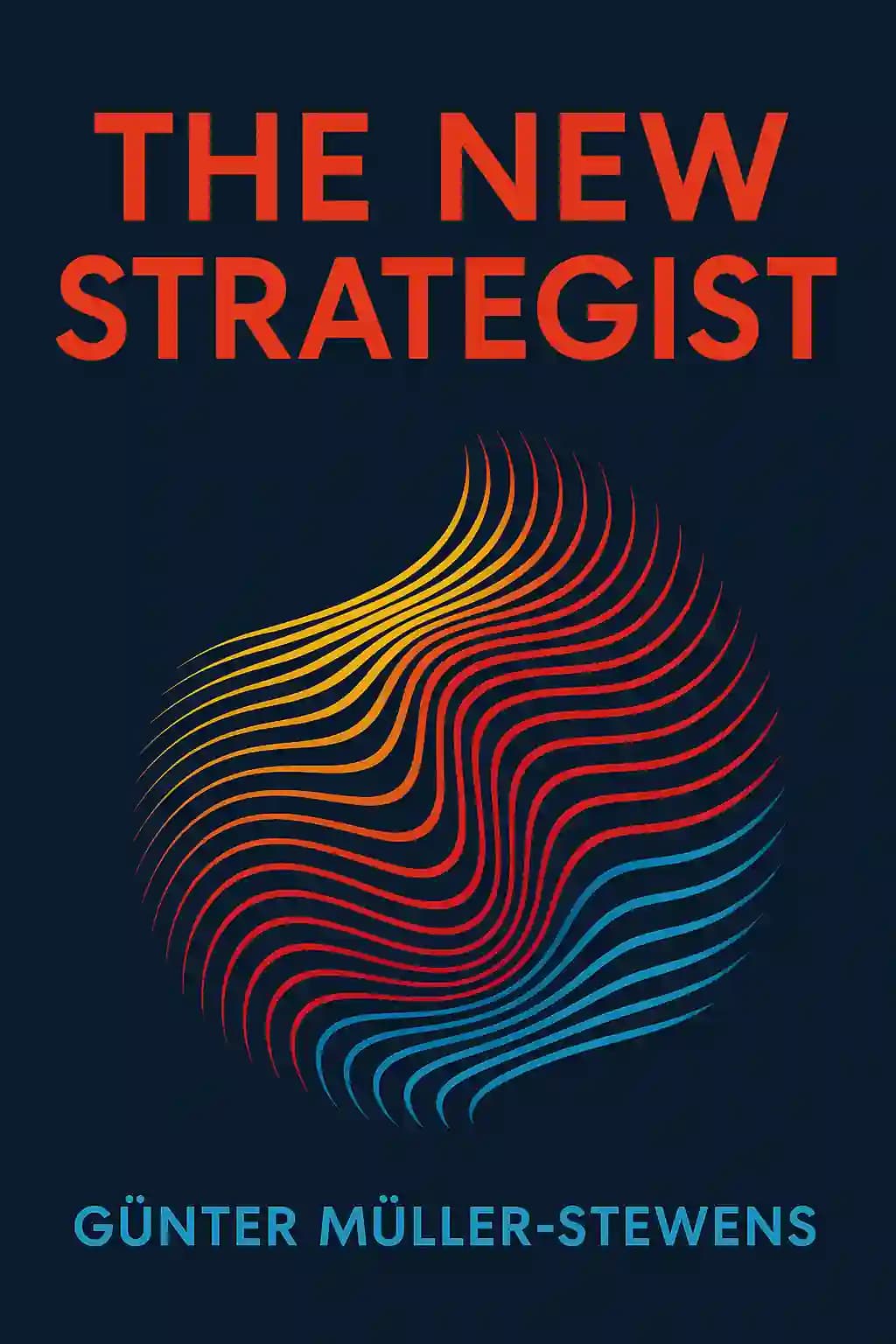
New Strategist
Shape Your Organization and Stay Ahead of Change
《New Strategist》概述
"The New Strategist" revolutionizes corporate thinking beyond profit maximization. Endorsed by top academics like Steven Floyd, Muller-Stewens' work challenges leaders to build purpose-driven organizations. What strategic shift could transform your company from surviving to thriving in our post-crisis world?

《New Strategist》核心主题
- strategic agility
- balancing central control
- organizational experimentation
- scaling innovation
- adaptive leadership
《New Strategist》经典语录
Traditional approaches to strategy are no longer sufficient.
Strategy is a journey, not a destination.
《New Strategist》主要人物
- Günter Müller-StewensAuthor and strategist proposing a new mindset
下载《New Strategist》摘要
免费获取《New Strategist》摘要的 PDF 或 EPUB 版本。可打印或随时离线阅读。
关于本书的常见问题
The New Strategist provides a practical framework for executing business strategy in fast-changing environments. It shifts focus from theoretical planning to actionable implementation, emphasizing roles like Chief Strategy Officers and managers. The book covers environmental analysis tools (SWOT, PEST), strategic leadership competencies, and aligning organizational purpose with market realities.
This book is ideal for managers, consultants, and executives responsible for strategy execution. It’s particularly valuable for leaders navigating digital transformation, market disruptions, or organizational restructuring. Academics studying strategic management will also benefit from its research-backed insights.
Yes—it bridges the gap between strategy theory and real-world application. Unlike many strategy books, it offers a unique dataset from the University of St. Gallen and actionable methods for day-to-day strategic work, making it essential for professionals aiming to future-proof their organizations.
- Strategic Discourse: Facilitating organization-wide conversations to align strategy.
- Environmental Analysis: Using SWOT, PEST, and Porter’s Five Forces to identify market opportunities.
- Purpose-Driven Strategy: Connecting corporate values to long-term strategic goals.
While books like Cynthia Montgomery’s The Strategist focus on leadership vision, Müller-Stewens prioritizes execution. It details specific tools (e.g., strategy maps) and roles (e.g., “architects of the future”) needed to operationalize plans in volatile markets.
The book advocates for:
- SWOT Analysis to assess internal/external factors.
- PEST Analysis for macro-environmental trends.
- Porter’s Five Forces to evaluate industry competition.
It identifies four competencies for strategic leaders: anticipating trends, making visionary decisions, fostering cross-department collaboration, and maintaining strategic transparency. Leaders are urged to act as “orchestrators” aligning resources with organizational purpose.
CSOs must balance long-term vision with short-term execution, using tools like strategy initiatives and performance dashboards. They’re tasked with embedding strategic thinking at all organizational levels, not just top management.
Müller-Stewens emphasizes linking corporate purpose to measurable initiatives—for example, translating sustainability goals into supply chain reforms or customer engagement metrics. Case studies show how purpose-driven companies outperform peers during crises.
With rapid AI adoption and geopolitical shifts, the book’s focus on adaptability and real-time strategy adjustments remains critical. Its methods help organizations respond to disruptions like supply chain bottlenecks or regulatory changes.
- Strategy Maps: Visualizing strategic objectives and dependencies.
- Initiative Pipelines: Prioritizing and tracking strategic projects.
- Discourse Workshops: Facilitating alignment across teams.
A successful strategist blends analytical rigor (e.g., data-driven forecasting) with empathy to engage stakeholders. They act as both “analyst” and “diplomat,” ensuring strategies are both innovative and executable.