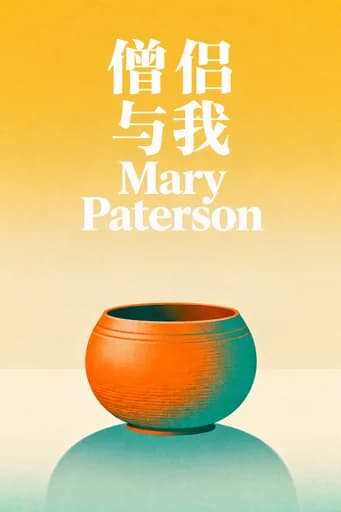
After 40 days in Thich Nhat Hanh's monastery, Mary Paterson's journey from grief to enlightenment captivates readers worldwide. Endorsed by Gates Foundation's Dr. Sgaier as "magnificent," this life-changing memoir asks: Can ancient Buddhist wisdom solve modern chaos? Discover why readers call it transformative.
Mary Paterson is the acclaimed author of The Monks and Me, a spiritual memoir that chronicles her transformative 40-day immersion at Thich Nhat Hanh’s Plum Village monastery in France. A psychologist and mindfulness practitioner, Paterson draws on her academic background in psychology and decades of studying Tibetan and Zen Buddhism to explore themes of self-discovery, inner peace, and intentional living. Her work bridges contemplative traditions with modern mindfulness practices, informed by her roles as a yoga instructor and meditation teacher.
Paterson’s writing extends beyond The Monks and Me; she co-authored Joshua Sofaer: Performance | Objects | Participation and contributes to interdisciplinary art projects through platforms like Open Dialogues. Her upcoming book, inspired by Himalayan travels, examines crisis as a catalyst for growth.
Translated into 10 languages and embraced globally, The Monks and Me has solidified Paterson’s reputation as a guiding voice in spiritual literature, merging introspective storytelling with actionable wisdom for contemporary seekers.
The Monks and Me chronicles Mary Paterson’s 40-day stay at Plum Village, Thich Nhat Hanh’s Buddhist monastery in France, following her father’s death. Blending memoir and spiritual exploration, it outlines 40 Buddhist precepts for finding inner peace, embracing impermanence, and rebuilding one’s “home” within. Themes include mindfulness, grief, and everyday application of Zen practices, framed through personal anecdotes and monastic routines.
This book suits readers seeking accessible spiritual guidance, those navigating grief or life transitions, and anyone curious about Buddhism without academic jargon. Its humor and relatable storytelling appeal to both newcomers and seasoned practitioners, particularly “night-table Buddhists” interested in personal growth over doctrinal analysis.
Yes—Paterson’s blend of vulnerability, wit, and practical wisdom makes it a standout spiritual memoir. It offers actionable insights (like mindfulness techniques) without heavy dogma, balancing introspection with lighthearted moments. Ideal for readers wanting to explore Buddhist principles through a personal journey rather than theoretical study.
Key takeaways include:
Paterson frames her father’s death as a catalyst for spiritual exploration, using Buddhist practices to process sorrow. She illustrates how monastic routines—like walking meditations and mindful eating—helped her rebuild stability, showing readers how to transform pain into growth.
The book details Plum Village’s daily rituals: mindful breathing, communal meals, “beginner’s mind” exercises, and sangha (community) support. Paterson also explains Thich Nhat Hanh’s teachings on interconnectedness and staying present, offering examples like “stopping bells” to pause and reflect.
With a psychology degree and training in yoga/Tibetan Buddhism, Paterson merges introspective analysis with relatable storytelling. Her performing arts experience enlivens anecdotes, while her meditation expertise clarifies complex concepts—making Zen practices approachable for lay readers.
Absolutely. Paterson positions crises as opportunities for growth, offering tools like journaling prompts and mindfulness exercises. The book’s focus on adaptability—such as redefining “home” during upheaval—resonates with career shifts, relationship changes, or loss.
Frank, conversational, and often humorous. Paterson avoids preachiness, sharing failures (like struggling with silence) alongside breakthroughs. This creates an authentic tone, balancing deep reflection with self-deprecating wit—ideal for readers wary of overly solemn spiritual guides.
Some may find its lack of structured Buddhist theory limiting. Critics note it prioritizes personal narrative over doctrinal depth, making it better suited for casual seekers than those wanting rigorous philosophical analysis. However, its practicality is a strength for many readers.
Unlike Elizabeth Gilbert’s Eat Pray Love or Cheryl Strayed’s Wild, it focuses less on travelogue drama and more on integrating teachings into daily life. It’s closer to Pema Chödrön’s work but with a memoiristic twist, blending raw personal history with actionable Zen practices.
通过作者的声音感受这本书
将知识转化为引人入胜、富含实例的见解
快速捕捉核心观点,高效学习
以有趣互动的方式享受这本书
"Take refuge in your self."
"I can control my body but not my surroundings," I realized.
"Breathing in, I go home to myself. Breathing out, I feel at ease."
The monastery's challenges became my teachers.
Mindfulness created not restriction but profound freedom and joy.
将《Monks and Me》的核心观点拆解为易于理解的要点,了解创新团队如何创造、协作和成长。
通过生动的故事体验《Monks and Me》,将创新经验转化为令人难忘且可应用的精彩时刻。
随时提问,选择你的学习方式,共创真正适合你的洞察。

"Instead of endless scrolling, I just hit play on BeFreed. It saves me so much time."
"I never knew where to start with nonfiction—BeFreed’s book lists turned into podcasts gave me a clear path."
"Perfect balance between learning and entertainment. Finished ‘Thinking, Fast and Slow’ on my commute this week."
"Crazy how much I learned while walking the dog. BeFreed = small habits → big gains."
"Reading used to feel like a chore. Now it’s just part of my lifestyle."
"Feels effortless compared to reading. I’ve finished 6 books this month already."
"BeFreed turned my guilty doomscrolling into something that feels productive and inspiring."
"BeFreed turned my commute into learning time. 20-min podcasts are perfect for finishing books I never had time for."
"BeFreed replaced my podcast queue. Imagine Spotify for books — that’s it. 🙌"
"It is great for me to learn something from the book without reading it."
"The themed book list podcasts help me connect ideas across authors—like a guided audio journey."
"Makes me feel smarter every time before going to work"

免费获取《Monks and Me》摘要的 PDF 或 EPUB 版本。可打印或随时离线阅读。
Imagine losing both parents and feeling completely unmoored from your sense of self. This profound loss drove me to embark on a forty-day pilgrimage to Plum Village, the renowned Buddhist monastery in France founded by Thich Nhat Hanh. The number forty carries deep spiritual significance across traditions-Christ, Muhammad, and Moses all underwent forty-day transformative periods. In yogic science, forty days marks the interval needed for deep truth recognition. Being forty years old when my father died added meaningful synchronicity to my journey. Under the cold November sky, I crossed an ocean to live essentially as a nun, hoping this immersion would bring healing and guidance through life's turbulent waters. The monastery revealed itself as a world apart from ordinary life. Sister An Nghiem, with her shaved head and muddy brown robes, greeted me at the train station with a serenity that immediately began dissolving my anxiety. As we drove through the stunning French countryside, rolling hills dotted with ancient stone buildings stretched to the horizon. Inside the refurbished farmhouse, shaved heads and brown robes moved with unexpected gaiety, defying stereotypes of somber monastics. My tiny room marked "EAGLE" became my cozy sanctuary, with its narrow bed, wooden desk, and meditation cushion overlooking monastery gardens. Life followed a simple yet profound rhythm-rising at 5:00 a.m. to the resonant sound of a brass gong, gathering in meditation before a magnificent white Buddha statue, sharing silent meals, and practicing walking meditation through the grounds. What struck me most was how the nuns moved with complete presence in every activity, whether sweeping floors with methodical care or serving tea with graceful attention.
During my first shower, the water stopped while I was covered in soap. Recalling Thay's teaching to "Take refuge in your self," I focused on my breath and observed a spider's web, finding acceptance in my discomfort. This experience illustrated the Buddha's Four Noble Truths: suffering (being cold and wet), its cause (aversion), the way out (mindfulness), and the path (breathing). Throughout my stay, I practiced taking refuge during noisy meditations, homesickness, and physical discomfort. Each breath strengthened my inner sanctuary, with the monastery's challenges becoming teachers of steadiness. Dining with a Vietnamese nun, I reflected on past relationships abandoned when novelty faded. I realized that losing our "beginner's mind" prevents us from seeing the uniqueness in people and experiences. I learned to immerse fully in simple activities like brushing teeth or eating. The nuns demonstrated this through their focused cleaning - each movement purposeful. One morning, pomegranate seeds in my breakfast revealed stunning clarity. Through mindful breathing, I'd gone "Home to myself" as Thay teaches, uniting body and mind in the present.
A chef-in-training's story about killing lobsters recalled seeing them in grocery tanks. Though lobsters can't scream when boiled, they suffer for 35-45 seconds until death. Similarly, witnessing sharks being finned highlighted their vital role in marine ecosystems. These experiences show how an ethical mind grasps life's interconnectedness. As Thich Nhat Hanh teaches, "Right Mindfulness is at the heart of the Buddha's teachings" - true awareness leads to moral behavior. Our unethical actions often stem from unawareness. When distraction pulls us from the present moment, we lose ethical clarity. Meditation brings us to the here and now, where we can fully understand our actions and feel our natural connection with others.
On my fourth day, Thich Nhat Hanh held a yellow rose, teaching: "If you are mindful of the rose, you also have concentration on it. When you are mindful and concentrated on the rose, you have insight." In this simple phrase, he distilled Buddhist teachings of mindfulness, concentration, and insight. The 84-year-old Zen master entered the Buddha Hall with remarkable youthfulness. When he lifted the rose and said, "A rose is not a rose; that is why it is a real rose," a warm sensation filled my spine. Everything made sense. Thay illustrated these practices by writing: "mindfulness -> concentration -> insight." Looking deeply at the rose revealed its "non-flower" elements: sunshine, clouds, earth, minerals, air-without which it cannot exist. This understanding of "non-self" frees us from despair. Whether one is a biologist, musician, or carpenter, depth of concentration matters most. As Einstein noted, "the journey of exploration and discovery is reason enough to pursue answers." Through focused attention comes transformative insight.
When I was twenty, three street children held us at gunpoint on a Brazilian beach. This experience echoed Thich Nhat Hanh's story of an American soldier spitting on a novice monk during the Vietnam War. Thay consoled the monk by saying, "You were not born to hold a gun. The American soldier considered you his enemy-that was a wrong perception." During a Q&A, Thay responded to an Australian's question about becoming a monk with a lesson about perception, comparing it to viewing a fish from different angles-we see only one perspective but must remain open to others. This wisdom resonated during my own transformation through suffering. In Paris, severe food poisoning prompted me to reach out to loved ones with messages of care. The Brazilian incident gained new meaning through this lens of perception. A true spiritual practitioner doesn't renounce the world but experiences it fully, developing resilience "as powerful as granite stone."
On my final day at Plum Village, I practiced the Sister's "Beginning Anew" ritual, leaving a purple wildflower for a pilgrim I'd had conflicts with. This Buddhist gesture of blessing "enemies" showed me how genuine kindness brings peace, regardless of response. During a mindfulness walk with Thay around a lotus pond, he waved at me, his face transforming into that of a five-year-old child. As I waved back, I too felt that childlike innocence-two souls connecting beyond time. The pilgrimage revealed my true Home-that wise inner dwelling place transcending pain. Departing, I recalled Thich Nhat Hanh's words: "In the stormy ocean of life, take refuge in your wise self." I had never left my Home.
What I discovered at Plum Village transformed not just my grief, but my entire understanding of presence. The monastery's teachings showed that mindfulness isn't reserved for retreats-it's a way of being that provides stability in our chaotic modern world. The seeds of mindfulness planted during those forty days continued growing. Truly seeing a pomegranate seed revealed how much we miss when rushing through life. Understanding interconnection-how all beings depend on each other-offers what our divided world needs most. The practices became essential tools: taking refuge in breath during difficulties, approaching tasks with beginner's mind, and expanding our perceptions. Most importantly, I learned that authentic presence-being fully available to each moment-is the greatest gift we can offer. As Thay said, "The present moment is filled with joy and happiness. If you are attentive, you will see it." This truth continues unfolding, proving that the most valuable souvenir from any spiritual journey is how we live differently afterward.