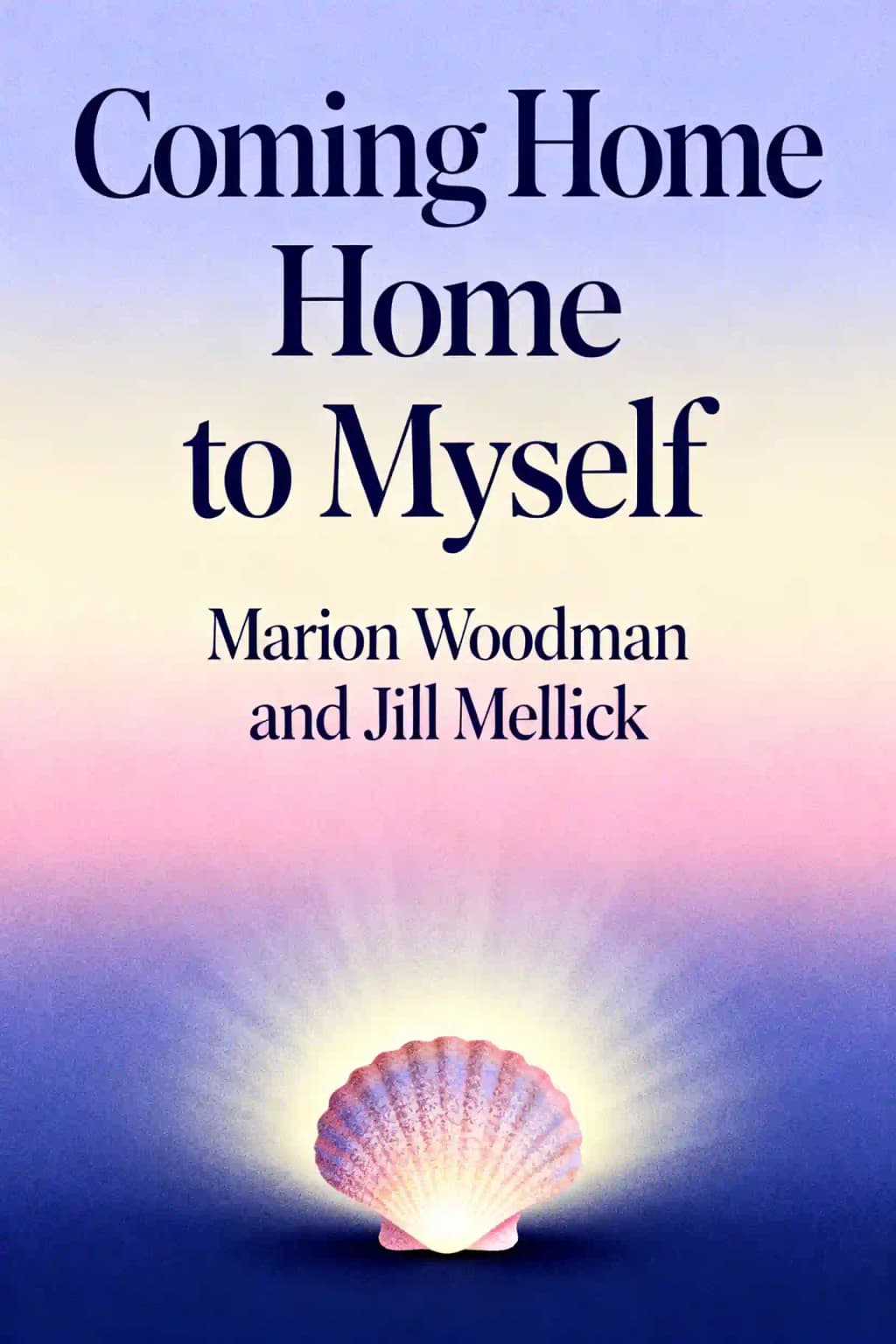
Discover Marion Woodman's transformative journey through 365 daily reflections nurturing feminine wisdom and healing. With over half a million devoted readers, this Jungian masterpiece - beautifully illustrated by psychologist Jill Mellick - asks: what might your soul reveal when you finally come home to yourself?
Marion Jean Woodman (1928–2018) was a celebrated Jungian analyst and the bestselling author of Coming Home to Myself: Reflections for Nurturing a Woman’s Body and Soul. She was a pioneering voice in feminine psychology and spiritual integration.
A graduate of the C.G. Jung Institute in Zürich, Woodman’s expertise in dream analysis, addiction recovery, and archetypal symbolism shaped her influential works like Addiction to Perfection and The Pregnant Virgin.
Co-author Jill Mellick, a psychologist and artist, blends Woodman’s insights with original watercolors and prose in this transformative guide to self-worth and feminine essence. Woodman’s collaborations with Robert Bly on gender dynamics and her leadership in BodySoul Rhythms® workshops underscore her legacy in bridging psychological depth with embodied wisdom.
Mellick’s interdisciplinary approach amplifies Woodman’s timeless themes of healing and wholeness. Translated into multiple languages, Woodman’s works remain foundational in Jungian studies, with Coming Home to Myself serving as a lyrical culmination of her vision. The Marion Woodman Foundation continues to advance her integrative practices worldwide.
Coming Home to Myself by Marion Woodman and Jill Mellick explores the journey of feminine self-discovery through Jungian psychology, focusing on integrating body and soul. The book combines Woodman’s writings on surrender, sacrifice, and confronting psychological shadows with Mellick’s artwork, offering reflections on healing trauma, reclaiming creativity, and nurturing self-acceptance. Key themes include dream analysis, active imagination, and rituals for personal wholeness.
This book is ideal for women seeking deeper self-awareness, Jungian psychology enthusiasts, and readers interested in healing through creativity and embodiment. It resonates with those navigating life transitions, recovering from perfectionism, or exploring the intersection of spirituality and psychology.
Yes, the book provides profound insights into feminine consciousness and Jungian concepts, blending poetic wisdom with practical guidance. Readers praise its bite-sized reflections, which are accessible for daily meditation or long-term personal growth.
Key concepts include:
Woodman argues that patriarchal norms disconnect women from their bodies and intuition. The book advocates reclaiming the “feminine” through self-compassion, creative expression, and honoring cyclical rhythms. It critiques cultural pressures that prioritize productivity over soulful living.
It distills themes from Woodman’s classics like Addiction to Perfection and The Pregnant Virgin into concise reflections. Compared to her analytical texts, this collaboration with Mellick offers a more meditative, visually-supported approach.
Some readers find its abstract Jungian terminology challenging, while others desire more structured exercises. However, most praise its evocative blend of poetry and psychology as uniquely impactful.
The book guides readers to:
Its themes of burnout recovery, reconnecting with nature, and questioning patriarchal norms align with modern movements toward holistic wellness and gender equity. The book’s focus on embodiment also counters digital-age disconnection.
通过作者的声音感受这本书
将知识转化为引人入胜、富含实例的见解
快速捕捉核心观点,高效学习
以有趣互动的方式享受这本书
We are all addicts.
Body work is soul work.
Perfectionism ravages a woman's body, spirit, relationships, and self-respect.
What is my addiction trying to tell me?
A body whose wisdom has never been honored does not easily trust.
将《Coming Home to Myself》的核心观点拆解为易于理解的要点,了解创新团队如何创造、协作和成长。
将《Coming Home to Myself》提炼为快速记忆要点,突出坦诚、团队合作和创造力的关键原则。

通过生动的故事体验《Coming Home to Myself》,将创新经验转化为令人难忘且可应用的精彩时刻。
随心提问,选择声音,共同创造真正与你产生共鸣的见解。

"Instead of endless scrolling, I just hit play on BeFreed. It saves me so much time."
"I never knew where to start with nonfiction—BeFreed’s book lists turned into podcasts gave me a clear path."
"Perfect balance between learning and entertainment. Finished ‘Thinking, Fast and Slow’ on my commute this week."
"Crazy how much I learned while walking the dog. BeFreed = small habits → big gains."
"Reading used to feel like a chore. Now it’s just part of my lifestyle."
"Feels effortless compared to reading. I’ve finished 6 books this month already."
"BeFreed turned my guilty doomscrolling into something that feels productive and inspiring."
"BeFreed turned my commute into learning time. 20-min podcasts are perfect for finishing books I never had time for."
"BeFreed replaced my podcast queue. Imagine Spotify for books — that’s it. 🙌"
"It is great for me to learn something from the book without reading it."
"The themed book list podcasts help me connect ideas across authors—like a guided audio journey."
"Makes me feel smarter every time before going to work"

免费获取《Coming Home to Myself》摘要的 PDF 或 EPUB 版本。可打印或随时离线阅读。
Have you ever noticed how your shoulders tighten before your mind registers stress? How your stomach knows something's wrong before you can articulate why? Our bodies are constantly speaking to us in a language we've forgotten how to hear. Marion Woodman spent decades helping people remember this forgotten tongue-not through abstract theory, but through the lived experience of reconnecting body and soul. Her work bridges Jungian psychology with feminine spirituality, offering a path home to ourselves that feels less like learning something new and more like remembering what we've always known. Think of your body as an ancient library where every experience you've ever had is stored-not in words, but in sensation, tension, breath, and cellular memory. Research confirms what mystics have always known: mind and body form an intricate intelligence network far more sophisticated than we've been taught to believe. Yet most of us treat our bodies like unruly servants rather than wise teachers. We listen to our pets with more attention than we give our own physical signals. A cat meows, and we immediately wonder what it needs. Our back aches for weeks, and we pop a pill without asking what it's trying to tell us. This disconnection isn't accidental-it's cultural. We've been trained to override bodily wisdom in favor of mental control, to push through exhaustion, to ignore hunger or desire that doesn't fit our schedules.