第 1 章
From Unicorn Chaser to Minimalist Entrepreneur
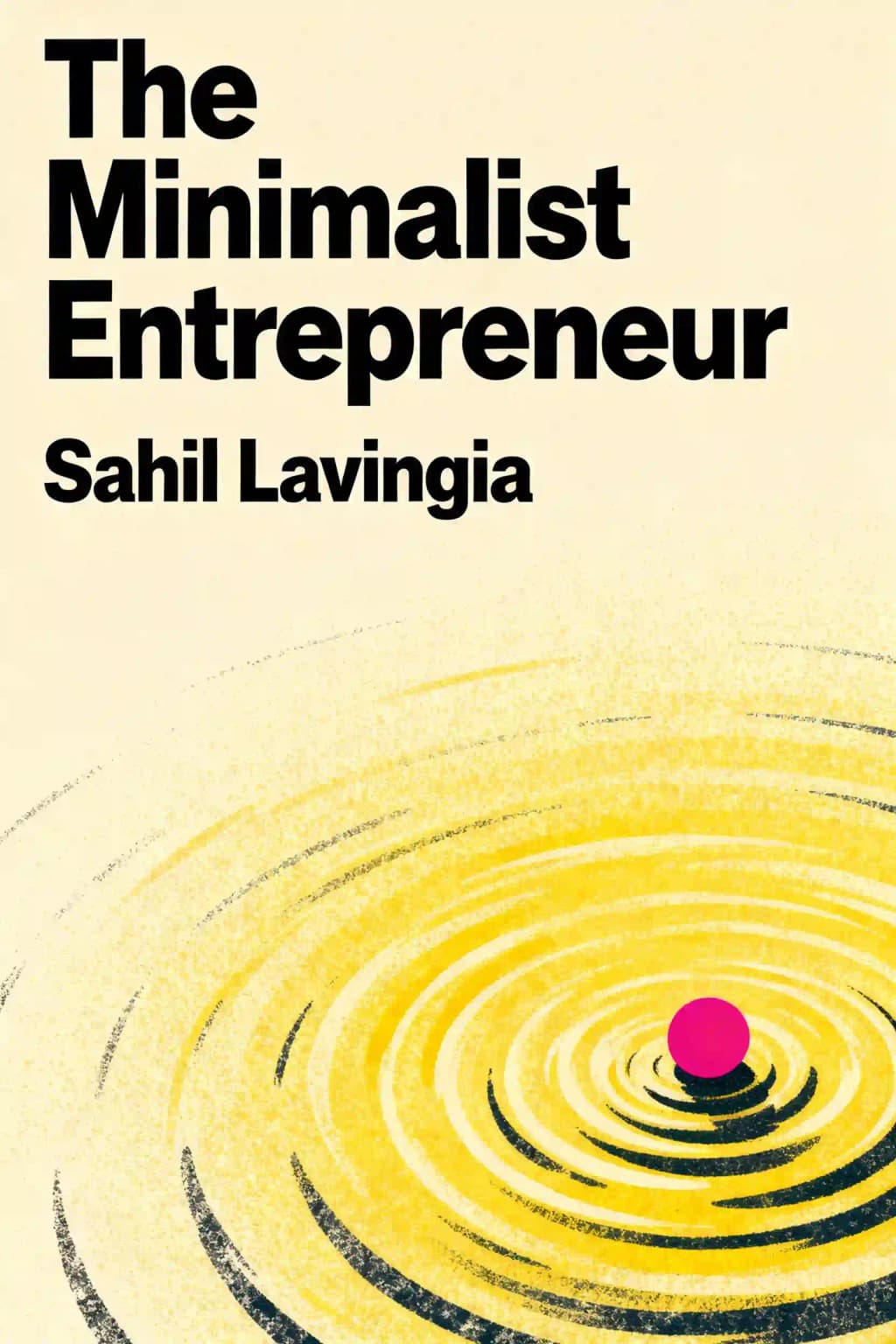
What if the billion-dollar "unicorn" startup isn't the pinnacle of entrepreneurial success? When Sahil Lavingia left Pinterest as employee #2 to build his own company, he was chasing the Silicon Valley dream. After raising $8 million and burning through $10 million, Gumroad-his creator economy platform-hit turbulence. Forced to lay off most of his team, Sahil fled to Utah, where he discovered a profound truth: his "failed" company was actually profitable, sustainable, and genuinely helping creators. This revelation became the foundation for "The Minimalist Entrepreneur," a book that has become required reading in entrepreneurship programs at Harvard, Stanford and Y Combinator. Endorsed by Seth Godin as "a delightful, humble guide to making something that matters," it challenges conventional startup wisdom by advocating for profitability over hypergrowth, community over venture capital, and sustainability over "moving fast and breaking things."
第 2 章
The Minimalist Entrepreneur's Manifesto
The minimalist entrepreneur rejects Silicon Valley's obsession with unicorns-those rare billion-dollar startups that dominate headlines. Instead, they build profitable, sustainable businesses that solve real problems for specific communities. Take Peter Askew, who purchased VidaliaOnions.com for $2,200 and transformed it into a thriving direct-to-consumer business by partnering with an award-winning farmer. Rather than chasing rapid growth, he focused on small improvements and profitability, eventually becoming beloved by customers who affectionately call him "THE VIDALIA MAN!" Similar success stories include Pieter Levels, who built Nomad List with zero outside funding, serving digital nomads worldwide, and Sahil Lavingia, whose Gumroad platform helps creators monetize their work while maintaining a lean team structure.
This approach represents a fundamental shift in entrepreneurial thinking. While venture capital has its place, the VC model depends on unsustainable growth and unrealistic expectations. For VCs to succeed, their rare winners must pay for all losers-about 70% of startups fail by VC standards, with the system riding on just 5% delivering 10-100x returns. This creates immense pressure on founders to prioritize growth over sustainability, often leading to burned-out teams and compromised product quality. Minimalist entrepreneurs reject this model, focusing instead on profitability from day one, maintaining control over their destiny, and building businesses that can weather economic downturns.
The path to becoming a minimalist entrepreneur follows a clear progression: start as a creator in communities you care about, identify persistent problems, build minimal solutions, sell to your first hundred customers, market authentically, and grow mindfully. This journey emphasizes deep community engagement before product creation. For example, ConvertKit's Nathan Barry spent years blogging for designers before building email marketing software for creators. Similarly, Basecamp's Jason Fried consulted for small businesses before developing project management tools. This isn't about getting rich quick-it's about getting rich slowly by embracing profitability as your key metric. When you're profitable, you gain unlimited shots on goal, virtually guaranteeing success as long as you keep learning from customers.
Most importantly, minimalist entrepreneurship democratizes business creation. With information widely available and startup costs lower than ever, anyone can build a business that serves customers and communities for as long as they wish. Tools like no-code platforms, affordable cloud hosting, and direct-to-consumer marketing channels have eliminated traditional barriers to entry. Success stories range from solo founders running seven-figure businesses from their laptops to small teams building sustainable companies in niche markets like artisanal food products, specialized software, or community-driven marketplaces. The question isn't whether you can start a business-it's which community you'll serve and which problems you'll solve. This approach emphasizes sustainable growth, customer satisfaction, and founder independence over the traditional startup metrics of user acquisition and funding rounds.
第 3 章
Start with Community, Not Products
Communities form the bedrock of successful minimalist businesses. Consider Sol Orwell, who joined Reddit's fitness community to improve his health, shared knowledge freely, and identified persistent problems around supplement information. After years of authentic participation, he launched Examine.com to provide unbiased supplement research. Only after building trust did he monetize-surveying the community about their needs and creating products based directly on their feedback. Today, Examine.com serves 70,000 daily visitors with seven-figure annual revenue.
This community-first approach represents our fundamental social unit in the digital age. Communities transcend geography, connecting people with shared interests while embracing diversity-bringing together different ages, backgrounds, and political views. Unlike networks where newcomers start at zero with no guaranteed audience, communities offer immediate belonging and connection.
Many struggle to identify their communities despite already belonging to several. Ask yourself: Who listens when you speak? Where do you spend your time? When are you most authentic? Who do you tolerate because of important shared interests? This self-examination reveals who you're meant to serve.
The real magic happens when you actively contribute. Following the "1% Rule"-where 1% create, 9% contribute, and 90% consume-your influence grows exponentially when you participate rather than lurk. Take Nathan Barry of ConvertKit, who discovered the power of teaching when comparing himself to Chris Coyier. Both had similar skills, but Chris shared everything he learned, building an audience that funded his $87,000 Kickstarter campaign. Nathan adopted this philosophy-"Work in Public," "Teach Everything You Know," and "Create Every Day"-growing ConvertKit to over $20 million in annual revenue.
When choosing a community for your business, look for one where you can create long-term value, build decades-long relationships, and develop an authentic voice. The ideal size is Goldilocks-like-not too small to sustain a business, not too large to attract major competitors. The best way to win is to be the only one serving an underserved niche with problems they'll pay to solve.
第 4 章
Build as Little as Possible
The minimalist entrepreneur starts small and focuses on what's essential. While most aspiring founders let self-doubt stop them because they think they lack necessary skills, every successful founder started knowing nothing. Instead of focusing on what you don't know, leverage what you do know, and learn the rest as you go.
Before building software or seeking funding, create what Lavingia calls a "manual valuable process"-a systematic, repeatable way to solve real problems for real people. Document each step as you fulfill customer needs, creating a playbook that becomes the foundation of your business. This "processization" helps you discover if you're making something people actually need and will pay for.
Even after helping your first customers, you might be uncertain about your solution. Freelancing is an excellent starting point-it generates cash flow sooner while giving you room to evolve. Many successful minimalist businesses began as freelance work before becoming viable companies. The quickest routes to profitability include selling knowledge through digital content, selling physical products, connecting people for fees, or creating software as a service (SaaS).
A business hypothesis must be both testable and falsifiable. For example: "Customers will pay a fixed fee with a small premium for quickly produced end credits with unlimited renders." Validate this by meeting with real customers-even just one-and treating your startup like a white-glove service. Avoid leading questions that prompt people to tell you what you want to hear. Instead, ask questions like "Why haven't you been able to fix this already?" rather than "Would you pay for my product?"
Gumroad began by solving one specific problem: helping creators sell digital files to their audiences. The original product was remarkably simple-take a file or link of value, share it, make money. The first version was just 2,700 lines of mostly copy-pasted code in a single Python file, without automated payouts or even file uploading. Instead, Lavingia manually processed payments through PayPal at month's end. They gradually automated everything, but starting with manual processes allowed them to launch quickly and solve the core problem immediately.
For minimalist entrepreneurs, early stages demand constraints. Evaluate new builds with four questions: Can I ship it in a weekend? Is it making customers' lives better? Will someone pay for it? Can I get feedback quickly? Notice there's no concern about aesthetics or code quality-if a minimal product is useful and people overlook its lack of polish, you're onto something.
第 5 章
Sell to Your First Hundred Customers
After building a product, many entrepreneurs fixate on grand launches-Hollywood premieres, Demo Days, Product Hunt debuts. This obsession with "launching" extends everywhere, from Silicon Valley to your local restaurant with its perpetual "grand opening" sign. But businesses aren't one-time events; they require lasting customer relationships.
Between starting and succeeding lies a less glamorous reality filled with small victories that gradually build into satisfaction from persistence. Once you have your MVP, focus on acquiring your first customers rather than endless iteration, which feels productive but burns runway. Skip the grand opening and instead pursue the steady journey of selling to your first hundred customers.
Never give your product away for free-charge something that allows you to stay afloat. You can price based on costs (adding a margin to your expenses) or value (charging for features that provide clear benefits to customers). Eventually, aim for tiered pricing. The "zero price effect" means there's a psychological gulf between free and even one dollar. Remember that pricing decisions aren't permanent-they generally increase as your product improves and provides more value.
Your first customers should be friends and family-the people who trust you most. Even Kickstarter acknowledges that successful projects begin with support from people you know. PleaseNotes founder Cheryl Sutherland leveraged her network to help design her products and raised $15,054 from 253 people (many friends and family) for her journal. This early proof of concept is invaluable, giving you feedback and momentum before expanding beyond your immediate circle.
Beyond friends and family, seek customers in your physical environment-put posters in coffee shops and connect with local micro-influencers and journalists who cover community happenings. Build relationships by being honest and transparent about your journey, showing product improvements and sharing recent challenges.
Direct outreach is unavoidable for new entrepreneurs. Manual sales will drive 99% of your early growth, with personalized messages that demonstrate understanding of specific needs. A good cold email should be individually crafted, educational, and helpful. Each message refines your ability to write better ones while teaching you about your customers-a learn-learn situation.
Word of mouth will eventually become your primary growth driver, but only after establishing your initial customer base through direct sales. Forget shortcuts like SEO or content marketing until you're profitable with at least a hundred customers who can refer others.
第 6 章
Market by Being You
Marketing is sales at scale-the natural evolution after securing your first hundred customers through direct sales. Unlike one-by-one outbound sales, marketing attracts hundreds of potential customers inbound simultaneously. But don't confuse marketing with advertising. As minimalist entrepreneurs, we only spend money when absolutely necessary, starting instead with free options like blogging and social media to build an audience.
Don't just chase headlines-create genuine connections with your audience. Most founders shy away from putting themselves at the center of their company's story, but this is exactly what you need to do. People care about other people, not faceless companies. Your journey of building something from nothing is inherently interesting.
Despite imposter syndrome (which affects even successful founders), remember that your existing customers already care about your thinking and decision-making process. They're paying you for your work and are interested in how your product came to be. Building an audience is about having these personal conversations at scale.
Every customer journey begins with someone who has no idea who you are. They'll encounter your product somewhere-Instagram, a forum post, a shared tweet-and likely forget about it. Eventually, they might "like" it or engage a few times. Their interest grows not in your product initially, but in what you or your business has to say. If they like your thinking and communication style, they may explore what you've built.
There are three progressively powerful levels of content sharing, each reaching a wider audience than the last. Start with education-share the hundred things you've learned from your hundred customers. Your existing audience will engage with these ideas and broadcast the best ones to their networks. Next, move to inspiration, like Richard Feynman did by transforming physics insights into life philosophy. Document your journey and progress to motivate others. Finally, aim for entertainment-the most difficult but most impactful level. Entertainment wins the battle for attention because it's what people naturally discuss and share.
Email remains the internet's most resilient marketing channel. Unlike social platforms that can change algorithms or shut down accounts, email gives you direct access to your audience on your terms. When someone shares their email, they've moved from stranger to friend, making this list far more valuable than social followers. Start building your email list immediately-even if it begins as a simple spreadsheet of interested contacts.
Rather than spending millions on user acquisition like PayPal or Uber did, focus on genuine rewards for loyal customers. Offer discounts for reviews or social shares as authentic appreciation rather than mere marketing tactics. Once your business is sustainable, you can expand to outreach with reviewers, influencers, and journalists-but most importantly, tell your authentic story.
第 7 章
Grow Yourself and Your Business Mindfully
Even after achieving profitability and organic growth, your journey isn't over. While some might be content creating a lifestyle business and retiring, many founders continue investing in growth because it's satisfying to improve a project and create more value for customers. Staying static doesn't work-the world constantly changes, requiring adaptation to avoid regression.
The fundamental business equation is simple: profit equals revenue minus costs. While this seems obvious-make more than you spend to survive-many founders ignore profitability in favor of product development, growth, and hiring until money runs out. Paul Graham of Y Combinator evaluates companies by whether they're "default alive or default dead"-if expenses and revenues remain constant, will the company survive? Surprisingly, many founders don't know because they're counting on investors to rescue them.
Your customers don't care about your growth metrics, funding rounds, or employee count. They simply want your product to improve and your business to survive. Amazon exemplifies this mindset by placing an empty chair in every board meeting to represent the customer voice, ensuring all decisions are scrutinized from the customer's perspective.
Even minimalist businesses may eventually need capital. When you're already profitable, you have leverage in funding negotiations. Beyond traditional venture capital, new options like Regulation Crowdfunding allow businesses to raise money directly from customers and community members. The JOBS Act of 2012 enabled private companies to sell shares to the general public, and in March 2021, the legal limit for regulation crowdfunding increased from $1.07 million to $5 million. This approach aligns stakeholders by turning customers into investors-creating a single community you're serving rather than balancing separate investor and customer interests.
Profitability is a superpower that frees you from reliance on outside forces. Chris Savage of Wistia calls this "profitable confidence"-knowing your business will survive regardless of what you try. This freedom allows you to pursue ideas at your own pace without betting the company on every new initiative. You can truly invest in creating customer value rather than just chasing growth metrics to secure the next funding round.
When your business is financially secure, there's still one critical failure point: you. You may run out of energy before money. Cofounder conflicts are one of the fastest ways to drain enthusiasm, with 20% of disagreements escalating until one founder leaves. To give your partnership the best chance, treat it like a marriage: only partner with someone you deeply trust, introduce vesting schedules, align on values and vision, plan for possible departures, and have difficult conversations early and repeatedly about goals, growth pace, and definitions of success.
第 8 章
Build the House You Want to Live In
Before inviting others to join your company, you need to get your house in order. A company is like a house party that never ends-it rarely gets cleaner than when it started. Values aren't generic platitudes but specific, memorable principles that guide behavior in both everyday and extreme situations. They're more efficient than handbooks because they tell stories about how to act.
Wildbit exemplifies this with their principle that "businesses are product agnostic," which helped them shift focus from Beanstalk to Postmark when needed. This same value later allowed them to shut down a five-year project called Conveyor and launch two new ventures without devastating the team.
Making decisions that affect your team and customers requires clear values. Many founders think culture will develop naturally, but without intentional guidance, it may not be what you want. You can start small-even with just yourself-but start having these conversations. Values can be pithy statements or long stories, but they need to be articulated.
The author prefers a small team of exceptional people over a large team of merely good ones. A company scales successfully when employees are empowered to help customers without leadership intervention. Leaders shouldn't be product dictators building a cult of personality. Instead, they should establish clear key performance indicators that everyone understands and can measure their work against.
Gumroad inverts the Peter Principle (where employees rise to their level of incompetence) by having employees work for customers while the founder works for employees. The best people continue doing what they excel at as they get promoted-they simply earn more for doing it. This structure creates a flatter organization where managers are genuinely invested in their reports' success.
Janessa White and Matt Dalley of Simply Eloped faced a "cultural crisis" after hiring too quickly without defining their company values. Despite being strategic about money and vendor partnerships in their wedding planning business, they made critical hiring mistakes by bringing on friends, family, and anyone who seemed nice, resulting in workplace drama and bullying. After hiring a leadership coach, they realized they'd focused too much on employee happiness rather than defining what would best serve customers.
Building company culture requires more effort than building your product, but ultimately proves more valuable. Just as marketing reminds customers you exist, hiring well means consistently communicating your values to attract the right candidates. Clear cultural values act as filters rather than magnets, allowing most people to self-select out while strongly attracting the perfect fits.
第 9 章
Where Do We Go from Here?
Starting a business is inherently risky but remains one of the best ways to create positive change, even if that change begins small rather than immediately "changing the world." The author challenges the notion that meaningful impact requires making "a dent in the universe," suggesting instead that small, compounding improvements to communities can be equally powerful.
After Gumroad became profitable, the author's first priority was reclaiming his time. Having spent four years as a typical founder-working constantly and neglecting relationships-he could finally chart a different course. Without pressure to placate investors or pursue unsustainable growth, he discovered he had become a "time billionaire" with decades of life ahead.
The author moved to Provo, simplified his lifestyle, and focused on creating more time by automating, outsourcing, or ignoring aspects of Gumroad he didn't enjoy. He returned to creative pursuits like writing and painting, spending up to twenty hours weekly on these activities. He realized that running a minimalist business didn't mean abandoning impact-it meant finding ikigai, the Japanese concept that aligns what you love with what the world needs, what you can be paid for, and what you're good at.
After two years in Provo, the author gained new perspective on his mission: expanding opportunities for others to build their own livelihoods. He realized that through Gumroad, he had already made business ownership accessible to thousands of creators worldwide. In 2020, following the George Floyd protests, he began investing in Black founders, which eventually led to launching his own venture fund investing approximately $10 million annually in about fifty companies.
While "changing the world" can distract from immediate business opportunities, entrepreneurs can still make meaningful environmental contributions. Emily LaFave Olson founded Rainbow Road, a plant-based ice cream company built on a circular system beneficial for the earth. After selling her first company and closing her second, she moved to Hawaii seeking connection with the earth. Unlike her previous venture-backed startups, she's bootstrapping Rainbow Road to maintain control and focus on profitability, taking "the smallest next step" to build something substantial and sustainable.
Eventually, every entrepreneur must decide whether to continue with their business or move on. The author acknowledges he may one day want more time or to serve different people in different ways. He doesn't expect to work at Gumroad forever, preferring to leave by choice rather than force.
The key is building the right business for yourself selfishly while serving a community selflessly. Understanding your "why" is crucial-why you chose your community, solved specific problems, approached certain customers first, and grew in particular ways. The author's goal was providing tools to build a business that gives freedom and choice. Whatever path you take, reflection on your past and observation of your present will help determine who you are and what you truly want.
The journey isn't easy, quick, or straightforward-it takes time and often multiple attempts. Before creating Gumroad, Lavingia launched dozens of failed projects. The future of humanity depends on more companies getting started, which happens by making entrepreneurship accessible and attainable. Eventually, your life and work will align, giving you purpose and allowing you to get paid for what you love, but only if you take that crucial first step.