第 1 章
The Entrepreneurial Revolution in Your Pocket
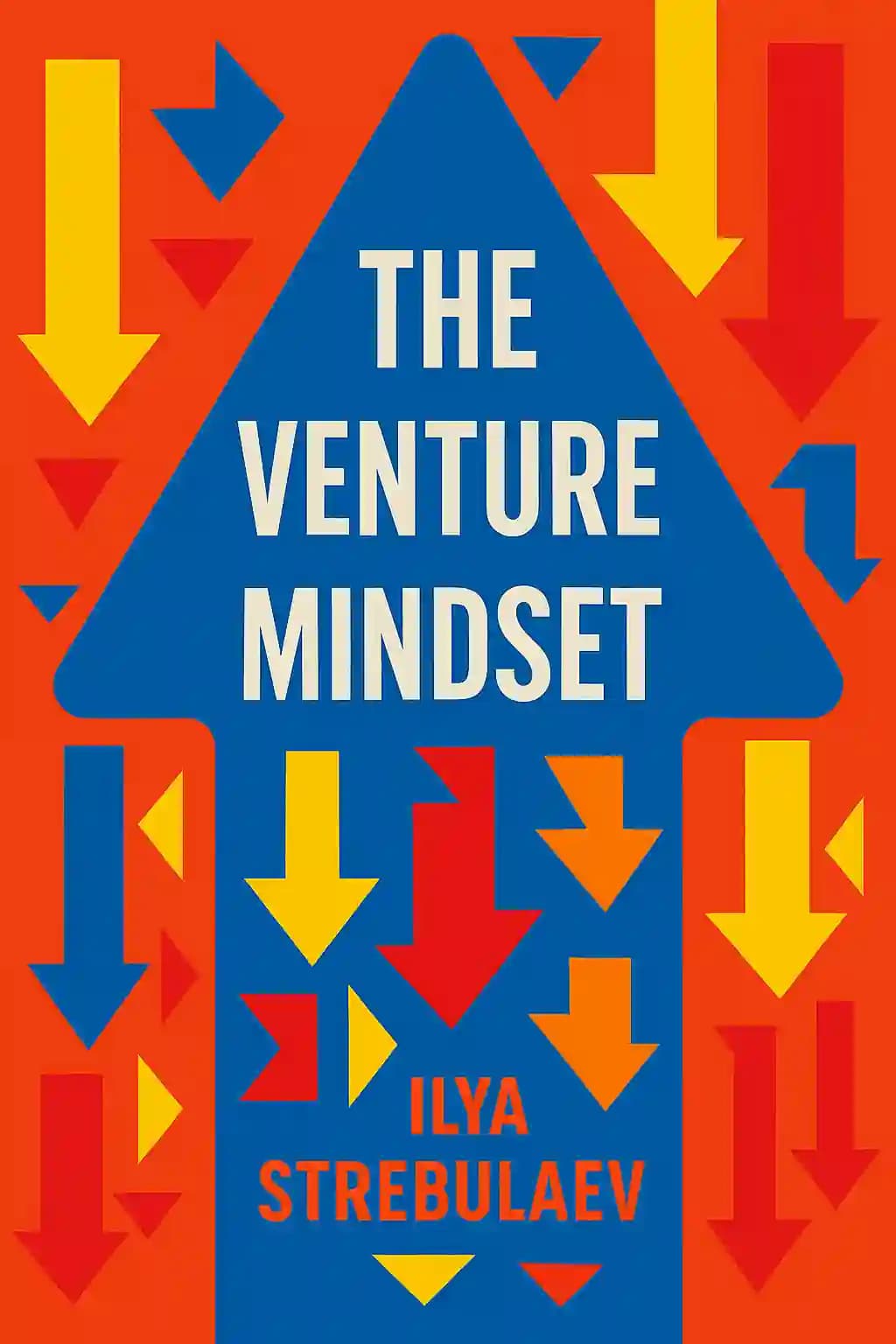
In a world where billion-dollar ideas can start on napkins, one book stands out for demystifying the secret sauce behind today's most transformative companies. "The Venture Mindset" has become a favorite among tech CEOs and innovation leaders for its practical approach to thinking like Silicon Valley's most successful investors. When Eric Yuan founded a videoconferencing startup called Saasbee in 2011, most venture capitalists dismissed it as entering an overcrowded market. Yet three believers at Qualcomm Ventures saw something special and invested $500,000 despite their colleagues' skepticism. That company, later renamed Zoom, would become one of the most successful investments in venture capital history. This pattern of unconventional thinking-embracing risk, seeking contrarian opportunities, and backing extraordinary people-forms the backbone of a decision-making framework that has reshaped our world, one unicorn at a time.
第 2 章
The Venture Mindset: A Different Species of Decision-Making
The Venture Mindset represents a fundamentally different approach to decision-making that has evolved through decades of trial and error, primarily in Silicon Valley. It's the secret operating system running behind every successful venture capital firm and the companies they create. This mindset differs dramatically from traditional business thinking in nearly every decision area-from hiring processes to investment selection to idea incubation.
At its core, the Venture Mindset embraces failure as an essential part of finding extraordinary success. Unlike traditional companies that fear mistakes, VCs understand that strikeouts don't matter if you occasionally hit home runs. This counterintuitive approach explains why venture capitalists remain resilient despite frequent failures-they operate in winner-take-all markets where a single successful investment can outperform all others combined.
Consider ride-sharing apps: dozens received funding, but only Uber and Lyft succeeded at scale. This pattern repeats across industries, with the typical VC portfolio seeing just one in twenty investments becoming a runaway success. This "home run" approach means VCs fear missing the next Google far more than backing failures. As VC Bill Gurley puts it: "If you invest in something that doesn't work, you lose 1X your money. If you miss Google, you lose 10,000X your money."
This mindset remains exceedingly rare in large organizations, where managers typically fear errors of commission more than errors of omission-the opposite of the VC approach. Traditional companies operate with meticulous planning processes that systematically filter out small, experimental projects. The annual budgeting cycle, with its emphasis on detailed financial metrics and ROI calculations, resists the unpredictable pivots that innovative ventures often require.
Companies attempting to embrace the Venture Mindset must avoid three critical pitfalls. First, "playing it too safe" by confusing incremental A/B testing with truly bold experimentation. Second, "betting the farm" on a single massive initiative rather than diversifying across multiple smaller bets. Third, letting "a thousand flowers bloom" without proper focus or discipline. The key is finding balance: making bold bets, diversifying risk across multiple initiatives, and regularly culling unsuccessful projects.
Smart organizations structure their innovation portfolios as three-tiered pyramids: core business investments with incremental innovations at the base, "adjacent innovation" in the middle, and high-risk disruptive innovations at the top. Google formalized this approach with a 70/20/10 resource allocation rule, with 10% dedicated to moonshot initiatives. Their Google X division operates like an internal VC fund, evaluating hundreds of speculative ideas annually and funding only the most promising ones.
第 3 章
Venturing Beyond Your Four Walls
Great innovations rarely emerge from within corporate walls. The Venture Mindset requires actively seeking opportunities in unexpected places, building diverse networks, and remaining open to unconventional ideas.
Consider Pejman Nozad's extraordinary journey from Iranian immigrant working at a rug store to respected Silicon Valley investor. While selling expensive rugs in Palo Alto, he built trust relationships with wealthy Silicon Valley customers, eventually launching a tech venture fund operating from the back of the shop. This positioned him to meet Dropbox founders Arash Ferdowsi and Drew Houston at a Y Combinator demo day in 2007, arranging the crucial introduction to Sequoia Capital that led to a $1.2 million investment eventually returning $2 billion.
The power of networks drives venture capital success. Research shows about half of all VC deals come from investors' professional networks. Unlike corporate executives, VCs work tirelessly expanding these connections, maintaining networks twice the size of corporate VCs. But effective networking isn't just about quantity-it's about diversity across industries, roles, and backgrounds.
Great VCs don't passively wait for opportunities-they actively hunt for them. Brian Jacobs of Emergence Capital exemplifies this approach. While visiting Salesforce Tower's construction site, he discovered Building Robotics, a startup providing temperature control software. Recognizing its potential, he secured an introduction to the founders and invested, eventually seeing the company acquired by Siemens.
Modern VCs employ sophisticated methods to identify opportunities. Paul Arnold's Switch Ventures uses data science to evaluate founders, analyzing datasets of over 100,000 entrepreneurs to identify those most likely to build unicorns. Similarly, Sequoia's "Early Bird" system tracks app store activity, helping them discover promising startups before they seek investment.
Revolutionary technologies often follow unlikely paths to success. Chester Carlson's xerography invention was rejected by industry giants like RCA, GE, Kodak, and IBM for five years before finding success. Steve Jobs was rejected when he offered Atari founder Nolan Bushnell one-third of Apple for just $50,000. Apple co-founder Steve Wozniak's personal computer concept was rejected five times by his employer Hewlett-Packard.
These rejections stem from the Not Invented Here (NIH) syndrome-a corporate mindset that rejects external ideas. Research shows this creative myopia is widespread: a study of nearly one million patents found inventors at large firms disproportionately draw from their own company's prior work while ignoring competitors' innovations.
To combat this syndrome, organizations must implement specific mechanisms for sourcing external ideas. The story of Nespresso illustrates this perfectly. Eric Favre, a Nestle engineer, discovered the secret to perfect espresso crema during a vacation in Rome. Despite working in Nestle's packaging department, Favre developed a prototype that encapsulated coffee in sealed capsules where trapped air created the perfect frothy espresso. Though management was initially skeptical, Favre's persistence over ten years eventually transformed Nestle's business.
第 4 章
The Prepared Mind Sees What Others Miss
When Sameer Gandhi met Dropbox's founders in 2007, his quick investment decision wasn't mere luck but the result of a prepared mind. Having researched file sharing extensively and met countless teams in this space, he recognized that Drew Houston and Arash Ferdowsi understood both the technical and design challenges that had stumped others.
This pattern recognition-developed through countless meetings with entrepreneurs and hours studying pitch decks-enables VCs to make seemingly instantaneous decisions that are actually built on extensive preparation. Like scientists such as Fleming discovering penicillin, the Venture Mindset combines serendipity with preparation-seeing opportunities others miss because your mind is tuned to recognize them.
While traditional companies often suffer from "analysis paralysis" when evaluating new ideas, the Venture Mindset relies on three core mechanisms for faster decision-making. First, do your spadework outside company walls, as demonstrated by Yuri Milner who built extensive spreadsheets tracking global social networks before successfully investing in Facebook despite initial rejection.
Second, leverage deep industry expertise, exemplified by Bonny Simi who transformed JetBlue's innovation approach by founding JetBlue Technology Ventures. With her unique background as pilot, Olympian and Stanford graduate, she combined airline industry knowledge with VC thinking to identify truly valuable startups while quickly dismissing those addressing non-critical problems.
The "Prepared Mind" approach is exemplified by firms like Accel Partners, whose partners constantly think about future trends before searching for companies that fit their thesis. Theresia Gouw, while at Accel, identified Google's weakness in "parameterized" search through discussions with search expert Philip Nelson. She realized Google struggled with detailed queries like travel options with specific parameters, creating an opportunity in vertical niche search. This insight led her to invest in Trulia, which later went public successfully.
Decision-making speed is crucial in innovation. VCs typically give entrepreneurs just twenty minutes to pitch, and most don't even get that opportunity. Research shows Hollywood producers decide on scripts in minutes or even seconds, with one study finding typical decision times of just 45 seconds. Dating decisions follow similar patterns-half of people decide about second dates within 2-3 minutes. Job recruiters hold the speed record, spending just 7.4 seconds scanning resumes for pattern-matching.
However, preparation doesn't mean relying on mental shortcuts or ignoring facts. A prepared mind must guard against biases related to race, gender or background that might cause overlooking unusual startups or uncommon ideas that don't fit established patterns.
第 5 章
The Art of Saying No: Why Selectivity Matters
The venture capital approach to decision-making is remarkably thorough-VCs spend an average of 118 hours on due diligence per investment they actually make, with some firms like Emergence Capital investing up to 400 hours. This process culminates in the "investment memorandum," a concise document that doesn't hide risks but brings them to light.
Unlike corporate presentations designed to advocate for ideas, these memos identify weaknesses, outline various scenarios from disaster to success, and stimulate frank discussion. Despite their reputation as risk-takers, VCs call themselves "risk-reduction engineers," methodically assessing management teams, business models, and market potential while conducting extensive reference checks.
Bill Maris of Google Ventures exemplified this approach when evaluating Theranos in 2013. Despite the company's impressive partnerships and board featuring political celebrities like Henry Kissinger, Maris spotted red flags: no healthcare experts on the board, no reputable biotech VC investors, and secretive leadership. When his team member attempted to test Theranos's blood-testing technology at Walgreens, they encountered suspicious delays.
While VCs de-risk investments, they avoid analysis paralysis. Their meetings are focused, memos concise, and decisions swift-unlike corporations where projects languish for months or years. This bureaucratic clutter kills innovation. IBM's failed Fireworks Partners venture illustrates this problem-some investments were still under review when the entire initiative was abandoned.
Being highly selective isn't just for venture capitalists-it's a skill anyone can master. The key is efficiently rejecting most opportunities before approving any, involving multiple people with prepared minds who aren't afraid to disagree. The winning ratio should be around 1 to 100.
The Pulitzer Prize selection process demonstrates this approach-judges read 300 books each but nominate just three, using a two-speed approach similar to VCs. Google's hiring process (with below 1% acceptance) and homebuyers' selection process follow similar patterns: quick initial screening followed by deeper due diligence on promising candidates.
第 6 章
Betting on People: The Jockey Matters More Than the Horse
Ali Tamaseb's research shows that "super founders"-entrepreneurs with prior successful startup experience-are three times more likely to succeed than other founders. This insight reflects how VCs often invest primarily based on the team, sometimes regardless of industry or market conditions.
The case of Tiny Speck illustrates this principle perfectly: when their game Glitch failed spectacularly, investors like Accel Partners refused to take back the remaining $5 million, instead encouraging founders Stewart Butterfield and Cal Henderson to pivot. This trust in the team rather than the product led to the creation of Slack, which eventually sold to Salesforce for $27 billion.
While in horse racing the animal itself accounts for about 90% of performance with jockeys contributing only 10%, venture capital operates with reverse priorities. Research with over 1,000 VCs revealed that 47% consider the team the most important factor in investment decisions-far outweighing any single business factor like business model, product, or market size.
This team-first approach becomes even more pronounced at earlier investment stages. VCs know that ideas are abundant, but execution makes all the difference. As General Georges Doriot put it: "Always consider investing in a grade A man with a grade B idea. Never invest in a grade B man with a grade A idea."
Gmail began as "Project Caribou"-a joke product built by a single engineer that launched on April Fool's Day 2004. Paul Buchheit, Google's employee #23, created what would become a 2-billion-user product with an incredibly vague mandate: "build an email thing." The project succeeded because Google created the right environment-a racetrack-for internal innovation.
Innovation requires leadership, not management. VCs evaluate founders on character and charisma, looking for those who energize others and treat everyone with respect. Kate Mitchell of Scale Venture Partners checks how founders treat receptionists, believing those who can't show respect to everyone will struggle to lead teams.
Rather than starting with ideas and finding managers, the venture mindset identifies leaders first and lets them innovate. With disruptive innovation, industry knowledge can sometimes be a hindrance-Tony Xu had no logistics experience before founding DoorDash, and Airbnb's founders had no hotel industry background. VCs seek "well-rounded square pegs"-pattern breakers with learning velocity who can keep pace with exponentially scaling startups.
第 7 章
Agree to Disagree: The Power of Constructive Conflict
VCs are disagreement seekers rather than consensus seekers. As Andy Rachleff of Benchmark Capital states, "The only way to make outsized returns in Venture Capital is to be right and non-consensus." Mike Maples reinforces this: "You can't outinvest others by investing in whatever everybody thinks."
The chapter warns against the "you scratch my back and I scratch yours" pattern that leads to mock consensus driven by political considerations. This happened at Enron, where performance reviews involved backroom deals between managers. In VC firms, partners must be able to safely critique each other's positions without fear of reprisal.
Ray Dalio insists organizations win by becoming "radically open-minded" and "replacing the joy of being proven right with the joy of learning what is true." The VC methodology includes an obligation to dissent-as General John Monash told his men: "When I really want [your loyal service] most is when you think I am wrong."
VCs combat group biases with four specific mechanisms. First, they keep teams small-typically 3-5 partners plus junior members-ensuring everyone present contributes. This aligns with Amazon's "two-pizza team" principle and research showing optimal group size is 4-5 people.
Second, they implement "juniors speak first" to prevent HIPPO (Highest-Paid Person's Opinion) domination. Junior team members often possess valuable "soft" information from customer conversations and market analysis.
Third, they assign devil's advocates to argue against investments. Some firms like a16z designate "red teams" to oppose deals, similar to Warren Buffett hiring separate advisers to argue for and against acquisitions.
Finally, they collect independent feedback before meetings, with team members sharing opinions on investment opportunities without seeing others' input first. This reveals genuine differences of opinion and liberates discussion.
Many successful VC firms have institutionalized this approach. At Venrock, partners vigorously debate deals, but the partner who brought the opportunity makes the final decision unilaterally. This process prevented them from missing opportunities like Dollar Shave Club, which was later acquired for $1 billion.
第 8 章
Double Down or Quit: The Power of Sequential Decision-Making
The Venture Mindset requires flexibility-being prepared to either double down or quit with each new piece of information. This approach begins with experimentation: launching a "minimum viable product" (MVP) or "minimum lovable product" (MLP) with limited functionality, then adding features only if initial tests succeed.
While business schools teach commitment-based decision models (like NPV and IRR calculations), VCs value flexibility-what academics call "real options." This approach recognizes the right, but not obligation, to take future actions.
Just as poker players receive limited information from initial cards and must decide whether to fold, call, or raise as more cards are revealed, VCs make sequential investment decisions as startups progress. The Airbnb story exemplifies this approach. Sequoia Capital's initial $600,000 seed investment (at a $2.5 million valuation) was just the beginning. As Airbnb demonstrated growth-expanding to 8,000 locations with 700,000 bookings-Sequoia doubled down in Series A. Through subsequent funding rounds, the valuation skyrocketed to $40 billion at IPO, eventually surpassing $100 billion.
We humans resist cutting our losses, even in life-or-death situations. This "escalation of commitment" affects mountain climbers near Everest's summit and business leaders alike. Amateur poker players demonstrate this bias by refusing to fold losing hands, while traders like Nick Leeson of Barings Bank make increasingly larger bets trying to recover losses.
The TV show "Who Wants to Be a Millionaire?" offers three critical lifelines that mirror VC best practices for avoiding escalation of commitment:
"Phone-a-Friend" teaches us not to double down alone. Smart VCs involve partners in follow-on decisions to counterbalance bias. Some firms like Lightspeed Capital use dedicated "reinvestment teams" to independently challenge assumptions.
"Ask the Audience" emphasizes seeking outsiders' perspectives. VCs require new investors to lead follow-on rounds, as they lack existing bias. Research shows rounds led by new investors yield better outcomes.
"50-50" reminds us to quit often enough. Only about half of startups survive each funding stage, with just 1 in 60 becoming unicorns. VCs fund startups for 12-18 months, then ruthlessly evaluate progress.
第 9 章
Making the Pie Bigger: Aligned Incentives Drive Success
Modern VCs operate on the "2 and 20" compensation model-2% management fee regardless of performance, plus 20% of profits after returning investors' capital. This carried interest, a term from sailing voyages, aligns VC interests with investors. VCs insist everyone critical to a startup's success becomes an owner with meaningful equity, making founders' upside unlimited while protecting against downside risk.
This approach both motivates hard work and attracts innovative, risk-tolerant talent. Research confirms these mechanisms work: experiments show pay-for-performance participants solve more anagrams, and jockeys paid percentage-based compensation perform better than those on fixed retainers.
In 1957, a compensation revolution began in what would become Silicon Valley when eight engineers left William Shockley's lab to launch their semiconductor venture. With Arthur Rock's help, they secured funding from Sherman Fairchild, each receiving 7.5% ownership. When Fairchild later bought them out for $3 million, removing their equity upside, all eight eventually left to start their own companies.
These "Fairchildren" spawned hundreds of ventures worth trillions today, including Intel, AMD, and Apple. Learning from Fairchild's mistake, they implemented widespread employee stock options, which became the industry standard.
Risk preferences vary dramatically based on incentive structures, not personality types. Corporate managers show extreme risk aversion, with 90% requiring at least a 60% chance of success before investing. The payoff chart explains why: in VC-backed startups, founders get nothing if the company sells for less than the investment, but capture massive upside in successful outcomes.
This asymmetry encourages risk-taking on innovative projects with higher volatility but bigger potential returns. Corporate managers face the opposite incentives-fixed salaries with minimal upside but significant downside if risky projects fail. The same person would make entirely different decisions in these two environments.
The Venture Mindset prioritizes value creation over value extraction-growing a bigger pie rather than fighting for a larger slice. This principle applies beyond venture capital to partnerships like consulting or legal firms, where the choice between adding partners (dividing profits among more people) or maintaining exclusivity is constant.
第 10 章
Great Things Take Time: The Patience to Build Unicorns
The chapter opens with the story of Matagorda Island, Texas, where in 1981 the first-ever US privately funded commercial rocket exploded during launch. This failure marked the beginning of private space ventures, followed by Space Services Inc.'s successful launch a year later.
Twenty-five years later, Elon Musk's SpaceX faced similar failures with Falcon 1, experiencing three consecutive launch failures before finally succeeding on the fourth attempt in 2008. Despite public criticism, SpaceX secured crucial venture funding after these failures, eventually transforming into a $137 billion company launching rockets weekly.
Like sequoia trees that need fire to release their seeds and grow, great companies often emerge from times of crisis. The section tells the story of Amadeo Peter Giannini, who founded Bank of Italy (later Bank of America) and walked 17 miles to rescue $80,000 from his bank during the 1906 San Francisco earthquake and fire. While other bankers closed for months, Giannini set up a makeshift desk on the waterfront the next day, offering loans on handshakes to help rebuild the city.
What makes VCs successful unicorn shepherds is patience-they're stuck with illiquid investments for years, often waiting through long periods of cash burn before seeing returns. The average unicorn takes nine years before IPO, with companies like MongoDB, Uber, and DocuSign taking 10-15 years.
This patience requirement creates a different mental model-like buying versus renting a car. While traditional investors focus on short-term profitability, VCs think about long-term potential and future market size, willing to endure the J-curve where things get worse before better.
Thinking long-term is a choice that fundamentally changes decision-making. With a short 3-year outlook, a power plant COO would cut costs to boost financials for sale, but with a 10-15 year outlook, he'd invest in retrofitting and repairs. This same principle applies across business decisions from hiring to training.
The famous Stanford marshmallow experiment demonstrates the power of delayed gratification. Children who could resist eating one marshmallow for 15 minutes to receive two later showed better outcomes in academic achievement and stress management years later-with SAT scores averaging 210 points higher than those who couldn't wait.
Successful children employed specific strategies: looking away, playing with toys, singing, or even napping rather than staring at the temptation. This principle applies to adult decision-making too, where most people demonstrate "hyperbolic discounting," valuing immediate rewards disproportionately higher than future ones.
When making career decisions, focus on long-term value rather than short-term metrics like starting salary-think like a VC about your career as an important long-term project. The Venture Mindset isn't just for Silicon Valley; it's a powerful framework for anyone seeking to create extraordinary value in an increasingly uncertain world.