第 1 章
Flush Failure, Build Fortune: The Entrepreneur's Raw Blueprint
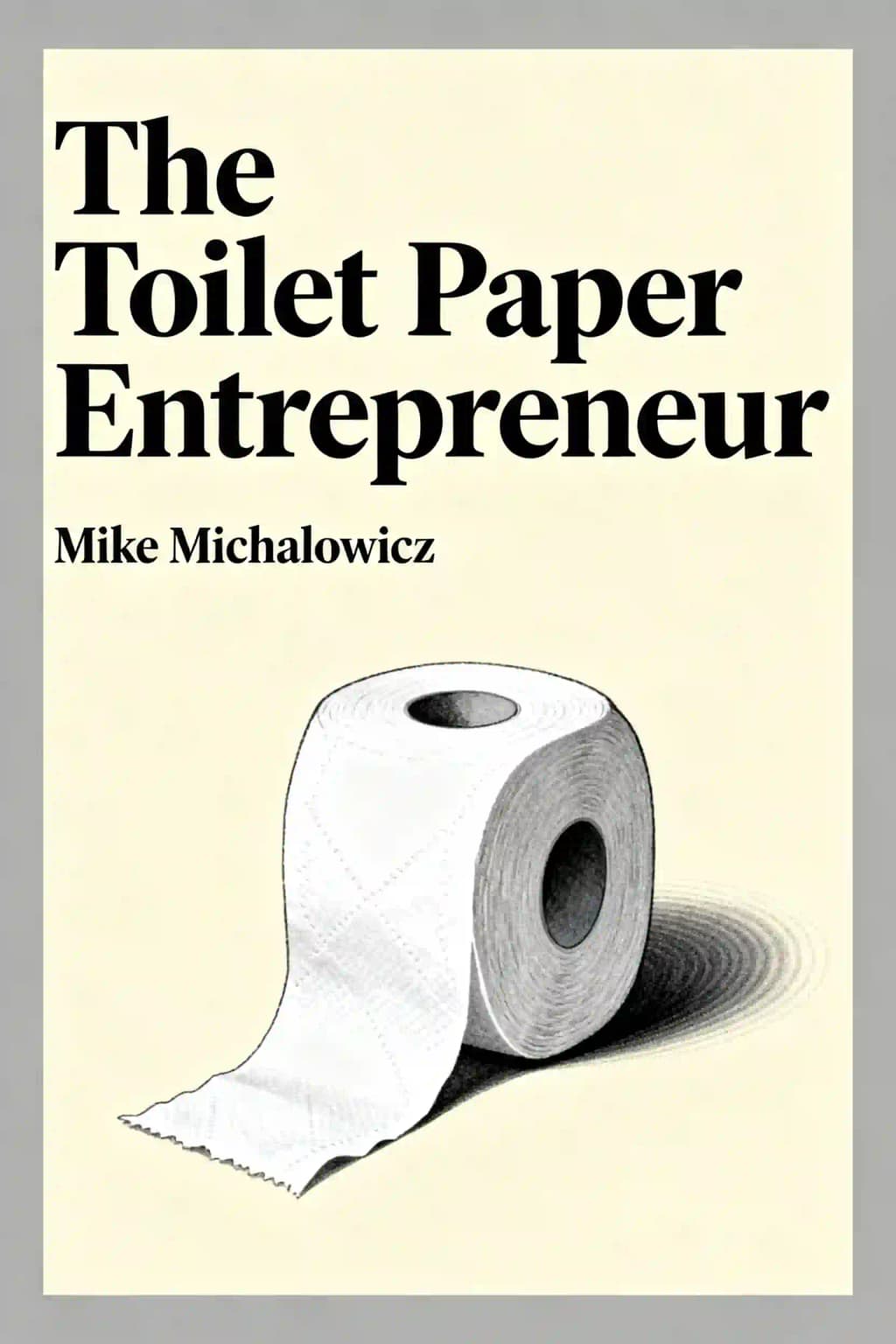
Imagine building a million-dollar business with just three sheets of toilet paper. Sounds absurd? That's precisely Mike Michalowicz's point. After selling two multi-million dollar companies before age 35, he crashed spectacularly, losing everything. From that rock bottom, he developed the "toilet paper entrepreneur" philosophy - doing extraordinary things with extraordinarily limited resources.
This isn't your professor's business book. While conventional wisdom demands 20-page business plans and significant startup capital, Michalowicz rebelliously argues that constraints breed innovation. His counterintuitive approach has earned him regular features in The Wall Street Journal and appearances on MSNBC.
What makes this guide invaluable is its brutal honesty about entrepreneurship's realities. You'll discover how to leverage your limitations, identify your unique business DNA, and implement the "Profit First" methodology that transformed thousands of companies worldwide.
The book's raw, often hilarious insights don't just teach business principles - they rewire your entrepreneurial mindset. For anyone with big dreams but limited resources, this isn't just reading material - it's revolutionary ammunition.
第 2 章
When Nature Calls: Finding Your Entrepreneurial Purpose
True entrepreneurship begins not with a business plan but with an undeniable calling. Consider the tale of two warriors: one fights for patriotism and belief in a cause, while the other fights merely for payment. When faced with overwhelming odds, which warrior persists? The one driven by purpose and passion.
This analogy perfectly captures the essence of entrepreneurial motivation. Those who launch businesses solely for financial gain often retreat at the first sign of adversity. Meanwhile, entrepreneurs fueled by genuine passion persist through seemingly insurmountable challenges, finding creative solutions with whatever resources they have available.
Your business must emerge from something that excites you deeply. Many entrepreneurs initially launch ventures based on familiarity rather than passion, which ultimately leads to burnout and failure. I've witnessed countless founders who chose industries they knew well but didn't love, only to abandon their businesses when inevitable obstacles arose.
The key question isn't "What business can I start?" but rather "What business can I not help but start?" This distinction is crucial. When you follow your calling, work becomes energizing rather than depleting. You'll find yourself thinking about your business in the shower, during commutes, and even in dreams. This natural obsession provides the stamina required for entrepreneurial success.
Remember that excuses - economic downturns, family responsibilities, lack of experience - are merely manifestations of fear. The only legitimate reason not to pursue entrepreneurship is lack of genuine passion. Without that internal fire, external resources cannot sustain your journey. When you align with your true calling, however, limited resources become merely interesting challenges rather than insurmountable barriers.
第 3 章
Silencing the Mind: Transforming Limiting Beliefs
Have you ever wondered why some entrepreneurs thrive with minimal resources while others fail despite abundant funding? The difference lies not in circumstances but in beliefs. Our internal dialogue shapes our reality more powerfully than external conditions ever could.
Imagine standing before a wall of limiting beliefs - invisible yet stronger than concrete. This wall separates you from your entrepreneurial success. Each time you think "I need more money to start," "I'm too young/old," or "I don't have enough experience," you add another brick to this barrier. The wall becomes so formidable that even when opportunities present themselves - like Jack Canfield's $100 bill experiment where he offers money to an audience but no one takes it - we remain paralyzed, unable to reach for what's available.
The entrepreneurial journey requires transforming this wall into what Michalowicz calls "The Channel" - a pathway of enabling beliefs. This transformation isn't about positive thinking; it's about recognizing false limitations and replacing them with empowering perspectives. For instance, "I have no marketing budget" becomes "Limited resources will force me to develop more creative, effective marketing strategies than my well-funded competitors."
What makes this particularly powerful is understanding that entrepreneurship is innate, not taught. While business skills can be learned, the entrepreneurial drive - that restless desire to create and build - emerges naturally. Some discover this calling early in life, while others recognize it later, but it cannot be manufactured through education alone.
The Channel mindset transforms seeming impossibilities into opportunities with the simple shift from "impossible" to "I'm possible." This isn't mere wordplay but a fundamental reorientation of perspective. Historical examples abound: flight was "impossible" until the Wright brothers made it possible; personal computing was "impossible" until visionaries like Jobs and Wozniak made it accessible.
When you encounter frustration or perceive impossibility in your market, you've actually discovered potential opportunity. These pain points signal unmet needs that your business could address. By reframing limitations as creative challenges, you position yourself to innovate where others see only obstacles.
第 4 章
The Fire Within: Aligning Passion with Profit
Having identified your calling and transformed limiting beliefs, the next crucial step is ensuring your passion can generate sustainable income. Passion alone won't pay bills; it must be channeled into a viable business model.
Ask yourself these critical questions: Can your business idea generate significant revenue? Will it provide consistent cash flow? Can you launch with minimal startup costs? These practical considerations don't diminish your passion but rather focus it toward sustainable success.
Consider Lesley-Ann Trow, whose business flourished once she aligned operations with her core values - what Michalowicz calls "Immutable Laws." These non-negotiable principles guide every aspect of your business, from product development to hiring decisions. When your business reflects your deepest values, you naturally attract like-minded customers and team members who resonate with your mission.
Your Immutable Laws act as filters, helping you make decisions that maintain integrity and consistency. They might include commitments like "We never sacrifice quality for profit" or "We always provide honest feedback, even when difficult." These principles aren't just nice ideas; they're the foundation of your business identity and a powerful differentiator in the marketplace.
The distinction between being a freelancer and an entrepreneur is crucial here. Freelancers sell their time and skills directly, while entrepreneurs build systems that generate value beyond their personal effort. True entrepreneurship means creating something that could eventually operate without your constant involvement - a business with its own identity and momentum.
This alignment between passion, values, and practical business considerations creates what Michalowicz calls "the fire in your belly" - that unstoppable drive that powers you through challenges. When your business embodies what matters most to you while addressing real market needs, you've discovered the sweet spot of entrepreneurial success.
What's remarkable about this approach is how it transforms the traditional view of business planning. Rather than starting with market analysis or funding strategies, you begin with self-knowledge and conviction. This inside-out approach ensures your business becomes an authentic expression of your values rather than merely a response to market opportunities.
第 5 章
Laser Focus: Concentrating Your Limited Resources
What do Microsoft, Hewlett-Packard, and Google have in common? Each began with an intensely narrow focus before expanding into diverse offerings. This principle - focusing small to grow big - is essential for entrepreneurs with limited resources.
When you concentrate your efforts on a specific niche, you can achieve excellence with minimal resources. This targeted approach allows for swift adaptation, superior product quality, and deeper market penetration than attempting to be all things to all people. The goal isn't to capture the entire market but to dominate a specific segment so thoroughly that expansion becomes natural and inevitable.
I'm reminded of a racing lesson that perfectly illustrates this principle: when driving at high speeds, focusing on obstacles guarantees collision; focusing on the desired path ensures safe navigation. Similarly, entrepreneurs must fix their attention on their specific goals rather than immediate limitations or competitors' actions.
The "Focus Five" strategy provides a practical framework for determining optimal business scope. This approach balances market dominance potential with revenue opportunities, avoiding direct competition with industry giants while capturing profitable niches. The ideal target: achieving $5 million in revenue within five years with limited competition.
Beyond market focus, successful entrepreneurs must choose one primary area of innovation: quality, price, or convenience. Companies like Wal-Mart (price) and McDonald's (convenience) demonstrate how unwavering commitment to a single innovation area creates market leadership. Attempting to excel in multiple areas simultaneously typically results in mediocrity across all dimensions.
This focused approach extends to understanding your ideal customer. Rather than targeting broad demographics, identify specific individuals whose values and needs align perfectly with your offering. Paul Scheiter's knife business thrived by deeply understanding survival enthusiasts' specific requirements and values. This targeted focus naturally polarizes markets - creating passionate followers and critics - which actually strengthens customer loyalty.
Perhaps most importantly, entrepreneurs must recognize their own strengths and limitations. You are exceptionally good at very few things. Identifying these natural talents and building your business around them ensures you focus on activities that energize rather than deplete you. This self-awareness isn't just about efficiency; it's about sustainability and satisfaction throughout your entrepreneurial journey.
第 6 章
The Power of Regular Planning: Dynamic Documents for Success
Traditional business wisdom emphasizes comprehensive, long-term planning. However, the most successful entrepreneurs embrace more dynamic, adaptable approaches. Rather than crafting elaborate five-year plans that quickly become obsolete, Toilet Paper Entrepreneurs develop focused, actionable documents that evolve with their businesses.
The cornerstone of this approach is the Prosperity Plan - a living document that defines your business's fundamental purpose and long-term vision. Unlike conventional business plans, this deeply personal document precedes formal company formation and reflects your authentic aspirations. Brian Scudamore of 1-800-GOT-JUNK? exemplifies this approach. While fishing, he envisioned transforming the junk removal industry and created a "Painted Picture" of seemingly impossible goals. Within five years, his company grew from $1 million to $100 million in revenue - all starting with a clear, compelling vision.
Your Prosperity Plan should articulate several key elements. First, identify your Area of Innovation - whether you'll lead through quality, price, or convenience. This choice should align with your natural strengths and differentiate you from competitors. Next, draft your Immutable Laws - the non-negotiable principles that will guide your company through challenges and shape its culture. Finally, define your Community - the specific audience whose needs and values align with your offering.
Complementing this long-term vision is the practice of "Quarterly Tacking." Like sailors adjusting course to reach their destination despite changing winds, entrepreneurs must regularly reassess and adjust their direction while maintaining their ultimate goals. Each quarter, select a few critical objectives that advance your vision, break them into concrete actions with clear accountability, and track progress visibly. This structured approach ensures consistent growth while maintaining flexibility to respond to changing market conditions.
What makes this planning approach powerful is its balance between vision and practicality. Rather than becoming lost in hypothetical scenarios or rigid projections, you focus on immediate actions that advance your long-term goals. This creates a rhythm of regular assessment and adjustment that keeps your business nimble and responsive while maintaining clear direction.
The beauty of this approach is that it acknowledges the unpredictable nature of entrepreneurship while providing enough structure to prevent aimless drifting. Your Prosperity Plan serves as your North Star, while Quarterly Tacking ensures you navigate effectively toward it, regardless of the obstacles or opportunities that arise along the way.
第 7 章
Taking the Leap: Embracing Action Over Perfection
Have you been waiting for the perfect moment to start your business? That moment will never arrive. The distinction between successful entrepreneurs and dreamers isn't knowledge, resources, or timing - it's action.
Colin Powell's "P = 40 to 70" principle captures this perfectly: when you have between 40% and 70% of the information needed for a decision, act. Below 40%, you're shooting in the dark; above 70%, you've likely missed the opportunity. This balanced approach recognizes that waiting for complete certainty paralyzes progress, while acting with reasonable information allows for momentum and adaptation.
Consider Fred DeLuca, who founded Subway with just $1,000 at seventeen years old. Without perfect preparation or extensive resources, he built a multi-billion dollar franchise by taking decisive action based on solid beliefs. Similarly, Barrett Ersek walked out of an MIT entrepreneurship meeting when struck by a groundbreaking idea for his lawn care business. Rather than continuing with traditional proposal methods, he immediately implemented satellite image-based assessments, doubling his company's profits and generating a $10 million sales surge.
These entrepreneurs embody what Michalowicz calls "burning the boats" - eliminating retreat options to ensure focused commitment. Like the legendary commander who ordered his ships burned upon reaching new shores, successful entrepreneurs remove fallback options that dilute their dedication. This all-in mentality creates the clarity and determination necessary for overcoming inevitable challenges.
For those struggling to start, Michalowicz offers practical strategies: document thoughts to clarify focus, prioritize tasks, execute quick actions immediately, and discard time-wasters. Breaking larger goals into manageable segments and creating external accountability through public commitments generates momentum. Even celebrating small accomplishments while establishing consequences for inaction can propel progress forward.
The secret behind this action-oriented approach is alignment between desire and passion. When your business reflects your authentic calling, tasks feel energizing rather than depleting. Mistakes become valuable learning opportunities rather than discouraging setbacks. Without continuous action, there is only stagnation; with persistent effort, aspirations transform into reality.
What's particularly liberating about this perspective is the recognition that not knowing everything upfront can actually be advantageous. If the Founding Fathers had foreseen all the challenges of establishing American independence, they might never have attempted it. Instead, they pursued their vision adaptively, triumphing through persistence despite overwhelming odds. Starting a business often best suits those who embrace flexibility and course correction rather than excessive planning.
第 8 章
Financial Ingenuity: Thriving with Three Sheets
Money doesn't start a venture; it sustains it. Waiting for capital kills dreams faster than any market challenge. The Toilet Paper Entrepreneur embraces resource scarcity as a catalyst for creativity and business acumen.
Julie Anderson epitomizes this resourcefulness. With minimal funds, she launched a successful costume business by crafting to order and using thrifted materials. Her story demonstrates how constraints spark ingenuity - often leading to business models more sustainable than those built on abundant capital.
When facing financial limitations, explore creative funding strategies. Kyle MacDonald famously traded a red paperclip for a house through a series of disciplined, creative exchanges - illustrating how value can be built from almost nothing. Before seeking external funding, leverage personal talents and resources to generate initial momentum.
If borrowing becomes necessary, consider unconventional sources. Vendors might provide loans when they see potential for mutual growth. Clients might fund through prepayments for future services. Even selling accounts receivable can generate immediate cash flow. However, approach personal loans cautiously - especially from friends - as they can strain relationships if business challenges arise.
Whatever funding approach you choose, establish a Profit First Account (PFA) immediately. Transfer a percentage of each deposit into this reserve before paying expenses, ensuring financial stability even during difficult periods. Start with a small percentage and increase gradually, allowing your business operations to adjust while building financial resilience.
Most importantly, maintain financial discipline regardless of your business's growth stage. Avoid borrowing to cover operational mistakes - instead, reduce expenses by restructuring labor costs or eliminating non-essential expenditures. Similarly, avoid personal guarantees on bank loans whenever possible, protecting your personal assets from business risks.
The beauty of this approach is how it transforms what most see as a limitation into a strategic advantage. Limited resources force prioritization, creativity, and efficiency - qualities that remain valuable even as your business grows. By embracing the "three sheets" mentality from the beginning, you develop financial habits that support sustainable growth rather than depending on continuous capital infusion.
This perspective challenges conventional wisdom about startup funding. Rather than viewing capital as a prerequisite for entrepreneurship, it positions resourcefulness as the true foundation of business success. When you can create value with minimal resources, additional capital becomes a growth accelerator rather than a survival necessity.
第 9 章
Protecting Your Vision: Strategic Partnerships and Equity
As your business grows, you'll face increasing pressure to share ownership through partnerships, investor relationships, or equity compensation. While these arrangements can provide resources and expertise, they often come with hidden costs that threaten your entrepreneurial vision.
Partnerships frequently strain under differing perspectives on risk, vision, values, and energy levels. What begins as harmonious collaboration often deteriorates when partners' priorities diverge or commitment levels fluctuate. Preserve equity unless potential partners significantly enhance business value through unique contributions that directly advance your goals.
Similarly, beware of "Very Inordinately Paid Specialists" (VIPs) - consultants, advisors, or industry veterans who promise transformative impact but frequently under-deliver. Pre-offered rewards typically yield disappointing results. Focus instead on rewarding those who genuinely drive your company forward, avoiding premature equity distribution or excessive payments to outsiders.
Remember that ideas alone hold minimal value without sustained effort. Equitable distribution during brainstorming phases often leads to regret when one person shoulders the majority of implementation work. Effort, not ideation, should determine equity worth, emphasizing continuous drive beyond initial concept development.
While venture capitalists and angel investors have funded remarkable successes, their primary motivation remains financial gain - often creating pressure and control issues for entrepreneurs. Consider external investment only after establishing stable revenue, recognizing that investor expectations typically demand significant returns within compressed timeframes.
If partnerships become necessary, establish performance metrics that ensure fair work distribution and growth-oriented equity splits. Starting small and maintaining control offers distinct advantages: nimble decision-making, deeper client relationships, and rapid adaptation to market changes. This "underdog advantage" often outweighs the apparent benefits of larger, better-funded competitors.
What makes this perspective particularly valuable is its emphasis on long-term vision over short-term resources. By carefully guarding your equity and maintaining decision-making authority, you preserve the ability to build your business according to your authentic values and goals. This patient approach may seem counterintuitive in a culture that celebrates rapid scaling and massive funding rounds, but it creates more sustainable businesses aligned with founders' original intentions.
The most successful entrepreneurs recognize that maintaining control of their vision often matters more than accelerating growth through external resources. By protecting your equity and carefully selecting partners based on aligned values and complementary contributions, you ensure your business remains an expression of your unique vision rather than becoming diluted by competing priorities.
第 10 章
The Entrepreneurial Advantage: Youth and the Young at Heart
Youth provides unparalleled advantages in entrepreneurship - but these benefits aren't limited to chronological age. The entrepreneurial mindset embodies youthful qualities regardless of birthdate: resilience, open-mindedness, and willingness to experiment.
Young entrepreneurs enjoy abundant time, energy, and fewer financial obligations - creating space for risk-taking and innovation. Perhaps most importantly, they approach challenges without preconceived limitations, seeing possibilities where experienced professionals might see only obstacles.
However, these advantages aren't exclusive to the chronologically young. Entrepreneurs of any age can cultivate the "young at heart" perspective that drives success. This mindset embraces learning, adapts quickly to changing circumstances, and maintains childlike curiosity about new possibilities.
Consider Thomas Crapper - often mistakenly credited with inventing the flushing toilet but undeniably a marketing genius who revolutionized plumbing through numerous patents. Despite humble origins and limited formal education, Crapper embodied the entrepreneurial spirit through confidence, unique strengths, and unwavering focus. His story reminds us that entrepreneurial success depends more on mindset than credentials or circumstances.
The Toilet Paper Entrepreneur approach ultimately transcends age, resources, or background. It centers on leveraging whatever you have - whether three sheets of toilet paper or three million dollars in funding - to create value through passion, belief, focus, and action. This resourceful mindset transforms limitations into catalysts for innovation, creating businesses that thrive not despite constraints but because of them.
What makes this perspective so powerful is its accessibility. Unlike approaches that require specific credentials, connections, or capital, the TPE philosophy is available to anyone willing to embrace its principles. By focusing on internal resources - passion, belief, creativity, and determination - rather than external advantages, it democratizes entrepreneurship and reveals possibilities that conventional wisdom might obscure.
The entrepreneurial journey isn't about having everything you need before starting; it's about starting with what you have and discovering that it's enough. When you combine authentic passion with focused action and resourceful creativity, you'll find that three sheets are all you need to begin building something remarkable.