第 1 章
Dreams: The Mind's Nocturnal Journey
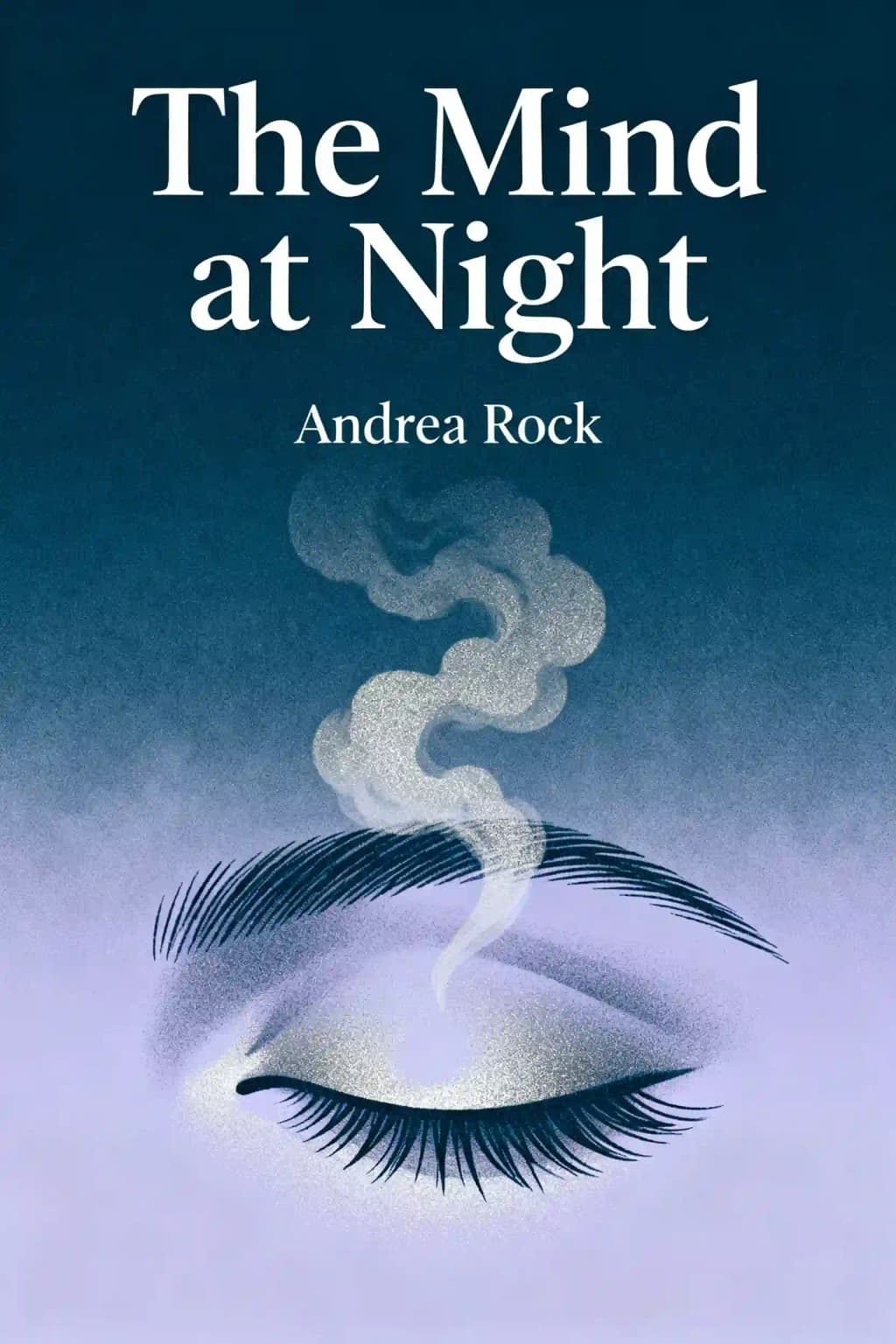
Have you ever woken up from a dream so vivid it felt more real than reality itself? You're not alone. Each night, as our bodies lie motionless, our brains embark on extraordinary journeys through landscapes of our own creation. Andrea Rock's "The Mind at Night" has been hailed as a scientific classic, with Kirkus Reviews calling it "a well-written, often entertaining look inside the mind" and Publishers Weekly praising its "exceptionally lucid" exploration of dream science. The book has achieved cult status among neuroscientists and psychology enthusiasts alike, with many universities including it in their core curriculum. Even celebrities like director Christopher Nolan have cited it as inspiration for films exploring the nature of consciousness and reality. What makes this exploration of our nocturnal minds so compelling is its perfect balance of scientific rigor and accessible storytelling-inviting us to understand the mysterious third of our lives spent in slumber.
第 2 章
The Discovery That Changed Sleep Science Forever
In 1951, a desperate graduate student named Eugene Aserinsky made a discovery that would revolutionize our understanding of the sleeping brain. At thirty years old, with no degree beyond high school despite numerous college credits, Aserinsky was struggling to support his family while pursuing graduate studies at the University of Chicago. Working under Nathaniel Kleitman, the world's only dedicated sleep researcher at that time, Aserinsky proposed studying eye movements throughout the night after noticing vigorous movements beneath sleeping subjects' eyelids.
Using an ancient polygraph rescued from the basement, he wired his eight-year-old son Armond with electrodes and was startled to discover periods when the slow, even wave patterns of sleep suddenly shifted to sharp peaks and valleys resembling waking patterns. These periods coincided with rapid eye movements visible beneath closed eyelids and occurred regularly four or five times nightly.
When Aserinsky awakened subjects during these periods, they almost always reported vivid dreams. Though initially skeptical, Kleitman eventually became convinced after observing the phenomenon in his own daughter. Their landmark 1953 Science publication forced scientists to completely rethink sleep-far from being an idle state, the brain regularly entered a supercharged condition remarkably similar to waking consciousness.
William Dement, a medical student fascinated by Kleitman's work, continued this research and established the foundation for modern sleep science. His work with Kleitman meticulously charted the five stages of sleep: from alpha waves of relaxed presleep, through hypnagogic imagery of stage I, light sleep of stage II, to the deep delta waves of stages III and IV (slow-wave sleep), and finally the paradoxical brain activity of REM. They discovered that REM returns approximately every 90 minutes throughout the night, with periods lengthening toward morning, and that dreams were recalled from 74% of REM awakenings versus less than 10% in non-REM.
The 1960s brought a surge in sleep research funding, with scientists exploring countless questions: Could dream content be manipulated? (Rarely, despite attempts with bells, water sprays, and blood pressure cuffs.) Did pre-sleep experiences affect dreams? (Banana cream pie before bed had little effect.) Dreams were found to be primarily visual experiences, with auditory elements in about half, while touch, taste, and smell rarely appeared.
Research revealed that REM sleep exists across mammals and some birds but not reptiles, with duration varying dramatically between species-from forty minutes daily in cattle to seven hours in opossums. In humans, REM begins in the womb at twenty-six weeks, accounts for 50% of newborns' sleep, stabilizes at 20-25% by age four, and gradually declines in later years.
第 3 章
The Brain Chemistry of Dreams
J. Allan Hobson's fascination with the mind began in his teens when he found himself more intrigued by consciousness itself than the universe his friends marveled at under Maine's starry skies. Following his mentor's advice that understanding the mind required studying the brain, Hobson entered Harvard in 1955 as a Freud devotee but soon became disillusioned with psychoanalytic approaches disconnected from neuroscience.
His career took a decisive turn when he witnessed REM sleep recordings at NIH. "When I watched the brain waves changing in a sleeping subject, I was hooked in one night," Hobson recalls. Partnering with Robert McCarley at Harvard, he probed cats' brainstems with microelectrodes during sleep cycles, despite skepticism from colleagues who believed neural activity ceased during sleep.
Their groundbreaking 1977 paper proposed a neurophysiological explanation of dreaming that challenged Freudian theory. They discovered that REM sleep begins when brainstem neurons alter the brain's chemical balance, shutting off norepinephrine and serotonin (essential for waking consciousness) while flooding the brain with acetylcholine. This chemical shift excites visual, motor and emotional centers while blocking actual movement and sensory input. The brain, operating under different rules, interprets internally generated signals as real experiences and creates narratives to match random brainstem signals.
Hobson argued that dreams weren't hiding repressed wishes but were transparent products of this altered brain chemistry. Dream characteristics-bizarre imagery, poor judgment, emotional intensity, and forgetting-directly resulted from this neurochemical state. While dream content might reflect emotional preoccupations, Hobson insisted no symbolic decoding was necessary.
He delighted in publicly challenging psychoanalytic theories, creating lifelong enemies through what he later admitted was "gloating." Hobson also brought his research to the public through an innovative 1977 exhibit called "Dreamstage," where visitors could watch sleeping volunteers through one-way mirrors while their brain activity was translated into laser light displays and synthesized music.
Hobson maintained that dreams are inherently bizarre because the brain regions responsible for logic and reality-checking are inactive during REM sleep. However, his view that dreaming occurred exclusively during REM was challenged by researchers like David Foulkes, who demonstrated that dreaming also occurs during non-REM sleep. Foulkes found that up to 70% of sleep-onset reports contained dreamlike content, suggesting we only remember the strangest dreams because they wake us up.
第 4 章
How Children's Dreams Reveal the Development of Consciousness
David Foulkes' groundbreaking work on children's dreams began almost by accident when studying how violent television affected dream content. Realizing no one had established baseline properties of children's dreams, he launched an extensive sleep lab study in Wyoming in 1968. For five years, children aged 3-15 spent multiple nights annually in the lab, where Foulkes personally awakened them during REM sleep to report "what was happening just now."
The results shattered conventional wisdom about children's dreams. Children under nine reported dreams during only 30% of REM awakenings (compared to adults' 80%), and dream content evolved in distinct developmental stages. Under age five, dreams consisted primarily of static, bland images of animals or everyday activities. Between five and eight, dreams developed action sequences and character interactions, but children didn't appear as active participants until age seven or eight. Only after age eleven did dreams reflect personal concerns and emotional preoccupations like adults'.
When critics suggested children simply lacked language skills to describe dreams, Foulkes' cognitive testing disproved this theory. Children who reported more dreams didn't have better verbal abilities but scored higher on visual-spatial tests like block pattern reconstruction. Two older boys who rarely reported dreams despite average verbal skills scored abnormally low on these visual-spatial tests, confirming that dreaming requires specific cognitive abilities rather than just recall or descriptive skills.
Studies of blindness further support the theory that dreaming depends on the ability to generate visual imagery without direct perceptual input. Children blinded before age five rarely experience visual dream imagery, while those losing sight after seven can dream visually like sighted people. Psychologist Raymond Rainville, blind since age twenty-five, reports that his dreams gradually shifted from vivid visual memories to the kind of constructed visual imagery he creates while awake.
Most significantly, children's inability to appear as active characters in dreams before age seven suggests they lack conscious self-identity until this age. This aligns with psychological tests showing children don't develop full self-concept until around seven. "In telling us about their dreams, children are telling us about operations they can and cannot perform in their mind's eye," Foulkes concluded.
His research suggests consciousness emerges gradually: "We dream because we have achieved consciousness."
第 5 章
Mapping the Dreaming Brain
Mark Solms's quest to understand dreaming began with a deeply personal motivation: his brother's traumatic brain injury at age six. Growing up in remote Namibia, Solms was profoundly affected by how damage to his brother's brain completely altered his personality. This childhood experience drove him to study neuroscience, specifically focusing on how the brain creates our sense of self.
As a neuroscience student in Johannesburg during the early 1980s, Solms found himself drawn to Freud's neurological speculations about dreaming. Though he initially accepted Hobson's dominant theory that dreams originated from random brainstem signals during REM sleep, his clinical work with brain-damaged patients soon revealed startling contradictions.
Working in neurosurgery departments in Johannesburg and London, Solms systematically questioned patients with various brain lesions about changes in their dreaming. His first breakthrough came when patients with parietal lobe damage-the region responsible for spatial orientation and mental imagery-consistently reported they had stopped dreaming entirely. This initially seemed to support Hobson's model: their REM sleep continued, but the brain's "picture-making machinery" was broken.
However, two shocking patterns emerged that undermined Hobson's theory. First, Solms encountered patients with brainstem damage who still dreamed-impossible according to Hobson. Second, patients with damage to the ventromesial forebrain (white matter deep in the frontal lobes) consistently stopped dreaming. When Solms searched medical literature, he discovered that prefrontal leukotomy patients-who had surgical cuts in precisely this region-had overwhelmingly reported cessation of dreaming, though no one had connected these dots before.
The ventromesial forebrain, known as the brain's "seeking system," is rich in dopamine pathways and activates when we pursue basic needs or pleasures. This suggested dreams might be driven by dopamine rather than acetylcholine (which triggers REM sleep).
Entirely by coincidence, just months after Solms published his theory in 1997, Tom Balkin and Allen Braun released groundbreaking brain-imaging research that mapped the dreaming brain in unprecedented detail. Using PET scanning, which measures blood flow to indicate active brain regions, they tracked subjects' brains before sleep, during various sleep stages, and after waking.
Their colorful three-dimensional portraits revealed that as we enter deep non-REM sleep, activity decreases throughout the brain, with the prefrontal cortex-responsible for logical thinking and planning-dropping first and most dramatically (about 25%). During REM sleep, most brain regions reactivate except one crucial area: the logical, reasoning portion of the prefrontal cortex. This explains why dreams lack reality testing-we don't question why our deceased grandfather appears in knight's armor driving a taxi.
Most surprisingly, certain brain regions become more active during REM than during wakefulness. While the primary visual cortex shuts down, visual association areas involved in creating mental images fire wildly above normal waking levels, making dreams intensely visual. The limbic system-our emotional memory center-operates at full tilt during dreams, while areas for sequential ordering and working memory remain offline.
第 6 章
The Evolutionary Purpose of Dreams
While some scientists maintain dreams are merely accidental by-products of evolutionary developments without specific function, others argue REM sleep evolved for reasons crucial to mammalian survival. Content analysis of dreams provides clues to dreaming's evolutionary history and potential purpose.
Content analysis reveals remarkable consistency in individual dreaming patterns over time. One woman who kept a dream journal for fifty years showed the same six elements appearing with consistent frequency throughout her life. Even across generations, American college students' dreams remained relatively unchanged despite major cultural upheavals.
Dreams differ from waking fantasies. In dreams, children were often victims of aggression and passive recipients of friendliness, while in fantasies they portrayed themselves as they wished to be. Dreams also contained more bizarre elements than fantasies.
Jonathan Winson's theory connects dreaming to survival, with the spiny anteater providing crucial evolutionary evidence. This primitive egg-laying mammal lacks REM sleep but shows theta rhythm brain waves during wakefulness-the same pattern that appears in other mammals during REM. Winson theorizes that as mammals evolved to be active during daylight, they needed a mechanism to process survival-critical information during sleep instead of wakefulness. Human dreaming evolved from this primitive survival mechanism into something more sophisticated through our complex neural networks.
Antti Revonsuo argues that dreaming evolved specifically as a threat simulation system-particularly adaptive in prehistoric environments where survival threats were constant and severe. To support this theory, the brain's fight-or-flight systems remain fully active during dreams. Though our muscles are paralyzed during sleep, the brain sends copies of motor commands to sensory systems, creating the illusion of movement-making dreamed actions "experientially and neurophysiologically real."
This evolutionary perspective explains why dreams seem designed to be forgotten. During REM sleep, acetylcholine levels rise (optimal for forming neural connections) while serotonin and norepinephrine plummet (impairing recall). For non-language species, remembering dreams could be dangerous, confusing illusion with reality. Humans uniquely distinguish between dreamed and real experiences.
Modern dream content still reflects ancient origins-studies show reading, writing and arithmetic rarely appear in dreams, while primitive threats remain common. Animals appear as enemies in 82% of men's dreams and 77% of women's, while male strangers feature in 72% of men's dreams and 63% of women's-reflecting ancestral threat patterns rather than modern dangers.
第 7 章
Dreams and Memory: The Night Shift of Learning
Memory consolidation transforms short-term memories into long-term ones through neural connections that strengthen with repeated activation-"cells that fire together wire together." Recent memories are most vulnerable to disruption from brain injuries, while older memories become more resilient through consolidation. Over time, memories transfer from the hippocampus to the neocortex for permanent storage.
Researchers have devised ingenious experiments to track how daily experiences appear in dreams. In one study at Albert Einstein College of Medicine, students wore goggles that made everything appear red. About half their dream scenes incorporated this red coloration, especially in the first REM period each night. Surprisingly, even pre-experiment memories sometimes appeared tinted red, revealing complex interactions between recent experiences and older memories.
Harvard's Robert Stickgold discovered valuable insights by studying hypnagogic imagery-the hallucinatory experiences that occur while falling asleep. After physically demanding activities like rock climbing, he found himself spontaneously reliving these experiences during sleep onset, complete with sensory details like feeling his hands on rocks.
To scientifically study this phenomenon, Stickgold had volunteers play Tetris for seven hours over three days. Remarkably, over 60% reported dreaming about falling Tetris pieces when awakened during early sleep, with most occurrences on the second night rather than the first. Even amnesic patients, who couldn't consciously remember playing the game, reported identical Tetris imagery in their dreams-proving that dream content derives from procedural and factual memories in the neocortex rather than autobiographical memories.
Dreams don't simply replay our daily experiences verbatim. The brain selectively edits information, focusing on essential elements while ignoring irrelevant details. It also transforms memories through association-as when one Tetris player dreamed of colored pieces with music from her earlier Nintendo experiences rather than the black-and-white version used in the experiment.
Studies show that only about half of dreams contain "day residue" from recent experiences, and these elements follow a specific pattern called the "dream lag effect." Typically, experiences appear in dreams the same night they occur, then drop away before potentially reappearing about a week later. This secondary processing tends to involve emotionally significant experiences.
Beyond memory consolidation, research shows different sleep stages are specialized for different types of learning. Stage II sleep, especially in the final hours before waking, appears crucial for motor skill improvement. Slow-wave sleep, more prevalent in the first half of the night, is important for factual memory tasks like rote memorization, while REM sleep is critical for procedural learning. Studies show REM sleep increases after training on new tasks, and performance declines if subjects are deprived of REM afterward.
Brain imaging provides conclusive evidence of learning during dreams. Pierre Maquet's research showed that brain regions activated while subjects learned tasks were reactivated during REM sleep, but only when subjects had something meaningful to learn. Those with faster reaction times during training showed greater brain reactivation during REM, suggesting the brain selectively replays experiences with learning value.
第 8 章
Dreams as Emotional Therapy
The emotional centers of the brain are most highly activated during our most vivid dreams, suggesting that emotionally charged memories are specifically targeted during REM sleep. Studies indicate dreaming serves as an internal therapist, helping us integrate emotional experiences and regulate our moods. As Robert Stickgold puts it, "Figuring out what memory means, rather than simply recording events, is the brain's mission at night."
Rosalind Cartwright's research suggests dreams function as mood regulators, processing negative emotions so we wake feeling better. Most studies confirm dreams predominantly feature negative emotions, with two-thirds of dream emotions being negative-including fear, anxiety, sadness, and anger.
Cartwright believes that integrating emotional experiences-particularly stressful ones-is a primary function of REM sleep. Brain imaging studies support this, showing the limbic system (emotional memory center) is highly activated during REM while logical prefrontal regions are nearly shut down.
Dreams work like "Scotch plaids," with recent memories overlaid on earlier ones, all connected by emotion rather than logic. For most people, dreams in the first REM period contain the most negative emotions, becoming progressively more positive throughout the night while incorporating older autobiographical memories. This pattern helps improve mood by morning if the brain finds positive-outcome memories associated with similar emotions.
Depressed people show distinctly different dreaming patterns. Their first REM period occurs earlier in the night with dreams surprisingly lacking emotion, but as the night progresses, their dreams become increasingly negative. While healthy individuals' dreams become more positive throughout the night, depressed people seem to ruminate through exclusively negative memory images, reinforcing their anxiety or fear.
Cartwright's research with recently divorced subjects revealed that those who recovered from depression had twice the dream recall rate and more dreams incorporating the ex-spouse compared to those who remained depressed. Over time, the ex-spouse's role in dreams shifted from generating anger to representing the dreamer's independence and freedom.
Eric Nofzinger's brain imaging research provides physiological evidence of dreaming's role in mood regulation. Using PET scanning, he found the limbic system shows a massive 15% increase in activation during REM compared to waking-far exceeding the typical 3-4% regional shifts in brain activation. This suggests the brain is processing emotional experiences during dreams.
Some psychologists suggest that properly functioning dreams may be more effective than introspective psychotherapy for depression. While Freud viewed the unconscious as a "cesspool" requiring therapist intervention, research shows dreams naturally flush emotions nightly.
Dreams serve to "contextualize" emotions in visual form, with overwhelming feelings often appearing as metaphorical whirlwinds or tidal waves. Ernest Hartmann's studies of trauma victims' dreams reveal how the brain translates dominant emotions into moving visual metaphors.
For trauma survivors, dreams follow a pattern: first vividly replaying the incident with modifications, then rapidly connecting it with emotionally related memories. Nightmares gradually transform as the experience integrates with positive memories, functioning as automatic internal therapy by making connections in a safe space.
第 9 章
Creative Breakthroughs in Dreams
Paul McCartney's experience with "Yesterday" demonstrates how dreams can unleash creativity. McCartney woke one morning in 1965 with a haunting melody from his dream, where he'd heard it played by a classical string ensemble. Initially convinced it must be someone else's composition, he checked extensively before accepting it was original. After adding lyrics to replace his initial nonsense words ("Scrambled eggs, oh my baby, how I love your legs..."), "Yesterday" became the most frequently played single on American radio.
Creative innovations in science also emerge from dreams. Immunologist Tse Wen Chang conceived a groundbreaking allergy treatment approach in a dream, waking his wife Nancy to discuss the idea of using engineered proteins to prevent allergic reactions rather than treating them after onset. This midnight inspiration led to a breakthrough drug for peanut allergies.
Dreams excel at solving problems by removing normal constraints. Cognitive psychologist John Antrobus explains that dreaming relaxes all constraints around problems, revealing solutions invisible during waking thought. Harvard physicist Paul Horowitz repeatedly solved telescope design problems through dreams featuring a narrator explaining solutions while he watched someone implement them.
Dreams often deliver solutions through visual metaphors. Elias Howe solved his sewing machine design problem through a dream of warriors carrying spears with eye-shaped holes near their tips-inspiring him to place the needle's eye near its point rather than at the opposite end.
The nonlinear meaning-making in dreams may represent chaos theory at work in the brain. While awake, neuromodulators like serotonin restrain cerebral chaos, but during REM sleep, physiological shifts push the brain into a chaotic state where vivid dreaming emerges as a self-organizing response. With fewer constraints than waking thought, dream consciousness allows for novel recombinations of cognitive elements.
The altered state of self-organization in dreams closely resembles what happens in the brain during creative waking activities. Bert States, a former professor and painter, suggests that brain scans of artists at work might reveal activation patterns similar to REM sleep. The mind state of creative immersion-whether writing, painting, or scientific theorizing-creates a dreamlike disorientation where one is minimally attending to practical reality.
James Pagel's research at the Sundance Film Institute found that screenwriters, directors, and actors recalled dreams nearly twice as frequently as the general population and reported dreams influencing their creative work at double the normal rate. Conversely, Pagel's study of "nondreamers" revealed they lacked creative outlets in waking life.
Creative individuals often use "incubation"-focusing on a problem before sleep to encourage solutions during dreaming. Deirdre Barrett recommends writing down the problem, visualizing dreaming about it while falling asleep, and recording any dreams upon waking. "Dreaming is, above all, a time when the unheard parts of ourselves are allowed to speak-we would do well to listen."
第 10 章
Lucid Dreaming: Consciousness Within Dreams
Stephen LaBerge's Palo Alto office, decorated with cloud-painted blue walls, provides a dreamlike setting fitting for his pioneering research into lucid dreaming-a phenomenon where dreamers become aware they're dreaming while the dream continues. This research has shifted scientific understanding about the dreaming mind, suggesting the boundary between dream experiences and waking reality may be less defined than previously thought.
LaBerge first experienced lucid dreaming as a child, continuing underwater pirate dreams night after night, fully aware he was both character and director of the action. After earning his mathematics degree at nineteen and beginning graduate studies in chemical physics at Stanford, LaBerge rediscovered lucid dreaming as an adult following a Tibetan Buddhist workshop.
Despite Western scientific skepticism about lucid dreaming's existence, the phenomenon has a rich historical record. Aristotle referenced it in the fourth century B.C., and Tibetan Buddhists have incorporated "dream yoga" in spiritual practices for over 1,000 years.
When LaBerge approached William Dement at Stanford to study lucid dreaming for his dissertation in 1977, most researchers dismissed the phenomenon as occurring during "microawakenings" rather than true sleep. Working with Lynn Nagel, LaBerge devised a breakthrough experiment where he would signal from within a lucid dream using pre-arranged eye movements detectable on monitoring equipment. On January 13, 1978, he succeeded, proving lucid dreaming occurred during unequivocal REM sleep.
Laboratory studies have firmly established that lucid dreamers can carry out pre-sleep instructions, including signaling to researchers and altering breathing patterns during dreams. Surveys consistently show that over half of respondents report having at least one lucid dream in their lifetime, though frequent lucid dreamers (monthly or more) represent only 10-20% of the population.
First-time lucid dreamers often report a startling sense of "hyperreality" upon realizing they're experiencing a flawlessly detailed world created entirely by their mind. While many can manipulate dream content after achieving lucidity, control isn't absolute. In one experiment where subjects were asked to find mirrors in their lucid dreams, they could locate mirrors easily, but over 40% reported their reflections transformed unpredictably-demonstrating that even in lucid states, dreams retain their characteristic fluidity.
When lucid dreamers performed specific tasks like singing or counting in their dreams, their brain activity mirrored what would occur during waking performance-right hemisphere activation during singing and left hemisphere activation during counting. These patterns didn't appear when subjects merely imagined these activities while awake, suggesting dream experiences simulate reality more authentically than imagination.
LaBerge recommends "reality testing" during waking hours-repeatedly questioning whether you're dreaming, especially during circumstances similar to recurring dream scenarios. Once asleep, checking text or clock faces helps trigger lucidity, as these elements typically mutate in dreams.
LaBerge offers a simple answer for why one would cultivate lucid dreaming: for the novelty and fun of it. "What's it like to have a world to myself that I'm the creator of? That's what you discover in a lucid dream, and for many people it's an exhilarating, peak experience." Beyond entertainment, lucid dreamers use their dreams to overcome fears and test new coping strategies.
第 11 章
The Future of Dream Science
Christof Koch, a physicist-turned-neuroscientist at Caltech, has partnered with Nobel laureate Francis Crick to identify the precise brain cells that give us consciousness. Koch sees dreaming as a fascinating piece of the consciousness puzzle, describing it as "a particularly vivid form of consciousness" with biological purpose.
Koch and Crick seek the "neuronal correlates of consciousness" (NCC) by studying neurons during waking consciousness. Their research with UCLA neurosurgeon Itzhad Fried revealed remarkably specific brain organization-individual neurons in epilepsy patients fired only in response to specific familiar faces like Bill Clinton, and fired again when subjects merely imagined those faces.
Our brains, not our eyes, create what we see. The retina transmits electrical signals from light photons, but these signals don't produce clear images by themselves-they're merely disconnected dots. The brain manipulates these signals extensively, creating a stable world despite our eyes moving three times per second. In both waking and dreaming, visual imagery is largely formed by our expectations and memories, with the associative cortex and limbic system supplying meaning rather than the eyes themselves.
Most brain activity occurs outside conscious awareness-estimates suggest 95-98% of mental activity and actions are unconsciously determined. Koch calls these unconscious neural systems "zombie agents" that handle complex tasks without our awareness. Our sense of consciousness involves elaborate neural networks mapping our bodies and the external world.
Sleep disorders like parasomnias reveal fascinating insights about brain states. In two murder cases investigated by Rosalind Cartwright, men arose during deep sleep and committed violent acts without awareness. Kenneth Parks drove fifteen miles and fatally stabbed his mother-in-law, while Scott Falater stabbed his wife forty-four times while sleepwalking. These cases demonstrate how parasomniacs can navigate space but lack visual recognition of faces, pain sensation, or the ability to hear screams.
REM behavior disorder primarily affects middle-aged and elderly men who, unlike normal sleepers, aren't paralyzed during REM sleep and act out their dreams. When awakened, they recall dreams that match their actions, typically fighting off attackers. The disorder often precedes Parkinson's disease, with two-thirds of patients developing it within twelve years.
Dreams provide unique insights into consciousness as "psychological reality at its barest." Antti Revonsuo suggests that studying dream inconsistencies could illuminate the "binding problem"-how the brain unifies sensory inputs into coherent experience. Sophie Schwartz investigates why dreaming accepts bizarre elements that waking consciousness rejects.
The Defense Department has invested $100 million in research aimed at eliminating soldiers' need for sleep. Jerome Siegel studies dolphins' unihemispheric sleep patterns, where only one brain hemisphere sleeps at a time, allowing continuous functioning. Chiara Cirelli investigates sleep's molecular functions, finding that continuous wakefulness maintains high neurotransmitter levels that might be toxic to neurons.
Future research will likely clarify how higher brain regions participate in dream construction and use dreaming to understand waking consciousness. Lucid dreaming research could provide insights into consciousness itself. Fifty years of dream research has revealed that dreaming represents a rich form of consciousness as valuable as waking experience. As science continues illuminating the brain's inner workings, our appreciation for nature's brilliant design only deepens.