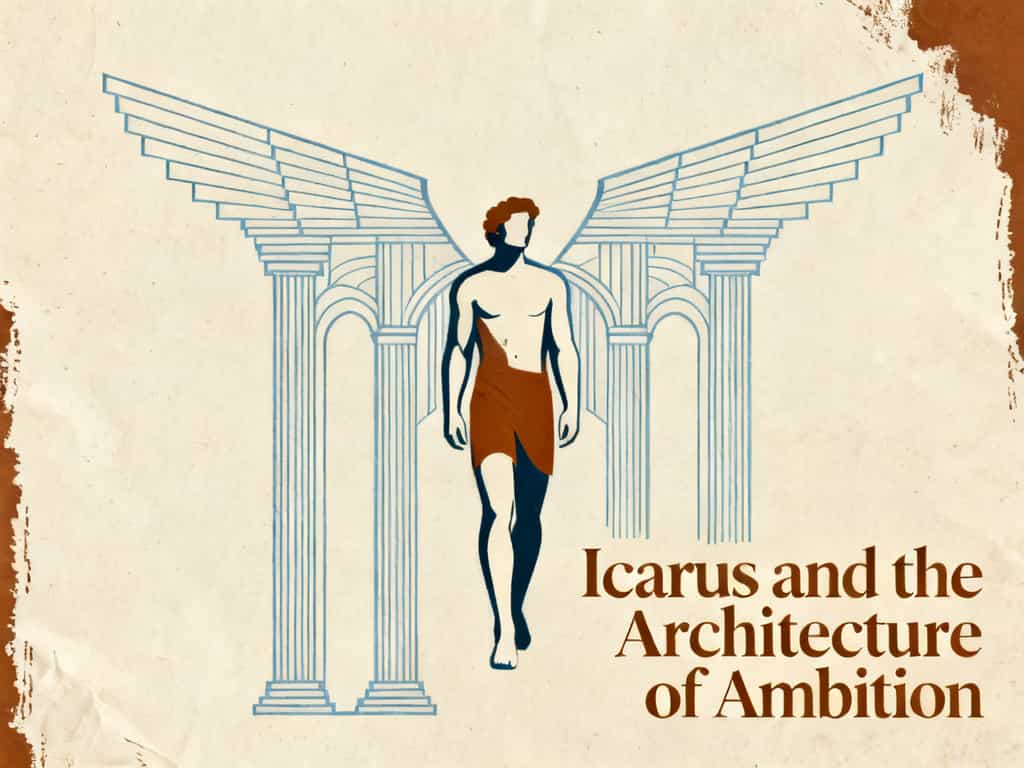
《Icarus Deception》概述
Seth Godin shatters the Icarus myth, arguing we've been flying too low, not too high. Endorsed by TED leaders, this 2012 manifesto challenges you to embrace creative risk in our connection economy. What masterpiece could you create if fear wasn't holding you back?
- Flying too low stifles potential more than flying too high risks failure.
- The Connection Economy demands emotional labor over industrial-era compliance.
- Artisan work replaces "safe jobs" as automation reshapes career stability.
- Ship vulnerable creative work daily to build anti-fragile professional resilience.
- Corporate loyalty now risks irrelevance – weirdness becomes career insurance.
- Reject "follow instructions" culture – make disruptive art your new factory job.
- Complacency disguised as prudence is modern mythology’s greatest deception.
- Creative courage muscles atrophy faster than technical skills in stagnation.
- Success requires balancing sun-seeking innovation with sea-avoiding persistence.
- Build linchpin value through public contributions, not private perfectionism.
- Industrial-age safety nets drown faster than wax wings melt.
- Ship early, scare yourself, repeat – the new career calibration ritual.
《Icarus Deception》作者介绍
Seth Godin, bestselling author of The Icarus Deception: How High Will You Fly?, is a pioneering entrepreneur and marketing thought leader whose work reshapes how we approach creativity and business.
The book, a manifesto on personal development and professional risk-taking, challenges industrial-age complacency by urging readers to embrace artistic courage—a theme rooted in Godin’s decades of critiquing conventional work models. A Stanford MBA graduate and founder of ventures like Yoyodyne (acquired by Yahoo!) and the altMBA workshop, he merges practical business acumen with philosophical insights.
Godin’s influential works, including Purple Cow, Linchpin, and This Is Marketing, have sold millions globally and have been translated into 38 languages. His daily blog, ranked among the world’s most-read, and five TED Talks amplify his reach.
Inducted into the Marketing Hall of Fame in 2018, Godin’s ideas are taught in business programs and embraced by startups and Fortune 500 leaders alike.
关于《Icarus Deception》的常见问题
What is The Icarus Deception by Seth Godin about?
The Icarus Deception challenges the traditional interpretation of the Greek myth, arguing that society’s emphasis on avoiding risk (“flying too high”) has overshadowed the greater danger of settling for mediocrity (“flying too low”). Godin urges readers to embrace creativity, reject industrial-era conformity, and pursue meaningful work in an age of automation.
Who should read The Icarus Deception?
This book is ideal for professionals feeling stagnant in corporate roles, entrepreneurs seeking unconventional paths, and creatives aiming to monetize their art. It’s particularly relevant for those navigating career transitions or resisting algorithmic work models.
Is The Icarus Deception worth reading?
Yes—it offers a provocative reframe of productivity myths and actionable insights for building a purpose-driven career. While light on step-by-step plans, its emphasis on emotional labor and “shipping creative work” resonates in today’s gig economy.
What is the main message of The Icarus Deception?
The core thesis is that playing it safe has become riskier than taking bold creative risks. Godin argues that institutions use the Icarus myth to enforce compliance, but true success now requires defying norms and sharing “art” (defined as empathetic, novel work).
How does Seth Godin reinterpret the Icarus myth?
Godin highlights the myth’s often-ignored warning: Daedalus also told Icarus not to fly too low, as sea mist would weigh down his wings. This symbolizes how corporate safety nets (e.g., 9-to-5 jobs) now hinder more than protect, making moderate effort riskier than bold experimentation.
What are the key concepts in The Icarus Deception?
- The Artist’s Mindset: Treating work as emotional labor worth sharing
- Ship Often: Prioritizing consistent output over perfection
- Connection Economy: Valuing human relationships over mass production
- The Lizard Brain: Overcoming fear-based resistance to creativity
Can you explain the “artist” concept in the book?
Godin redefines artist as anyone creating work with vulnerability and intention—not just painters or musicians. Examples include teachers crafting lessons, engineers solving novel problems, or entrepreneurs building community-driven brands.
How does The Icarus Deception relate to modern work challenges?
The book predicts automation’s rise (written pre-AI boom) and argues humans must focus on non-routine creativity. This aligns with 2025 debates about upskilling for roles requiring empathy, improvisation, and emotional intelligence.
What critiques exist about The Icarus Deception?
Some readers find its advice overly abstract, lacking concrete steps for risk-averse individuals. Others argue it underestimates systemic barriers to creative careers. However, its core message about redefining safety remains widely praised.
Does Seth Godin offer practical steps in the book?
While avoiding rigid frameworks, Godin emphasizes daily practices:
- Identifying and quieting the “lizard brain” (fear response)
- Publishing work before feeling ready
- Building tribes of like-minded creators
What is the “connection economy” in The Icarus Deception?
This concept describes the shift from industrial mass production to value created through trust and relationships. Examples include influencers monetizing niche communities or startups leveraging customer co-creation.
How does the book address fear of failure?
Godin redefines failure as not trying rather than imperfect outcomes. He advocates “failing forward” by treating each project as a learning step, not a final destination.
In what ways does The Icarus Deception challenge traditional success metrics?
The book argues against equating success with job titles or salaries, urging readers to measure impact through:
- Emotional resonance of their work
- Willingness to experiment publicly
- Ability to provoke thought or action in others
通过作者的声音感受这本书
将知识转化为引人入胜、富含实例的见解
快速捕捉核心观点,高效学习
以有趣互动的方式享受这本书
《Icarus Deception》主要人物
- Seth GodinAuthor and proponent of the connection economy
- IcarusMythological figure used as a metaphor for risk
- DaedalusMythological father who warned against flying low
《Icarus Deception》核心主题
- connection economy
- emotional labor
- creative risk
- post-industrial mindset
- artistic vulnerability
《Icarus Deception》经典语录
Safe is risky.
Playing it safe is now riskier than taking bold artistic risks.
Art is what happens when a human being does something generous that creates change.
Quality and competence are now merely the price of admission.
Real connection isn't about Facebook friends or Twitter followers-it's about being missed when you're gone.
探索你的学习方式
 快速摘要模式
8分钟阅读或收听《Icarus Deception》摘要
将《Icarus Deception》的核心观点拆解为易于理解的要点,了解创新团队如何创造、协作和成长。

 趣味模式
趣味模式
《Icarus Deception》的启示 - 22分钟故事
通过生动的故事体验《Icarus Deception》,将创新经验转化为令人难忘且可应用的精彩时刻。
 个性化模式
个性化模式
用你自己的学习方式体验《Icarus Deception》
随时提问,选择你的学习方式,共创真正适合你的洞察。
"Instead of endless scrolling, I just hit play on BeFreed. It saves me so much time."


"I never knew where to start with nonfiction—BeFreed’s book lists turned into podcasts gave me a clear path."


"Perfect balance between learning and entertainment. Finished ‘Thinking, Fast and Slow’ on my commute this week."
"Crazy how much I learned while walking the dog. BeFreed = small habits → big gains."
"Reading used to feel like a chore. Now it’s just part of my lifestyle."

"Feels effortless compared to reading. I’ve finished 6 books this month already."
"BeFreed turned my guilty doomscrolling into something that feels productive and inspiring."

"BeFreed turned my commute into learning time. 20-min podcasts are perfect for finishing books I never had time for."
"BeFreed replaced my podcast queue. Imagine Spotify for books — that’s it. 🙌"

"It is great for me to learn something from the book without reading it."
"The themed book list podcasts help me connect ideas across authors—like a guided audio journey."
"Makes me feel smarter every time before going to work"
"Instead of endless scrolling, I just hit play on BeFreed. It saves me so much time."
"I never knew where to start with nonfiction—BeFreed’s book lists turned into podcasts gave me a clear path."
"Perfect balance between learning and entertainment. Finished ‘Thinking, Fast and Slow’ on my commute this week."
"Crazy how much I learned while walking the dog. BeFreed = small habits → big gains."
"Reading used to feel like a chore. Now it’s just part of my lifestyle."
"Feels effortless compared to reading. I’ve finished 6 books this month already."
"BeFreed turned my guilty doomscrolling into something that feels productive and inspiring."
"BeFreed turned my commute into learning time. 20-min podcasts are perfect for finishing books I never had time for."
"BeFreed replaced my podcast queue. Imagine Spotify for books — that’s it. 🙌"
"It is great for me to learn something from the book without reading it."
"The themed book list podcasts help me connect ideas across authors—like a guided audio journey."
"Makes me feel smarter every time before going to work"
"Instead of endless scrolling, I just hit play on BeFreed. It saves me so much time."
"I never knew where to start with nonfiction—BeFreed’s book lists turned into podcasts gave me a clear path."
"Perfect balance between learning and entertainment. Finished ‘Thinking, Fast and Slow’ on my commute this week."
"Crazy how much I learned while walking the dog. BeFreed = small habits → big gains."
"Reading used to feel like a chore. Now it’s just part of my lifestyle."
"Feels effortless compared to reading. I’ve finished 6 books this month already."
"BeFreed turned my guilty doomscrolling into something that feels productive and inspiring."
"BeFreed turned my commute into learning time. 20-min podcasts are perfect for finishing books I never had time for."
"BeFreed replaced my podcast queue. Imagine Spotify for books — that’s it. 🙌"
"It is great for me to learn something from the book without reading it."
"The themed book list podcasts help me connect ideas across authors—like a guided audio journey."
"Makes me feel smarter every time before going to work"
"Instead of endless scrolling, I just hit play on BeFreed. It saves me so much time."
"I never knew where to start with nonfiction—BeFreed’s book lists turned into podcasts gave me a clear path."
"Perfect balance between learning and entertainment. Finished ‘Thinking, Fast and Slow’ on my commute this week."
"Crazy how much I learned while walking the dog. BeFreed = small habits → big gains."
"Reading used to feel like a chore. Now it’s just part of my lifestyle."
"Feels effortless compared to reading. I’ve finished 6 books this month already."
"BeFreed turned my guilty doomscrolling into something that feels productive and inspiring."
"BeFreed turned my commute into learning time. 20-min podcasts are perfect for finishing books I never had time for."
"BeFreed replaced my podcast queue. Imagine Spotify for books — that’s it. 🙌"
"It is great for me to learn something from the book without reading it."
"The themed book list podcasts help me connect ideas across authors—like a guided audio journey."
"Makes me feel smarter every time before going to work"

下载《Icarus Deception》摘要
免费获取《Icarus Deception》摘要的 PDF 或 EPUB 版本。可打印或随时离线阅读。